8-Year-Old Girl Dies From ‘Brain-Eating Amoeba’ in Louisiana: What Happened and How Dangerous Is Naegleria fowleri?

The death of an 8-year-old Louisiana girl has brought renewed attention to one of the rarest and most dangerous water-related infections known to medicine.

The child, identified by her family as Lillian Smart, died in August 2026 after being diagnosed with an infection caused by Naegleria fowleri, commonly described as the “brain-eating amoeba.” Health authorities and news reports linked the suspected exposure to swimming in Lake Claiborne in northern Louisiana.

The organism can cause primary amebic meningoencephalitis (PAM), a rapidly progressive infection of the brain and its surrounding tissues. Although the disease is extremely rare, it is almost always fatal once infection occurs.

The story is frightening, but it is important to put the risk into perspective: millions of people swim in freshwater every year, while only a handful of PAM cases are reported annually in the United States.

So what exactly happened, how does Naegleria fowleri infect people, and what can families do to reduce the risk?

What Happened to the 8-Year-Old Louisiana Girl?

Lillian Smart, an 8-year-old from Louisiana, died after developing PAM caused by Naegleria fowleri. Her family and reporting on the case indicate that she likely encountered the organism while swimming in Lake Claiborne. Louisiana health officials confirmed the infection in August 2026.

According to reports, Lillian had been hospitalized in Louisiana after becoming seriously ill. Her family later announced her death, saying that the brain injuries caused by the infection were too severe for her to recover.

The case is particularly notable because Louisiana had not recorded a confirmed Naegleria fowleri case since 2013, according to Associated Press reporting. CDC surveillance data list four Louisiana cases from 1937 through 2025; the 2026 case is therefore a rare event even in a state where warm freshwater exposure is possible.

Key facts

FactDetails
Patient8-year-old girl, Lillian Smart
LocationLouisiana, United States
OrganismNaegleria fowleri
DiseasePrimary amebic meningoencephalitis (PAM)
Suspected exposureLake Claiborne freshwater
OutcomeDeath
Nature of infectionExtremely rare but usually fatal

What Is Naegleria fowleri?

Naegleria fowleri is a microscopic, free-living amoeba that lives primarily in warm freshwater. In extremely rare circumstances, contaminated water entering the nose can allow the organism to travel toward the brain and cause PAM.

The organism is naturally found in environments such as:

  • Warm freshwater lakes
  • Rivers
  • Ponds
  • Hot springs
  • Some inadequately maintained recreational-water environments
  • In rare situations, contaminated tap water

The term “brain-eating amoeba” is a media-friendly description rather than the organism’s scientific name. It is used because the amoeba can invade brain tissue during PAM and cause extensive inflammation and tissue destruction.

Importantly, simply encountering the organism does not automatically result in infection.

The CDC describes PAM as very rare, with typically fewer than 10 cases reported annually in the United States. Between 1962 and 2024, 167 U.S. cases were reported, with only four survivors.

How Does the “Brain-Eating Amoeba” Enter the Body?

Infection occurs when water containing Naegleria fowleri goes up the nose. The amoeba can then travel along the olfactory pathway toward the brain. Drinking contaminated water does not cause PAM.

This distinction is extremely important.

People generally become infected during activities such as:

  1. Swimming in warm freshwater.
  2. Diving or jumping into lakes or ponds.
  3. Submerging the head in contaminated water.
  4. Stirring up sediment in shallow freshwater.
  5. In rare situations, using contaminated water for nasal or sinus rinsing.

The infection does not occur simply because someone swallows contaminated water.

There is also no evidence that PAM spreads from one infected person to another.

Why Is Warm Freshwater a Concern?

Naegleria fowleri thrives in warm freshwater environments, particularly during hot weather. Higher temperatures can create conditions that are more favorable for the amoeba.

The organism is associated with warm or hot freshwater such as lakes, ponds, rivers and hot springs.

CDC guidance notes that infections are often associated with summer exposure, when freshwater temperatures rise. Risk can also increase when water levels become lower and warmer.

This is one reason cases are more commonly reported during warmer months.

However, the presence of warm water does not mean an infection is likely. The overall risk remains extremely low.

What Are the Symptoms of Naegleria fowleri Infection?

Early PAM symptoms can include headache, fever, nausea and vomiting. As the infection progresses, symptoms can rapidly become much more severe, including stiff neck, confusion, seizures, hallucinations and coma.

Early symptoms

The first symptoms can resemble more common illnesses, including bacterial meningitis:

  • Severe headache
  • Fever
  • Nausea
  • Vomiting

According to the CDC, symptoms generally begin around five days after exposure, although they can appear anywhere from one to 12 days afterward.

Later symptoms

As PAM progresses, a person may develop:

  • Stiff neck
  • Confusion
  • Difficulty paying attention
  • Loss of balance
  • Seizures
  • Hallucinations
  • Coma

The illness can progress extremely quickly after symptoms begin.

Practical warning

A person who develops sudden severe headache, fever, vomiting or stiff neck after recent exposure to warm freshwater should seek urgent medical attention and tell healthcare professionals about the water exposure.

That information can be important because PAM is so uncommon that clinicians may initially consider more common causes of meningitis.

How Dangerous Is Naegleria fowleri?

PAM is one of the most dangerous infections associated with Naegleria fowleri. The infection progresses rapidly and is fatal in more than 97% of reported U.S. cases, according to CDC information.

The danger comes from the speed and severity of the infection.

Once the organism reaches the brain, it causes inflammation and destruction of brain tissue. Brain swelling can become severe, and the disease may progress to coma and death within a short period.

CDC data from 1937–2025 document 173 U.S. PAM cases. Texas and Florida have reported the largest numbers, while Louisiana has recorded four cases through 2025.

This highlights an important point:

The infection is extremely dangerous, but the probability of getting it is extremely low.

Fear should not replace practical prevention.

Can You Get the Brain-Eating Amoeba From Drinking Water?

No. Naegleria fowleri infection occurs when contaminated water enters the nose, not when it is swallowed.

This is one of the most common misconceptions about the organism.

The amoeba needs a pathway through the nasal cavity to reach the brain. Drinking contaminated water does not provide that route.

However, contaminated water can pose a risk during nasal rinsing or sinus irrigation.

For this reason, CDC recommends using distilled, sterile or appropriately boiled water for nasal rinsing rather than untreated tap water.

Can Naegleria fowleri Spread From Person to Person?

No. PAM caused by Naegleria fowleri is not considered a contagious person-to-person infection.

A person with PAM does not ordinarily transmit the amoeba to family members, friends or healthcare workers through normal contact.

The infection is primarily associated with a specific environmental exposure: contaminated water entering the nose.

This is another reason why the Louisiana case should be understood as a rare environmental infection, rather than an outbreak spreading between people.

What Are the Risk Factors?

The main risk factor is exposure to warm freshwater in which Naegleria fowleri may be present, particularly when activities allow water to enter the nose.

Higher-risk activities include:

ActivityRisk consideration
Swimming in warm lakesWater may enter the nose
Diving/jumpingIncreased chance of nasal water exposure
Playing in shallow freshwaterSediment can be disturbed
Hot springsNaturally warm water can support the amoeba
Nasal rinsing with unsafe waterDirect nasal exposure
Properly maintained chlorinated poolMuch lower concern
Drinking contaminated waterDoes not cause PAM

The CDC emphasizes that the overall probability of infection remains very low.

How Can Families Reduce the Risk?

The most effective prevention strategy is to prevent warm freshwater from entering the nose. Avoiding warm freshwater activities is the most certain way to prevent exposure, while practical precautions can reduce risk for people who choose to swim.

During freshwater activities

  • Hold your nose when jumping or diving.
  • Consider using a nose clip.
  • Keep your head above water in hot springs.
  • Avoid stirring up sediment in shallow freshwater.
  • Be particularly cautious during very warm weather.
  • Follow local public-health warnings about recreational water.

For children, adult supervision is especially important around natural bodies of water.

For nasal rinsing

Use only:

  • Distilled water
  • Sterile water
  • Properly boiled and cooled water

Do not use untreated water for nasal irrigation.

Does This Matter for People in India?

Yes. Although the Louisiana case occurred in the United States, Naegleria fowleri is found around the world, and India has reported cases of PAM and other forms of amebic meningoencephalitis.

This is particularly relevant for people who swim or bathe in warm freshwater.

India’s National Centre for Disease Control (NCDC) has published information on primary amoebic meningoencephalitis and notes that the disease can be difficult to diagnose because it is uncommon and may be underreported.

Recent research also highlights cases in Kerala, where amebic meningoencephalitis has emerged as a significant public-health concern.

A 2026 CDC Emerging Infectious Diseases study identified 159 cases of amebic meningoencephalitis in Kerala during January–November 2025. Nine of the PCR-confirmed cases were caused by N. fowleri.

A separate 2026 review identified reported Indian N. fowleri cases from 2018–2025 involving exposures such as ponds, lakes, water parks and domestic water sources.

India-specific takeaway

The Louisiana case should not be interpreted as evidence that a similar outbreak is occurring throughout India. Instead, it is a reminder that warm freshwater exposure and safe water practices deserve attention, especially during hot weather.

How Is PAM Diagnosed?

Diagnosis requires specialized laboratory testing because early PAM symptoms can resemble bacterial meningitis and other neurological infections. Healthcare professionals may use cerebrospinal-fluid testing and molecular or microscopic methods to identify the organism.

Diagnosis can be challenging because:

  • The disease is exceptionally rare.
  • Early symptoms are nonspecific.
  • It can resemble bacterial meningitis.
  • The disease progresses rapidly.
  • Specialized laboratory expertise may be required.

A history of recent warm freshwater exposure can therefore be an important clinical clue.

The CDC notes that definitive laboratory diagnosis is important and that testing capabilities are available only in a limited number of specialized laboratories in the United States.

Is There Treatment for Naegleria fowleri Infection?

Treatment is possible, but there is no reliably effective cure, and PAM remains extremely difficult to treat because of its rapid progression. Survivors are exceptionally rare.

Treatment has involved combinations of medicines, including drugs such as amphotericin B, azithromycin, fluconazole, rifampin and miltefosine, alongside intensive supportive care. However, evidence is limited because so few cases occur and very few patients survive.

This is why early recognition and immediate specialist medical care are critical when PAM is suspected.

Treatment decisions must be made by qualified medical professionals and depend on the individual patient.

Is “Brain-Eating Amoeba” an Outbreak or a Pandemic Threat?

No. The Louisiana case does not indicate a widespread outbreak or pandemic. Naegleria fowleri infections remain extremely rare, despite their very high severity.

The phrase “brain-eating amoeba” can make the organism sound like a rapidly spreading infectious disease. It is important to distinguish severity from transmissibility.

Unlike respiratory viruses:

  • It does not normally spread between people.
  • It is not transmitted by coughing or sneezing.
  • Drinking contaminated water does not cause PAM.
  • Cases generally involve specific environmental exposures.

The major public-health challenge is therefore awareness, early recognition, safe water practices and rapid diagnosis, rather than preventing person-to-person transmission.

What Should Parents Know Before Children Swim in Lakes?

Parents do not need to avoid every swimming activity because of Naegleria fowleri, but they should understand the difference between properly maintained swimming facilities and warm natural freshwater. Practical precautions can reduce nasal exposure.

Before allowing children to swim:

  1. Check local water advisories.
  2. Prefer properly maintained and disinfected swimming facilities.
  3. Be cautious with warm natural freshwater.
  4. Discourage diving or jumping into potentially contaminated water.
  5. Teach children not to stir up shallow sediment.
  6. Consider nose clips during freshwater activities.
  7. Never use untreated water for nasal rinsing.
  8. Seek urgent medical attention if concerning symptoms develop after freshwater exposure.

The goal is risk reduction, not unnecessary panic.

Key Difference: Rare Does Not Mean Harmless

There are two facts about Naegleria fowleri that can appear contradictory:

Fact 1: PAM is extremely rare.

Fact 2: Once infection occurs, it is extremely dangerous.

Both are true.

CDC surveillance has recorded only 173 U.S. cases through 2025, despite the enormous number of people who participate in freshwater activities.

Therefore, people should not interpret news about a single case as meaning that every lake or swimming activity is dangerous.

Instead, the appropriate response is awareness + prevention + rapid medical attention when warning symptoms appear.

Naegleria fowleri Frequently Asked Questions

What is Naegleria fowleri?

Naegleria fowleri is a free-living microscopic amoeba that can live in warm freshwater. In rare circumstances, it can enter through the nose and cause primary amebic meningoencephalitis.

What is primary amebic meningoencephalitis?

Primary amebic meningoencephalitis, or PAM, is a severe infection of the brain and surrounding tissues caused by Naegleria fowleri. It progresses rapidly and is almost always fatal.

Can you get the brain-eating amoeba from drinking water?

No. Infection occurs when contaminated water enters the nose. Swallowing water containing the amoeba does not cause PAM.

Can Naegleria fowleri spread from person to person?

No. PAM caused by N. fowleri is not considered a person-to-person infection.

What are the first symptoms?

Early symptoms can include headache, fever, nausea and vomiting. Symptoms can progress rapidly to stiff neck, confusion, seizures and coma.

How long after exposure do symptoms appear?

Symptoms usually begin around five days after exposure but can occur between one and 12 days.

Is there a risk in India?

Yes. Naegleria fowleri occurs globally, and India has reported PAM cases. Recent research has documented cases associated with freshwater exposure, including in Kerala.

How can I reduce the risk?

Prevent water from entering the nose during warm freshwater activities, use a nose clip when appropriate, avoid disturbing shallow sediment and use only safe water for nasal rinsing.

Should people stop swimming?

Not necessarily. The risk of PAM is extremely low. People can reduce risk by following recreational-water safety guidance and taking precautions around warm freshwater.

Final Takeaway

The death of 8-year-old Lillian Smart in Louisiana is a heartbreaking reminder of how severe Naegleria fowleri infection can be. The organism can cause PAM when contaminated water enters the nose, and once symptoms begin, the disease can progress with extraordinary speed.

But there is an equally important message: PAM is exceptionally rare.

For families, the practical response is not fear of every swimming pool or lake. It is understanding the risk, preventing warm freshwater from entering the nose, using safe water for nasal rinsing, following local water advisories and seeking emergency medical care when severe symptoms occur after freshwater exposure.

For India, the subject deserves particular attention because recent surveillance and research show that Naegleria fowleri and other free-living amoebae can cause serious disease in the country, particularly in the context of freshwater exposure.

The most useful message is simple: know the risk, take sensible precautions, and never ignore sudden neurological symptoms after freshwater exposure

Travelling to Delhi? What to Know About the Rising H1N1 Flu Cases, Symptoms & Safety Tips

Introduction: Why Are People Talking About H1N1 in Delhi?

If you are planning a trip to Delhi, you may have noticed recent headlines about a sharp increase in H1N1 flu cases in Delhi. The rise is real, but it is important to understand the situation without unnecessary panic.

Delhi has reported a substantial increase in H1N1 infections during August 2026. According to Delhi government data reported on August 27, the city had recorded 2,612 H1N1 cases, including 166 new cases in the preceding 24 hours. Earlier figures showed 1,777 cases by August 20 and 2,308 by August 25, illustrating how quickly reported numbers were changing.

At the same time, health authorities have stressed caution rather than panic. The Indian Council of Medical Research has said the increase is not being driven by a newly emerged, more dangerous H1N1 strain. The virus reported in India is a known lineage that has been circulating since 2025.

So, should travellers avoid Delhi?

Not necessarily. The more useful approach is to understand how influenza spreads, recognize symptoms early and take sensible precautions—particularly if you or someone travelling with you belongs to a higher-risk group.

What Is H1N1 Flu?

H1N1 is a subtype of influenza A virus that causes respiratory infection. It is commonly called “swine flu,” although modern seasonal H1N1 is primarily a human seasonal influenza virus. It can cause anything from a mild flu-like illness to serious respiratory complications, particularly in people at higher risk.

Influenza is different from an ordinary cold because symptoms often begin more suddenly and can be more intense.

Typical symptoms include:

  • Fever
  • Cough
  • Sore throat
  • Headache
  • Muscle or body aches
  • Chills
  • Fatigue
  • Runny or blocked nose

WHO notes that influenza commonly produces sudden fever, cough, headache, muscle and joint pain, sore throat and a feeling of severe weakness or malaise.

Practical tip

If you develop a sudden fever and cough after travelling, do not automatically assume it is H1N1. Several respiratory infections can produce similar symptoms. A healthcare professional can determine whether testing or treatment is appropriate.

How Serious Is the Current H1N1 Situation in Delhi?

Delhi is experiencing a significant increase in reported H1N1 infections, but current evidence does not indicate that a new, unusually lethal H1N1 strain has emerged. The important concern is the number of infections and the possibility of complications in vulnerable people.

The numbers have risen rapidly:

Reporting periodReported H1N1 cases in Delhi
Same period in 2025229
August 12, 20261,449
August 20, 20261,777
August 25, 20262,308
August 27, 20262,612

These figures come from reports citing Delhi government/NCDC surveillance data and should be interpreted according to their respective reporting dates.

The increase is therefore significant, but a rising case count alone does not mean that every infection will become severe.

Why the situation deserves attention

Doctors have reported more influenza-like illness in Delhi-NCR, while health authorities have increased surveillance and reviewed hospital preparedness.

For travellers, the key message is simple:

Be aware, not alarmed.

Why Are H1N1 Cases Increasing in Delhi?

Influenza activity can increase because of seasonal and environmental factors, changing weather patterns, population movement and increased opportunities for respiratory transmission. Delhi doctors have reported a rise in respiratory infections during the current humid and variable-weather period.

Influenza spreads efficiently when infected people are in close proximity to others.

Delhi is a particularly busy travel hub, with:

  • Airports
  • Railway stations
  • Metro systems
  • Intercity buses
  • Offices
  • Schools and colleges
  • Shopping areas
  • Restaurants
  • Tourist attractions

These settings create many opportunities for respiratory viruses to move between people.

WHO explains that influenza can spread through tiny particles released when an infected person coughs, sneezes, talks or breathes, particularly when people share close or enclosed spaces.

Practical tip

Travelling does not automatically mean you will get H1N1. Instead, reduce avoidable exposure and pay attention to symptoms during and after your journey.

H1N1 Symptoms: What Should Travellers Watch For?

H1N1 commonly causes sudden fever, cough, sore throat, headache, body aches and fatigue. Some people may also experience a runny nose, chills or gastrointestinal symptoms. Symptoms can overlap with COVID-19 and other respiratory infections, so symptoms alone cannot confirm H1N1.

Common symptoms

SymptomWhat it may feel like
FeverSudden rise in body temperature
CoughOften dry or persistent
Sore throatPain or irritation while swallowing
Body achesMuscle and joint discomfort
HeadacheMild to severe headache
FatigueUnusual tiredness or weakness
ChillsFeeling cold or shivering
Runny noseNasal discharge or congestion

The flu often has a more abrupt onset than a typical cold. (CDC)

What about children?

Children can develop the same general symptoms but may also show reduced activity, poor feeding or other changes in behaviour.

Parents should pay particular attention to breathing difficulties, unusual sleepiness or worsening symptoms.

H1N1 vs Common Cold: What Is the Difference?

A cold often develops gradually and tends to be milder. Influenza usually begins more abruptly and is more likely to cause fever, pronounced body aches, chills, headache and significant fatigue. However, symptoms overlap, so the difference cannot always be determined at home.

FeatureCommon coldInfluenza
OnsetUsually gradualOften sudden
FeverLess commonCommon
Body achesUsually mildOften more noticeable
FatigueVariableOften significant
HeadacheLess commonCommon
CoughUsually mild/moderateCan be significant
Sore throatCommonPossible

This comparison is useful for awareness but should not be used as a self-diagnosis tool.

Who Is at Higher Risk of Complications?

Influenza can become more serious in young children, older adults, pregnant women and people with certain chronic or immune-related conditions. These groups should seek medical advice early if they develop flu-like symptoms.

Higher-risk groups include:

  • Children, particularly those under 5
  • Adults aged 65 and above
  • Pregnant women
  • People with chronic lung conditions
  • People with heart disease
  • People with diabetes
  • People with certain kidney, liver or neurological conditions
  • People with weakened immune systems
  • People receiving cancer treatment

WHO and CDC both identify these groups as being at greater risk of serious influenza complications. (CDC)

Travel tip for high-risk travellers

If you fall into a higher-risk category, discuss your travel plans and influenza vaccination with your doctor before travelling.

Is It Safe to Travel to Delhi During the H1N1 Rise?

For most healthy people, the presence of increased influenza activity does not automatically mean that travel to Delhi must be cancelled. The decision should consider your health, the purpose of travel, current official guidance and your ability to take precautions.

For people at higher risk of complications, medical advice before travel is particularly important.

Before travelling

Consider:

  1. Are you currently sick?
  2. Do you have a chronic health condition?
  3. Are you travelling with an elderly person or young child?
  4. Are you pregnant?
  5. Are you vaccinated against seasonal influenza?
  6. Will you spend substantial time in crowded indoor environments?

If you already have a flu-like illness, unnecessary travel can expose other people to infection.

CDC guidance recommends staying home when sick and limiting contact with others except when seeking medical care or when necessary.

How Can Travellers Reduce Their H1N1 Risk?

No single precaution provides complete protection. The best approach combines vaccination where appropriate, hand hygiene, respiratory etiquette, ventilation, avoiding close contact with sick people and staying home when ill. WHO recommends vaccination as the best way to reduce the risk of influenza and severe disease.

Follow these practical measures

1. Wash your hands regularly

Use soap and water or an alcohol-based hand rub, especially after travelling through crowded public spaces.

2. Avoid touching your face

Try not to touch your eyes, nose and mouth with unwashed hands.

3. Cover coughs and sneezes

Use a tissue or your elbow rather than coughing directly into your hands.

4. Improve ventilation

Opening windows and avoiding crowded, poorly ventilated indoor spaces can reduce respiratory transmission risk.

5. Avoid close contact with sick people

If someone around you has obvious flu-like symptoms, maintain reasonable distance where possible.

6. Stay home when sick

Do not continue sightseeing, attending meetings or using public transport unnecessarily while experiencing an acute flu-like illness.

Should You Wear a Mask in Delhi?

A mask can be a useful additional precaution in crowded or poorly ventilated settings, particularly during periods of increased respiratory-virus activity. It should be considered alongside other measures rather than as a replacement for them.

Places where travellers may consider additional respiratory protection include:

  • Airports
  • Railway stations
  • Metro trains
  • Crowded buses
  • Busy indoor venues
  • Healthcare facilities

WHO’s 2026 guidance on public-health measures for influenza includes personal protection, environmental measures and travel-related actions as part of a broader approach to reducing transmission.

Practical tip

A mask is most useful when combined with good hand hygiene, ventilation and avoiding close contact with people who are unwell.

Can the Flu Vaccine Help?

Yes. Seasonal influenza vaccination is the primary preventive measure recommended by WHO for reducing influenza illness and, importantly, severe outcomes. Vaccines are updated as influenza viruses evolve, and protection takes time to develop after vaccination.

WHO recommends annual influenza vaccination particularly for groups at higher risk, including:

  • Pregnant women
  • Older adults
  • Young children
  • People with chronic medical conditions
  • Healthcare workers

NCDC’s current seasonal influenza resource page also provides information on the 2026 vaccine composition, technical guidelines and influenza surveillance in India.

Important

Vaccination decisions should be discussed with a qualified healthcare professional, especially for children, pregnant women and people with existing medical conditions.

What Should You Do If You Develop Symptoms While in Delhi?

If you develop flu-like symptoms, reduce contact with other people, rest, maintain hydration and contact a healthcare professional when appropriate. People at higher risk or with worsening symptoms should seek medical advice promptly. (CDC)

A practical approach is:

Step 1: Stop unnecessary travel and social activities.

Step 2: Avoid close contact with family members, older adults and other vulnerable people.

Step 3: Contact a healthcare professional if symptoms are significant, worsening or if you belong to a high-risk group.

Step 4: Follow medical advice about testing and treatment.

Step 5: Take prescribed medicines exactly as directed.

Do not start prescription antiviral medicines on your own simply because you suspect H1N1.

WHO notes that antiviral medicines can be particularly important for people at high risk or those with severe illness, and early treatment can be beneficial.

When Should You Seek Urgent Medical Care?

Most influenza infections are mild, but severe symptoms require prompt medical evaluation. Difficulty breathing, chest pain, bluish lips or face, severe weakness, confusion or rapidly worsening illness are warning signs that should not be ignored. (CDC)

Seek urgent medical attention if you experience symptoms such as:

  • Difficulty breathing
  • Shortness of breath
  • Chest pain or pressure
  • Bluish lips or face
  • Severe or persistent weakness
  • Confusion or altered consciousness
  • Symptoms that improve and then suddenly worsen
  • Severe dehydration
  • In children, fast or difficult breathing or ribs pulling in during breathing

People with serious underlying conditions should have a lower threshold for contacting their healthcare provider.

Does Everyone With H1N1 Need Hospitalization?

No. Most people with seasonal influenza recover without hospitalization. Hospital care is generally considered when symptoms are severe, complications develop or the person has significant risk factors requiring closer monitoring.

This distinction matters because headlines about rising cases can make it appear that every infection is an emergency.

In reality, influenza severity varies significantly between individuals.

A healthy young adult with mild symptoms may require only supportive care and monitoring, while an older adult with a chronic heart or lung condition may require earlier medical assessment.

What Is Delhi Doing About the Rise in H1N1 Cases?

Delhi health authorities have increased surveillance and reviewed hospital preparedness as reported H1N1 cases have risen. Health officials have also emphasized following central government guidance and taking precautions rather than panicking.

Reported preparedness measures have included monitoring influenza-like illness and severe respiratory infections, reviewing hospital capacity and assessing availability of medicines, diagnostics and critical-care resources.

The National Centre for Disease Control maintains a dedicated seasonal influenza resource containing technical guidelines covering patient categorization, home care, masks, clinical protocols, laboratory procedures and surveillance.

This is important because influenza surveillance is continually updated.

What Travellers Should Carry for a Delhi Trip

A small health kit can be useful during periods of increased respiratory illness.

Consider carrying:

  • Hand sanitizer
  • Tissues
  • A suitable mask for crowded settings
  • Regular prescription medicines
  • A thermometer
  • Drinking water
  • Basic personal hygiene supplies

Do not carry or take prescription medicines such as antivirals simply for self-treatment without medical advice.

Travel checklist

Before leavingDuring travelIf symptoms appear
Check your healthWash handsLimit contact
Consider vaccinationAvoid unnecessary close contactRest
Carry medicinesImprove ventilationContact a doctor if needed
Pack hygiene suppliesConsider a mask in crowdsWatch for warning signs

H1N1 Travel Safety: Common Mistakes to Avoid

1. Ignoring sudden symptoms

A fever and persistent cough should not automatically be dismissed as “just weather.”

2. Travelling while significantly unwell

Continuing a trip while sick increases the chance of exposing other passengers and contacts.

3. Self-medicating with antibiotics

H1N1 is caused by a virus. Antibiotics do not treat influenza itself and should not be taken unless prescribed for a bacterial infection.

4. Assuming every fever is H1N1

Other viruses can cause similar symptoms. A healthcare professional can determine whether further evaluation is necessary.

5. Panicking over headlines

Current evidence does not indicate that a new, more lethal H1N1 strain is suddenly circulating in Delhi. ICMR has specifically addressed this concern.

H1N1 in Delhi: Myths vs Facts

MythFact
H1N1 means there is a new pandemicH1N1 is a seasonal influenza A subtype
Every H1N1 infection is dangerousSeverity varies; many cases are mild
Antibiotics cure H1N1Antibiotics do not treat viral influenza
A mask alone guarantees protectionPrevention works best as a combination of measures
Every fever means H1N1Many infections can cause fever
Current rise means a new lethal strainICMR says no new H1N1 strain has been identified as driving the current rise
Sick travellers should continue their plansStaying home when ill helps reduce transmission

Why Reliable Health Information Matters

During a disease surge, accurate information is as important as precaution. Case numbers can change rapidly, headlines may use different reporting dates and symptoms often overlap with other respiratory illnesses. The safest approach is to rely on official health authorities and qualified healthcare professionals.

For India, the National Centre for Disease Control (NCDC) provides seasonal influenza resources, while WHO provides international influenza guidance.

When reading an H1N1 news report, check:

  • Publication date
  • Reporting date of case numbers
  • Whether figures are confirmed cases or suspected cases
  • Source of the statistics
  • Whether the information comes from health authorities
  • Whether the article is discussing H1N1 specifically or influenza overall

This prevents outdated numbers from being presented as current information.

H1N1 Flu Cases in Delhi Frequently Asked Questions

Is H1N1 increasing in Delhi in 2026?

Yes. Delhi has experienced a substantial rise in reported H1N1 cases during August 2026. Delhi government data reported on August 27 showed 2,612 cumulative H1N1 cases, with 166 new cases reported in the preceding 24 hours.

What are the main H1N1 symptoms?

Common symptoms include sudden fever, cough, sore throat, headache, body aches, chills and fatigue. A runny nose may also occur.

Is H1N1 the same as swine flu?

H1N1 is commonly referred to as “swine flu,” a term associated with the 2009 H1N1 pandemic. Today, H1N1 is also part of seasonal human influenza circulation.

Should I cancel my Delhi trip because of H1N1?

Not automatically. Healthy travellers should follow practical precautions and monitor official guidance. People at higher risk of complications should discuss travel plans with a healthcare professional.

Can I travel if I have flu symptoms?

It is generally better to avoid unnecessary travel while acutely ill. Staying home and limiting contact with others reduces the opportunity to spread influenza.

Does the flu vaccine protect against H1N1?

Seasonal influenza vaccines are designed to protect against the influenza viruses expected to circulate, including an H1N1 component. Vaccine composition is periodically updated based on global surveillance.

Who is most vulnerable to severe influenza?

Young children, older adults, pregnant women and people with certain chronic diseases or weakened immunity have a higher risk of complications.

Can H1N1 be treated?

Yes. Treatment depends on the individual’s symptoms and risk level. Antiviral medicines may be recommended by clinicians, particularly for people at higher risk or with severe illness. Early treatment can be important.

Do I need an H1N1 test if I have a fever and cough?

Not necessarily. Testing decisions depend on symptoms, risk factors, clinical assessment and the healthcare setting. A doctor can determine whether testing is appropriate.

What should I do if breathing becomes difficult?

Difficulty breathing is a warning sign requiring urgent medical attention. Do not delay seeking care because you are waiting for symptoms to resolve.

Key Takeaways for Anyone Travelling to Delhi

The current H1N1 flu cases in Delhi deserve attention, but they should not automatically create fear.

Remember these five points:

1. H1N1 activity is currently elevated in Delhi.
Reported cases increased rapidly through August 2026.

2. There is no evidence that a new, unusually dangerous H1N1 strain is driving the increase.
ICMR has said the circulating virus is a known lineage.

3. Know the symptoms.
Sudden fever, cough, sore throat, body aches, headache and fatigue are common influenza symptoms.

4. Prevention matters.
Vaccination where appropriate, hand hygiene, respiratory etiquette, ventilation and avoiding close contact with sick people can reduce risk.

5. Know when to seek help.
High-risk individuals and people with severe or worsening symptoms should contact a healthcare professional promptly.

Final Word

Delhi remains an important travel, business and cultural destination, and an increase in seasonal influenza does not mean that every traveller is in danger.

The smarter approach is awareness without panic.

Check reliable health updates before travelling, recognize flu symptoms early, protect vulnerable family members, maintain respiratory hygiene and avoid unnecessary contact with others if you become sick.

When it comes to H1N1, informed precautions are more useful than fear.

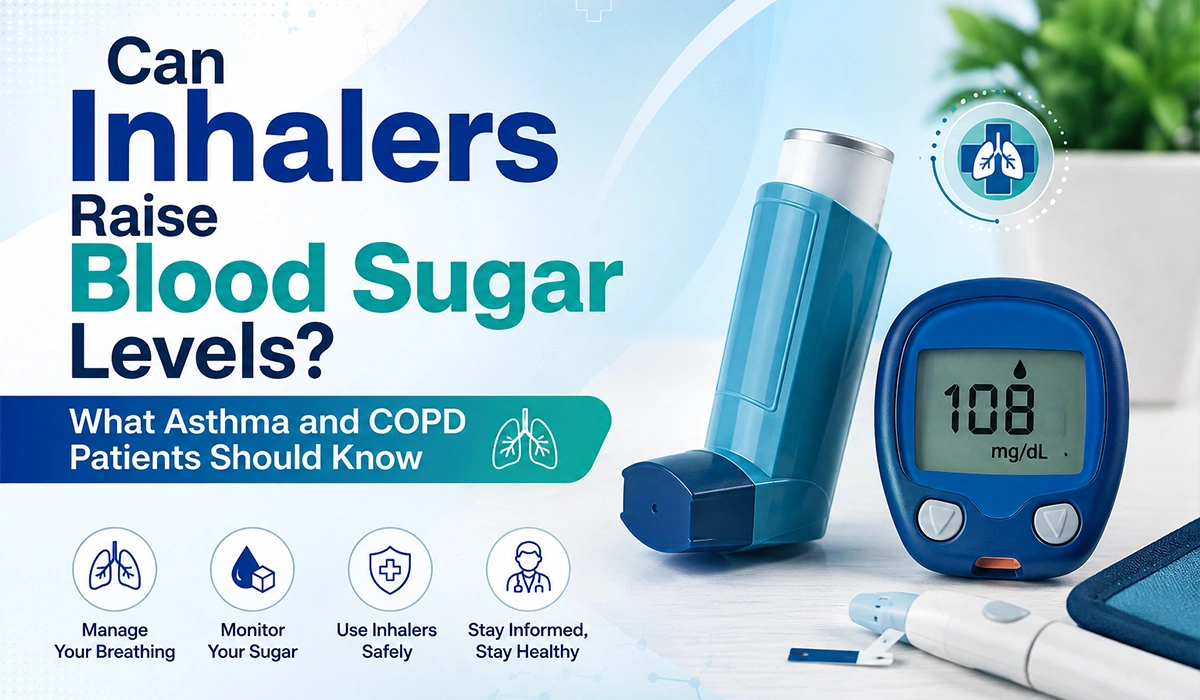
Can Inhalers Raise Blood Sugar Levels? What Asthma and COPD Patients Should Know

If you live with asthma or COPD and also monitor your blood sugar, you may have noticed something confusing: your glucose readings sometimes rise when your breathing symptoms get worse or after certain inhaled medicines.

So, can inhalers raise blood sugar levels?

The short answer is yes, some inhaled medicines can contribute to a rise in blood glucose, but the effect depends strongly on the type of inhaler, dose, frequency of use, and your individual health. Inhaled corticosteroids generally have much less systemic effect than steroid tablets, while high doses of some bronchodilators such as salbutamol can temporarily increase blood glucose.

For people with diabetes, prediabetes, asthma, or COPD, understanding this difference can prevent unnecessary worry—and help ensure that an important respiratory medicine is not stopped without medical advice.

Medical note: This article is for health education, not individual diagnosis or treatment. If your blood glucose is repeatedly high, your breathing is worsening, or you are considering changing an inhaler, speak with your doctor or pharmacist.

1. Can Inhalers Raise Blood Sugar Levels?

Quick answer: Some inhalers can affect blood glucose, but not all inhalers have the same effect. Inhaled corticosteroids usually have limited systemic absorption at standard doses, while high-dose or frequent use may have greater systemic effects. Beta-2 agonists such as salbutamol can also cause reversible increases in blood glucose, particularly at higher doses.

An inhaler is a delivery device, not a single type of medicine. Two people may both say they are “using an inhaler,” while actually taking completely different drugs.

Common inhaled medicines include:

  • Inhaled corticosteroids (ICS) – reduce airway inflammation.
  • Short-acting beta-2 agonists (SABA) – provide quick bronchodilation.
  • Long-acting beta-2 agonists (LABA) – keep airways open for longer.
  • Long-acting muscarinic antagonists (LAMA) – provide long-lasting bronchodilation.
  • Combination inhalers – contain two or more medicines.

This distinction matters because the potential effect on blood glucose varies between drug classes.

For example, salbutamol is a beta-2 agonist. Product information states that beta-2 agonists can produce reversible metabolic changes, including increased blood glucose.

Practical tip: Don’t judge an inhaler only by its brand name. Check the active ingredients and ask your healthcare professional what each component does.

2. Why Would an Inhaler Affect Blood Glucose?

Quick answer: Some respiratory medicines can influence glucose metabolism. Corticosteroids can increase glucose production and reduce insulin sensitivity, while beta-2 agonists can stimulate metabolic pathways that temporarily increase glucose levels. The effect is generally more important with higher systemic exposure.

The body carefully balances glucose through hormones such as insulin. Certain medicines can temporarily change this balance.

Corticosteroids

Steroids can increase glucose production by the liver and make the body’s tissues less sensitive to insulin. This is why oral or injectable corticosteroids are well known to cause hyperglycemia.

However, inhaled corticosteroids are delivered primarily to the lungs and generally produce much less systemic exposure than oral steroids.

The amount that reaches the bloodstream depends on factors such as:

  • Dose
  • Drug potency
  • Inhaler/device type
  • Lung absorption
  • How much medicine is swallowed
  • Liver metabolism
  • Duration of treatment

GINA notes that systemic effects of inhaled corticosteroids depend on dose, potency, delivery system, systemic bioavailability, and metabolism.

Beta-2 agonists

Medicines such as salbutamol work differently. They stimulate beta-2 receptors to relax airway muscles.

At higher doses, beta-2 agonists can also affect metabolism and increase blood glucose. Product information for inhaled salbutamol specifically advises caution in people with diabetes because blood glucose can rise.

Example: A person having a severe asthma attack may receive repeated or high-dose salbutamol. Their glucose may temporarily increase, but this does not necessarily mean the inhaler has caused permanent worsening of diabetes.

3. Do Steroid Inhalers Cause Diabetes?

Quick answer: Standard-dose inhaled corticosteroids are not considered equivalent to steroid tablets in their effect on blood sugar. Evidence about long-term glucose effects is mixed, with greater concern at higher doses and in people who already have diabetes or other metabolic risk factors.

This is one of the most important distinctions in the topic.

A person may hear that “steroids raise blood sugar” and assume every steroid inhaler will cause diabetes. That conclusion is too broad.

Inhaled corticosteroids are designed to deliver medication directly to the airways, limiting exposure elsewhere in the body.

GINA’s patient information states that long-term corticosteroid tablets can provoke diabetes, whereas inhaled corticosteroids have not been shown to have the same effect in asthma.

At the same time, researchers have investigated whether prolonged or high-dose ICS treatment might contribute to diabetes risk, particularly among people with COPD. Some observational research has reported associations, while the overall evidence remains complicated by factors such as disease severity, steroid exposure and other health conditions.

A systematic review of systemic effects of inhaled corticosteroids in asthma found limited and conflicting evidence and noted that many studies had important limitations.

Practical takeaway: Don’t stop an ICS inhaler because you are worried about diabetes. Ask whether your current dose is appropriate and whether your blood glucose needs monitoring.

4. What About Salbutamol and Other Reliever Inhalers?

Quick answer: Salbutamol and other beta-2 agonists can cause a temporary increase in blood glucose, especially with higher doses or repeated treatment. This effect is generally reversible, but people with diabetes may need closer glucose monitoring during intensive treatment.

Salbutamol—also known as albuterol in some countries—is commonly used as a rapid bronchodilator.

It relaxes airway muscles and can make breathing easier during bronchospasm.

But beta-2 stimulation can also influence metabolism.

Official medicine information describes possible increases in blood glucose with salbutamol and notes that people with diabetes may have difficulty compensating for this rise.

The effect is particularly relevant when:

  • Large doses are used
  • Nebulized treatment is given repeatedly
  • The patient is having a severe asthma attack
  • Diabetes is poorly controlled
  • Corticosteroids are being used at the same time

Importantly, a glucose rise after a reliever inhaler does not mean you should avoid the medicine during an asthma attack.

Breathing comes first.

If your reliever is required much more frequently than usual, the underlying respiratory disease may not be adequately controlled and should be medically reviewed.

5. Asthma, Inhalers and Blood Sugar: What Is the Connection?

Quick answer: Asthma itself and the medicines used during worsening asthma can both influence glucose readings. In particular, severe attacks may require high doses of bronchodilators and sometimes systemic corticosteroids, both of which can contribute to hyperglycemia.

Imagine someone with asthma and type 2 diabetes.

Their asthma becomes worse. They begin using their reliever more frequently. Their doctor may then prescribe a short course of oral corticosteroids if clinically appropriate.

Now their blood glucose rises.

Which medicine caused it?

It may not be one single factor.

Possible contributors include:

FactorPossible effect on glucose
Standard-dose ICSUsually limited systemic glucose effect
High-dose/long-term ICSMay have greater systemic effects
Salbutamol/beta-2 agonistCan temporarily increase glucose
Oral corticosteroidsStronger and well-established effect
Severe illness/stressCan independently increase glucose
Reduced physical activityMay worsen glucose control

This is why a healthcare professional needs to consider the whole clinical picture, rather than blaming every glucose change on an inhaler.

GINA emphasizes the importance of effective inhaled treatment for controlling asthma and reducing severe exacerbations.

6. What About COPD and Blood Sugar?

Quick answer: People with COPD can experience glucose problems for several reasons, including underlying metabolic disease, acute illness, systemic corticosteroid treatment and, in some cases, long-term inhaled corticosteroid exposure. COPD treatment decisions should therefore consider both respiratory benefits and metabolic risks.

COPD is different from asthma, although some medicines overlap.

In COPD, inhaled corticosteroids may be prescribed for selected patients, often as part of combination therapy. They are not automatically appropriate for every person with COPD.

The 2025 GOLD report provides evidence-based recommendations for COPD diagnosis and management and emphasizes selecting treatment according to individual patient characteristics and exacerbation risk.

Research has identified a possible association between inhaled corticosteroid exposure and diabetes development or worsening glycemic control in COPD, particularly in observational studies. However, this does not mean every COPD patient using an ICS will develop diabetes.

There is another important issue: COPD exacerbations themselves can be associated with poor glucose control.

One study found that elevated blood glucose was associated with a higher risk of subsequent severe COPD exacerbation, although this does not establish that inhalers caused the elevated glucose.

7. Inhaled Steroids vs Oral Steroids: Which Has More Effect on Blood Sugar?

Quick answer: Oral corticosteroids generally have a much stronger systemic effect on blood glucose than standard-dose inhaled corticosteroids because a greater amount of the drug reaches the bloodstream. Inhaled steroids can still have systemic effects, particularly at high doses or with prolonged treatment.

This is an important comparison for patients who have diabetes.

FeatureInhaled corticosteroidsOral corticosteroids
Main deliveryAirways/lungsWhole body
Systemic exposureGenerally lowerMuch higher
Blood glucose effectUsually limited at standard dosesCommon and clinically important
Long-term systemic effectsDose-dependentMore established
Monitoring in diabetesMay be appropriate depending on riskOften important

NHS guidance explains that steroid tablets can increase blood glucose, while inhaled steroids are unlikely to do so in most people.

That does not mean inhaled corticosteroids have zero systemic absorption.

Rather, the degree of exposure is usually much smaller.

This is one reason doctors try to use the lowest inhaled corticosteroid dose that effectively controls asthma, while still maintaining appropriate disease control. GINA notes that high-dose ICS is needed by relatively few patients and that long-term high-dose use carries greater systemic side-effect risk.

8. Can High Blood Sugar Make Asthma or COPD Worse?

Quick answer: High blood glucose does not simply “cause” every asthma or COPD flare, but poor metabolic control can be associated with worse outcomes, particularly in COPD. Illness, inflammation, reduced activity and steroid treatment can all interact with glucose control.

This creates a potential cycle.

Respiratory illness → stress response → higher glucose → reduced activity → more difficulty controlling health conditions.

Then treatment for a severe respiratory episode may add another factor.

For example, systemic corticosteroids are often used for certain acute exacerbations because they can reduce airway inflammation. However, systemic steroids are well known to cause hyperglycemia.

That does not make steroid treatment “bad.”

It means doctors have to balance:

Respiratory benefit + metabolic risk.

For a severe asthma or COPD exacerbation, controlling the breathing problem may be the immediate priority, while blood glucose is monitored and managed alongside it.

9. Who Should Monitor Blood Sugar More Closely?

Quick answer: People with established diabetes, prediabetes, previous steroid-related hyperglycemia, or repeated courses of corticosteroids may benefit from closer glucose monitoring when their respiratory medicines change or their illness worsens. The exact monitoring plan should be individualized.

Extra attention may be useful if you:

  • Have type 1 or type 2 diabetes
  • Have prediabetes
  • Use high-dose inhaled corticosteroids
  • Frequently need oral steroids
  • Are receiving repeated nebulized beta-2 agonists
  • Have recently had a severe asthma or COPD exacerbation
  • Notice unexplained changes in glucose readings

If your doctor starts systemic steroids, ask whether your diabetes medicines or glucose-monitoring schedule need adjustment.

For people already diagnosed with diabetes, NHS guidance recommends regular glucose monitoring when systemic steroids are prescribed because treatment may need to change temporarily.

10. What Should You Do If Your Blood Sugar Rises After Using an Inhaler?

Quick answer: Do not automatically stop your inhaler. Record the glucose reading, note which medicine you used and how often, and discuss the pattern with your doctor or pharmacist. Seek urgent medical care if you have severe breathing difficulty or symptoms of dangerously high blood glucose.**

A simple tracking approach can help:

Step 1: Record your glucose

Write down:

  • Time
  • Blood glucose level
  • Meal timing
  • Inhaler used
  • Number of doses
  • Other medicines taken

Step 2: Look for a pattern

One unusual reading does not prove that an inhaler caused the change.

A repeated pattern is more useful.

Step 3: Review the medication

Ask your healthcare professional:

  • What are the active ingredients?
  • Is it a steroid inhaler?
  • Is it a beta-2 agonist?
  • What is the dose?
  • How often should I use it?
  • Do I need glucose monitoring?

Step 4: Never abruptly stop essential asthma treatment

GINA emphasizes that people with asthma should continue prescribed inhaled corticosteroid-containing treatment rather than stopping it without medical advice, because inadequate treatment can increase the risk of worsening asthma and attacks.

11. Can Better Inhaler Technique Reduce Side Effects?

Quick answer: Correct inhaler technique helps ensure that the medicine reaches the lungs as intended and may reduce unnecessary medication deposition in the mouth and throat. It cannot completely eliminate systemic absorption, but correct technique is an important part of safe and effective inhaler use.**

Common mistakes include:

  • Inhaling too quickly or slowly for the device
  • Not coordinating actuation and inhalation with an MDI
  • Failing to hold the breath when instructed
  • Not using a spacer when appropriate
  • Incorrect preparation of a dry-powder inhaler
  • Taking doses more frequently than prescribed

For pressurized metered-dose inhalers containing corticosteroids, GINA notes that use with a spacer is preferred where appropriate.

Correct technique is therefore not just about better symptom control.

It is also part of responsible medicine use.

Practical tip: Ask your doctor, nurse or pharmacist to watch you use your inhaler once. Even experienced patients can develop technique errors over time.

12. Should People With Diabetes Avoid Inhaled Corticosteroids?

Quick answer: No. Diabetes is not a blanket reason to avoid inhaled corticosteroids when they are clinically indicated. For asthma especially, ICS-containing treatment is an important part of preventing severe exacerbations. The goal is to use the appropriate medicine and dose while considering individual risks.

This is where online health information can become misleading.

A headline such as “steroids raise blood sugar” may be technically true but incomplete.

For asthma, inhaled corticosteroids treat the underlying airway inflammation. GINA’s current strategy recommends ICS-containing treatment rather than relying on a short-acting beta-2 agonist alone.

For COPD, inhaled corticosteroids are used selectively based on clinical factors.

Therefore, the right question is not:

“Do steroids raise blood sugar?”

It is:

“What is the benefit and risk of this particular steroid, at this dose, for this particular patient?”

That is a much more clinically useful question.

13. When Should You Talk to Your Doctor?

Quick answer: Speak with your doctor if glucose levels repeatedly rise after starting or increasing an inhaler, if you need frequent rescue medication, if you require repeated steroid courses, or if your diabetes becomes harder to control. Never change essential respiratory treatment without professional guidance.**

Contact your healthcare professional if:

  • Your glucose is repeatedly above your usual target
  • You have newly developed persistent high readings
  • You need your reliever much more frequently
  • You are using nebulized treatment repeatedly
  • You have been prescribed oral steroids
  • Your asthma symptoms are worsening
  • Your COPD symptoms are worsening
  • You are unsure whether your inhaler contains a steroid

Seek urgent medical help for severe breathlessness, inability to speak normally because of breathlessness, bluish/grey lips or face, severe confusion, or rapidly worsening symptoms.

For people with diabetes, very high glucose accompanied by vomiting, dehydration, abdominal pain, confusion or other concerning symptoms also requires urgent medical assessment.

14. What Is the Best Way to Balance Respiratory and Blood Sugar Health?

Quick answer: The safest approach is coordinated management: control asthma or COPD effectively, use inhalers exactly as prescribed, monitor glucose when clinically appropriate, and review medication whenever treatment changes. Good respiratory control can reduce the need for emergency treatments such as repeated systemic steroids.**

Think of asthma/COPD care and diabetes care as connected—not competing goals.

A practical checklist

For respiratory health:

  1. Know which inhaler is your controller and which is your reliever.
  2. Use your prescribed dose.
  3. Learn correct inhaler technique.
  4. Attend regular reviews.
  5. Do not stop controller treatment without advice.
  6. Have an action plan for worsening symptoms.

For glucose health:

  1. Monitor according to your diabetes care plan.
  2. Record unusual readings.
  3. Pay attention when medicines change.
  4. Ask about glucose monitoring during steroid treatment.
  5. Report repeated unexplained hyperglycemia.

The larger goal is to reduce severe respiratory exacerbations while minimizing unnecessary systemic medication exposure.

GINA emphasizes inhaled corticosteroid-containing treatment because preventing severe asthma exacerbations is a central goal of asthma care.

15. The Bigger Picture: Don’t Blame Every Glucose Rise on Your Inhaler

Quick answer: A rise in blood glucose after using an inhaler can have several explanations. The medicine may contribute, especially with high-dose beta-2 agonists or systemic steroid exposure, but illness, stress hormones, diet, reduced activity and underlying diabetes can also play roles.**

This is particularly important during an asthma or COPD flare.

Suppose someone with diabetes has:

  • Wheezing
  • Poor sleep
  • Reduced physical activity
  • An infection
  • Frequent salbutamol use
  • A short course of oral steroids

Their glucose may rise substantially.

It would be inaccurate to say:

“The inhaler caused my diabetes.”

It would be more accurate to say:

“Several factors may be affecting my glucose, including my respiratory illness and medicines.”

That distinction leads to better medical decisions.

Inhalers and Blood Sugar: At-a-Glance Comparison

Medicine/typeMain purposePotential glucose effect
Inhaled corticosteroidControls airway inflammationUsually limited at standard doses; greater concern with high doses/long-term exposure
Salbutamol/albuterolQuick bronchodilationCan temporarily increase blood glucose, particularly at higher doses
LABALong-acting bronchodilationMetabolic effects depend on drug and exposure
LAMALong-acting bronchodilationNot primarily associated with blood glucose elevation
ICS/LABA combinationAnti-inflammatory + bronchodilationDepends on both components and dose
Oral corticosteroidTreats significant inflammation/exacerbationsStrong, well-established hyperglycemic effect

The table is a general educational comparison. The exact effects depend on the specific medicine, formulation, dose and patient.

What About Inhalers in India?

For patients in India, the same basic principles apply, but brand names and inhaler combinations can vary considerably.

A patient may encounter:

  • Metered-dose inhalers
  • Dry-powder inhalers
  • Breath-actuated devices
  • Nebulized medicines
  • Combination inhalers

Some products may contain multiple active ingredients.

Therefore, searching only for a brand name online is not always enough.

When discussing an inhaler with an Indian doctor or pharmacist, have the packaging or prescription available and ask:

“Does this contain a steroid or a beta-2 agonist, and could it affect my blood sugar?”

This is especially useful if you have diabetes and are starting a new inhaler or changing your respiratory treatment.

India also has a large burden of diabetes, making medication-related glucose monitoring particularly relevant for patients who have both metabolic and respiratory conditions.

However, local availability should never be used as a reason to substitute one inhaler for another without professional guidance.

Common Myths About Inhalers and Blood Sugar

Myth 1: “Every inhaler increases blood sugar.”

Fact: No. Different inhalers contain different medicines, and their metabolic effects differ.

Myth 2: “If I have diabetes, I cannot use steroid inhalers.”

Fact: Diabetes does not automatically rule out an inhaled corticosteroid when clinically indicated.

Myth 3: “Inhaled steroids are exactly the same as steroid tablets.”

Fact: They are both corticosteroids, but inhaled medicines generally produce much lower systemic exposure than oral steroids at standard doses.

Myth 4: “A high glucose reading proves the inhaler caused it.”

Fact: Illness, stress, diet, activity and other medicines can also affect glucose.

Myth 5: “I should stop my inhaler if glucose rises.”

Fact: Stopping essential respiratory treatment without medical advice can be dangerous. Discuss the glucose pattern and medication with your healthcare professional.

Frequently Asked Questions: Can Inhalers Raise Blood Sugar Levels?

Can inhalers raise blood sugar levels?

Yes, some can. High-dose beta-2 agonists such as salbutamol can cause reversible increases in blood glucose, while inhaled corticosteroids generally have less systemic effect than oral steroids. The actual effect depends on the drug, dose, frequency and individual health.

Do steroid inhalers increase blood sugar?

Usually, standard-dose inhaled corticosteroids have a much smaller effect on blood glucose than steroid tablets. However, systemic effects can increase with higher doses and prolonged use. People with diabetes may need individualized monitoring.

Can salbutamol inhalers raise blood glucose?

Yes. Salbutamol can produce reversible metabolic changes, including increased blood glucose, particularly at higher doses. People with diabetes may need closer monitoring during intensive treatment.

Can COPD inhalers cause diabetes?

Not all COPD inhalers have the same risk. Research has examined a possible association between inhaled corticosteroid use and diabetes development or worsening glycemic control, but the evidence is complicated and does not mean that every COPD patient using an ICS will develop diabetes.

Are oral steroids more likely to raise blood sugar than inhaled steroids?

Yes. Oral corticosteroids have substantially greater systemic exposure and are well known to raise blood glucose. Inhaled corticosteroids generally have less systemic effect when used at standard doses.

Should diabetics avoid asthma inhalers?

No. Diabetes does not mean that a person should avoid medically necessary asthma treatment. Effective asthma control is important, and inhaled corticosteroid-containing treatment is a key component of modern asthma management.

Should I check blood sugar after using an inhaler?

If you have diabetes and notice repeated glucose changes after starting or intensifying respiratory treatment, discuss monitoring with your healthcare professional. Monitoring may be particularly relevant during high-dose beta-2 agonist treatment or systemic steroid courses.

Can an inhaler cause permanent diabetes?

A single inhaler dose does not mean you will develop permanent diabetes. Long-term diabetes risk is more complicated and depends on factors such as genetics, weight, lifestyle, underlying metabolic health and medication exposure. Evidence linking inhaled corticosteroids to diabetes is mixed.

Can asthma itself increase blood sugar?

During illness or an asthma exacerbation, the body’s stress response can increase blood glucose. Treatment used during severe attacks can also influence glucose. Therefore, a high reading during an exacerbation does not automatically mean the inhaler caused it.

What should I do if my blood sugar is high after my inhaler?

Do not stop the inhaler on your own. Record your glucose level, the inhaler and dose used, and any other medicines you are taking. If high readings continue, contact your doctor or diabetes care team for advice.

Key Takeaways

Can inhalers raise blood sugar levels? Sometimes—but the answer depends on the inhaler.

The most important points are:

  • Not all inhalers affect glucose in the same way.
  • Standard-dose inhaled corticosteroids generally have less systemic glucose impact than oral steroids.
  • High-dose or frequent salbutamol/beta-2 agonist treatment can temporarily increase blood glucose.
  • Long-term/high-dose inhaled corticosteroid exposure deserves individualized consideration, particularly in people with diabetes.
  • COPD research has identified a possible relationship between ICS exposure and diabetes, but the evidence is not simple or definitive.
  • Respiratory illness itself can affect glucose control.
  • Do not stop a prescribed asthma or COPD inhaler without medical advice.
  • If glucose repeatedly rises after a treatment change, discuss the pattern with your doctor or pharmacist.
  • Correct inhaler technique and appropriate dosing remain essential.
  • For severe breathing symptoms, seek urgent medical care rather than delaying treatment because of concerns about glucose.

The best respiratory treatment is not necessarily the one with the fewest possible side effects—it is the one whose benefits and risks are appropriate for your individual health needs.

Why Better Health Data Is Essential for AI in Women’s Healthcare

Introduction: AI Can Only Be as Good as the Health Data Behind It

Imagine a woman visiting a doctor with years of health experiences scattered across different places: one hospital has her blood reports, another has an ultrasound, a local clinic has prescriptions, and an app has information about her menstrual cycle or fitness.

Now imagine an AI system that could safely bring those pieces together.

It could potentially help identify patterns, flag risks earlier, support clinicians, improve research, and make healthcare more personalized.

But there is a fundamental problem: What happens when the data is incomplete, poorly labelled, unrepresentative, or missing important aspects of women’s health?

AI does not automatically understand the gaps in the information it receives. If the underlying data does not adequately represent women, an algorithm can learn those limitations and reproduce them at scale.

This is why health data for AI in women’s healthcare is becoming such an important issue.

The World Health Organization says quality, disaggregated health data is essential for identifying inequalities and understanding how factors such as sex, age, geography and socioeconomic conditions influence health outcomes.

For India, the opportunity is particularly significant. The Ayushman Bharat Digital Mission (ABDM) is building an interoperable digital health ecosystem where health records can be linked and shared through consent-based mechanisms.

The future of AI in women’s healthcare, therefore, will not be determined by algorithms alone.

It will depend on whether we collect better data, protect it properly, understand its context and make sure women are represented in the evidence used to build healthcare AI.

1. What Is Health Data for AI in Women’s Healthcare?

Quick answer:
Health data for AI in women’s healthcare refers to structured and unstructured information about women’s health that can be responsibly used to develop, train, validate or evaluate AI systems. It may include clinical records, laboratory results, imaging, treatment outcomes, reproductive health information and demographic or social factors.

AI systems learn patterns from data.

That data can come from:

  • Electronic health records
  • Laboratory reports
  • Medical imaging
  • Prescriptions
  • Hospital admissions
  • Clinical trials
  • Wearable devices
  • Patient-reported outcomes
  • Maternal health records
  • Reproductive health information
  • Menstrual and menopause information
  • Disease registries
  • Public-health datasets
  • Genomic and biological information

But collecting more data is not automatically better.

The important question is whether the data is relevant, accurate, representative, properly labelled, ethically obtained and suitable for the intended AI application.

For example, an AI model designed to support breast cancer imaging needs high-quality imaging data and reliable clinical outcomes. An AI tool intended to support maternal health requires completely different information, including pregnancy-related clinical data.

Practical tip: Before asking whether AI can solve a healthcare problem, ask whether the right data exists to understand that problem.

2. Why Does Women’s Healthcare Need Better Data?

Quick answer:
Women’s health has historically faced research and evidence gaps. Even when women are included in studies, sex and gender differences are not always analysed adequately. Better data can help researchers and clinicians understand how diseases develop, appear, progress and respond to treatment differently across populations.

This is not simply an AI problem.

It is a healthcare research problem that AI makes more visible.

The National Academies reported in 2024 that important gaps remain across women’s health research, including reproductive and gynecologic health, cardiovascular disease, cancer, mental health and other conditions.

The NIH also states that considering sex as a biological variable can improve the interpretation, validation and generalizability of research findings.

Consider cardiovascular disease.

If an AI system is trained primarily on historical patterns that do not adequately capture women’s disease presentation and treatment response, its output may not be equally useful for every patient.

The same principle applies to:

  • Autoimmune conditions
  • Endometriosis
  • Polycystic ovary syndrome
  • Menopause
  • Pregnancy-related conditions
  • Osteoporosis
  • Mental health
  • Certain cancers
  • Cardiovascular disease

Better data creates a better evidence foundation.

3. How Can Poor Data Create Bias in Healthcare AI?


AI bias can occur when training data is incomplete, unbalanced, poorly labelled or not representative of the population in which the system will be used. A model can then perform differently across groups, even when the algorithm itself appears technically sophisticated.

Think of AI as a pattern-learning system.

If the training dataset contains thousands of examples from one population but very few from another, the model has less evidence from which to learn the second population’s patterns.

This can happen through:

  1. Underrepresentation — too few women or particular groups of women.
  2. Missing variables — important health information is not collected.
  3. Poor labels — diagnoses or outcomes are incorrectly recorded.
  4. Historical bias — old healthcare practices become embedded in datasets.
  5. Selection bias — data comes mainly from certain hospitals or regions.
  6. Measurement bias — the same condition is measured differently across groups.
  7. Deployment bias — a model developed for one population is used elsewhere without adequate validation.

WHO specifically identifies biased training data as a risk because it can produce misleading or inaccurate information and threaten health equity.

Practical tip: AI developers should evaluate model performance separately across relevant demographic and clinical groups rather than relying only on an overall accuracy number.

4. Why Sex-Disaggregated Data Matters

Sex-disaggregated data means health information is analysed separately by sex where scientifically relevant. It can reveal differences that disappear when everyone is placed into one combined dataset, helping researchers identify unequal disease burdens, treatment responses and healthcare outcomes.

Suppose 10,000 patients are included in a study.

The overall result may look strong.

But if researchers never examine whether the outcome differs between women and men, important information may remain hidden.

WHO recommends stronger use of sex-disaggregated health data to identify inequalities and understand how different factors influence health outcomes.

For AI, this becomes even more important.

A model should not simply be asked:

“How accurate are you?”

It should also be tested with questions such as:

  • How accurate are you for women?
  • Does performance change by age?
  • Does performance change during pregnancy?
  • Does performance change after menopause?
  • Does performance vary across geographic populations?
  • Does performance change for different socioeconomic groups?
  • Are there enough examples of rare conditions?

This is how better health data for AI in women’s healthcare can translate into more meaningful evaluation.

5. Women’s Health Data Is More Than Reproductive Health

Quick answer:
Women’s healthcare data should cover the full life course rather than focusing only on pregnancy, fertility and reproductive conditions. AI research should also address cardiovascular disease, cancer, autoimmune conditions, mental health, ageing, metabolic health, neurological conditions and other diseases affecting women.

One of the biggest mistakes in women’s health is treating it as synonymous with reproductive health.

Women need healthcare throughout their entire lives.

A useful AI-ready women’s health dataset could consider:

Life stagePotential data areas
AdolescencePuberty, nutrition, mental health
Reproductive yearsMenstrual health, fertility, pregnancy
PregnancyMaternal health, complications, outcomes
PostpartumRecovery, mental health, chronic conditions
MidlifeMenopause, cardiovascular and metabolic health
Later lifeBone health, dementia, cardiovascular disease

This broader approach is important because diseases that affect both sexes can also behave differently.

The NIH identifies conditions such as cardiovascular disease, HIV, reproductive ageing, autoimmune diseases, Alzheimer’s disease and depressive disorders among areas where women’s health research needs continued attention.

Practical tip: Build women’s health datasets around the life course, not a single reproductive event.

6. What Types of Data Can Improve AI in Women’s Healthcare?

Quick answer:
Useful AI datasets combine clinical, biological, behavioural and contextual information while maintaining appropriate privacy safeguards. The exact data required depends on the healthcare problem, but combining complementary data types can help researchers understand patients more completely.

Potential data sources include:

Clinical data

  • Diagnoses
  • Prescriptions
  • Symptoms
  • Procedures
  • Hospital records
  • Treatment outcomes

Diagnostic data

  • Blood tests
  • Pathology
  • Ultrasound
  • Mammography
  • MRI
  • CT scans

Patient-generated data

  • Symptoms
  • Quality-of-life measures
  • Menstrual information
  • Medication adherence
  • Wearable measurements

Research data

  • Clinical trials
  • Cohort studies
  • Registries
  • Longitudinal studies

Contextual information

  • Age
  • Location
  • Socioeconomic conditions
  • Access to healthcare
  • Environmental exposure

However, more variables do not automatically mean a better model.

Data should be collected because it has a legitimate clinical or research purpose.

Practical tip: Follow the principle of collecting data that is necessary and relevant rather than collecting everything simply because technology makes it possible.

7. Can AI Help Personalize Women’s Healthcare?

Quick answer:
AI may support more personalized healthcare by identifying patterns across large amounts of patient information, but personalization depends on the quality and relevance of the underlying data. AI should support—not replace—clinical judgement, patient preferences and appropriate medical evaluation.

Imagine two patients with the same diagnosis.

They may have different:

  • Ages
  • Medical histories
  • Risk factors
  • Treatment responses
  • Other medications
  • Family histories
  • Lifestyle factors

A sufficiently validated AI system could potentially help clinicians identify patterns across these variables.

Possible applications include:

  • Risk prediction
  • Clinical decision support
  • Medical imaging analysis
  • Patient monitoring
  • Research discovery
  • Treatment-response analysis
  • Population-health planning

WHO notes that AI is already being explored or used in areas including diagnosis, clinical care, drug development, disease surveillance and health-system management.

But personalization should never become automated medical decision-making without appropriate clinical oversight

8. AI in Women’s Healthcare in India: Why Digital Health Matters

Quick answer:
India’s expanding digital health infrastructure creates an opportunity to improve longitudinal health records and enable responsible AI research. The Ayushman Bharat Digital Mission is designed to support interoperable digital health services and consent-based exchange of health information across participating systems.

India’s healthcare environment is diverse.

A model developed in a major metropolitan hospital may encounter very different patients from those seen in rural or smaller healthcare settings.

That makes representative data especially important.

The ABDM framework is relevant because it aims to connect health information across systems while giving individuals control over consent. According to the National Health Authority, health records are created and stored by healthcare providers, while ABDM facilitates secure exchange between intended stakeholders after patient consent.

The ecosystem can include:

  • Hospitals
  • Clinics
  • Laboratories
  • Pharmacies
  • Digital health applications
  • Health professionals
  • Personal health records

ABDM’s Personal Health Record approach also allows individuals to view and manage longitudinal health information and manage consent.

For India, the goal should not simply be more digital data.

It should be better, interoperable, representative and responsibly governed data.

9. Why Privacy Is Critical for Women’s Health Data

Quick answer:
Women’s health data can contain highly sensitive information, including reproductive health, pregnancy, mental health, sexual health, genetic information and medical history. AI systems therefore need strong privacy, security, consent and governance mechanisms before data is collected, shared or used for model development.

Privacy is not a technical footnote.

It is part of healthcare quality.

A patient may be willing to share information with her doctor but not necessarily with an unknown company, researcher or AI application.

Responsible systems should clearly explain:

  • What data is collected
  • Why it is collected
  • Who can access it
  • How long it is retained
  • Whether it is shared
  • How consent works
  • How consent can be withdrawn
  • How errors can be corrected

India’s ABDM framework emphasizes consent-based health-record sharing. The National Health Authority states that users can control which records they share and for how long.

WHO similarly emphasizes human autonomy, privacy and confidentiality as core principles for AI in healthcare.

Practical tip: A trustworthy AI health product should make privacy understandable to ordinary patients—not hide it behind complicated legal language.

10. What Does Responsible AI Data Governance Look Like?

Quick answer:
Responsible AI data governance means establishing clear rules for how health data is collected, validated, stored, shared, used and monitored. It should address privacy, consent, security, data quality, representation, accountability, transparency and ongoing evaluation.

A practical governance framework can include seven steps:

StepWhat to check
1. PurposeWhy is the data needed?
2. ConsentIs the appropriate permission available?
3. QualityIs the information accurate and complete?
4. RepresentationDoes it reflect the intended population?
5. SecurityIs sensitive information protected?
6. ValidationDoes the AI work across relevant groups?
7. MonitoringDoes performance remain safe after deployment?

WHO’s guidance stresses transparency, accountability, inclusion, equity, human oversight and safety in AI for health.

The WHO’s 2025 work on health data governance also directly links high-quality, representative data with safe and reliable AI systems.

11. Better Data Requires Better Participation From Women

Quick answer:
Better AI cannot be created only by collecting historical records. Women need meaningful participation in clinical research, digital-health design, validation studies and health-data initiatives. Patient experiences can reveal problems that clinical datasets alone may fail to capture.

There is a difference between having women in a dataset and understanding women through the dataset.

The National Academies noted that although women are now enrolled in clinical trials at roughly comparable rates overall in some settings, important subgroup and analysis gaps remain.

Researchers should therefore ask:

  • Were women adequately represented?
  • Were relevant subgroups represented?
  • Were sex differences analysed?
  • Were outcomes reported separately where appropriate?
  • Did researchers capture patient-reported outcomes?
  • Were women involved in study design?
  • Was the technology tested in real-world settings?

Patient participation also matters in AI product design.

For example, a women’s health application might technically collect excellent data but still fail if women find its questions confusing, invasive or irrelevant.

The best dataset is not simply large. It is meaningful to the people represented in it.

12. What Are the Biggest Challenges Ahead?

Quick answer:
The major challenges include incomplete datasets, inconsistent standards, privacy risks, underrepresentation, fragmented healthcare systems, weak interoperability, algorithmic bias and insufficient real-world validation. Solving these problems requires cooperation among clinicians, researchers, patients, technology companies, regulators and health systems.

The future will not be friction-free.

Challenge 1: Fragmented records

A patient’s information may exist across multiple healthcare providers.

Challenge 2: Data quality

Missing or incorrect information can weaken AI models.

Challenge 3: Representation

A dataset may not reflect India’s geographic, socioeconomic and demographic diversity.

Challenge 4: Privacy

Sensitive information requires strong safeguards.

Challenge 5: Algorithmic bias

A model can perform differently across patient groups.

Challenge 6: Validation

A model that performs well in one hospital may not perform equally well elsewhere.

Challenge 7: Trust

Patients and clinicians need to understand what an AI system can—and cannot—do.

WHO warns against premature adoption of untested health AI and recommends rigorous evaluation before widespread routine use.

13. AI in Women’s Healthcare: Data Quality vs Data Quantity

Quick answer:
More health data does not necessarily produce better AI. High-quality datasets need accurate labels, appropriate representation, relevant variables, reliable outcomes, consistent standards and ethical governance. A smaller, well-designed dataset can sometimes be more useful than a massive dataset containing systematic errors.

Consider two datasets.

Dataset A:
10 million records, but incomplete outcomes, inconsistent labels and little information about important subgroups.

Dataset B:
1 million records with strong clinical labels, appropriate representation, longitudinal outcomes and robust quality controls.

The second dataset may be more valuable for a specific AI application.

A useful framework is:

Data quality = accuracy + completeness + relevance + consistency + representation + traceability

This is particularly important in women’s healthcare because some conditions can be difficult to diagnose, symptoms can overlap with other diseases, and important life-stage information may not appear consistently in standard medical records.

Better AI starts with better questions about data.

14. What Should Healthcare Organizations Do Now?

Quick answer:
Healthcare organizations should begin with data governance rather than AI deployment. They should identify useful datasets, improve data quality, standardize collection, strengthen privacy controls, evaluate representation and establish clinical validation processes before implementing AI at scale.

A practical roadmap looks like this:

Step 1: Audit existing data

Identify what information exists and where it is stored.

Step 2: Identify women’s health gaps

Look for missing conditions, age groups, life stages and geographic populations.

Step 3: Standardize data

Use consistent definitions and formats.

Step 4: Improve interoperability

Enable appropriate systems to exchange information securely.

Step 5: Establish consent mechanisms

Patients should understand how their information is used.

Step 6: Build representative datasets

Include relevant populations instead of relying on convenience samples.

Step 7: Validate AI

Test performance across clinically important groups.

Step 8: Keep humans involved

Doctors and qualified healthcare professionals should remain responsible for clinical decisions.

Step 9: Monitor after launch

AI performance can change when patient populations or clinical environments change.

This approach is consistent with the broader direction of responsible AI governance recommended by WHO.

15. The Future: From Women’s Health Data to Smarter Healthcare

Quick answer:
The long-term opportunity is to create healthcare systems where women’s health data supports earlier research discovery, better clinical decision support, more personalized care and stronger public-health planning. The objective should not be replacing doctors with AI, but giving healthcare professionals better evidence while keeping patients at the centre.

The future could involve AI systems that help connect information across a patient’s healthcare journey.

A woman might eventually have a longitudinal health record that helps clinicians understand:

adolescence → reproductive years → pregnancy → postpartum → midlife → menopause → healthy ageing

That does not mean every piece of information should automatically be available to every system.

It means healthcare can move toward a more connected model where patients have greater control over their information and clinicians can access relevant records with appropriate consent.

India’s digital health infrastructure provides an important foundation for this direction. ABDM’s model emphasizes interoperability, individual control and consent-based sharing.

But technology alone will not close the women’s health gap.

Better research creates better data. Better data creates better AI. Better AI can support better healthcare.

That chain only works when every step is responsible.

Health Data for AI in Women’s Healthcare: Key Takeaways

IssueWhy it matters
Better representationHelps AI reflect the people it serves
Sex-disaggregated dataReveals meaningful differences
Life-course dataGoes beyond reproductive healthcare
High-quality labelsImproves model learning
Patient-generated dataAdds real-world experiences
InteroperabilityConnects fragmented health information
PrivacyProtects sensitive health information
ConsentGives patients control
Clinical validationTests whether AI actually works
Human oversightKeeps medical decisions accountable
Continuous monitoringDetects performance problems over time

Frequently Asked Questions: Health Data for AI in Women’s Healthcare

What is health data for AI in women’s healthcare?

Health data for AI in women’s healthcare is information about women’s health that can be responsibly used to train, validate or evaluate AI systems. It may include clinical records, imaging, laboratory results, treatment outcomes, reproductive health information, patient-reported outcomes and relevant demographic factors.

Why is better health data important for AI in women’s healthcare?

Better health data helps AI systems learn from more accurate and representative evidence. Historical gaps in women’s health research can affect what is known about diseases, treatment responses and health outcomes. Better datasets can help reduce these evidence gaps and support more equitable AI development.

Can AI eliminate bias in women’s healthcare?

No. AI can potentially help identify patterns and improve decision support, but it can also reproduce or amplify biases present in its training data. Bias needs to be addressed through representative datasets, appropriate analysis, clinical validation, monitoring and governance.

Why is sex-disaggregated health data important?

Sex-disaggregated data allows researchers and health systems to examine whether diseases, treatments and outcomes differ across sexes where scientifically relevant. WHO identifies disaggregated data as an important foundation for understanding health inequalities.

What types of women’s health data can AI use?

Depending on the application, AI may use medical records, diagnostic images, laboratory results, clinical-trial information, patient-reported outcomes, wearable-device information and other relevant health data. The data should be collected and used for a legitimate purpose with appropriate privacy safeguards.

How can India improve health data for AI?

India can strengthen data quality, interoperability, consent mechanisms, clinical research, representation across regions and populations, and responsible AI validation. The Ayushman Bharat Digital Mission is already developing infrastructure for interoperable digital health and consent-based health-record exchange.

Is women’s health data private?

Health data is sensitive and requires appropriate privacy and security protections. Under India’s digital-health ecosystem, ABDM describes consent-based sharing and gives individuals mechanisms to manage access to their health records. Specific legal obligations depend on the organization, data use and applicable law.

Can AI replace doctors in women’s healthcare?

AI should not be treated as a replacement for qualified healthcare professionals. Responsible AI is intended to support healthcare workers, research and health-system decision-making while maintaining appropriate human oversight and accountability. WHO emphasizes human autonomy, safety and responsibility in AI for health.

What is the biggest data challenge in women’s healthcare?

One major challenge is the persistence of evidence gaps: some women’s health conditions remain under-researched, and studies may not adequately analyse sex or gender differences. Other challenges include fragmented records, inconsistent data quality, privacy concerns and underrepresentation of certain populations.

How can patients contribute to better women’s health data?

Patients can participate in ethically approved research, provide accurate medical histories, use trusted digital-health services and understand how their health information is collected and shared. Patient perspectives can also help researchers and developers design more useful and respectful healthcare technologies

Conclusion: Better Data Is the Starting Point

The biggest opportunity for AI in women’s healthcare is not simply creating a more powerful algorithm.

It is creating a better evidence foundation.

Women’s health data needs to be accurate, representative, meaningful, secure and responsibly governed. It needs to reflect different ages, life stages, conditions, locations and healthcare experiences.

India’s growing digital-health infrastructure creates an opportunity to build more connected health information systems, while consent-based frameworks such as ABDM demonstrate how interoperability can be developed alongside individual control.

But technology must remain accountable to people.

AI can analyse patterns faster than humans. It can help researchers examine enormous datasets. It can support clinicians and potentially improve access to healthcare services.

Yet AI cannot fix evidence that was never collected.

The future of AI in women’s healthcare will not be built from more data alone. It will be built from better data—better collected, better understood, better protected and better used.

That is where smarter healthcare begins.

Can Better Indoor Lighting Help Prevent Myopia in Children?

Introduction: Could the Light Around Your Child Matter?

Imagine a typical school day for a child in India.

The morning starts indoors. School means classrooms, books, notebooks and screens. After school, there may be homework, tuition classes, television, gaming or a smartphone. By evening, the child may have spent most of the day inside.

Parents often ask: “Is screen time causing my child’s eyesight to become weaker?”

The answer is more complicated than simply blaming screens.

Research increasingly points to a combination of factors: genetics, prolonged near work, reduced outdoor time and the visual environment in which children spend their days. The amount of light reaching the eyes may also matter.

This raises an interesting question:

Can better indoor lighting help prevent myopia in children?

The short answer is possibly—but indoor lighting should not be treated as a replacement for outdoor daylight.

Evidence is strongest for spending more time outdoors during daylight. The World Health Organization currently recommends at least 90 minutes outdoors during daylight as one strategy that may help delay myopia onset and progression, together with breaks during near work and appropriate eye care.

At the same time, emerging research is examining whether better-designed indoor lighting could provide additional benefits.

For parents, schools and healthcare professionals, the practical message is simple: improve the child’s complete visual environment rather than searching for one magic light bulb.

1. What Is Myopia in Children?

Myopia, or short-sightedness, is a refractive condition in which distant objects appear blurry because light focuses in front of the retina rather than directly on it. Childhood myopia can progress as the eye grows, and earlier onset can increase the likelihood of developing higher levels of myopia later.

Myopia is becoming an important global eye-health concern. The WHO identifies myopia as one of the eye conditions that can potentially be addressed through preventive strategies, particularly lifestyle changes involving outdoor time and near-work habits.

In India, the issue deserves attention as well. A 2026 systematic review and meta-analysis of Indian schoolchildren found an overall pooled prevalence of refractive errors of approximately 11%, with myopia being the most common refractive error at about 8% in the included evidence base.

These numbers vary substantially by age, location, study method and population, so they should not be interpreted as a single national rate for every Indian child.

Why does childhood onset matter?

When myopia begins early, there is more time for it to progress during childhood and adolescence. Higher levels of myopia are associated with increased lifetime risks of certain eye complications.

That is why prevention, early detection and appropriate myopia management are all important.

2. What Is the Connection Between Light and Myopia?

Light exposure appears to influence childhood eye growth, but the strongest evidence concerns bright outdoor daylight rather than ordinary indoor lighting. Children who spend more time outdoors generally have a lower risk of developing myopia. Researchers are investigating whether characteristics of indoor light can provide additional protection.

The eye does not experience all light environments equally.

Outdoor environments can expose children to dramatically higher illuminance than typical indoor rooms. One study measuring different environments found median outdoor illuminance around 1,175 lux, compared with approximately 179 lux indoors, although values varied considerably by location and conditions.

Another study found outdoor light levels substantially higher than indoor levels even when children were under shade or using sun protection.

This is one reason simply making an indoor room “brighter” does not necessarily reproduce the biological environment of being outdoors.

Practical example

A child studying beside a large window may experience substantially more daylight than a child studying in a closed room with one artificial lamp.

However, a bright indoor classroom is still not equivalent to outdoor daylight.

3. Can Better Indoor Lighting Help Prevent Myopia in Children?

There is promising but still developing evidence that better indoor lighting may influence myopia progression, but it is too early to say that indoor lighting alone prevents childhood myopia. Outdoor daylight remains the better-established environmental strategy.

A 2026 prospective cohort study investigated simulated full-spectrum lighting in classrooms and homes among fourth-grade students. The study included only 85 children—45 in the lighting intervention and 40 controls—and reported differences in spherical equivalent refraction, axial length and choroidal thickness after 6 and 12 months.

The findings are interesting, but they should be interpreted carefully.

It was a relatively small prospective cohort study, not definitive evidence that full-spectrum lighting prevents myopia across the general population.

This distinction is important for parents.

“Promising research” does not mean “proven treatment.”

A responsible recommendation today would be:

  1. Provide comfortable, adequate indoor lighting.
  2. Reduce glare and harsh shadows.
  3. Encourage regular breaks from near work.
  4. Give children substantial outdoor daylight exposure.
  5. Arrange regular eye examinations.
  6. Follow professional advice if myopia is diagnosed.

4. Why Outdoor Daylight Is More Important Than Simply Making a Room Brighter

Outdoor daylight is currently one of the strongest environmental factors associated with lower myopia risk in children. Indoor lighting can improve the visual environment, but it should complement—not replace—time spent outside during daylight.

One of the strongest pieces of evidence comes from a randomized clinical trial in Guangzhou, China.

Researchers added approximately 40 minutes of outdoor activity each school day for children in intervention schools. After three years, myopia incidence was 30.4% in the intervention group versus 39.5% in the control group, an absolute difference of 9.1 percentage points.

This does not mean exactly 40 minutes will produce the same result in every child or population.

But it provides strong experimental evidence that increasing outdoor exposure can reduce the risk of developing myopia.

A later randomized trial also found that encouraging parents to increase children’s outdoor time improved light exposure and was associated with less axial elongation and lower myopic progression.

The practical lesson

Instead of asking:

“Which indoor bulb prevents myopia?”

A better question is:

“How can we create a healthier visual day for the child?”

5. How Bright Should a Child’s Study Area Be?

There is no universally established indoor lux level that can be guaranteed to prevent myopia. A child’s study area should have sufficient, comfortable illumination for reading without excessive glare, deep shadows or visual discomfort.

Lux measures illuminance—the amount of light falling on a surface.

Indoor lighting requirements depend on:

  • Room size
  • Desk position
  • Window size
  • Time of day
  • Type and placement of lighting
  • Reading material
  • Screen brightness
  • Glare
  • Individual visual needs

Research measurements show that indoor environments can vary enormously. In one study, indoor locations ranged from very dim areas to rooms that temporarily exceeded 1,000 lux near large windows.

Therefore, a single “magic lux number” for myopia prevention would oversimplify the science.

Better practice

For homework:

  • Place the desk near a source of natural daylight where practical.
  • Avoid direct sunlight shining onto the page or screen.
  • Use a well-positioned desk lamp when necessary.
  • Reduce reflections from screens.
  • Keep the surrounding room reasonably illuminated rather than studying with only a bright screen in an otherwise dark room.

6. Does Full-Spectrum Lighting Help Children’s Eyes?

Full-spectrum lighting is an emerging area of myopia research, not yet a universally established method for preventing myopia. A 2026 study reported encouraging findings, but its small sample size means larger and longer studies are needed before strong recommendations can be made.

The recent study from China used simulated full-spectrum lighting designed to resemble the visible spectrum of sunlight, approximately 430–780 nm. The researchers reported favorable changes in several eye-related measurements over 12 months.

This is scientifically interesting because it moves the discussion beyond simple brightness.

Researchers are exploring:

  • Spectrum
  • Intensity
  • Duration
  • Timing of exposure
  • Outdoor versus indoor light
  • Circadian effects
  • Eye-growth responses

However, parents should be cautious about products marketed as “anti-myopia lights” or “myopia-prevention bulbs.”

Unless a product has strong clinical evidence supporting its specific claims, it should not be presented as a proven medical intervention.

7. Can Poor Indoor Lighting Cause Myopia?

Poor lighting can contribute to visual discomfort, but it should not automatically be described as a direct cause of myopia. Current evidence supports a broader relationship involving genetics, outdoor exposure and near-work behavior rather than a simple “dim room causes myopia” explanation.

Children may experience:

  • Eye strain
  • Headaches
  • Squinting
  • Difficulty focusing
  • Discomfort
  • Reduced reading comfort

when the visual environment is poorly designed.

But these symptoms are not the same as developing myopia.

Research into childhood light exposure has found associations between different light environments and eye growth, but the causal pathways remain an active area of research.

The distinction matters because parents should not panic if their child studies under ordinary indoor lighting.

The goal is to create a comfortable, well-lit environment while increasing outdoor daylight exposure.

8. What About Screens and Near Work?

Long periods of close-up work, including reading and digital-device use, are associated with myopia risk, particularly when combined with limited outdoor time. Children should take regular breaks and avoid holding books or screens excessively close to their eyes.

The WHO specifically recommends regular breaks during near-vision activities and highlights prolonged near work and insufficient outdoor time as risk factors.

A practical strategy is to break long study sessions into shorter periods.

For example:

30–45 minutes of near work → short visual break → resume activity.

The European Society of Ophthalmology/International Myopia Institute guidance recommends limiting continuous near work to around 30–45 minutes before taking a break and recommends approximately 1–2 hours of outdoor activity daily for school-aged children as a primary prevention strategy.

A simple family rule

Instead of telling a child:

“Stop using your phone.”

Try:

“Use it, then look far away, move around and go outside.”

This approach is often easier to follow.

9. A Better Indoor Lighting Setup for Children’s Homework

The best study environment combines adequate lighting, low glare, comfortable viewing distance, good posture and regular breaks. Natural daylight should be used whenever practical, while artificial lighting should fill in dark areas rather than create harsh contrast.

A practical setup

FactorBetter approach
Natural lightUse daylight near a window when practical
Desk lampPosition to illuminate the work without shining into the eyes
GlareAvoid reflections on books and screens
ShadowsPrevent the hand or head from creating strong shadows
ScreenAdjust brightness to comfortable surroundings
Viewing distanceAvoid holding books/screens extremely close
BreaksTake regular breaks during sustained near work
Outdoor timeAim for substantial daylight exposure every day
Eye checksFollow age-appropriate professional screening

Practical tip

Do not make the study room extremely dark just because the screen looks bright.

The surrounding environment should also have comfortable illumination.

10. Can Opening Windows Help?

Opening windows can increase natural daylight, but the benefit depends on the amount of daylight actually reaching the child’s eyes. A window alone does not turn an indoor environment into an outdoor light environment.

Window size, direction, building design, curtains, weather and time of day all matter.

Research has shown that rooms with large windows can sometimes reach relatively high illuminance, but indoor levels are generally much lower than open outdoor environments.

So, if a child studies near a window, that is helpful for daylight exposure—but it should not become an excuse to eliminate outdoor activities.

Better strategy

Window + outdoor play + regular breaks is more sensible than window instead of outdoor play.

11. What Should Indian Parents and Schools Do?

Indian families and schools should focus on a complete eye-health routine: more outdoor daylight, sensible near-work habits, comfortable indoor lighting and regular vision screening. This approach is more evidence-based than relying on a specific lamp or lighting technology.

This is particularly relevant in urban environments where children may spend much of their day indoors.

Indian research has documented a substantial burden of refractive errors among schoolchildren, with myopia representing the largest component in a recent systematic review.

Schools can consider

  • Outdoor activity periods
  • Better classroom daylight
  • Comfortable artificial lighting
  • Reduced glare
  • Regular vision screening
  • Breaks between prolonged near-work sessions
  • Outdoor school activities where practical

Parents can consider

  • Daily outdoor play
  • Limiting uninterrupted screen sessions
  • Encouraging proper reading distance
  • Avoiding homework in poorly lit spaces
  • Monitoring complaints of blurred distance vision
  • Arranging professional eye examinations

This is especially important for children with a family history of myopia because genetics also influence risk.

12. Indoor Lighting vs Outdoor Daylight: What’s Better?

Outdoor daylight has stronger evidence for myopia prevention than indoor lighting modifications. Indoor lighting can improve visual comfort and may have additional benefits, but current evidence does not justify treating it as an equivalent substitute for outdoor exposure.

FactorIndoor LightingOutdoor Daylight
Visual comfortCan be optimizedGenerally comfortable with appropriate conditions
Light intensityUsually lowerUsually much higher
Evidence for preventing myopiaEmergingStronger
Controlled environmentEasierLess controlled
Can replace outdoor time?NoN/A
Research statusDevelopingWell established
Main recommendationUse good-quality comfortable lightingEncourage regular daylight exposure

Outdoor environments can provide illuminance many times higher than typical indoor environments.

This difference may be one reason outdoor exposure has such a strong relationship with childhood myopia prevention.

13. What Does the Latest Research Say?

The research direction is moving toward understanding light as a measurable environmental factor, but outdoor exposure remains the most established recommendation. New studies on full-spectrum indoor lighting are promising, yet they need confirmation through larger, randomized and longer-term trials.

A 2025 scoping review identified 34 studies examining the visual environment of children and young people at risk of myopia, including research on indoor and outdoor light exposure, near work and related environmental factors.

Meanwhile, the International Myopia Institute’s 2025 clinical digest continues to identify outdoor time as the strongest protective environmental factor for preventing or delaying myopia onset.

This creates an important hierarchy of evidence:

Strongest practical evidence:
Outdoor daylight + healthy near-work habits.

Promising research area:
Optimized indoor lighting and full-spectrum lighting.

Not established:
A particular household bulb or commercial lighting product as a guaranteed myopia-prevention treatment.

14. What Parents Should Do If a Child Already Has Myopia

Better lighting and outdoor habits are useful, but they should not replace professional myopia management. If a child already has myopia, an eye-care professional should assess the prescription and progression and discuss appropriate management options.

Parents should watch for signs such as:

  • Sitting very close to the television
  • Holding books or devices unusually close
  • Squinting to see distant objects
  • Difficulty seeing the classroom board
  • Frequent headaches
  • Complaints of blurred distance vision
  • Declining school performance related to vision

The WHO recommends appropriate eye examinations and prescribed correction, alongside lifestyle measures such as outdoor time and regular breaks.

Depending on the child’s age, prescription and progression, an eye-care professional may discuss specialized spectacle lenses, contact-lens approaches or other evidence-based myopia-control strategies.

Lighting is part of prevention—not a substitute for diagnosis or treatment.

15. The Simple “Healthy Vision Day” for Children

A healthy vision routine is more powerful than focusing on one lighting product. Build the child’s day around daylight, movement, sensible near-work periods, comfortable lighting and appropriate eye examinations.

Here is a simple example:

TimeHealthy Vision Habit
MorningSpend some time outdoors in daylight
SchoolUse comfortable classroom lighting
StudyWork at a sensible viewing distance
Every 30–45 minTake a visual break
AfternoonOutdoor play or activity
EveningUse comfortable room lighting for homework
Screen timeAvoid long uninterrupted sessions
RegularlyGet professional eye checks

The WHO’s current guidance supports at least 90 minutes outdoors during daylight, while professional myopia-management guidance commonly recommends around 1–2 hours of outdoor activity daily for school-aged children.

16. Common Myths About Lighting and Myopia

Myth 1: “A brighter bulb will prevent myopia.”

Reality: There is not enough evidence to make this claim. Comfortable indoor lighting is beneficial, but outdoor daylight has stronger evidence.

Myth 2: “Screens directly cause every case of myopia.”

Reality: Myopia has multiple risk factors, including genetics, near work and limited outdoor exposure.

Myth 3: “Indoor lighting can replace outdoor time.”

Reality: Ordinary indoor illumination generally does not reproduce outdoor light levels.

Myth 4: “If my child has no symptoms, there is no need for an eye check.”

Reality: Children may not always recognize or report gradual changes in distance vision. Screening and professional assessment are important.

Myth 5: “Full-spectrum lights are already proven to prevent myopia.”

Reality: Recent research is encouraging, but the evidence is still developing and larger studies are needed.

17. Why Choose an Evidence-Based Approach?

The best approach to children’s eye health combines proven habits with careful interpretation of emerging research. Parents should prioritize outdoor daylight, healthy near-work behavior and professional eye care rather than relying on marketing claims about individual lighting products.

A trustworthy eye-health strategy should:

  • Clearly distinguish evidence from speculation.
  • Avoid promising that one product prevents myopia.
  • Use current clinical guidance.
  • Encourage professional examinations.
  • Consider the child’s individual risk.
  • Adapt recommendations as stronger research becomes available.

For schools and healthcare organizations, this evidence-based approach also creates better long-term health communication.

Instead of saying:

“Buy this special light to prevent myopia.”

A more responsible message is:

“Create a healthy visual environment, encourage outdoor daylight and monitor children’s vision regularly.”

18. Frequently Asked Questions About Indoor Lighting and Myopia in Children

Can better indoor lighting help prevent myopia in children?

Better indoor lighting may contribute to a healthier visual environment, and emerging studies are investigating its effect on myopia. However, there is not yet enough evidence to say that indoor lighting alone prevents myopia. Outdoor daylight exposure has stronger evidence and should remain a priority.

Is LED lighting bad for children’s eyes?

There is no good evidence that ordinary LED lighting itself causes childhood myopia. The important factors are overall visual comfort, glare, brightness, exposure patterns and the child’s broader lifestyle. Indoor lighting should be comfortable and appropriate for the activity.

Should children study in bright rooms?

Children should study in adequately and comfortably illuminated rooms. Avoid excessive glare, harsh shadows and strong contrast between a bright screen and a dark room.

How much outdoor time should children get to help prevent myopia?

The WHO recommends at least 90 minutes outdoors during daylight, while professional myopia guidance commonly recommends approximately 1–2 hours daily for school-aged children.

Can sunlight reverse myopia?

No. Outdoor time may help delay myopia onset and may reduce risk, but it should not be described as a way to reverse established myopia.

Does screen time increase myopia risk?

Prolonged near work, including screen use, is associated with myopia risk, especially when combined with insufficient outdoor time. Regular breaks and more outdoor activity are recommended.

Is full-spectrum lighting better for children with myopia?

There is emerging evidence, including a 2026 prospective cohort study, suggesting potential benefits from simulated full-spectrum lighting. However, the study was relatively small, so more research is required before it can be considered a proven myopia-prevention strategy.

Should parents buy a special anti-myopia lamp?

Parents should be cautious about products making medical claims. A specific lamp should not be treated as a proven treatment unless supported by strong clinical evidence and appropriate regulatory status.

Does studying in a dark room cause myopia?

A poorly lit room can cause visual discomfort, but it is too simplistic to say that studying in a dark room directly causes myopia. Myopia is influenced by multiple genetic and environmental factors.

What should I do if my child cannot see the classroom board?

Arrange a comprehensive eye examination. Do not assume the problem is simply tiredness or screen use. If myopia is diagnosed, follow the eye-care professional’s recommendations.

Practical Checklist for Parents

Before worrying about a specific light bulb, ask:

✓ Does my child get outdoor daylight every day?
✓ Does my child take breaks during prolonged reading or screen use?
✓ Is the study area comfortable and adequately illuminated?
✓ Is there excessive glare on the screen or page?
✓ Does my child hold books or devices unusually close?
✓ Can my child see the classroom board clearly?
✓ Does my child have a family history of myopia?
✓ Has my child’s vision been checked regularly?

These questions address the bigger picture.

Conclusion: Better Light Is Helpful. More Daylight Is Better Supported.

So, can better indoor lighting help prevent myopia in children?

The most accurate answer is:

It may help create a healthier visual environment, and emerging research on optimized indoor lighting is promising. But current evidence is much stronger for regular outdoor daylight exposure than for any specific indoor lighting system.

For families in India and around the world, the practical formula is straightforward:

More daylight.
Smarter near-work habits.
Comfortable indoor lighting.
Regular eye checks.
Professional care when needed.

The goal is not to keep children away from books, classrooms or technology. These are essential parts of modern childhood.

The goal is to create balance.

A child can study indoors, use technology responsibly, and still spend meaningful time outside in daylight.

And perhaps that is the most important lesson from current myopia research:

The healthiest environment for a child’s eyes is not simply a brighter room—it is a healthier day.

Why Men With Disabilities May Have Lower Prostate Cancer Screening Rates

Introduction: When Prevention Is Harder to Reach

Imagine a man in his 60s who uses a wheelchair. He has regular medication, manages his daily health carefully, and rarely misses an appointment when he needs treatment.

But preventive care is different.

His clinic may be difficult to access. The appointment system may not accommodate his needs. The doctor may focus on his existing disability and chronic conditions rather than cancer prevention. Or he may simply never receive clear information about prostate cancer screening.

None of these situations necessarily means that he does not care about his health.

Sometimes, the healthcare system makes prevention harder to reach.

This matters because disability affects a large part of the global population. The World Health Organization estimates that about 1.3 billion people—16% of the world’s population—experience significant disability. WHO also identifies physical, communication, financial, transportation and attitudinal barriers as contributors to health inequities.

Research specifically examining prostate-specific antigen (PSA) testing found that men with disabilities in the United States were less likely to undergo PSA testing than men without disabilities.

So, why might this happen?

And more importantly, what can patients, families, clinicians and healthcare systems do about it?

1. What Is Prostate Cancer Screening?

Prostate cancer screening means checking for possible prostate cancer before symptoms appear. PSA testing is the main blood test used in prostate cancer early detection. Depending on the person’s risk and test results, a clinician may recommend further evaluation, which can include examination, imaging or biopsy.

The prostate is a small gland located below the bladder in men. Prostate cancer can develop without obvious symptoms, particularly during its earlier stages.

The most common screening test is the prostate-specific antigen (PSA) blood test. PSA is a protein produced by prostate tissue. However, PSA is not specific to cancer. Levels can also rise because of benign prostate enlargement or inflammation.

That distinction is important.

A high PSA does not automatically mean cancer.

Similarly, screening is not the same as diagnosis. A screening result may indicate that further evaluation is appropriate.

Practical example

A man has a PSA test and receives an elevated result. Rather than assuming he has cancer, his clinician considers his age, symptoms, medical history and other factors and may repeat the test or recommend additional investigation.

2. Why Can Men With Disabilities Have Lower Prostate Cancer Screening Rates?

Research suggests that men with disabilities may experience lower PSA testing rates because of a combination of healthcare access barriers, communication difficulties, competing health priorities, transportation challenges, and differences in healthcare utilization. Disability itself should not be assumed to cause lower screening; the evidence points toward disparities in access and preventive care.

A 2021 study using U.S. Health Information National Trends Survey data compared 782 men with disabilities with 4,569 men without disabilities. After adjustment, men with any disability had lower odds of PSA testing, with an odds ratio of 0.77 (95% CI 0.62–0.96). Having a healthcare provider, health insurance and living with a partner were among factors associated with greater PSA testing.

The study also found particularly notable differences among deaf and blind men.

This does not mean every man with a disability receives inadequate preventive care.

Instead, it highlights a population-level disparity that deserves attention.

3. Physical Accessibility Can Affect Preventive Care

A healthcare appointment is not truly accessible if a patient cannot comfortably enter the building, reach the examination area, use medical equipment, or complete the appointment without unnecessary physical barriers.

For some men with mobility disabilities, getting healthcare can involve several steps:

  1. Arranging transportation.
  2. Entering an accessible building.
  3. Navigating corridors and elevators.
  4. Accessing an appropriate examination room.
  5. Using accessible medical equipment.
  6. Returning home.

If any step becomes difficult, a preventive appointment can be postponed.

WHO identifies inaccessible transportation, buildings and healthcare environments among barriers that can contribute to health inequities for people with disabilities.

Practical tip for healthcare providers

Before scheduling an appointment, ask:

  • Does the patient need accessible transportation?
  • Is the entrance wheelchair accessible?
  • Is accessible examination equipment available?
  • Does the patient need additional appointment time?
  • Does the patient need a support person or interpreter?

Accessibility should be planned rather than improvised.

4. Communication Barriers Can Reduce Screening Awareness

Men with hearing, vision, cognitive or communication disabilities may not receive preventive-health information in a format that works for them. Clear communication, accessible information and direct conversations with patients can improve the opportunity to make informed screening decisions.

WHO notes that people with disabilities can encounter communication barriers during interactions with healthcare staff and may have difficulty accessing health information in standard formats.

For example:

  • A deaf patient may require a sign-language interpreter.
  • A patient with low vision may need large-print or accessible digital information.
  • A person with cognitive disabilities may benefit from simple language and visual explanations.
  • Someone with a speech disability may need additional time to communicate.

The key principle

Talk to the patient—not only to the caregiver.

A disability does not automatically mean that a person cannot understand, decide or participate in healthcare decisions.

5. Existing Health Conditions Can Push Cancer Prevention Into the Background

Many people with disabilities also manage other health conditions, medications, rehabilitation needs or regular specialist appointments. When healthcare becomes focused on immediate or ongoing problems, preventive services such as cancer screening can receive less attention.

Consider a patient who has appointments with:

  • Neurology
  • Physiotherapy
  • Orthopedics
  • Cardiology
  • Primary care
  • Rehabilitation services

A routine discussion about prostate cancer screening may never happen.

WHO emphasizes that people with disabilities can experience multiple health inequities and barriers within healthcare systems.

This creates an important opportunity for integrated preventive care.

A primary-care visit should not only ask, “What problem brought you here today?”

It can also ask:

“What preventive care is due for you?”

6. Transportation and Cost Can Become Hidden Screening Barriers

Transportation, appointment logistics and healthcare costs can make preventive services harder to access. These barriers may be particularly important when a screening test is not connected to an immediate symptom.

A person may think:

“I feel fine, so I can do the test later.”

But the reason screening exists is that some diseases may be present before noticeable symptoms develop.

WHO reports that people with disabilities can face substantially greater difficulty with inaccessible or unaffordable transportation and healthcare access.

CDC resources on reducing screening barriers similarly identify long travel distances, limited transportation, burdensome scheduling and facilities that are not disability-friendly as obstacles to completing cancer screening.

Practical solution

Healthcare systems can reduce friction by:

  • Coordinating appointments.
  • Offering accessible scheduling.
  • Providing clear directions.
  • Offering appropriate transportation assistance where available.
  • Making laboratory testing easier to access.
  • Using accessible digital communication.

Small changes can make preventive care much easier.

7. Healthcare Providers May Not Always Recognize Preventive-Care Needs

A disability can unintentionally become the main focus of a medical encounter. When clinicians concentrate heavily on disability-related conditions, preventive services may be overlooked unless they are deliberately incorporated into routine care.

This is not necessarily a problem of individual negligence.

It can be a system-design problem.

WHO describes inadequate provider knowledge, negative attitudes and inaccessible services as factors contributing to healthcare barriers for people with disabilities.

Healthcare professionals can help by incorporating preventive-care checklists into routine appointments.

For an eligible patient, that could include discussions about:

  • Cancer screening
  • Cardiovascular risk
  • Diabetes
  • Vaccination
  • Medication review
  • Mental health
  • Bone health
  • Lifestyle and nutrition

Practical tip

A disability-focused appointment and a preventive-health appointment do not always have to be separate.

8. Does Having a Disability Mean a Man Should Automatically Get PSA Screening?

No. Disability alone does not determine whether PSA screening is appropriate. Screening decisions depend on factors such as age, life expectancy, overall health, personal preferences and prostate-cancer risk factors. Men should discuss the potential benefits and harms with a clinician rather than assuming that screening is automatically necessary or unnecessary.

This distinction is essential.

The evidence showing lower PSA testing among men with disabilities is evidence of a screening disparity, not proof that every man with a disability should receive a PSA test.

Current international guidance emphasizes individualized risk assessment.

For example, the European Association of Urology recommends an individualized risk-adapted strategy for well-informed men with sufficient life expectancy, with earlier PSA testing for certain higher-risk groups.

The USPSTF’s current published recommendation is older and is being updated. Its 2018 guidance recommends an individual decision about PSA-based screening for men aged 55–69 after discussion of benefits and harms, and recommends against routine PSA screening for men 70 and older.

Therefore, age alone should not be used as the only consideration.

9. What Are the Main Risk Factors for Prostate Cancer?

The strongest established risk factors include increasing age and family history. Certain genetic factors and ancestry can also affect risk. A man’s personal risk profile should therefore be considered when discussing early detection.

Important factors include:

Risk factorWhy it matters
Increasing ageProstate cancer becomes more common with age
Family historyHaving close relatives with prostate cancer can increase risk
Genetic mutationsBRCA2 and some other inherited mutations can increase risk
AncestrySome populations have higher risk of developing aggressive disease
Previous medical findingsCertain findings may influence future risk assessment

The EAU recommends earlier PSA testing for some higher-risk men, including those with a family history, men of African descent and men carrying BRCA2 mutations.

Disability should therefore be considered alongside the person’s complete health and risk profile, rather than treated as a standalone screening indication.

10. What Happens After a PSA Test?

An abnormal PSA result does not automatically mean prostate cancer. PSA can rise for several reasons, so clinicians may repeat the test, assess risk factors and use additional diagnostic tools before deciding whether a biopsy is needed.

A simplified pathway may look like this:

PSA test → risk assessment → repeat PSA if appropriate → additional evaluation → MRI/risk assessment → biopsy when indicated

The EAU recommends repeating PSA in certain asymptomatic men with PSA levels between 3 and 10 ng/mL before moving to further investigations. For appropriate patients, MRI, validated risk calculators or additional biomarkers may help determine whether biopsy is warranted.

This is one reason why PSA screening should be approached as a decision-making process, rather than a simple yes-or-no test.

11. Why Screening Can Help—but Also Has Risks

Prostate cancer screening may help detect clinically important cancer earlier, but it can also lead to false-positive results, unnecessary biopsies, overdiagnosis and treatment-related harms. The right decision depends on an individual’s risk and preferences.

The USPSTF estimates that among 1,000 men invited to PSA screening in the evidence base it reviewed, some would experience positive tests, biopsies and treatment-related harms, while a smaller number could avoid metastatic disease or death from prostate cancer.

This is why responsible health communication should avoid statements such as:

“Everyone should get a PSA test.”

or

“PSA screening is unnecessary.”

Neither statement is appropriate for every man.

Instead:

“Discuss your individual risk and the benefits and harms of screening with your healthcare professional.”

12. How Can Healthcare Become More Disability-Inclusive?

Improving screening rates requires more than telling patients to “get screened.” Healthcare organizations need to remove barriers across the entire patient journey—from booking and transportation to communication, examination and follow-up.

A disability-inclusive prostate cancer screening pathway can include:

Before the appointment

  • Accessible booking systems
  • Clear information about screening
  • Transportation guidance
  • Interpreter arrangements
  • Longer appointment slots when necessary

During the appointment

  • Accessible entrances and rooms
  • Appropriate examination equipment
  • Direct communication with the patient
  • Plain-language explanations
  • Shared decision-making

After screening

  • Accessible test-result communication
  • Easy-to-understand next steps
  • Coordinated referrals
  • Assistance arranging follow-up appointments

WHO emphasizes that disability inclusion requires addressing physical, informational and attitudinal barriers across health systems.

13. What Can Men With Disabilities Do?

Men with disabilities can take an active role by asking whether prostate cancer screening is appropriate for them, sharing their family history and health information, and explaining any accessibility needs before an appointment.

A useful checklist:

Before your appointment, know:

  • Your age
  • Your family history of prostate cancer
  • Any known inherited cancer-risk mutation
  • Your current medications
  • Any previous PSA results
  • Any urinary or other concerning symptoms
  • Your accessibility requirements

Then ask:

  1. Am I at increased risk of prostate cancer?
  2. Should I consider a PSA test?
  3. What are the possible benefits and harms for me?
  4. If my PSA is elevated, what happens next?
  5. How often would testing be appropriate if I choose it?

These questions can turn a routine appointment into a meaningful preventive-care conversation

14. What Can Families and Caregivers Do?

Families and caregivers can support preventive care by helping with transportation, appointment scheduling, communication and follow-up while respecting the man’s autonomy and decision-making rights.

Support can include:

  • Helping arrange accessible transportation.
  • Checking whether the clinic can meet accessibility needs.
  • Helping prepare questions.
  • Supporting appointment reminders.
  • Helping organize previous medical records.
  • Joining appointments when the patient wants assistance.

The goal is support, not substitution.

A caregiver should not automatically make medical decisions for an adult simply because the person has a disability.

15. What Should Healthcare Organizations Do?

Healthcare organizations can reduce prostate cancer screening disparities by making preventive care accessible by design. This means collecting disability-related access information, training staff, improving physical accessibility, providing communication support and tracking preventive-care outcomes.

A practical framework is:

AreaAction
AccessibilityEnsure entrances, rooms and equipment are usable
CommunicationProvide interpreters and accessible information
Staff trainingTeach disability-inclusive healthcare practices
SchedulingOffer flexible and accessible appointment processes
PreventionAdd cancer screening prompts to routine care
DataMonitor screening rates by disability status where appropriate
Follow-upMake referrals and results accessible
Patient voiceInclude people with disabilities when designing services

This approach moves the responsibility from the patient alone to the healthcare system.

That shift is important.

16. India: Why This Conversation Matters

India has a large and diverse population with substantial healthcare-access differences between urban and rural settings. Prostate cancer is an important male cancer in India, while disability-related screening data specifically focused on PSA testing remain less developed than the U.S. evidence base.

IARC’s GLOBOCAN 2022 India fact sheet lists prostate cancer among the leading cancers affecting Indian men, with an estimated 6.4% incidence proportion and 4.9% mortality proportion among male cancers in its India estimates.

However, it would be inappropriate to assume that the U.S. finding on lower PSA testing among men with disabilities directly represents India.

Healthcare systems, disability definitions, screening practices, insurance structures and access patterns differ between countries.

What India can learn

The broader lesson is transferable:

Cancer prevention should be accessible to people with disabilities, not merely available to them.

That means hospitals, diagnostic centres and primary-care providers should consider:

  • Accessible facilities
  • Affordable testing
  • Rural access
  • Transportation challenges
  • Language diversity
  • Sign-language support
  • Accessible digital health information
  • Disability-sensitive staff training

17. Disability Should Not Become an Invisible Health Risk

A disability should never cause healthcare professionals to assume that preventive care is unnecessary. Men with disabilities have the same right to participate in informed health decisions, including decisions about cancer prevention and screening.

The WHO describes disability-related health inequities as arising partly from unfair conditions and barriers within health systems.

This changes the question.

Instead of asking:

“Why aren’t these patients coming for screening?”

healthcare systems should also ask:

“What barriers are preventing them from getting there?”

That question leads to better solutions.

18. Prostate Cancer Screening in Men With Disabilities: Key Takeaways

The evidence points to an important but often overlooked issue: men with disabilities may be less likely to receive PSA testing, but disability itself does not determine whether screening is medically appropriate.

The most important lessons are:

  1. Screening disparities exist. A U.S. study found lower PSA testing among men with disabilities.
  2. Barriers can be physical, financial, informational and attitudinal.
  3. PSA is not a cancer diagnosis. Elevated PSA can have non-cancer causes.
  4. Screening decisions should be individualized.
  5. Age, family history, ancestry, genetics and life expectancy matter.
  6. Accessible communication is part of good healthcare.
  7. Healthcare providers should not overlook preventive care because of disability.
  8. Patients should be involved in decisions about their own health.
  9. India needs more disability-disaggregated evidence on cancer screening.
  10. Accessibility should be designed into healthcare systems from the beginning.

Prostate Cancer Screening in Men With Disabilities: Frequently Asked Questions

Do men with disabilities have lower prostate cancer screening rates?

Evidence from a U.S. national survey analysis found that men with disabilities were less likely to undergo PSA testing than men without disabilities. The study found an adjusted odds ratio of 0.77 for PSA testing among men with disabilities.

Does having a disability increase the risk of prostate cancer?

Disability itself should not be treated as a general prostate-cancer risk factor. Risk assessment should consider age, family history, ancestry, genetics and other individual factors.

Should every man with a disability get a PSA test?

No. PSA screening should be based on individual risk, age, health status, life expectancy and personal preferences. A healthcare professional can help determine whether testing is appropriate.

What is a PSA test?

PSA testing is a blood test that measures prostate-specific antigen. PSA can be elevated because of prostate cancer, but also because of benign prostate enlargement, inflammation and other conditions.

What age should men start prostate cancer screening?

There is no single worldwide starting age. The EAU recommends individualized early detection, with PSA testing generally beginning around age 50 for men at typical risk and earlier for certain higher-risk groups. The USPSTF’s published recommendation supports individual decision-making for men aged 55–69.

Does a high PSA mean prostate cancer?

No. PSA is not cancer-specific. An elevated result may have several causes, which is why clinicians may repeat PSA or use other assessments before recommending a biopsy.

Can a man with a disability ask for an accessible screening appointment?

Yes. Patients can tell healthcare providers about accessibility needs involving mobility, hearing, vision, communication, transportation or additional appointment time.

What are common healthcare barriers for people with disabilities?

Common barriers include inaccessible buildings and equipment, transportation difficulties, communication problems, financial barriers, scheduling challenges and negative attitudes or inadequate disability-related knowledge among healthcare workers.

Is prostate cancer screening available in India?

PSA testing and prostate cancer diagnostic services are available through healthcare facilities in India, but availability, cost and clinical practice vary by location. Men should consult a qualified clinician regarding whether testing is appropriate.

Should men with urinary symptoms wait for screening?

No. Screening generally refers to testing people without symptoms. New or concerning urinary, sexual, pelvic or other symptoms should be discussed with a healthcare professional rather than waiting for a routine screening appointment.

Only add links where the destination page actually exists and provides the promised information.

Conclusion: Prevention Should Be Accessible to Everyone

The question is not simply whether men with disabilities want prostate cancer screening.

The more important question is whether healthcare systems make that screening accessible, understandable and appropriate.

Research indicates that men with disabilities can be less likely to receive PSA testing, while WHO evidence shows that people with disabilities face substantial barriers across healthcare systems.

At the same time, prostate cancer screening is not a one-size-fits-all decision. PSA testing has potential benefits as well as harms, and recommendations differ by age, risk and individual circumstances.

For patients, the next step is simple: ask the question.

For clinicians, it is to make the conversation accessible.

And for healthcare systems, it is to remove barriers before they become missed opportunities.

Good preventive healthcare is not just about offering a test. It is about making sure every eligible person has a fair opportunity to understand it, access it and make an informed choice.

Can AI Bring Expert-Level Healthcare to Everyone? How Artificial Intelligence Could Transform Medical Care

Introduction: What If Expert Healthcare Could Travel With You?

Imagine a patient in a small Indian town who has a health concern but cannot easily reach a specialist.

Today, that patient may have to travel to a larger city, wait for an appointment and potentially spend significant time and money accessing specialist care.

Now imagine a different system.

A healthcare professional has access to an AI system that can rapidly review medical information, identify patterns, summarize a patient’s history, flag possible risks and suggest questions that deserve further clinical investigation.

The patient still has a doctor.

But the doctor has a powerful digital assistant.

This is one of the most important possibilities behind AI in healthcare.

Artificial intelligence is already being used in areas such as diagnosis, clinical care, drug development, disease surveillance and health-system management. The World Health Organization says AI has significant potential to improve healthcare while warning that safety, equity, ethics and governance must develop alongside the technology.

So the real question isn’t:

“Will AI replace doctors?”

A more useful question is:

“Can AI help more people access the kind of support that was once available mainly through specialist expertise?”

The answer may be yes—but only if AI is developed and deployed responsibly.

What Is AI in Healthcare?

AI in healthcare refers to computer systems that analyze health-related information, recognize patterns, generate predictions or support clinical and administrative decisions. Applications include medical imaging, disease detection, risk assessment, personalized diagnostics, drug development and patient communication. AI is increasingly becoming a tool that supports healthcare professionals rather than simply replacing human work.

AI is not one single technology.

It includes:

  • Machine learning
  • Deep learning
  • Natural language processing
  • Computer vision
  • Generative AI
  • Large multimodal models
  • Predictive analytics

These technologies can process different forms of information, including:

  • Medical images
  • Laboratory results
  • Clinical notes
  • Patient histories
  • Genomic information
  • Health records
  • Text and voice
  • Some forms of physiological data

The important point is that AI can process enormous amounts of information quickly.

But speed does not automatically equal medical accuracy.

Practical example

A radiologist may review hundreds of images.

An AI system can help flag images that require closer attention.

The AI does not necessarily replace the radiologist.

Instead:

AI finds patterns → clinician evaluates them → patient receives care.

Can AI Really Bring Expert-Level Healthcare to Everyone?

AI could expand access to expert-level healthcare support, but it cannot currently guarantee expert-level medical care for everyone. AI can help clinicians interpret information, identify patterns and support decisions, particularly where specialist resources are limited. However, medical judgment, physical examination, context and accountability remain essential.

This distinction is critical.

Healthcare is more than information processing.

A doctor may need to understand:

  • A patient’s symptoms
  • Family history
  • Lifestyle
  • Physical examination
  • Emotional state
  • Previous treatments
  • Social circumstances
  • Patient preferences

AI may help organize and analyze some of this information, but healthcare decisions exist within a much wider human context.

WHO describes AI as having potential to address workforce gaps and resource limitations, while emphasizing people-centered, equitable and sustainable healthcare systems.

The bigger opportunity

AI could help bring specialist-level decision support to places where specialists are scarce.

That is different from giving every person an AI doctor.

How AI Could Improve Medical Diagnosis

AI can support diagnosis by analyzing medical images, detecting patterns, assessing risks and helping clinicians identify findings that might otherwise require additional attention. The FDA identifies AI-enabled medical-device applications including image processing, early disease detection, diagnosis, prognosis and risk assessment.

Consider medical imaging.

A healthcare professional may need to examine:

  • X-rays
  • CT scans
  • MRI images
  • Ultrasound images
  • Pathology images

AI can help analyze these images and identify patterns.

The potential advantage is not simply speed.

It is consistency and pattern recognition at scale.

Example

A doctor sees an unusual finding.

The AI system flags the same area.

The clinician then reviews it carefully.

This creates a second layer of support.

Practical tip

AI-assisted diagnosis should be treated as clinical decision support, not an automatic final diagnosis.

The FDA’s current AI-enabled medical-device framework emphasizes safety and effectiveness evaluation for authorized devices.

AI Could Help Where Doctors Are in Short Supply

One of AI’s biggest healthcare opportunities is supporting clinicians in areas with limited access to specialists. AI may help with screening, triage, documentation, information retrieval and decision support, allowing healthcare workers to spend more time on patients and complex cases. WHO specifically identifies workforce gaps and resource limitations as areas where AI could contribute.

This could be particularly relevant in countries such as India.

Healthcare access can vary significantly between:

Major metropolitan cities → smaller cities → rural communities.

A specialist may be concentrated in one location while patients are distributed across hundreds of communities.

AI cannot solve infrastructure problems by itself.

But it could help extend the capabilities of healthcare workers who are already serving those communities.

Example

A primary-care clinician in a smaller city could potentially use an approved AI tool to:

  1. Organize patient information.
  2. Highlight potential risk factors.
  3. Support interpretation of certain diagnostic information.
  4. Suggest evidence-based questions.
  5. Help determine whether specialist referral may be appropriate.

The doctor remains responsible for the clinical decision.

AI and Personalized Healthcare

AI could make healthcare more personalized by combining multiple types of patient information and identifying patterns that may not be obvious through manual review alone. Potential applications include risk assessment, personalized diagnostics and treatment-support tools. However, personalization depends on high-quality data, clinical validation and appropriate privacy protections.

Traditional healthcare often works with broad categories.

AI could help move toward:

“What works for people like this patient?”

rather than simply:

“What usually works for this condition?”

For example, future systems could potentially analyze combinations of:

  • Medical history
  • Laboratory results
  • Imaging
  • Medication history
  • Lifestyle
  • Genetic information
  • Previous treatment response

The goal would be to provide more individualized insights.

But personalization has a major requirement:

better data.

Poor-quality data can produce poor-quality recommendations.

AI Could Make Healthcare More Preventive

AI could help shift healthcare from reacting to illness toward identifying risk earlier. By analyzing patterns in health data, AI systems may help identify people who require additional assessment or monitoring. However, predictions are not diagnoses, and risk alerts must be clinically validated before they are used for patient decisions.

Imagine healthcare working like this:

Today:
Patient becomes seriously unwell → seeks care.

Potential future:
AI identifies concerning pattern → healthcare professional reviews it → patient receives earlier assessment.

This could be especially valuable for conditions where early detection improves outcomes.

AI-enabled medical devices are already being developed and authorized for applications involving early disease detection and risk assessment.

Important distinction

Risk prediction ≠ disease diagnosis.

An AI system may say:

“This pattern deserves attention.”

It should not automatically mean:

“You definitely have this disease.”

AI in Drug Discovery and Pharmaceutical Research

AI is increasingly being explored across pharmaceutical development, including drug discovery, molecular analysis and other stages of research. WHO recognizes AI’s potential in pharmaceutical development and delivery, while also highlighting the need for appropriate governance and safety.

Drug development can take years and requires extensive research.

AI may help researchers:

  • Analyze scientific literature
  • Identify biological patterns
  • Explore potential drug candidates
  • Predict molecular properties
  • Support clinical research
  • Analyze complex datasets

The value is potentially enormous because researchers can use computational systems to explore possibilities much faster than manual approaches alone.

But a computer-generated candidate is not automatically a medicine.

It still needs:

Laboratory research → preclinical testing → clinical trials → regulatory review → manufacturing controls → monitoring

This is especially important for pharmaceutical companies and healthcare organizations adopting AI.

Can AI Help Patients Understand Their Health?

Yes, AI can help explain medical information in simpler language, summarize health documents and support patient education. However, AI-generated health information can be incomplete or incorrect, so patients should not treat general AI responses as a substitute for professional diagnosis or treatment.

One of the most powerful uses of generative AI may be surprisingly simple:

translation.

Not just language translation.

AI can translate:

medical language → understandable language.

For example:

Instead of a complicated medical report, a patient could receive a plain-language explanation of what certain terms mean and what questions to ask their healthcare professional.

That could improve health literacy.

But there is a boundary

AI should help people understand healthcare.

It should not encourage people to ignore qualified medical advice.

AI and Remote Healthcare in India

AI could strengthen telemedicine and remote healthcare by supporting clinical documentation, triage, translation, patient communication and decision support. In India, where healthcare access varies by geography, these tools could help connect healthcare workers and patients with additional digital capabilities.

Imagine a healthcare system where:

Patient → Local healthcare worker → Telemedicine → AI support → Specialist

This could create a connected care pathway.

AI may help with:

  • Translating patient information
  • Summarizing medical histories
  • Organizing clinical notes
  • Identifying potential risk
  • Supporting referral decisions
  • Patient education

But connectivity, affordability, digital literacy and data protection remain essential.

AI cannot improve healthcare access if people cannot access the underlying healthcare system.

What Are the Biggest Benefits of AI in Healthcare?

The major potential benefits include faster information analysis, improved decision support, earlier detection, greater access to specialist knowledge, personalized care, reduced administrative workload and faster medical research. WHO sees AI as a potentially important tool for more equitable and sustainable healthcare, provided safety and governance are built into implementation.

Potential benefitHow AI may help
Faster analysisProcesses large datasets quickly
Diagnosis supportIdentifies patterns
Early detectionFlags potential risks
Personalized careCombines patient-specific information
Healthcare accessSupports clinicians in underserved areas
ResearchAccelerates data analysis
AdministrationReduces repetitive documentation
Patient educationSimplifies complex information
Drug discoveryHelps explore research possibilities

The important word is support.

AI should strengthen healthcare systems rather than become an uncontrolled replacement for them.

What Are the Risks of AI in Healthcare?

AI in healthcare can introduce risks involving incorrect outputs, biased data, privacy, cybersecurity, lack of transparency, unclear accountability and unequal access. WHO emphasizes human autonomy, safety, transparency, accountability and equity as core principles for responsible AI in health.

The technology may be powerful, but it is not infallible.

Key risks

1. Incorrect information
AI can generate inaccurate conclusions.

2. Bias
If training data does not adequately represent different populations, performance may vary.

3. Privacy
Health information is highly sensitive.

4. Accountability
Who is responsible if an AI-assisted decision causes harm?

5. Overreliance
Healthcare workers may become too dependent on automated recommendations.

6. Digital inequality
Advanced AI could benefit wealthy systems first while underserved communities remain behind.

WHO has warned that rapid AI adoption without appropriate legal and ethical safeguards could deepen inequities rather than reduce them.

AI vs Doctor: Who Is Better?

AI and doctors should not be treated as simple competitors. AI can process large amounts of information quickly and recognize patterns, while healthcare professionals bring clinical judgment, physical examination, communication, ethics and accountability. The strongest model is likely to combine AI capabilities with qualified human oversight.

AIHealthcare Professional
Processes data quicklyUnderstands patient context
Recognizes patternsApplies clinical judgment
Works continuouslyCommunicates empathetically
Can summarize informationPerforms physical examination
Can support predictionTakes responsibility for care
Scales computational tasksUnderstands human preferences

The future may therefore be:

Doctor + AI > Doctor alone

rather than:

AI > Doctor

The exact balance will depend on the clinical task.

Can AI Replace Doctors?

AI is unlikely to replace the full role of doctors because healthcare involves physical examination, judgment, communication, ethics and responsibility. AI may automate or support specific tasks, but complete medical care involves far more than pattern recognition.

A doctor does not simply identify diseases.

A doctor also:

  • Talks to patients
  • Understands concerns
  • Examines the body
  • Explains choices
  • Weighs risks
  • Makes decisions under uncertainty
  • Coordinates care
  • Takes professional responsibility

AI can support many of these processes.

But it cannot simply replace the human relationship at the center of healthcare.

How Can Healthcare Organizations Adopt AI Responsibly?

Healthcare organizations should introduce AI gradually, validate tools for their intended clinical use, protect patient data, train healthcare workers and establish clear accountability. AI systems should be monitored after deployment rather than treated as permanently reliable once introduced.

A responsible implementation framework can follow six steps:

1. Define the problem

Don’t adopt AI simply because it is fashionable.

2. Choose the right use case

Start with a clear clinical or operational need.

3. Validate performance

Test the system with relevant populations and real-world conditions.

4. Protect patient information

Implement strong privacy and cybersecurity measures.

5. Train healthcare workers

Users need to understand both capabilities and limitations.

6. Monitor continuously

AI performance can change when data, workflows or populations change.

The FDA’s AI-enabled-device framework emphasizes safety and effectiveness, while its recent guidance work also addresses transparency, bias and lifecycle management.

What Does Responsible AI Healthcare Look Like?

A responsible healthcare AI system should be:

Safe
Patient safety comes first.

Transparent
Users should understand what the system is designed to do.

Fair
Performance should be assessed across relevant populations.

Private
Sensitive health information must be protected.

Accountable
There should be clear responsibility for decisions.

Human-centered
Patients and healthcare workers remain central.

WHO’s guidance emphasizes human autonomy, well-being and safety, transparency, accountability, inclusiveness and equity as fundamental principles for AI in health.

Why Human Expertise Still Matters

AI can provide powerful computational support, but human expertise remains essential because healthcare decisions involve uncertainty, context, values and responsibility. The best use of AI is therefore not to remove human expertise but to make qualified healthcare professionals more informed, efficient and capable.

Consider a difficult medical decision.

Two patients may have the same diagnosis but different:

  • Ages
  • Medical histories
  • Allergies
  • Medications
  • Family circumstances
  • Preferences
  • Risk tolerance

A purely algorithmic answer may miss important context.

A trained healthcare professional can ask:

“What matters most to this patient?”

That question is at the heart of human-centered healthcare.

AI Healthcare in India: What Could the Future Look Like?

India could use AI to strengthen diagnostics, telemedicine, medical research, healthcare administration and access to specialist support. The greatest opportunity may be combining AI with India’s existing healthcare workforce and digital-health infrastructure rather than trying to replace healthcare professionals.

A future Indian healthcare journey could look like:

Patient

↓

Digital health information

↓

Primary healthcare professional

↓

AI-assisted analysis

↓

Specialist support

↓

Personalized care

This model could help reduce some geographic barriers.

But technology alone cannot solve every healthcare challenge.

India will also need:

  • Reliable digital infrastructure
  • Skilled healthcare professionals
  • Data governance
  • Cybersecurity
  • Affordable access
  • AI literacy
  • Strong regulation
  • Public trust

WHO’s global AI-for-health strategy similarly emphasizes country-level implementation, equity and responsible governance.

The Future: From AI Assistant to Healthcare Intelligence

The next stage of AI in healthcare may not be one giant system that “knows everything.”

Instead, healthcare could develop a network of specialized AI tools.

One might help analyze images.

Another might summarize medical records.

Another could support drug research.

Another might help identify population-level disease trends.

Another could help patients understand medical information.

The healthcare professional could become the human decision-maker working with multiple intelligent tools.

This could create a new model:

Human expertise + AI intelligence + better data + stronger healthcare systems

The goal should not be technology for technology’s sake.

The goal should be:

better care, earlier action, wider access and better outcomes.

AI Healthcare: Benefits vs Risks

AreaOpportunityRisk
DiagnosisFaster pattern recognitionFalse positives/negatives
Patient educationEasier explanationsIncorrect information
ResearchFaster analysisPoor-quality data
Personalized carePatient-specific insightsPrivacy concerns
Rural healthcareExpanded decision supportDigital access gaps
AdministrationLess repetitive workAutomation errors
Drug discoveryFaster candidate explorationValidation challenges
Public healthDisease surveillanceData governance
Medical devicesNew diagnostic capabilitiesSafety concerns

The lesson is simple:

Every AI benefit requires an equally serious approach to risk management.

Frequently Asked Questions: AI in Healthcare

1. Can AI bring expert-level healthcare to everyone?

AI could expand access to expert-level support, particularly where specialists are limited. However, it cannot currently guarantee expert-level healthcare for everyone and should work alongside qualified healthcare professionals.

2. How is AI used in healthcare?

AI is used or being developed for medical imaging, diagnosis support, risk assessment, personalized diagnostics, drug development, patient communication, administrative tasks and disease surveillance.

3. Can AI diagnose diseases?

Some AI-enabled medical devices are designed for specific diagnostic or screening applications. However, an AI output should not automatically be treated as a final diagnosis. Clinical context and professional assessment remain important.

4. Will AI replace doctors?

AI is more likely to automate or support specific healthcare tasks than replace the complete role of doctors. Human judgment, communication, examination and accountability remain essential.

5. Can AI improve healthcare in India?

Yes, potentially. AI could support diagnostics, telemedicine, healthcare administration, medical research and specialist decision support, particularly when combined with India’s healthcare workforce and digital infrastructure.

6. Is AI safe for healthcare?

AI can be useful when properly validated and regulated, but it also introduces risks involving bias, privacy, incorrect outputs and accountability. WHO recommends strong governance and ethical safeguards for AI in health.

7. Can AI help with medical imaging?

Yes. AI-enabled medical devices are being used for applications involving image processing and early disease detection, among other uses.

8. Can AI personalize medical treatment?

AI can potentially support personalized diagnostics and risk assessment by analyzing patient-specific information. However, personalized medical decisions require clinical validation and professional oversight.

9. Can AI help discover new medicines?

AI can support pharmaceutical research and drug development by analyzing complex biological and chemical data. However, AI-generated candidates still require laboratory, preclinical and clinical validation.

10. Should patients use AI instead of seeing a doctor?

No. AI can help people understand health information, but it should not replace professional evaluation, particularly for serious, persistent or worsening symptoms.

11. How can healthcare organizations use AI responsibly?

Organizations should define clear use cases, validate systems, protect patient data, train users, establish accountability and continuously monitor performance.

12. What is the future of AI in healthcare?

The future is likely to involve closer collaboration between healthcare professionals and AI systems, with AI handling more data-intensive tasks while humans retain clinical judgment, patient communication and accountability.

Conclusion: AI Could Expand Healthcare—If We Keep People at the Center

The most exciting possibility of AI in healthcare is not that a computer could become a doctor.

It is that AI could help make high-quality healthcare knowledge and decision support more widely available.

A healthcare professional in a smaller Indian city could potentially have access to tools that help analyze complex information. A patient could receive clearer explanations of medical terminology. Researchers could analyze enormous datasets faster. Pharmaceutical scientists could explore new research possibilities. Healthcare systems could identify patterns earlier and reduce some administrative burdens.

But these possibilities come with responsibilities.

AI can make mistakes.

Data can be biased.

Privacy can be compromised.

Technology can become inaccessible to the people who need it most.

And when healthcare decisions affect real human lives, someone must remain accountable.

That is why the future should not be:

AI instead of healthcare professionals.

It should be:

AI empowering healthcare professionals.

The World Health Organization’s vision is similarly centered on using AI to enhance health while preventing technology from becoming another source of inequality.

For India and the rest of the world, the opportunity is enormous.

The real promise of AI in healthcare is not replacing human expertise—it is helping more people benefit from it.

Can Ozempic Improve Brain Health? What Research Says About GLP-1 Drugs and the Brain

Introduction: Why Are Scientists Looking at Ozempic and the Brain?

For years, medicines such as Ozempic were mainly discussed in the context of blood sugar, type 2 diabetes and weight management. Then researchers began asking a surprising question:

Could medicines that affect metabolism also affect the brain?

The question is not completely unexpected. Diabetes, obesity, cardiovascular disease and metabolic dysfunction are all connected with long-term brain health. Researchers have also found that GLP-1 receptors and related metabolic pathways may influence processes beyond blood glucose control.

This created excitement around GLP-1 receptor agonists, including semaglutide.

Some observational studies have reported associations between semaglutide use and lower rates of cognitive problems or dementia. A large real-world study involving more than 1.7 million people with type 2 diabetes found lower rates of Alzheimer’s disease-related dementia among people receiving semaglutide compared with several other diabetes treatments. However, observational studies cannot prove that semaglutide itself prevented dementia.

Then came a much more important test.

Two large Phase 3 trials—EVOKE and EVOKE+—tested oral semaglutide in people with early Alzheimer’s disease. Together, they enrolled 3,808 participants across 566 sites in 40 countries. The trials did not show that semaglutide slowed clinical progression of Alzheimer’s disease at the primary 104-week endpoint.

So what should we believe?

The answer is more nuanced than either “Ozempic protects your brain” or “GLP-1 drugs have nothing to do with the brain.”

The science is promising in some areas, but semaglutide is not currently established as a treatment for Alzheimer’s disease or a general brain-health drug.

What Is Ozempic and How Does It Work?

Ozempic contains semaglutide, a GLP-1 receptor agonist approved for specific medical uses including improving blood-glucose control in adults with type 2 diabetes and reducing certain cardiovascular and kidney risks in appropriate patients. Its primary approved role is metabolic and cardiovascular—not treatment of Alzheimer’s disease.

GLP-1 stands for glucagon-like peptide-1.

It is a hormone involved in regulating blood glucose and appetite.

Semaglutide mimics GLP-1 activity and can:

  • Improve blood-glucose control
  • Reduce appetite
  • Slow gastric emptying
  • Support weight loss
  • Provide cardiovascular benefits in certain patients

The current U.S. prescribing information for Ozempic lists indications related to type 2 diabetes, cardiovascular risk reduction and certain kidney outcomes. Brain health or Alzheimer’s disease is not an approved indication.

Practical takeaway

A medicine can have interesting effects in research without becoming an approved treatment for every condition it might influence.

That distinction is especially important with GLP-1 drugs.

Why Might GLP-1 Drugs Affect the Brain?

Researchers are investigating whether GLP-1 signalling may influence brain processes involving metabolism, inflammation, blood vessels and neuronal function. This has created interest in cognition and neurodegenerative diseases, but biological plausibility does not automatically translate into clinical benefit.

The brain requires enormous amounts of energy.

It depends heavily on:

  • Glucose metabolism
  • Blood flow
  • Healthy blood vessels
  • Cellular energy production
  • Balanced inflammatory responses

Conditions such as diabetes and obesity can affect several of these systems.

That is one reason scientists are interested in whether improving metabolic health could indirectly support brain health.

Researchers are also studying whether GLP-1 signalling has more direct effects on the nervous system.

However, mechanism is not outcome.

A drug may affect a biological pathway without preventing a disease.

Practical tip

When evaluating health headlines, separate:

What the drug does biologically
from
What clinical trials show happens to patients.

Can Ozempic Actually Improve Brain Health?

There is currently insufficient evidence to say that Ozempic improves brain health in healthy people or prevents dementia. Some observational and smaller studies suggest potentially beneficial cognitive or neurological associations, but large Phase 3 Alzheimer’s trials of oral semaglutide did not show a significant slowing of clinical disease progression.

This is the most important point in the entire article.

Research is moving in several directions simultaneously.

Evidence suggesting potential benefit

  • Observational studies have reported lower rates of dementia-related outcomes among some semaglutide users.
  • Some smaller prospective studies have reported improvements in cognitive testing.
  • Brain-imaging research has identified changes in brain regions after semaglutide treatment.

Evidence against a clear Alzheimer’s treatment effect

  • EVOKE and EVOKE+ did not meet their primary clinical efficacy endpoints.
  • The trials were discontinued after negative clinical results.
  • Semaglutide is not approved as an Alzheimer’s treatment.

Therefore, the most accurate conclusion is:

Interesting scientific signal, but no proven Alzheimer’s treatment benefit.

What Did the EVOKE and EVOKE+ Trials Find?

The EVOKE and EVOKE+ Phase 3 trials tested oral semaglutide in people with early symptomatic Alzheimer’s disease. At 104 weeks, there was no statistically significant difference between semaglutide and placebo in the primary measure of clinical disease progression. The trials were discontinued because of the negative clinical outcome.

This is particularly important because randomized, placebo-controlled Phase 3 trials provide much stronger evidence than observational studies.

The trials included:

3,808 participants

566 sites

40 countries

Participants had amyloid-confirmed Alzheimer’s disease with mild cognitive impairment or mild dementia.

At week 104:

  • EVOKE showed an estimated treatment difference of −0.08
  • 95% confidence interval: −0.35 to 0.20
  • P = 0.57

EVOKE+ showed:

  • Estimated difference: 0.10
  • 95% confidence interval: −0.17 to 0.38
  • P = 0.46

Neither result demonstrated a statistically significant slowing of clinical progression.

Why this matters

This is an excellent example of why medical research needs multiple levels of evidence.

A promising mechanism can generate a hypothesis.

A small study can generate interest.

An observational study can identify an association.

But a large randomized trial can test whether the treatment actually improves an important clinical outcome.

Why Did Earlier Studies Look More Promising?

Earlier studies included observational research, laboratory experiments and smaller clinical investigations. These studies can identify useful signals, but they are more vulnerable to confounding, selection effects, small sample sizes and other limitations than large randomized controlled trials.

Consider a person with type 2 diabetes who takes semaglutide.

They may also:

  • Lose weight
  • Improve glucose control
  • Become more physically active
  • Have better cardiovascular risk management
  • Receive more regular healthcare

If that person’s dementia risk later appears lower, it can be difficult to determine exactly why.

Was it:

semaglutide?

better glucose control?

weight loss?

better cardiovascular health?

another factor?

Or a combination?

That is why randomized trials are so valuable.

What Do Real-World Studies Say About Semaglutide and Dementia?

Some real-world studies have found associations between semaglutide use and lower rates of dementia-related outcomes, but these studies do not prove that semaglutide prevents dementia. They are useful for generating hypotheses that can then be tested in controlled clinical trials.

One large target-trial emulation study used electronic health records from 1,710,995 people with type 2 diabetes.

The researchers reported lower Alzheimer’s disease-related dementia incidence among people receiving semaglutide compared with several other treatments.

Another propensity-score matched study found no increased risk of neurological or psychiatric outcomes with semaglutide and reported lower risks of certain cognitive and dementia outcomes in some comparisons. The authors specifically stated that these findings should be validated in clinical trials.

This is a good example of how headlines can become misleading.

Association is not proof of prevention.

What About Smaller Studies Showing Better Cognition?

Some smaller studies have reported improvements in cognitive testing after semaglutide treatment, but their results should be interpreted cautiously. A recent 24-month observational study of adults with type 2 diabetes and mild cognitive impairment reported improved cognitive scores, but the researchers themselves called for randomized trials.

The study included:

  • 72 adults receiving semaglutide
  • 60 controls
  • 24 months of observation

Researchers reported improvements in certain cognitive measures among semaglutide recipients.

But this was not a large randomized Phase 3 trial.

That means the results are interesting but cannot overturn the stronger evidence from EVOKE and EVOKE+.

The lesson

A small positive study can tell researchers:

“This deserves more investigation.”

It cannot necessarily tell patients:

“This treatment will protect your brain.”

Can Semaglutide Change the Brain Even If It Does Not Improve Cognition?

Possibly. A 2026 neuroimaging study involving 26 adults with overweight or obesity found changes in brain structure and function after 24 weeks of semaglutide, particularly in the left temporal lobe. However, the study did not find significant improvement in cognitive task performance.

This is an important distinction.

Researchers observed measurable neurological changes.

But:

Brain change ≠ cognitive improvement.

And:

Cognitive improvement ≠ prevention of dementia.

Brain biology is extraordinarily complex.

A change seen on MRI does not automatically mean a person will remember more, think faster or develop less dementia years later.

More research is needed to understand what these changes mean.

What About Semaglutide and Depression or Mental Health?

Research is also exploring GLP-1 drugs in psychiatric and cognitive conditions. A 2026 randomized clinical trial in adults with major depressive disorder and cognitive dysfunction found that semaglutide did not significantly improve the primary measure of executive function, although a secondary global cognition measure showed a possible benefit. The study was small and requires further confirmation.

The trial included 72 participants.

Semaglutide did not significantly improve the primary executive-function outcome.

However, a secondary analysis found an improvement in global cognition.

The researchers did not find an improvement in depressive symptoms.

This again illustrates the complexity of interpreting secondary outcomes.

A statistically positive secondary result can be useful for generating new research questions, but it does not establish a new clinical indication.

GLP-1 Drugs and the Brain: What Is Known vs Unknown?

QuestionCurrent evidence
Do GLP-1 drugs affect metabolism?Yes
Can semaglutide improve glucose control?Yes
Can semaglutide support weight loss?Yes, in approved contexts
Are GLP-1 drugs being studied for brain health?Yes
Are there observational links with lower dementia risk?Yes
Has semaglutide been proven to prevent Alzheimer’s disease?No
Did EVOKE/EVOKE+ slow clinical Alzheimer’s progression?No
Is Ozempic approved to treat Alzheimer’s disease?No
Should people take Ozempic solely for brain health?No

The strongest message is simple:

Research interest is not the same thing as clinical approval.

Could Better Metabolic Health Protect the Brain Indirectly?

Possibly. Diabetes, obesity, high blood pressure and cardiovascular disease are associated with brain-health risks. Improving metabolic and cardiovascular health may therefore support overall long-term health, although that does not mean a specific GLP-1 drug has been proven to prevent dementia.

This is where the brain-health story becomes broader than Ozempic.

Healthy brain aging involves many factors:

  • Blood pressure control
  • Blood glucose management
  • Physical activity
  • Healthy nutrition
  • Adequate sleep
  • Social connection
  • Avoiding tobacco
  • Managing cardiovascular risk
  • Treating hearing and vision problems where appropriate

A medication may address one component of this larger picture.

It cannot replace the rest.

Ozempic vs Other GLP-1 Drugs: Are They All the Same?

No. GLP-1 receptor agonists share a biological pathway, but different medicines have different structures, doses, approved uses, administration methods and evidence bases. Research results from one GLP-1 drug should not automatically be applied to every drug in the class.

CategoryWhat to consider
Active ingredientDifferent drugs may use different molecules
AdministrationOral or injectable
Approved indicationsVary by product
DosageDifferent
Clinical evidenceDrug-specific
Brain researchStill developing
Side effectsCan differ
Regulatory statusCountry-specific

This is particularly important in India, where brand availability, approved indications and prescribing practices can differ from the United States and other countries.

Patients should discuss the specific medicine with a qualified healthcare professional rather than treating the entire GLP-1 class as interchangeable.

What Are the Risks of Taking Semaglutide?

Semaglutide is a prescription medicine with important safety considerations. Common adverse effects include gastrointestinal symptoms, while serious risks can also occur. The current FDA prescribing information includes warnings involving pancreatitis, diabetic retinopathy complications, severe gastrointestinal adverse reactions and a boxed warning related to thyroid C-cell tumors.

Reported common gastrointestinal effects include:

  • Nausea
  • Vomiting
  • Diarrhoea
  • Abdominal discomfort

The FDA prescribing information also warns about more serious issues, including pancreatitis and severe gastrointestinal adverse reactions. It states that Ozempic is contraindicated in people with a personal or family history of medullary thyroid carcinoma or with MEN 2.

Practical tip

Do not use semaglutide simply because it is trending for weight loss or because of claims about brain health.

A doctor should assess:

  • Your medical history
  • Current medicines
  • Diabetes status
  • Weight-related health risks
  • Kidney and other health considerations
  • Potential contraindications

Should You Take Ozempic for Brain Health?

No—not solely for brain health. Current evidence does not establish Ozempic or semaglutide as a proven treatment for preventing Alzheimer’s disease or improving cognition in otherwise healthy people. The medicine should be used only for medically appropriate, approved indications under professional supervision.

This is perhaps the most practical answer for readers.

If you have type 2 diabetes, obesity or another condition for which a GLP-1 medicine may be appropriate, your doctor can discuss the potential benefits and risks.

But taking a prescription medicine specifically because you read that it “may improve brain health” is not supported by current evidence.

The EVOKE and EVOKE+ results are especially important here.

What Does This Mean for People in India?

For people in India, the same evidence-based principle applies: GLP-1 medicines should be used only for appropriate medical indications and under qualified medical supervision. Brain-health claims should not be used as a reason to self-medicate or purchase semaglutide without a prescription.

India is experiencing growing interest in metabolic health, diabetes care and weight management.

That makes responsible health information especially important.

People searching for terms such as:

  • Ozempic for brain health
  • semaglutide for dementia
  • GLP-1 drugs for Alzheimer’s
  • Ozempic and memory
  • semaglutide cognitive benefits
  • GLP-1 medicine near me

should understand that online interest does not equal medical recommendation.

If you are concerned about memory, cognition or dementia risk, consult a qualified physician rather than starting a GLP-1 medicine on your own.

What Should We Watch Next?

Researchers will continue studying whether GLP-1 medicines have neurological effects, whether different molecules can reach or influence the brain more effectively, and whether metabolic improvements translate into meaningful long-term neurological benefits. Future randomized trials will be critical.

Important research questions include:

  1. Do GLP-1 drugs prevent dementia in people at high risk?
  2. Does treating diabetes earlier influence later brain health?
  3. Do different GLP-1 medicines have different neurological effects?
  4. Can newer drugs produce direct brain benefits?
  5. Which patient groups might benefit most?
  6. Are observed cognitive changes clinically meaningful?
  7. Can long-term treatment change dementia incidence?

These questions are still being investigated.

A recent systematic review found growing interest in semaglutide’s potential effects on brain function and cognition but also emphasized substantial heterogeneity among available studies.

How to Support Brain Health Today

You do not need to wait for a new drug to support brain health. Managing cardiovascular and metabolic risk factors, staying physically active, eating a balanced diet, sleeping adequately, avoiding tobacco and maintaining social and cognitive engagement are practical components of healthy aging.

Focus on the basics:

Move regularly
Physical activity supports cardiovascular and overall health.

Manage blood pressure
High blood pressure can affect long-term vascular health.

Control blood sugar
Diabetes management matters for the whole body, including the brain.

Eat a balanced diet
Emphasize vegetables, fruits, whole grains, legumes, nuts and appropriate protein sources.

Sleep well
Poor sleep can affect attention, mood and cognitive function.

Stay socially connected
Meaningful social interaction is an important part of healthy aging.

Avoid tobacco
Smoking increases cardiovascular and other health risks.

Get persistent symptoms checked
New or worsening memory problems deserve medical evaluation.

The Bottom Line: What Does Research Really Say About Ozempic and Brain Health?

The answer has changed as stronger evidence has emerged.

Early laboratory research, observational studies and smaller clinical studies created a compelling hypothesis that GLP-1 drugs might benefit brain health.

Some real-world research continues to report associations with lower dementia risk.

Some newer studies have reported changes in cognition or brain imaging.

But the most important recent evidence comes from the large EVOKE and EVOKE+ Phase 3 trials.

They did not show that oral semaglutide slowed clinical progression of early Alzheimer’s disease at the primary endpoint.

Therefore:

Ozempic and other GLP-1 drugs remain important medicines for their approved metabolic and cardiovascular uses, but they should not currently be promoted or used as proven brain-health or Alzheimer’s treatments.

The research is not over.

But the responsible conclusion today is neither hype nor dismissal.

Frequently Asked Questions About Ozempic and Brain Health

1. Can Ozempic improve brain health?

There is currently insufficient evidence to say that Ozempic improves general brain health. Research into semaglutide and cognition is ongoing, and large Alzheimer’s trials did not demonstrate a significant slowing of clinical disease progression.

2. Does Ozempic prevent Alzheimer’s disease?

No. Ozempic is not approved to prevent or treat Alzheimer’s disease, and current Phase 3 trial evidence does not establish semaglutide as an effective Alzheimer’s treatment.

3. Does semaglutide affect the brain?

Research suggests semaglutide may have measurable neurological and brain-imaging effects, but the clinical meaning of these changes remains uncertain.

4. Can GLP-1 drugs reduce dementia risk?

Some observational studies have found associations between GLP-1 drugs or semaglutide and lower dementia risk. However, observational evidence cannot prove that these medicines prevent dementia.

5. Did the EVOKE trials prove semaglutide does not help the brain?

They showed that semaglutide did not significantly slow clinical progression of early Alzheimer’s disease at the primary 104-week endpoint. That does not mean GLP-1 drugs have no neurological effects whatsoever.

6. Should healthy people take Ozempic for brain health?

No. Ozempic should not be taken solely for a potential brain-health benefit that has not been established clinically.

7. Is Ozempic approved for Alzheimer’s disease?

No. The FDA-approved indications for Ozempic relate to type 2 diabetes and certain cardiovascular and kidney outcomes, not Alzheimer’s disease.

8. Can diabetes affect brain health?

Diabetes and related metabolic and vascular risk factors are associated with cognitive and neurological health. Good diabetes management is therefore an important part of overall long-term health.

9. Are all GLP-1 drugs equally effective for brain health?

No. Different GLP-1 medicines have different evidence, formulations and approved uses. Research findings from one drug should not automatically be applied to every GLP-1 medicine.

10. Is semaglutide safe?

Semaglutide can be appropriate for certain patients but has important risks and side effects. It is a prescription medicine and should be used under medical supervision.

11. Can semaglutide improve memory?

Some smaller studies have reported improvements in cognitive measures, but the evidence is not strong enough to recommend semaglutide as a memory treatment.

12. What should I do if I am worried about memory loss?

Speak with a qualified healthcare professional. Memory problems can have many causes, including sleep problems, medication effects, depression, nutritional deficiencies, metabolic conditions and neurological disorders.

Final Takeaway

Can Ozempic improve brain health?

The most accurate answer in 2026 is:

Researchers see biological and observational signals worth studying, but Ozempic/semaglutide has not been proven to prevent Alzheimer’s disease or broadly improve brain health. The large EVOKE and EVOKE+ trials did not show a significant slowing of early Alzheimer’s progression at their primary endpoint.

For patients, the message is simple:

Use GLP-1 medicines for medically appropriate indications—not because of unproven brain-health claims.

The future of GLP-1 research may still reveal important neurological effects. But until stronger evidence arrives, good metabolic health, cardiovascular risk management and healthy lifestyle habits remain the foundation of long-term brain health.

Does Coffee Increase Testosterone in Men? What Research Says About Testosterone, Body Fat and Metabolism

Introduction: Your Morning Coffee and Your Testosterone

For many men, the morning begins with the same ritual: wake up, reach for a cup of coffee and get ready for the day.

Then comes a question that has become increasingly popular in fitness and men’s wellness circles:

Could that cup of coffee do more than wake you up? Could it increase testosterone?

The answer is more complicated than social-media headlines suggest.

Some controlled studies have found that caffeine can temporarily change testosterone responses, particularly around exercise. Other research has found no meaningful relationship between habitual caffeine intake and testosterone levels. A large observational analysis of U.S. men found no simple linear relationship between caffeine intake and testosterone.

There is another piece of the puzzle: body fat and metabolic health.

Testosterone is influenced by age, sleep, physical activity, body composition, nutrition, medical conditions and several other factors. Coffee may influence some aspects of energy expenditure and exercise performance, but that does not make it a testosterone-boosting treatment.

So, does coffee increase testosterone in men?

The short answer

Coffee may cause short-term changes in testosterone under certain circumstances, especially when caffeine is consumed around exercise, but current evidence does not show that drinking coffee consistently raises men’s long-term testosterone levels.

Let’s look at what the research actually says.

1. What Is Testosterone and Why Does It Matter?

Testosterone is a hormone produced mainly by the testes in men, although smaller amounts are also produced elsewhere in the body. It plays important roles in reproductive function, muscle and bone health, red blood cell production and other physiological processes.

Testosterone is not simply a “muscle hormone.”

It contributes to several aspects of male health, including:

  • Sexual development and function
  • Sperm production
  • Muscle maintenance
  • Bone health
  • Red blood cell production
  • Body composition
  • Overall physiological function

Testosterone levels naturally vary between individuals and can change throughout the day.

They are also affected by factors such as:

  • Age
  • Sleep
  • Body composition
  • Physical activity
  • Nutrition
  • Illness
  • Certain medications
  • Hormonal disorders

Practical example

Two men can drink the same coffee every morning and have completely different testosterone levels.

That is because testosterone health is determined by a much broader biological picture than caffeine intake alone.

Practical tip: Don’t judge your testosterone health based on how much coffee you drink.

2. Does Coffee Increase Testosterone in Men?

The evidence is mixed. Some small experimental studies have observed temporary increases in testosterone after caffeine, particularly alongside resistance exercise. Other studies have found no meaningful difference. Observational research also does not show a simple relationship between habitual caffeine intake and testosterone.

This is where many online claims become misleading.

One controlled study involving resistance-trained men found that caffeine consumed before exercise increased the acute testosterone response to exercise.

Another randomized study specifically examined caffeinated coffee before exercise and found that testosterone increased after exercise—but caffeine added to coffee did not alter the acute testosterone response compared with decaffeinated coffee.

That distinction is important.

It means the exercise itself may have contributed substantially to the observed testosterone response.

What about everyday coffee drinking?

A large analysis of American men found no linear relationship between caffeine intake and testosterone levels, although researchers observed some nonlinear associations.

Another population-based study similarly found no consistent association between caffeinated beverage consumption and androgen concentrations.

Bottom line

Coffee should not be considered a reliable testosterone booster.

3. Why Do Some Studies Show Higher Testosterone After Caffeine?

Caffeine affects the nervous system and can influence exercise performance and several physiological responses. During resistance exercise, some studies have observed short-term changes in testosterone after caffeine consumption. These responses may depend on dose, exercise, individual biology and study design.

One controlled trial involving 24 professional rugby players examined different caffeine doses before resistance exercise. The researchers reported a dose-dependent increase in testosterone at the highest caffeine dose, but cortisol also increased substantially.

That creates an important complication.

You cannot look at one hormone in isolation.

The body responds to caffeine through multiple pathways.

Caffeine may influence:

  • Alertness
  • Perceived effort
  • Exercise performance
  • Free fatty acids
  • Cortisol
  • Testosterone
  • Other hormonal responses

And these effects can vary between people.

Practical takeaway

A temporary rise in testosterone after caffeine and exercise does not automatically mean coffee improves testosterone status over months or years.

4. Coffee Before Exercise: Does It Change Testosterone?

Caffeine may change the acute hormonal response to exercise, but the evidence does not establish that coffee produces a lasting testosterone benefit. Studies have produced different results, suggesting that exercise type, caffeine dose, individual response and study design all matter.

A 2019 randomized crossover study compared caffeinated and decaffeinated coffee before combined high-intensity and resistance exercise in recreationally strength-trained men. Testosterone increased after exercise, but adding caffeine to coffee did not significantly change that testosterone response.

Another study found that higher caffeine doses increased testosterone and cortisol responses during resistance exercise.

So why do the findings differ?

Because studies can vary in:

  • Caffeine dose
  • Participant fitness
  • Exercise intensity
  • Timing
  • Coffee versus isolated caffeine
  • Hormone measurement
  • Genetic differences
  • Sample size

Practical tip

If you drink coffee before exercise because it helps you feel more alert or perform better, that is a different claim from saying it raises testosterone.

5. What About Body Fat and Testosterone?

Body composition is relevant to testosterone health, but coffee should not be viewed as a direct treatment for low testosterone caused by excess body fat. Healthy weight management, regular physical activity, adequate sleep and appropriate nutrition have a much broader role in metabolic and hormonal health.

This is an important part of the coffee-and-testosterone conversation.

Men with excess body fat can experience changes in hormone regulation, including lower testosterone in some circumstances.

But the solution is not simply:

More coffee → more testosterone.

A healthier approach is:

Better nutrition + physical activity + healthy body composition + sleep + medical evaluation when needed.

Coffee can be part of a healthy dietary pattern for many people, but it cannot replace those fundamentals.

6. Can Coffee Help Metabolism?

Caffeine can temporarily affect energy expenditure and fat metabolism, but this does not mean coffee alone produces major or lasting weight loss. Research on coffee and metabolic health is complex, and observational associations do not prove that coffee causes better metabolic outcomes.

Caffeine is a stimulant.

Research has shown that caffeine can influence metabolic processes, including the release and use of fatty acids.

For example, controlled exercise research has found increased free fatty acid concentrations following caffeine intake.

But increased fatty acid availability is not the same as losing body fat.

Think about it this way

Your body can temporarily mobilize more fat for energy without necessarily reducing total body fat.

Long-term body composition depends heavily on:

  • Total energy intake
  • Energy expenditure
  • Physical activity
  • Diet quality
  • Sleep
  • Hormonal and metabolic health
  • Consistency over time

Practical tip

Don’t use coffee as a shortcut for fat loss.

Use it, if you enjoy it and tolerate it, as one small part of a broader healthy lifestyle.

7. Does Coffee Help Men Lose Belly Fat?

There is no strong evidence that simply drinking coffee specifically removes belly fat. Caffeine can influence energy expenditure and fat metabolism temporarily, but reducing abdominal fat requires sustainable changes in overall energy balance, physical activity, nutrition and lifestyle.

Belly fat is particularly important because excess visceral fat is associated with metabolic health risks.

But there is no special coffee mechanism that selectively “melts” abdominal fat.

A more realistic strategy includes:

Strength training + aerobic activity + adequate protein + high-quality diet + sleep + sustainable calorie control.

Coffee may fit into that routine.

It is not the foundation of it.

8. Coffee, Testosterone and Metabolic Health: What Does Research Actually Show?

Research areaWhat evidence suggests
Caffeine + exerciseCan produce short-term hormonal changes
Habitual caffeine + testosteroneNo consistent simple relationship
Coffee + acute testosteroneMixed findings
Caffeine + fat metabolismCan temporarily increase fatty-acid availability
Coffee + body fatNot a standalone fat-loss strategy
Coffee + long-term testosteroneInsufficient evidence for a reliable boosting effect
Individual responseCan vary substantially

The most important word in this table is “short-term.”

A temporary physiological response does not necessarily translate into a meaningful long-term health benefit.

9. Does the Amount of Caffeine Matter?

Yes. Dose can affect the body’s response to caffeine, but more caffeine is not automatically better. Research has found different hormonal responses at different doses, and high doses can also increase cortisol and cause unwanted effects.

In one resistance-exercise study, researchers tested 200, 400 and 800 mg caffeine doses. The highest dose produced a larger testosterone response, but cortisol also increased substantially.

Another study using different doses found increased testosterone responses at higher caffeine exposure during resistance exercise.

That does not mean men should consume large doses of caffeine to increase testosterone.

High caffeine intake can cause:

  • Nervousness
  • Restlessness
  • Sleep problems
  • Rapid heartbeat
  • Anxiety
  • Digestive discomfort

And poor sleep can work against overall health.

Practical tip

Don’t chase a hormone response by increasing caffeine.

10. Can Genetics Change How Caffeine Affects Testosterone?

Possibly. Research suggests that genetic differences may influence individual hormonal responses to caffeine. A 2024 study found that a specific ADORA2A gene variant was associated with different testosterone and growth-hormone responses to caffeine during resistance exercise in trained men.

This is an interesting example of nutrigenetics—the study of how genetic differences may influence responses to dietary components.

In the study, men with one ADORA2A genotype showed greater hormonal responses after caffeine and resistance exercise than carriers of other variants.

But this is early evidence.

It does not mean that consumers need genetic testing to decide whether to drink coffee.

The bigger lesson

The same food or beverage can affect different people differently.

That is why broad statements such as “coffee boosts testosterone in men” are too simplistic.

11. Caffeinated vs Decaffeinated Coffee: Does It Matter?

Caffeinated and decaffeinated coffee can have different effects, but research has not established that caffeinated coffee consistently raises testosterone in men. Some randomized research has observed hormone changes, while other studies have found no consistent effect.

A randomized controlled trial compared caffeinated coffee, decaffeinated coffee and water in overweight adults. Researchers found no consistent overall effect on SHBG or sex hormones, although some short-term differences were observed among men. The researchers cautioned that the small sample size limited conclusions.

This reinforces a key principle:

One study is rarely enough to settle a nutrition question.

Practical comparison

FeatureCaffeinated coffeeDecaffeinated coffee
Contains caffeineYesVery little
Alertness effectStrongerLower
May affect exercise responsePossibleLower caffeine-related effect
Proven testosterone boosterNoNo
Can fit a healthy dietYes, for many peopleYes, for many people

12. Could Coffee Affect Testosterone Indirectly Through Lifestyle?

Possibly, but the effect is indirect and depends on the individual. Coffee may improve alertness and exercise readiness for some people, but excessive caffeine can interfere with sleep. Since sleep is important for overall hormonal health, too much caffeine could work against the very goal someone is trying to achieve.

Consider two scenarios.

Scenario A

A man drinks a moderate amount of coffee in the morning, exercises regularly, eats well and sleeps adequately.

Coffee may fit comfortably into his lifestyle.

Scenario B

A man drinks large amounts of coffee late in the evening, sleeps poorly and relies on caffeine to function the next day.

The caffeine habit may become counterproductive.

The lesson is simple:

The context matters more than the coffee itself.

13. What Actually Supports Healthy Testosterone?

Healthy testosterone is supported by overall health rather than one food or beverage. Regular exercise, healthy body composition, adequate sleep, balanced nutrition and management of underlying medical conditions are more important than trying to manipulate testosterone through coffee.

Focus on the fundamentals

1. Exercise

Resistance training can support muscle health and body composition.

2. Healthy body weight

Maintaining a healthy body composition supports metabolic health.

3. Sleep

Poor sleep can affect multiple hormonal and metabolic processes.

4. Balanced nutrition

Adequate protein, healthy fats, vitamins and minerals are important for general health.

5. Stress management

Chronic stress can affect overall wellbeing and hormone regulation.

6. Medical evaluation

Persistent symptoms of low testosterone should be assessed by a healthcare professional rather than treated with coffee or supplements alone.

14. Coffee vs Other Strategies for Testosterone Health

ApproachEvidence for overall testosterone health
CoffeeMixed/inconclusive
Resistance trainingStrong lifestyle benefit
Healthy body compositionImportant
Adequate sleepImportant
Balanced dietImportant
Managing medical conditionsImportant
Excessive caffeineNot recommended
Unverified testosterone supplementsEvidence varies; caution needed

This comparison highlights an important point:

The boring basics usually matter more than the trendy hack.

Coffee may be useful.

But it is not a replacement for sleep, exercise or nutrition.

15. When Should Men Check Their Testosterone?

Men should consider medical evaluation when they have persistent symptoms that could indicate testosterone deficiency rather than trying to diagnose themselves through diet. Symptoms can include reduced sexual desire, erectile difficulties, decreased muscle mass, fatigue and other changes, but these symptoms have many possible causes.

A single symptom does not automatically mean testosterone is low.

Similarly, drinking coffee and feeling energetic does not prove that testosterone is healthy.

If symptoms persist, a healthcare professional can determine whether hormone testing is appropriate.

Practical tip

Do not start testosterone therapy or hormone-boosting supplements based solely on social-media claims about coffee, caffeine or “natural boosters.”

16. Coffee and Testosterone: The Bottom Line for Men

The evidence gives us a more balanced picture than the typical internet headline.

What we know

  • Caffeine can affect acute physiological responses.
  • Some studies have observed temporary testosterone increases during or after exercise.
  • Other studies have found no meaningful testosterone difference.
  • Habitual caffeine intake does not show a simple linear relationship with testosterone in population research.
  • Genetic differences may influence individual responses.
  • Caffeine can affect fat metabolism and exercise performance, but this does not make coffee a fat-loss treatment.
  • Long-term testosterone health depends on many factors.

What we do not know

There is not enough evidence to say:

“Drink coffee every day to raise testosterone.”

That claim goes beyond the evidence.

Frequently Asked Questions: Coffee and Testosterone in Men

1. Does coffee increase testosterone in men?

Coffee may produce short-term changes in testosterone under certain conditions, particularly around exercise, but research is inconsistent. There is no strong evidence that regular coffee consumption reliably increases men’s long-term testosterone levels.

2. Does caffeine increase testosterone before a workout?

Some studies have reported greater acute testosterone responses when caffeine is consumed before resistance exercise, while others found no significant effect. Dose, exercise type and individual characteristics may influence the response.

3. Can coffee help reduce belly fat?

Coffee should not be considered a specific treatment for belly fat. Caffeine can temporarily affect energy expenditure and fat metabolism, but sustainable fat loss depends on overall diet, activity and energy balance.

4. Is black coffee better for testosterone?

There is no good evidence that black coffee is a reliable testosterone booster. Avoiding added sugar and excessive calories may help overall dietary quality, but coffee itself should not be treated as hormone therapy.

5. Does caffeine lower testosterone?

Research is mixed. Some observational studies have found inverse associations, while others found no consistent relationship, and controlled exercise studies have sometimes found temporary increases.

6. How much coffee should men drink for testosterone?

There is no scientifically established amount of coffee that should be consumed specifically to increase testosterone. Drinking more caffeine to chase a hormonal effect is not recommended.

7. Does coffee increase testosterone permanently?

There is no convincing evidence that coffee permanently increases testosterone. Most research showing hormonal changes has examined short-term responses.

8. Does coffee improve metabolism?

Caffeine can temporarily influence metabolic processes and fat mobilization. However, this does not mean coffee alone produces substantial or sustained weight loss.

9. Can exercise and coffee together increase testosterone?

Some studies have found acute testosterone increases after caffeine and exercise, but other studies have found that caffeine did not significantly change the exercise-related testosterone response.

10. Does decaf coffee affect testosterone?

Research has not established a consistent testosterone effect from decaffeinated coffee. A small randomized trial found no consistent overall effect on sex hormones.

11. Should men with low testosterone drink more coffee?

No. Coffee should not be used as treatment for clinically low testosterone. Men with persistent symptoms should speak with a healthcare professional.

12. What naturally supports healthy testosterone?

Regular physical activity, healthy body composition, adequate sleep, balanced nutrition and appropriate management of medical conditions are more meaningful foundations for hormonal health than relying on a single food or drink.

Conclusion: Coffee Is Not a Testosterone Shortcut

So, does coffee increase testosterone in men?

The most accurate answer is:

It may temporarily influence testosterone under certain conditions, especially around exercise, but current evidence does not show that drinking coffee reliably increases long-term testosterone levels.

Some controlled studies have reported acute hormonal changes after caffeine, while other research has found no meaningful effect. Population studies also do not show a simple relationship between habitual caffeine intake and testosterone.

Coffee can still have a place in a healthy lifestyle.

If you enjoy it, tolerate caffeine well and avoid excessive intake, it can be part of your daily routine. But don’t expect it to compensate for poor sleep, inactivity, excess body fat or an unbalanced diet.

For men’s hormonal health, the strongest strategy remains remarkably simple:

Move regularly. Eat well. Sleep enough. Maintain a healthy body composition. Manage health conditions. And use coffee as a beverage—not as a testosterone treatment.

The best “testosterone hack” may not be another cup of coffee. It may be taking better care of the whole body.

Ebola Outbreak in the Democratic Republic of Congo 2026: What We Know About the Growing Health Emergency

Introduction: Why the 2026 Ebola Outbreak in the DRC Matters

In May 2026, health authorities in the Democratic Republic of the Congo (DRC) and Uganda confirmed an outbreak of Bundibugyo virus disease, a form of Ebola disease. What began in the DRC’s Ituri Province later expanded across several provinces and health zones.

The situation has since become much larger.

According to WHO’s 1 August 2026 update, the DRC had reported 3,605 confirmed cases and 1,587 deaths as of 30 July. Cases had been reported in 49 health zones across five provinces. WHO described it as the largest Ebola outbreak ever reported in the DRC.

The outbreak is especially challenging because it is occurring alongside insecurity, population displacement, difficult road access and substantial population movement. These conditions can make early detection, contact tracing and delivery of healthcare more difficult.

But what exactly is happening?

How does Ebola spread? What symptoms should people know? How is the outbreak being controlled? And what does the situation mean for the rest of Africa and countries such as India?

This guide explains the 2026 Ebola outbreak in straightforward language.

What Is the Ebola Outbreak in the Democratic Republic of Congo in 2026?

The 2026 DRC outbreak is an outbreak of Bundibugyo virus disease, one of the diseases caused by viruses in the Ebola virus family. It was declared in May 2026 after cases were confirmed in the DRC and Uganda. Transmission in the DRC has since expanded geographically and remains active.

The outbreak is different from the Zaire ebolavirus outbreaks that have received extensive international attention in the past.

This outbreak involves the Bundibugyo virus.

WHO says there is currently no licensed vaccine or specific treatment for Bundibugyo virus disease, although research into candidate vaccines and treatments is continuing.

Key facts

Factor2026 DRC outbreak
DiseaseBundibugyo virus disease
CountryDemocratic Republic of the Congo
Outbreak confirmedMay 2026
Initial major focusIturi Province
Provinces affected by 30 July5
Health zones reporting cases by 30 July49
Confirmed DRC cases by 30 July3,605
Deaths by 30 July1,587
Reported CFR44%
WHO global risk assessmentLow as of the 1 August update

The figures are evolving as surveillance and laboratory testing continue, so readers should check WHO’s latest updates for the newest numbers.

How Did the 2026 Ebola Outbreak Begin?

The outbreak was confirmed in May 2026 after Bundibugyo virus disease was detected in the DRC and Uganda. In the DRC, the initial outbreak was concentrated in Ituri Province, particularly around affected health zones including Mongbwalu, Rwampara and Bunia. It subsequently spread to additional provinces and health zones.

The DRC’s first confirmed cases were reported in Ituri Province, an area that has previously experienced infectious disease emergencies.

By mid-June, WHO reported that Ituri accounted for more than 90% of confirmed cases, with Bunia, Rwampara and Mongbwalu among the most affected health zones.

As transmission continued, cases were reported beyond Ituri.

By 30 July, cases had been detected in:

  • Ituri
  • North Kivu
  • South Kivu
  • Haut-Uélé
  • Tshopo

This geographic expansion is one reason the outbreak has become such a major public health concern.

How Serious Is the Ebola Outbreak in the DRC?

The outbreak is serious because transmission has continued to increase while the geographic area affected has expanded. By 30 July 2026, WHO reported 3,605 confirmed cases and 1,587 deaths in the DRC. The outbreak had surpassed the country’s previous largest Ebola outbreak of 2018–2020.

WHO reported that during epidemiological week 30, the outbreak recorded its highest weekly totals to date:

  • 567 reported cases
  • 296 reported deaths

These numbers demonstrate the speed at which transmission was occurring at that point in the outbreak.

However, case numbers can change as:

  • More people are tested.
  • Previously suspected cases are classified.
  • Surveillance expands.
  • Laboratory capacity improves.
  • New transmission chains are detected.

Therefore, a rising number does not always represent newly infected people alone.

Which Areas of the DRC Are Affected?

As of 30 July 2026, confirmed cases had been reported across 49 health zones in five provinces: Ituri, North Kivu, South Kivu, Haut-Uélé and Tshopo. Ituri remained the main centre of transmission and accounted for the majority of confirmed cases.

The affected provinces include areas with significant population movement.

This matters because people may travel between:

  • Villages
  • Towns
  • Major cities
  • Healthcare facilities
  • Markets
  • Border regions

Movement does not automatically mean that Ebola will spread everywhere. But it makes surveillance and contact follow-up more important.

WHO and Africa CDC have emphasized the need for stronger early detection, contact follow-up and cross-border preparedness.

What Is Bundibugyo Virus Disease?

Bundibugyo virus disease is a viral illness caused by Bundibugyo virus, a member of the Ebola virus group. It can cause severe disease and death. Like other Ebola diseases, transmission is associated with direct exposure to infected body fluids, particularly during illness and after death.

The name comes from Bundibugyo, a district in western Uganda where the virus was first identified during an outbreak in 2007.

It is important not to confuse the different Ebola viruses.

There are several viruses in the broader Ebola group, and vaccines or treatments developed for one species may not automatically work against another.

That is particularly relevant to the 2026 outbreak because WHO says there is currently no licensed vaccine or specific treatment for Bundibugyo virus disease.

How Does Ebola Spread?

Ebola spreads mainly through direct contact with the blood or other body fluids of an infected person or someone who has died from the disease. Transmission can also occur through contaminated materials. The risk is especially important when caring for sick people or handling bodies without appropriate precautions.

Ebola is not generally spread like a common cold through casual everyday contact.

Transmission can occur when infectious body fluids come into contact with:

  • Broken skin
  • The eyes
  • The mouth
  • Other mucous membranes

Healthcare workers can face increased exposure risk if infection-prevention procedures are not followed.

This is why Ebola response teams emphasize:

early identification → isolation → testing → appropriate care → contact tracing

Practical tip

If someone is suspected of having Ebola, avoid direct contact with their body fluids and contact local health authorities or healthcare professionals rather than attempting to manage a suspected case independently.

What Are the Symptoms of Ebola?

Ebola disease can begin with symptoms such as fever, weakness, fatigue, muscle pain, headache and sore throat. Later symptoms can include vomiting, diarrhoea, rash and, in severe cases, bleeding or organ complications. Symptoms overlap with many other illnesses, so diagnosis requires appropriate medical testing.

Symptoms can develop after an incubation period following exposure.

Possible symptoms include:

  • Fever
  • Severe weakness
  • Fatigue
  • Muscle pain
  • Headache
  • Sore throat
  • Vomiting
  • Diarrhoea
  • Rash
  • Abdominal pain
  • Bleeding in some severe cases

Not everyone develops the same symptoms.

And an important point is often missed:

Having a fever does not mean someone has Ebola.

Many common infections can cause similar symptoms.

The combination of symptoms, exposure history, epidemiological information and laboratory testing is needed for diagnosis.

Why Early Detection Matters

Early detection helps public health teams identify patients, provide appropriate supportive care, trace contacts and interrupt transmission chains. In an outbreak, every delay can make it harder to determine who may have been exposed and where transmission is occurring.

WHO’s 2026 response has emphasized:

  • Surveillance
  • Contact tracing
  • Laboratory testing
  • Clinical care
  • Infection prevention
  • Community engagement
  • Cross-border preparedness

These activities work together.

For example, identifying one confirmed patient is only the first step.

Health teams then need to determine:

Who had close contact with the patient?

Those contacts may require monitoring for symptoms during the relevant follow-up period.

This is why contact tracing remains one of the most important tools during Ebola outbreaks.

How Are Health Workers Responding?

The DRC government, WHO, Africa CDC and partners are using surveillance, laboratory testing, contact follow-up, clinical care, infection prevention, supplies and community engagement to control the outbreak. WHO and Africa CDC have called for faster detection and stronger community-led response because operational challenges remain significant.

The response is not limited to hospitals.

It also includes:

1. Disease surveillance

Teams look for unusual illness and potential cases.

2. Laboratory testing

Testing helps distinguish Ebola from other diseases.

3. Contact tracing

Teams identify people who may have been exposed.

4. Treatment and supportive care

Patients require specialized medical management.

5. Infection prevention

Healthcare workers use appropriate protective measures.

6. Community engagement

People need accurate information and trust in healthcare services.

7. Cross-border preparedness

Neighbouring countries monitor for possible imported cases.

WHO and Africa CDC said in August that contact follow-up in the DRC stood at 75%, below the operational target of at least 95%, illustrating one of the response challenges.

Why Is Controlling This Outbreak So Difficult?

The outbreak is occurring in a difficult humanitarian environment involving insecurity, population displacement, poor road access, misinformation, population mobility and pressure on healthcare services. These factors can delay diagnosis, complicate contact tracing and make it harder to deliver supplies and care.

Public health response is easier when:

  • Patients can reach hospitals quickly.
  • Health workers can safely travel.
  • Communities trust response teams.
  • Contacts can be followed.
  • Laboratories can receive samples rapidly.

In parts of the DRC, these conditions are difficult to maintain.

WHO’s August assessment specifically highlighted insecurity, movement, misinformation, limited access to care and shortages of essential supplies as response barriers.

This demonstrates an important lesson:

An outbreak is not only a medical problem. It can also become a logistics, communication and social-trust problem.

Does Ebola Spread Through the Air Like Flu?

Ebola is not considered an airborne respiratory infection like influenza or measles. Its principal transmission route is direct exposure to infectious body fluids. This is one reason infection-prevention practices, safe patient care and safe handling of bodies are central to controlling Ebola outbreaks.

This distinction is important because Ebola and influenza are very different diseases.

FeatureEbolaInfluenza
Main transmission concernDirect contact with infectious body fluidsRespiratory droplets/aerosols
Typical outbreak controlIsolation, contact tracing, infection preventionVaccination, respiratory precautions, antiviral treatment in some cases
Disease typeViral haemorrhagic feverRespiratory viral illness
DiagnosisLaboratory testingLaboratory testing when required

The differences mean public health strategies must be tailored to the disease.

Is There a Vaccine for the 2026 Bundibugyo Virus Outbreak?

There is currently no licensed vaccine specifically for Bundibugyo virus disease, according to WHO’s 2026 outbreak information. Researchers are working on candidate vaccines and other medical countermeasures, but these should not be confused with an approved, widely available vaccine.

This is one of the most important differences between this outbreak and outbreaks caused by Zaire ebolavirus.

WHO established a technical advisory process to assess candidate vaccines for Bundibugyo virus during the 2026 response.

Research and preparedness work therefore remain important.

Is There a Specific Treatment for Bundibugyo Virus?

WHO currently reports that there is no licensed specific treatment for Bundibugyo virus disease. Medical care focuses on early diagnosis, specialized supportive care and management of complications, while researchers continue evaluating promising candidates.

Supportive medical care can include management of:

  • Dehydration
  • Electrolyte disturbances
  • Fever
  • Pain
  • Shock
  • Organ complications
  • Other secondary medical problems

Early access to appropriate healthcare is therefore critical.

People should not attempt to self-treat suspected Ebola with medicines purchased without medical advice.

What Happened in Uganda and France?

The 2026 outbreak was not limited entirely to the DRC. Uganda reported linked cases, while one case was confirmed in France in a person who had been involved in supporting the response in the DRC. WHO reported no secondary transmission from the French case and Uganda declared the end of its outbreak in July after meeting the required period without new locally transmitted cases.

Uganda is an important example of why strong surveillance can make a difference.

On 28 July, Uganda declared its Bundibugyo outbreak over after 42 days without a new confirmed locally transmitted case following the discharge of its last confirmed case.

However, WHO continues to consider Uganda at risk of imported cases because transmission continues in neighbouring DRC.

This demonstrates both sides of outbreak response:

Transmission can be stopped—but vigilance must continue.

What Is the Risk to the Rest of Africa and the World?

WHO’s 1 August 2026 assessment rated the risk to the rest of the African region and globally as low, while emphasizing the need for heightened surveillance and preparedness because ongoing transmission and cross-border movement could lead to further spread.

A low global risk does not mean zero risk.

The risk can change if:

  • Transmission expands geographically.
  • International travel links affected areas.
  • Cases are not detected quickly.
  • Contact tracing is incomplete.
  • Cross-border surveillance weakens.

For countries outside the affected region, the appropriate response is preparedness rather than panic.

What Does the Ebola Outbreak Mean for India?

For India, the current global risk assessment is low, and the DRC outbreak does not mean that Ebola is spreading through Indian communities. However, India’s healthcare system can benefit from continued awareness, travel-related surveillance and strong infection-prevention preparedness for imported infectious diseases.

India has extensive international travel and trade links with Africa.

That makes preparedness important even when the immediate public-health risk is low.

Healthcare professionals should remain aware of:

  • Travel history
  • Fever after travel from affected regions
  • Relevant exposure history
  • Infection-prevention protocols
  • Official public-health alerts

People who have recently travelled to an outbreak-affected region and develop concerning symptoms should seek medical advice and disclose their travel and exposure history.

How Can People Help Prevent Ebola Transmission?

The most important prevention measures are avoiding direct contact with infected body fluids, following public-health instructions, seeking medical care promptly when symptoms occur after a relevant exposure, and cooperating with contact-tracing teams. Communities should rely on official health information rather than rumours or social media misinformation.

Practical prevention measures

Avoid direct contact with suspected patients’ body fluids.

Do not handle bodies of people who died from suspected Ebola without trained teams and appropriate precautions.

Follow instructions from local health authorities.

Seek medical advice after relevant exposure or concerning symptoms.

Cooperate with contact monitoring.

Avoid spreading unverified information.

WHO and Africa CDC have specifically emphasized community engagement as a critical part of controlling the 2026 outbreak.

Ebola Prevention: Myths vs Facts

MythFact
Ebola spreads like ordinary fluEbola’s main transmission route involves direct exposure to infectious body fluids
Every fever is EbolaMany diseases cause fever
Ebola automatically means deathSurvival is possible, particularly with appropriate supportive care
A vaccine is available for every Ebola virusVaccines differ by Ebola virus species
The DRC outbreak means a global pandemic is underwayWHO assessed global risk as low in its 1 August update
Social media posts are enough to diagnose EbolaDiagnosis requires professional assessment and laboratory testing

Why Community Trust Matters

Ebola control depends not only on laboratories and hospitals but also on community cooperation. People need to trust health workers enough to report symptoms, allow contact tracing, follow infection-prevention advice and accept accurate information.

Fear can create a dangerous cycle.

A person may fear being isolated and avoid reporting symptoms.

That can delay diagnosis.

Delayed diagnosis can create more opportunities for transmission.

More transmission creates greater fear.

Breaking this cycle requires clear communication and trusted healthcare workers.

WHO and Africa CDC’s August mission emphasized community-led response and acknowledged misinformation and resistance to some response measures as operational challenges.

What Can We Learn From the 2026 DRC Ebola Outbreak?

The outbreak provides several important public-health lessons.

1. Early detection matters

Finding cases quickly can limit transmission chains.

2. Laboratory capacity matters

Fast testing supports accurate decisions.

3. Healthcare workers need protection

Frontline workers can face significant exposure risk.

4. Communities are part of the response

Public-health programmes cannot succeed without local cooperation.

5. Borders do not stop infectious diseases

Regional surveillance is essential.

6. Preparedness must continue between outbreaks

Countries need trained teams, laboratories, supplies and response plans before emergencies occur.

7. Accurate information saves lives

Misinformation can delay care and undermine outbreak control.

Ebola Outbreak in DRC 2026: Key Facts at a Glance

QuestionAnswer
What virus is involved?Bundibugyo virus
When was the outbreak confirmed?May 2026
Where did it initially focus?Ituri Province
How many DRC provinces were affected by 30 July?Five
Health zones affected by 30 July49
Confirmed DRC cases by 30 July3,605
Deaths by 30 July1,587
Is there a licensed Bundibugyo vaccine?No
Is there a specific licensed treatment?No
Global risk assessment in WHO’s 1 August updateLow
Main prevention strategyEarly detection, infection prevention, contact tracing and community engagement

Figures are based on WHO’s 1 August 2026 update and can change as the outbreak evolves.

Frequently Asked Questions: Ebola Outbreak in Democratic Republic of Congo 2026

1. Is there an Ebola outbreak in the Democratic Republic of Congo in 2026?

Yes. The DRC is experiencing a major outbreak of Bundibugyo virus disease. WHO reported 3,605 confirmed cases and 1,587 deaths in the DRC as of 30 July 2026.

2. What type of Ebola is spreading in the DRC?

The 2026 outbreak is caused by Bundibugyo virus, a member of the Ebola virus group. It is distinct from Zaire ebolavirus, which caused several previous major outbreaks.

3. Where is Ebola spreading in the DRC?

As of 30 July, cases had been reported across 49 health zones in five provinces: Ituri, North Kivu, South Kivu, Haut-Uélé and Tshopo.

4. What are the first symptoms of Ebola?

Early symptoms can include fever, weakness, fatigue, muscle pain, headache and sore throat. Later symptoms can include vomiting, diarrhoea, rash and, in severe cases, bleeding.

5. How does Ebola spread?

Ebola primarily spreads through direct contact with infectious body fluids from an infected person or someone who has died from the disease.

6. Is Ebola airborne?

Ebola is not considered an airborne respiratory infection like influenza. Direct exposure to infectious body fluids is the main transmission concern.

7. Is there a vaccine for the 2026 Ebola outbreak?

WHO states that there is currently no licensed vaccine specifically for Bundibugyo virus disease. Candidate vaccines are being evaluated.

8. Is there a cure for Bundibugyo Ebola?

There is currently no licensed specific treatment for Bundibugyo virus disease. Patients require appropriate medical and supportive care.

9. Is Ebola spreading globally?

WHO’s 1 August 2026 assessment rated the risk to the rest of Africa and globally as low, although continued surveillance and preparedness are needed.

10. Should people in India be worried about the DRC Ebola outbreak?

The current WHO global risk assessment is low. People should not panic, but travellers returning from affected areas who develop concerning symptoms should seek medical advice and disclose their travel history.

11. Can Ebola be prevented?

Risk can be reduced through early detection, avoiding contact with infectious body fluids, appropriate infection-prevention measures, contact tracing and cooperation with public-health authorities.

12. Why is the DRC outbreak difficult to control?

Insecurity, population displacement, movement, poor road access, misinformation, limited access to care and shortages of supplies have complicated the response.

13. Is the 2026 outbreak the largest Ebola outbreak in the DRC?

Yes. WHO reported that the 2026 outbreak had surpassed the previous largest DRC Ebola outbreak of 2018–2020, which recorded 3,317 confirmed cases.

14. What should someone do after possible Ebola exposure?

They should avoid exposing others to potentially infectious body fluids and contact a healthcare or public-health service promptly. They should clearly report their exposure and travel history.

15. Where can I get the latest Ebola outbreak information?

WHO and Africa CDC provide official situation updates. Because outbreak numbers can change quickly, current official updates should be checked before relying on older figures.

Nukind Healthcare

Pharmaceutical, nutraceutical & personal care manufacturing you can build a distribution business on.

4.9 partners & distributors
Call Us
Office Address
Plot No. 68, Phase-1, Faridabad, Haryana
Footer

Get in Touch

Well Being Products

Add to cart
Home

Get in Touch

May I help you?