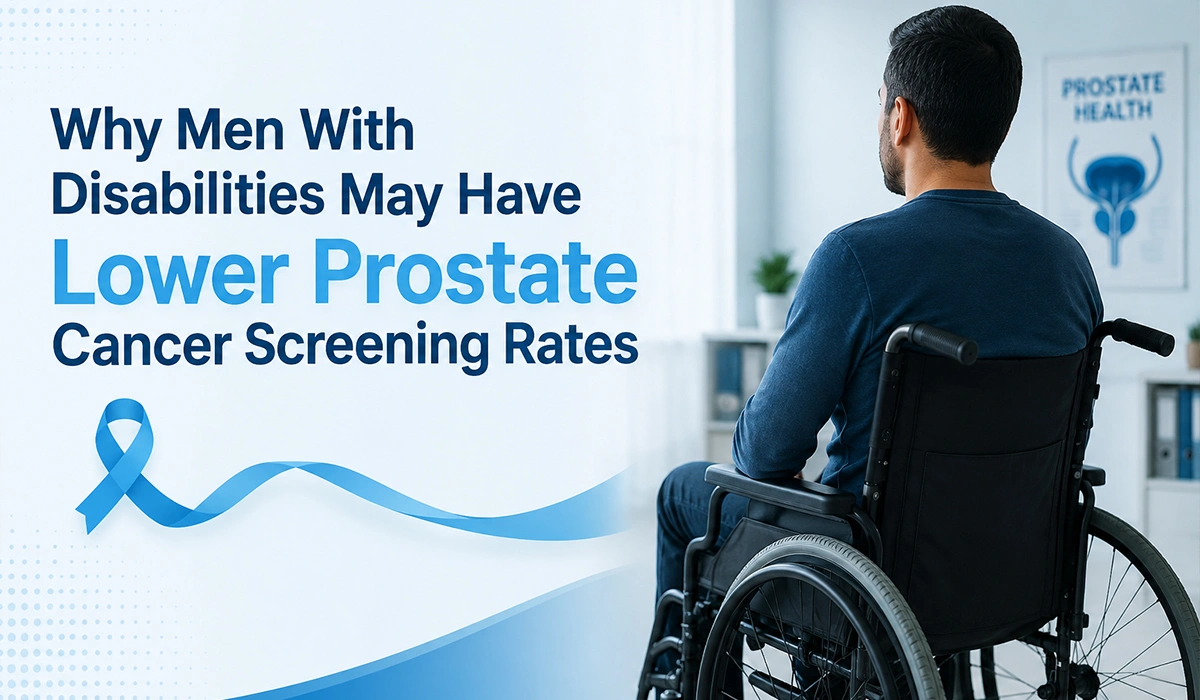
Introduction: When Prevention Is Harder to Reach
Imagine a man in his 60s who uses a wheelchair. He has regular medication, manages his daily health carefully, and rarely misses an appointment when he needs treatment.
But preventive care is different.
His clinic may be difficult to access. The appointment system may not accommodate his needs. The doctor may focus on his existing disability and chronic conditions rather than cancer prevention. Or he may simply never receive clear information about prostate cancer screening.
None of these situations necessarily means that he does not care about his health.
Sometimes, the healthcare system makes prevention harder to reach.
This matters because disability affects a large part of the global population. The World Health Organization estimates that about 1.3 billion people—16% of the world’s population—experience significant disability. WHO also identifies physical, communication, financial, transportation and attitudinal barriers as contributors to health inequities.
Research specifically examining prostate-specific antigen (PSA) testing found that men with disabilities in the United States were less likely to undergo PSA testing than men without disabilities.
So, why might this happen?
And more importantly, what can patients, families, clinicians and healthcare systems do about it?
1. What Is Prostate Cancer Screening?
Prostate cancer screening means checking for possible prostate cancer before symptoms appear. PSA testing is the main blood test used in prostate cancer early detection. Depending on the person’s risk and test results, a clinician may recommend further evaluation, which can include examination, imaging or biopsy.
The prostate is a small gland located below the bladder in men. Prostate cancer can develop without obvious symptoms, particularly during its earlier stages.
The most common screening test is the prostate-specific antigen (PSA) blood test. PSA is a protein produced by prostate tissue. However, PSA is not specific to cancer. Levels can also rise because of benign prostate enlargement or inflammation.
That distinction is important.
A high PSA does not automatically mean cancer.
Similarly, screening is not the same as diagnosis. A screening result may indicate that further evaluation is appropriate.
Practical example
A man has a PSA test and receives an elevated result. Rather than assuming he has cancer, his clinician considers his age, symptoms, medical history and other factors and may repeat the test or recommend additional investigation.
2. Why Can Men With Disabilities Have Lower Prostate Cancer Screening Rates?
Research suggests that men with disabilities may experience lower PSA testing rates because of a combination of healthcare access barriers, communication difficulties, competing health priorities, transportation challenges, and differences in healthcare utilization. Disability itself should not be assumed to cause lower screening; the evidence points toward disparities in access and preventive care.
A 2021 study using U.S. Health Information National Trends Survey data compared 782 men with disabilities with 4,569 men without disabilities. After adjustment, men with any disability had lower odds of PSA testing, with an odds ratio of 0.77 (95% CI 0.62–0.96). Having a healthcare provider, health insurance and living with a partner were among factors associated with greater PSA testing.
The study also found particularly notable differences among deaf and blind men.
This does not mean every man with a disability receives inadequate preventive care.
Instead, it highlights a population-level disparity that deserves attention.
3. Physical Accessibility Can Affect Preventive Care
A healthcare appointment is not truly accessible if a patient cannot comfortably enter the building, reach the examination area, use medical equipment, or complete the appointment without unnecessary physical barriers.
For some men with mobility disabilities, getting healthcare can involve several steps:
- Arranging transportation.
- Entering an accessible building.
- Navigating corridors and elevators.
- Accessing an appropriate examination room.
- Using accessible medical equipment.
- Returning home.
If any step becomes difficult, a preventive appointment can be postponed.
WHO identifies inaccessible transportation, buildings and healthcare environments among barriers that can contribute to health inequities for people with disabilities.
Practical tip for healthcare providers
Before scheduling an appointment, ask:
- Does the patient need accessible transportation?
- Is the entrance wheelchair accessible?
- Is accessible examination equipment available?
- Does the patient need additional appointment time?
- Does the patient need a support person or interpreter?
Accessibility should be planned rather than improvised.
4. Communication Barriers Can Reduce Screening Awareness
Men with hearing, vision, cognitive or communication disabilities may not receive preventive-health information in a format that works for them. Clear communication, accessible information and direct conversations with patients can improve the opportunity to make informed screening decisions.
WHO notes that people with disabilities can encounter communication barriers during interactions with healthcare staff and may have difficulty accessing health information in standard formats.
For example:
- A deaf patient may require a sign-language interpreter.
- A patient with low vision may need large-print or accessible digital information.
- A person with cognitive disabilities may benefit from simple language and visual explanations.
- Someone with a speech disability may need additional time to communicate.
The key principle
Talk to the patient—not only to the caregiver.
A disability does not automatically mean that a person cannot understand, decide or participate in healthcare decisions.
5. Existing Health Conditions Can Push Cancer Prevention Into the Background
Many people with disabilities also manage other health conditions, medications, rehabilitation needs or regular specialist appointments. When healthcare becomes focused on immediate or ongoing problems, preventive services such as cancer screening can receive less attention.
Consider a patient who has appointments with:
- Neurology
- Physiotherapy
- Orthopedics
- Cardiology
- Primary care
- Rehabilitation services
A routine discussion about prostate cancer screening may never happen.
WHO emphasizes that people with disabilities can experience multiple health inequities and barriers within healthcare systems.
This creates an important opportunity for integrated preventive care.
A primary-care visit should not only ask, “What problem brought you here today?”
It can also ask:
“What preventive care is due for you?”
6. Transportation and Cost Can Become Hidden Screening Barriers
Transportation, appointment logistics and healthcare costs can make preventive services harder to access. These barriers may be particularly important when a screening test is not connected to an immediate symptom.
A person may think:
“I feel fine, so I can do the test later.”
But the reason screening exists is that some diseases may be present before noticeable symptoms develop.
WHO reports that people with disabilities can face substantially greater difficulty with inaccessible or unaffordable transportation and healthcare access.
CDC resources on reducing screening barriers similarly identify long travel distances, limited transportation, burdensome scheduling and facilities that are not disability-friendly as obstacles to completing cancer screening.
Practical solution
Healthcare systems can reduce friction by:
- Coordinating appointments.
- Offering accessible scheduling.
- Providing clear directions.
- Offering appropriate transportation assistance where available.
- Making laboratory testing easier to access.
- Using accessible digital communication.
Small changes can make preventive care much easier.
7. Healthcare Providers May Not Always Recognize Preventive-Care Needs
A disability can unintentionally become the main focus of a medical encounter. When clinicians concentrate heavily on disability-related conditions, preventive services may be overlooked unless they are deliberately incorporated into routine care.
This is not necessarily a problem of individual negligence.
It can be a system-design problem.
WHO describes inadequate provider knowledge, negative attitudes and inaccessible services as factors contributing to healthcare barriers for people with disabilities.
Healthcare professionals can help by incorporating preventive-care checklists into routine appointments.
For an eligible patient, that could include discussions about:
- Cancer screening
- Cardiovascular risk
- Diabetes
- Vaccination
- Medication review
- Mental health
- Bone health
- Lifestyle and nutrition
Practical tip
A disability-focused appointment and a preventive-health appointment do not always have to be separate.
8. Does Having a Disability Mean a Man Should Automatically Get PSA Screening?
No. Disability alone does not determine whether PSA screening is appropriate. Screening decisions depend on factors such as age, life expectancy, overall health, personal preferences and prostate-cancer risk factors. Men should discuss the potential benefits and harms with a clinician rather than assuming that screening is automatically necessary or unnecessary.
This distinction is essential.
The evidence showing lower PSA testing among men with disabilities is evidence of a screening disparity, not proof that every man with a disability should receive a PSA test.
Current international guidance emphasizes individualized risk assessment.
For example, the European Association of Urology recommends an individualized risk-adapted strategy for well-informed men with sufficient life expectancy, with earlier PSA testing for certain higher-risk groups.
The USPSTF’s current published recommendation is older and is being updated. Its 2018 guidance recommends an individual decision about PSA-based screening for men aged 55–69 after discussion of benefits and harms, and recommends against routine PSA screening for men 70 and older.
Therefore, age alone should not be used as the only consideration.
9. What Are the Main Risk Factors for Prostate Cancer?
The strongest established risk factors include increasing age and family history. Certain genetic factors and ancestry can also affect risk. A man’s personal risk profile should therefore be considered when discussing early detection.
Important factors include:
| Risk factor | Why it matters |
|---|---|
| Increasing age | Prostate cancer becomes more common with age |
| Family history | Having close relatives with prostate cancer can increase risk |
| Genetic mutations | BRCA2 and some other inherited mutations can increase risk |
| Ancestry | Some populations have higher risk of developing aggressive disease |
| Previous medical findings | Certain findings may influence future risk assessment |
The EAU recommends earlier PSA testing for some higher-risk men, including those with a family history, men of African descent and men carrying BRCA2 mutations.
Disability should therefore be considered alongside the person’s complete health and risk profile, rather than treated as a standalone screening indication.
10. What Happens After a PSA Test?
An abnormal PSA result does not automatically mean prostate cancer. PSA can rise for several reasons, so clinicians may repeat the test, assess risk factors and use additional diagnostic tools before deciding whether a biopsy is needed.
A simplified pathway may look like this:
PSA test → risk assessment → repeat PSA if appropriate → additional evaluation → MRI/risk assessment → biopsy when indicated
The EAU recommends repeating PSA in certain asymptomatic men with PSA levels between 3 and 10 ng/mL before moving to further investigations. For appropriate patients, MRI, validated risk calculators or additional biomarkers may help determine whether biopsy is warranted.
This is one reason why PSA screening should be approached as a decision-making process, rather than a simple yes-or-no test.
11. Why Screening Can Help—but Also Has Risks
Prostate cancer screening may help detect clinically important cancer earlier, but it can also lead to false-positive results, unnecessary biopsies, overdiagnosis and treatment-related harms. The right decision depends on an individual’s risk and preferences.
The USPSTF estimates that among 1,000 men invited to PSA screening in the evidence base it reviewed, some would experience positive tests, biopsies and treatment-related harms, while a smaller number could avoid metastatic disease or death from prostate cancer.
This is why responsible health communication should avoid statements such as:
“Everyone should get a PSA test.”
or
“PSA screening is unnecessary.”
Neither statement is appropriate for every man.
Instead:
“Discuss your individual risk and the benefits and harms of screening with your healthcare professional.”
12. How Can Healthcare Become More Disability-Inclusive?
Improving screening rates requires more than telling patients to “get screened.” Healthcare organizations need to remove barriers across the entire patient journey—from booking and transportation to communication, examination and follow-up.
A disability-inclusive prostate cancer screening pathway can include:
Before the appointment
- Accessible booking systems
- Clear information about screening
- Transportation guidance
- Interpreter arrangements
- Longer appointment slots when necessary
During the appointment
- Accessible entrances and rooms
- Appropriate examination equipment
- Direct communication with the patient
- Plain-language explanations
- Shared decision-making
After screening
- Accessible test-result communication
- Easy-to-understand next steps
- Coordinated referrals
- Assistance arranging follow-up appointments
WHO emphasizes that disability inclusion requires addressing physical, informational and attitudinal barriers across health systems.
13. What Can Men With Disabilities Do?
Men with disabilities can take an active role by asking whether prostate cancer screening is appropriate for them, sharing their family history and health information, and explaining any accessibility needs before an appointment.
A useful checklist:
Before your appointment, know:
- Your age
- Your family history of prostate cancer
- Any known inherited cancer-risk mutation
- Your current medications
- Any previous PSA results
- Any urinary or other concerning symptoms
- Your accessibility requirements
Then ask:
- Am I at increased risk of prostate cancer?
- Should I consider a PSA test?
- What are the possible benefits and harms for me?
- If my PSA is elevated, what happens next?
- How often would testing be appropriate if I choose it?
These questions can turn a routine appointment into a meaningful preventive-care conversation
14. What Can Families and Caregivers Do?
Families and caregivers can support preventive care by helping with transportation, appointment scheduling, communication and follow-up while respecting the man’s autonomy and decision-making rights.
Support can include:
- Helping arrange accessible transportation.
- Checking whether the clinic can meet accessibility needs.
- Helping prepare questions.
- Supporting appointment reminders.
- Helping organize previous medical records.
- Joining appointments when the patient wants assistance.
The goal is support, not substitution.
A caregiver should not automatically make medical decisions for an adult simply because the person has a disability.
15. What Should Healthcare Organizations Do?
Healthcare organizations can reduce prostate cancer screening disparities by making preventive care accessible by design. This means collecting disability-related access information, training staff, improving physical accessibility, providing communication support and tracking preventive-care outcomes.
A practical framework is:
| Area | Action |
|---|---|
| Accessibility | Ensure entrances, rooms and equipment are usable |
| Communication | Provide interpreters and accessible information |
| Staff training | Teach disability-inclusive healthcare practices |
| Scheduling | Offer flexible and accessible appointment processes |
| Prevention | Add cancer screening prompts to routine care |
| Data | Monitor screening rates by disability status where appropriate |
| Follow-up | Make referrals and results accessible |
| Patient voice | Include people with disabilities when designing services |
This approach moves the responsibility from the patient alone to the healthcare system.
That shift is important.
16. India: Why This Conversation Matters
India has a large and diverse population with substantial healthcare-access differences between urban and rural settings. Prostate cancer is an important male cancer in India, while disability-related screening data specifically focused on PSA testing remain less developed than the U.S. evidence base.
IARC’s GLOBOCAN 2022 India fact sheet lists prostate cancer among the leading cancers affecting Indian men, with an estimated 6.4% incidence proportion and 4.9% mortality proportion among male cancers in its India estimates.
However, it would be inappropriate to assume that the U.S. finding on lower PSA testing among men with disabilities directly represents India.
Healthcare systems, disability definitions, screening practices, insurance structures and access patterns differ between countries.
What India can learn
The broader lesson is transferable:
Cancer prevention should be accessible to people with disabilities, not merely available to them.
That means hospitals, diagnostic centres and primary-care providers should consider:
- Accessible facilities
- Affordable testing
- Rural access
- Transportation challenges
- Language diversity
- Sign-language support
- Accessible digital health information
- Disability-sensitive staff training
17. Disability Should Not Become an Invisible Health Risk
A disability should never cause healthcare professionals to assume that preventive care is unnecessary. Men with disabilities have the same right to participate in informed health decisions, including decisions about cancer prevention and screening.
The WHO describes disability-related health inequities as arising partly from unfair conditions and barriers within health systems.
This changes the question.
Instead of asking:
“Why aren’t these patients coming for screening?”
healthcare systems should also ask:
“What barriers are preventing them from getting there?”
That question leads to better solutions.
18. Prostate Cancer Screening in Men With Disabilities: Key Takeaways
The evidence points to an important but often overlooked issue: men with disabilities may be less likely to receive PSA testing, but disability itself does not determine whether screening is medically appropriate.
The most important lessons are:
- Screening disparities exist. A U.S. study found lower PSA testing among men with disabilities.
- Barriers can be physical, financial, informational and attitudinal.
- PSA is not a cancer diagnosis. Elevated PSA can have non-cancer causes.
- Screening decisions should be individualized.
- Age, family history, ancestry, genetics and life expectancy matter.
- Accessible communication is part of good healthcare.
- Healthcare providers should not overlook preventive care because of disability.
- Patients should be involved in decisions about their own health.
- India needs more disability-disaggregated evidence on cancer screening.
- Accessibility should be designed into healthcare systems from the beginning.
Prostate Cancer Screening in Men With Disabilities: Frequently Asked Questions
Do men with disabilities have lower prostate cancer screening rates?
Evidence from a U.S. national survey analysis found that men with disabilities were less likely to undergo PSA testing than men without disabilities. The study found an adjusted odds ratio of 0.77 for PSA testing among men with disabilities.
Does having a disability increase the risk of prostate cancer?
Disability itself should not be treated as a general prostate-cancer risk factor. Risk assessment should consider age, family history, ancestry, genetics and other individual factors.
Should every man with a disability get a PSA test?
No. PSA screening should be based on individual risk, age, health status, life expectancy and personal preferences. A healthcare professional can help determine whether testing is appropriate.
What is a PSA test?
PSA testing is a blood test that measures prostate-specific antigen. PSA can be elevated because of prostate cancer, but also because of benign prostate enlargement, inflammation and other conditions.
What age should men start prostate cancer screening?
There is no single worldwide starting age. The EAU recommends individualized early detection, with PSA testing generally beginning around age 50 for men at typical risk and earlier for certain higher-risk groups. The USPSTF’s published recommendation supports individual decision-making for men aged 55–69.
Does a high PSA mean prostate cancer?
No. PSA is not cancer-specific. An elevated result may have several causes, which is why clinicians may repeat PSA or use other assessments before recommending a biopsy.
Can a man with a disability ask for an accessible screening appointment?
Yes. Patients can tell healthcare providers about accessibility needs involving mobility, hearing, vision, communication, transportation or additional appointment time.
What are common healthcare barriers for people with disabilities?
Common barriers include inaccessible buildings and equipment, transportation difficulties, communication problems, financial barriers, scheduling challenges and negative attitudes or inadequate disability-related knowledge among healthcare workers.
Is prostate cancer screening available in India?
PSA testing and prostate cancer diagnostic services are available through healthcare facilities in India, but availability, cost and clinical practice vary by location. Men should consult a qualified clinician regarding whether testing is appropriate.
Should men with urinary symptoms wait for screening?
No. Screening generally refers to testing people without symptoms. New or concerning urinary, sexual, pelvic or other symptoms should be discussed with a healthcare professional rather than waiting for a routine screening appointment.
Only add links where the destination page actually exists and provides the promised information.
Conclusion: Prevention Should Be Accessible to Everyone
The question is not simply whether men with disabilities want prostate cancer screening.
The more important question is whether healthcare systems make that screening accessible, understandable and appropriate.
Research indicates that men with disabilities can be less likely to receive PSA testing, while WHO evidence shows that people with disabilities face substantial barriers across healthcare systems.
At the same time, prostate cancer screening is not a one-size-fits-all decision. PSA testing has potential benefits as well as harms, and recommendations differ by age, risk and individual circumstances.
For patients, the next step is simple: ask the question.
For clinicians, it is to make the conversation accessible.
And for healthcare systems, it is to remove barriers before they become missed opportunities.
Good preventive healthcare is not just about offering a test. It is about making sure every eligible person has a fair opportunity to understand it, access it and make an informed choice.