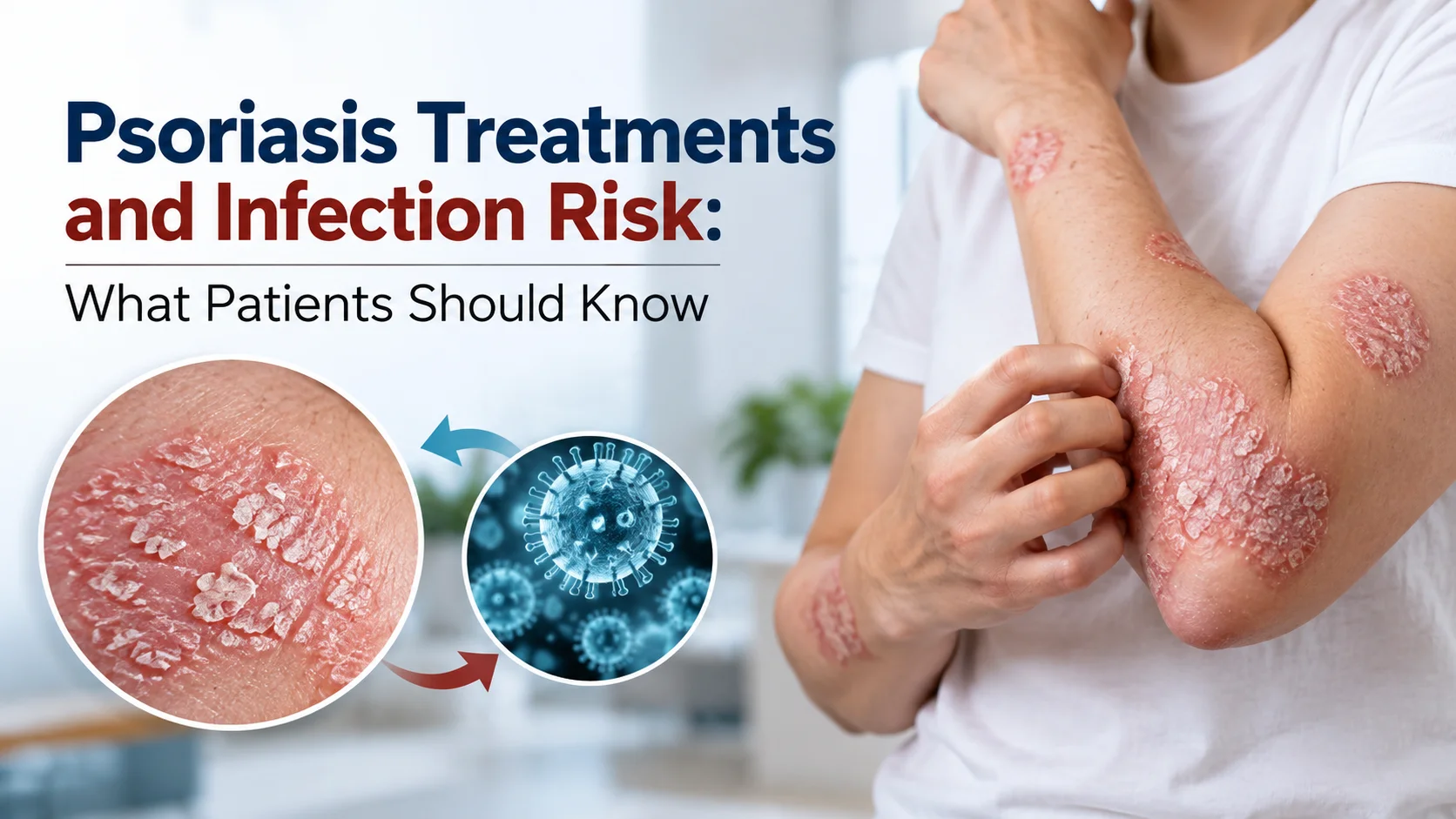
Living with psoriasis often means thinking beyond visible skin symptoms. Psoriasis is a chronic inflammatory disease, and some people need medicines that influence immune-system activity. This can make questions about psoriasis treatments and infection risk especially important.
The good news is that modern psoriasis treatments have well-established safety-monitoring approaches. The type of treatment, a person’s existing health conditions and their history of infections can all influence individual risk.
What Is Psoriasis?
Quick answer: Psoriasis is a chronic immune-mediated inflammatory disease that causes rapid skin-cell turnover and characteristic patches or plaques. It can also affect areas beyond the skin, including the joints and other aspects of health.
Psoriasis affects millions of people worldwide and can range from mild disease managed with topical treatments to moderate or severe disease requiring phototherapy or systemic medicines.
Why Can Psoriasis Treatment Affect Infection Risk?
Quick answer: Some systemic psoriasis treatments modify immune-system pathways. Because the immune system helps protect the body from infections, certain medicines can alter infection susceptibility.
This does not mean that everyone taking systemic treatment will develop an infection. Risk varies considerably according to the medicine and the patient’s health profile.
Which Psoriasis Treatments Are Associated With Infection Risk?
Quick answer: Infection risk differs among psoriasis therapies. Biologics and conventional systemic medicines can have different safety profiles, while topical treatments and phototherapy generally have different considerations.
| Treatment approach | Examples | Infection consideration |
|---|---|---|
| Topical therapy | Corticosteroids, vitamin D analogues | Primarily local treatment considerations |
| Phototherapy | Narrowband UVB | Different risk profile from systemic immune-modifying medicines |
| Conventional systemic therapy | Methotrexate, cyclosporine | Requires appropriate medical monitoring |
| Biologic therapy | TNF, IL-17, IL-23 and other targeted therapies | Infection screening and monitoring may be required |
The American Academy of Dermatology notes that serious infection is an important safety consideration with biologics and that screening, including tuberculosis testing, is typically performed before treatment.
Do All Biologics Have the Same Infection Risk?
Quick answer: No. Research suggests that infection risk can vary between biologic medicines and patient populations, so treatments should not be treated as interchangeable from a safety perspective.
A large French cohort study involving 44,239 new biologic users found differences in serious-infection risk between several biologic therapies. However, observational studies can be affected by differences between patients receiving different treatments. What Does Recent Research Show?
Quick answer: Recent evidence continues to examine how infection risk differs between psoriasis treatments, including newer biologics and treatment switching.
A 2025 systematic review and meta-analysis of 24 randomized clinical trials involving 12,661 patients found differences in infection outcomes following switches between biologic classes. The authors emphasized continued vigilance regarding infections when changing biologic therapy.
These findings should not be interpreted as meaning that one treatment is universally safer for every patient.
Who May Have Higher Infection Risk?
Quick answer: Infection risk can be influenced by factors beyond the psoriasis medicine itself.
The AAD notes that people taking biologics may have higher infection risk when they also have factors such as diabetes, tobacco exposure, a history of infections or older age.
A patient’s complete medical history therefore matters when selecting and monitoring treatment.
What Screening May Be Needed?
Quick answer: Before starting certain systemic psoriasis treatments, doctors may perform blood tests and screening for infections such as tuberculosis.
Depending on the medicine and individual circumstances, clinicians may review previous infections, vaccination history, liver or blood-test results and other medical conditions. The exact monitoring plan varies by treatment.
What Symptoms Should Patients Watch For?
Quick answer: Patients receiving systemic psoriasis treatment should report concerning or persistent infection symptoms to their healthcare professional rather than ignoring them.
Depending on the infection, symptoms may include:
- Persistent fever
- Severe cough
- Shortness of breath
- Painful or spreading skin redness
- Unusual fatigue
- Persistent diarrhea
- Other unexplained symptoms
The appropriate response depends on the individual situation and medication.
Should Patients Stop Their Psoriasis Medicine During an Infection?
Quick answer: Patients should not routinely stop or restart prescription psoriasis treatment without medical advice.
Some infections may require temporary treatment changes, while others may not. The decision depends on the infection, its severity and the medicine being used.
How Can Patients Reduce Infection-Related Risks?
Quick answer: Regular medical monitoring, appropriate screening, vaccination discussions and promptly reporting concerning symptoms can help support safer psoriasis treatment.
Patients should also tell their dermatologist about all medicines, supplements, previous infections and existing medical conditions.
Why Is Individualized Treatment Important?
Quick answer: Psoriasis treatment should balance disease control, quality of life, existing health conditions and potential adverse effects, including infection risk.
A treatment that is appropriate for one patient may not be appropriate for another. This is particularly important when choosing between topical, phototherapy, conventional systemic and biologic options.
Psoriasis Treatments and Infection Risk: Frequently Asked Questions
Can psoriasis treatments increase infection risk?
Some systemic and biologic treatments can influence infection susceptibility, but the degree of risk varies by medicine and patient.
Do biologics always cause infections?
No. Most people receiving biologics do not necessarily develop serious infections. Risk depends on the specific medicine and individual factors.
Are newer psoriasis treatments safer?
Safety profiles differ between treatments. Newer does not automatically mean safer for every patient.
Should I get infection screening before psoriasis treatment?
Some biologics require screening such as tuberculosis testing before treatment. Your dermatologist can determine which tests are appropriate.
Can I take psoriasis medicine if I have an infection?
This depends on the infection and the treatment. Speak with your treating clinician before making changes.
Practical Takeaway
Psoriasis treatments and infection risk are closely linked to the type of therapy and the patient’s individual health profile. Modern treatments can provide substantial disease control, but appropriate screening and monitoring remain important.
For patients in India or elsewhere, the safest approach is to discuss infection history, other medical conditions and current medicines with a qualified dermatologist before starting or changing systemic psoriasis treatment.