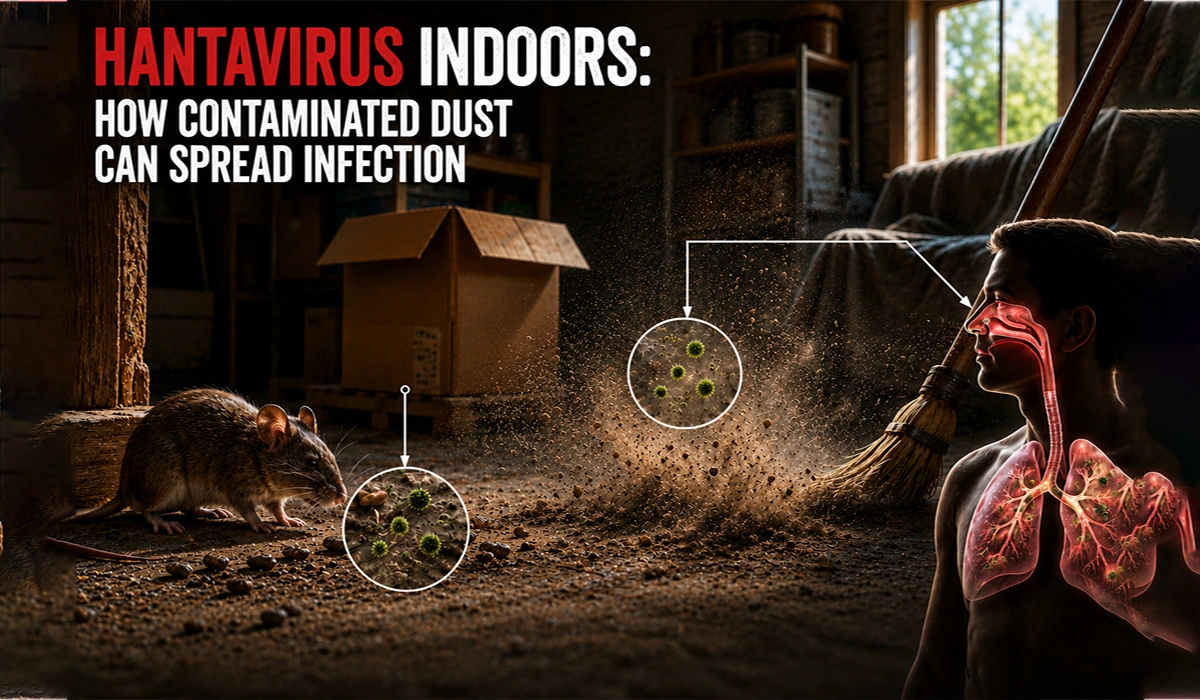
Imagine opening an old storage shed after months of neglect. Dust rises into the air as sunlight streams through a cracked window. You sweep the floor quickly, thinking little about the stale smell and scattered rodent droppings nearby. A few days later, fever, body aches, and breathing problems begin to appear.
For many people, this sounds like an ordinary cleaning day gone wrong. But in rare cases, it can become something much more dangerous — hantavirus infection.
Across the United States and other parts of the world, health experts continue to warn about the risks of hantavirus indoors, especially in areas where rodents are common. What makes this virus especially concerning is how easily contaminated dust can spread infection when disturbed during cleaning or renovation work.
Understanding how hantavirus spreads indoors can help families, workers, and homeowners protect themselves before exposure happens.
What Is Hantavirus?
Hantavirus is a group of viruses carried mainly by rodents. Humans can become infected after coming into contact with infected rodent urine, droppings, saliva, or nesting materials.
The virus gained widespread attention in the United States during the 1993 outbreak in the Southwest region, where several healthy young adults developed severe respiratory illness after exposure to deer mice.
Different types of hantaviruses exist worldwide:
- In the United States, the Sin Nombre virus is the most common cause of hantavirus pulmonary syndrome (HPS)
- In Europe and Asia, hantaviruses can also cause hemorrhagic fever with renal syndrome (HFRS)
Although hantavirus infections are rare, they can become life-threatening if not identified early.
Why Indoor Exposure Is So Dangerous
Many people assume rodent problems are only risky when there is direct contact with animals. In reality, one of the biggest threats comes from inhaling contaminated dust indoors.
When rodent droppings or nesting materials dry out, virus particles can become airborne if disturbed by:
- Sweeping
- Vacuuming
- Dusting
- Renovation work
- Opening long-closed buildings
Once these particles enter the air, people may breathe them in without realizing it.
Indoor spaces create a higher risk because:
- Air circulation may be poor
- Dust can accumulate over time
- Closed spaces trap airborne particles
- Rodents often hide in attics, garages, basements, sheds, and crawl spaces
Even healthy individuals can become infected after brief exposure.
How Hantavirus Spreads Through Contaminated Dust
One of the most misunderstood facts about hantavirus indoors is that infection does not usually happen from touching dust alone. The real danger begins when contaminated materials become airborne.
Here is how the process often works:
- Rodents leave urine, saliva, or droppings in a closed indoor area
- The material dries over time
- Cleaning or movement disturbs the contaminated particles
- Virus particles enter the air
- A person breathes in the airborne particles
This is called aerosolized transmission.
According to public health experts, inhalation remains the most common method of indoor hantavirus transmission.
Common Indoor Locations Linked to Hantavirus Exposure
Certain indoor environments are more likely to contain infected rodent waste.
Garages and Storage Units
Unused garages often attract rodents seeking warmth and shelter. Boxes, old furniture, and stored fabrics create nesting areas.
Basements
Dark, damp basements may hide rodent activity for months without notice.
Cabins and Vacation Homes
Seasonal homes that remain closed for long periods can become high-risk locations.
Attics and Crawl Spaces
These hidden areas are difficult to inspect regularly, allowing rodent infestations to grow unnoticed.
Barns and Sheds
Farm equipment, hay, and clutter create ideal nesting spots.
Construction and Renovation Sites
Workers disturbing old insulation, dust, or hidden rodent nests may unknowingly inhale virus particles.
Signs of Rodent Contamination Indoors
Knowing how to identify rodent activity early can reduce the chances of exposure.
Common warning signs include:
- Rodent droppings
- Gnawed wires or packaging
- Nests made of paper or fabric
- Scratching sounds inside walls
- Strong musky odors
- Greasy marks along walls or floors
Fresh droppings are usually dark and moist, while older droppings appear dry and crumbly.
If these signs appear indoors, proper cleaning methods are critical.
Early Symptoms of Hantavirus Infection
Hantavirus symptoms often begin like the flu, making early diagnosis difficult.
Initial symptoms may include:
- Fever
- Chills
- Fatigue
- Muscle aches
- Headache
- Dizziness
- Nausea
- Vomiting
After several days, some patients develop severe breathing problems as fluid builds up in the lungs.
This stage can become life-threatening quickly and may require hospitalization.
Anyone experiencing symptoms after rodent exposure should seek immediate medical attention.
Why Sweeping and Vacuuming Can Increase Risk
One of the biggest mistakes people make is cleaning rodent droppings with a broom or vacuum cleaner.
These methods can:
- Spread contaminated dust into the air
- Increase inhalation risk
- Circulate particles throughout the room
Public health agencies strongly advise against dry sweeping or vacuuming rodent waste.
Instead, safe cleaning methods focus on disinfecting surfaces before removal.
Safe Indoor Cleaning Methods to Prevent Hantavirus
Cleaning safely can greatly reduce infection risk.
Step 1: Ventilate the Area
Open windows and doors for at least 30 minutes before entering.
Step 2: Wear Protective Gear
Use:
- Rubber or latex gloves
- N95 mask if possible
- Protective eyewear
Step 3: Spray Disinfectant
Thoroughly soak droppings and contaminated areas using:
- Household disinfectant
- Bleach solution
Never sweep dry materials first.
Step 4: Remove Materials Carefully
Use paper towels to pick up droppings and dispose of them in sealed plastic bags.
Step 5: Disinfect Again
Clean all nearby surfaces thoroughly.
Step 6: Wash Hands Properly
Wash hands with soap and warm water immediately after cleanup.
Who Is Most at Risk of Indoor Exposure?
Certain groups face higher exposure risks due to work or living conditions.
These include:
- Farmers
- Construction workers
- Cleaning crews
- Campers
- Warehouse workers
- Rural homeowners
- Pest control professionals
People living in rodent-prone regions of the United States may also face increased risk.
Hantavirus Prevention Tips for Homes and Workplaces
Preventing rodent infestations remains the best defense.
Seal Entry Points
Close gaps around:
- Doors
- Pipes
- Vents
- Foundations
Store Food Properly
Use airtight containers for food and pet supplies.
Reduce Clutter
Rodents prefer hidden nesting areas.
Remove Outdoor Attractants
Keep trash sealed and remove brush piles near buildings.
Inspect Buildings Regularly
Check attics, basements, and storage areas for signs of rodents.
Use Professional Pest Control
Large infestations may require expert treatment.
The Difference Between Hantavirus and Other Respiratory Infections
Because symptoms resemble flu or COVID-19, hantavirus can sometimes go unnoticed at first.
However, hantavirus pulmonary syndrome often progresses rapidly.
Key differences may include:
- Known rodent exposure
- Severe shortness of breath
- Sudden lung complications
- Rapid decline after early flu-like symptoms
Doctors may use blood tests and exposure history to help confirm diagnosis.
How Climate and Seasonal Changes Affect Hantavirus Risk
Environmental changes can influence rodent populations.
After rainy seasons or increased food availability:
- Rodent numbers may grow
- Indoor migration may increase
- Human exposure risk may rise
This pattern has been observed in several hantavirus outbreaks.
Cold weather may also push rodents indoors seeking shelter.
Global Cases of Hantavirus Indoors
While hantavirus cases are more widely discussed in the United States, infections have also been reported in:
- Canada
- Argentina
- Chile
- China
- South Korea
- Finland
- Russia
Different rodent species carry different strains worldwide.
Indoor transmission risks remain similar across many regions where rodents and enclosed spaces intersect.
The Psychological Impact of Rodent-Related Illness Fears
For many families, discovering rodent contamination inside a home can create anxiety and fear.
People may worry about:
- Hidden exposure
- Children’s safety
- Long-term health effects
- Future infestations
Education plays an important role in reducing panic while encouraging proper prevention and cleaning habits.
Why Public Awareness About Hantavirus Matters
Despite its seriousness, many people still know very little about hantavirus indoors.
Awareness campaigns can help:
- Prevent unsafe cleaning practices
- Encourage early medical care
- Reduce rodent infestations
- Improve workplace safety
Simple education about contaminated dust can save lives.
Conclusion
Hantavirus indoors may not be a common household topic, but understanding the risks of contaminated dust can make a major difference in prevention and safety.
A simple act like sweeping an old shed or opening a neglected storage room can expose people to airborne virus particles if rodent contamination is present. The good news is that awareness, proper cleaning methods, and strong rodent prevention practices can dramatically lower the risk.
As homes, workplaces, and storage spaces continue to face rodent challenges worldwide, preventive healthcare and safe environmental practices remain essential.
Taking a few careful steps today may help protect your family, coworkers, and community from a serious infection tomorrow.