Introduction
A simple task like sweeping an old garage or cleaning a dusty attic may not seem dangerous. But what if the dust rising into the air carried harmful viruses capable of causing severe illness?
This is the hidden danger behind understanding hantavirus: risks of indoor exposure and airborne dust. Across the United States and other parts of the world, hantavirus infections remain rare but serious. Many people become exposed while cleaning enclosed spaces where rodents have lived unnoticed for weeks or months.
What makes hantavirus especially concerning is how easily exposure can happen indoors. Tiny particles from rodent urine, droppings, or saliva can become airborne through dust and enter the body through breathing.
Learning about hantavirus, its symptoms, prevention methods, and indoor exposure risks can help families stay safe while protecting their homes and health.
What Is Hantavirus?
Understanding understanding hantavirus: risks of indoor exposure and airborne dust starts with knowing what hantavirus actually is.
Hantaviruses are a group of viruses mainly spread by rodents. Humans can become infected through contact with infected rodent waste or contaminated dust particles in the air.
Different strains exist worldwide. In the United States, hantavirus can lead to a serious respiratory illness called:
- Hantavirus Pulmonary Syndrome (HPS)
This condition affects the lungs and can become life-threatening if not treated early.
Why Indoor Exposure Is Dangerous
Indoor environments create the perfect conditions for hantavirus exposure.
Rodents often enter:
- Basements
- Cabins
- Sheds
- Garages
- Attics
- Storage rooms
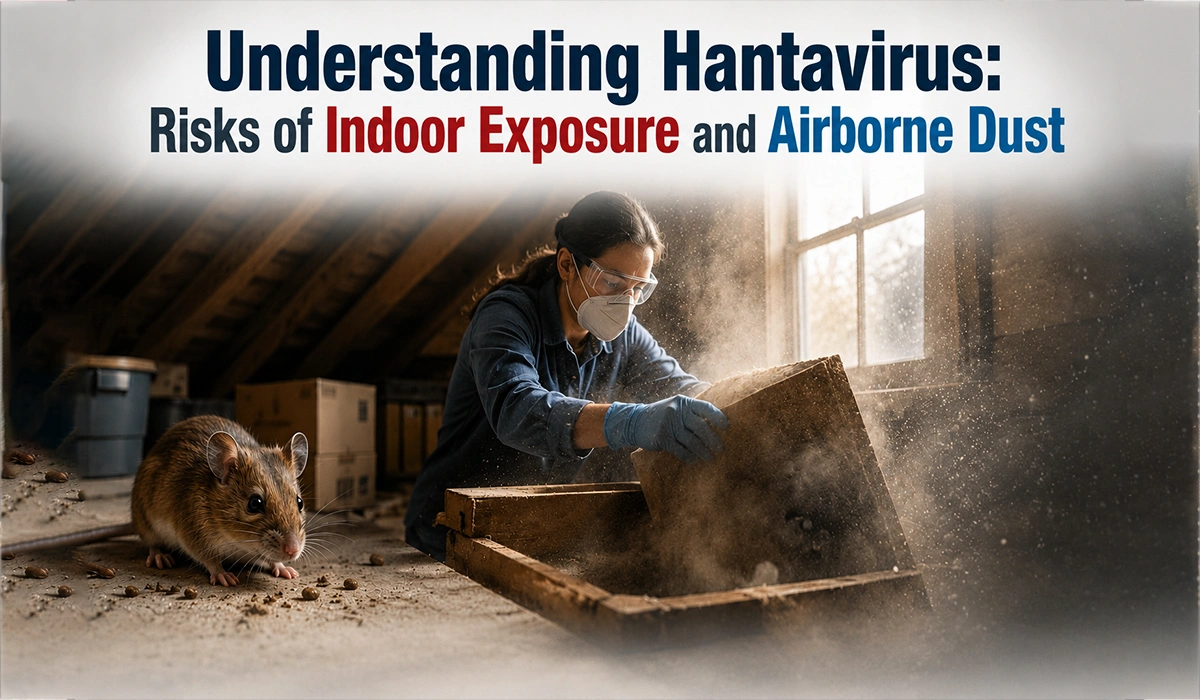
When these areas remain closed for long periods, rodent waste accumulates. Disturbing the area by sweeping or vacuuming can release virus-containing particles into the air.
This explains why understanding hantavirus: risks of indoor exposure and airborne dust is important for homeowners, travelers, and workers.
How Airborne Dust Spreads Hantavirus
One of the most dangerous aspects of hantavirus is airborne transmission through contaminated dust.
Common ways dust becomes airborne:
- Sweeping floors
- Vacuuming rodent droppings
- Moving boxes or furniture
- Cleaning old storage spaces
Tiny particles may carry infected material into the air, where they can be inhaled.
Unlike direct bites or visible contamination, airborne exposure is often invisible, making prevention critical.
Rodents Linked to Hantavirus
Different rodent species carry hantaviruses depending on the region.
In North America, common carriers include:
- Deer mice
- Cotton rats
- Rice rats
- White-footed mice
These rodents may appear harmless, but they can carry viruses without becoming sick themselves.
Homes near forests, farms, or rural areas may face higher risk.
Symptoms of Hantavirus Infection
Early symptoms often resemble flu-like illness, making diagnosis difficult.
Early symptoms:
- Fever
- Fatigue
- Muscle aches
- Headache
- Chills
Advanced symptoms:
- Shortness of breath
- Chest tightness
- Coughing
- Fluid buildup in lungs
Recognizing symptoms early is crucial because HPS can worsen quickly.
Why Early Detection Matters
One of the key lessons in understanding hantavirus: risks of indoor exposure and airborne dust is that early medical care saves lives.
Hantavirus symptoms may appear 1–8 weeks after exposure.
Because symptoms resemble flu or viral infections, many people delay seeking care. However, breathing difficulties should never be ignored after potential rodent exposure.
Prompt treatment improves survival chances significantly.
High-Risk Indoor Areas
Some spaces are more likely to contain contaminated dust.
Common high-risk areas:
- Abandoned buildings
- Vacation cabins
- Old warehouses
- Closed garages
- Farming structures
- Crawl spaces
People opening seasonal properties after winter should take extra precautions.
Safe Cleaning Methods to Prevent Exposure
Cleaning safely is one of the best ways to reduce risk.
Avoid:
- Dry sweeping
- Vacuuming droppings
- Stirring dust aggressively
Recommended safety steps:
- Open windows and ventilate the area
- Wear gloves and a mask
- Spray contaminated areas with disinfectant
- Let disinfectant soak for several minutes
- Wipe using paper towels instead of sweeping
This approach reduces airborne particles significantly.
Importance of Ventilation During Cleaning
Proper airflow helps lower airborne virus concentration.
Before entering closed spaces:
- Open doors and windows
- Let fresh air circulate for at least 30 minutes
- Avoid immediate cleaning after opening
Good ventilation is a major part of understanding hantavirus: risks of indoor exposure and airborne dust.
Preventing Rodent Infestation Indoors
Preventing rodents is the first defense against hantavirus.
Simple prevention tips:
- Seal holes and cracks
- Store food properly
- Remove clutter
- Keep garbage covered
- Trim vegetation near buildings
Regular inspections can stop infestations before they grow.
Hantavirus in the United States
The United States reports hantavirus cases mainly in western and southwestern regions.
States with reported cases include:
- New Mexico
- Colorado
- Arizona
- California
While infections remain uncommon, awareness is increasing because of severe outcomes.
The CDC continues to emphasize prevention and safe cleaning practices.
Global Perspective on Hantavirus
Hantavirus is not limited to the USA.
Different forms exist in:
- Europe
- Asia
- South America
Some strains primarily affect kidneys instead of lungs.
Global awareness matters because international travel and climate changes may influence rodent populations and exposure patterns.
Comparing Hantavirus to Other Respiratory Illnesses
Hantavirus symptoms may resemble:
- Influenza
- COVID-19
- Pneumonia
However, the connection to rodent exposure is a major clue.
Unlike common viral infections, hantavirus often progresses rapidly once breathing symptoms appear.
Who Faces Higher Risk?
Certain groups face increased exposure risk:
- Farmers
- Construction workers
- Campers
- Pest control workers
- Cabin owners
- Warehouse employees
Anyone cleaning neglected indoor spaces should remain cautious.
The Role of Public Health Awareness
Education plays a critical role in preventing infections.
Public awareness campaigns help people:
- Recognize symptoms
- Clean safely
- Reduce rodent exposure
Understanding understanding hantavirus: risks of indoor exposure and airborne dust empowers individuals to make safer choices at home and work.
Long-Term Health Effects
Some survivors experience prolonged recovery.
Possible long-term effects:
- Fatigue
- Reduced lung function
- Weakness
- Emotional stress after hospitalization
This highlights why prevention remains essential.
How Families Can Stay Safe at Home
Families can lower risk with simple habits.
Household safety checklist:
✔ Inspect storage areas regularly
✔ Remove rodent nesting materials safely
✔ Maintain ventilation
✔ Keep homes clean and dry
✔ Educate family members about safe cleaning
Small preventive actions can significantly reduce exposure.
Conclusion
Understanding understanding hantavirus: risks of indoor exposure and airborne dust is essential for protecting yourself and your family.
Something as ordinary as cleaning a dusty room can become risky if rodent contamination is present. Awareness, safe cleaning practices, proper ventilation, and rodent prevention can greatly reduce exposure.
While hantavirus infections are uncommon, their severity makes prevention extremely important. Paying attention to indoor hygiene and acting carefully around contaminated spaces can help keep homes safer and healthier.
Staying informed today may prevent serious health risks tomorrow.