Introduction
Imagine waking up to headlines announcing a deadly disease outbreak in multiple countries and a global health agency warning the world to pay attention. For many people, such news can feel distant—until they realize how interconnected today’s world has become.
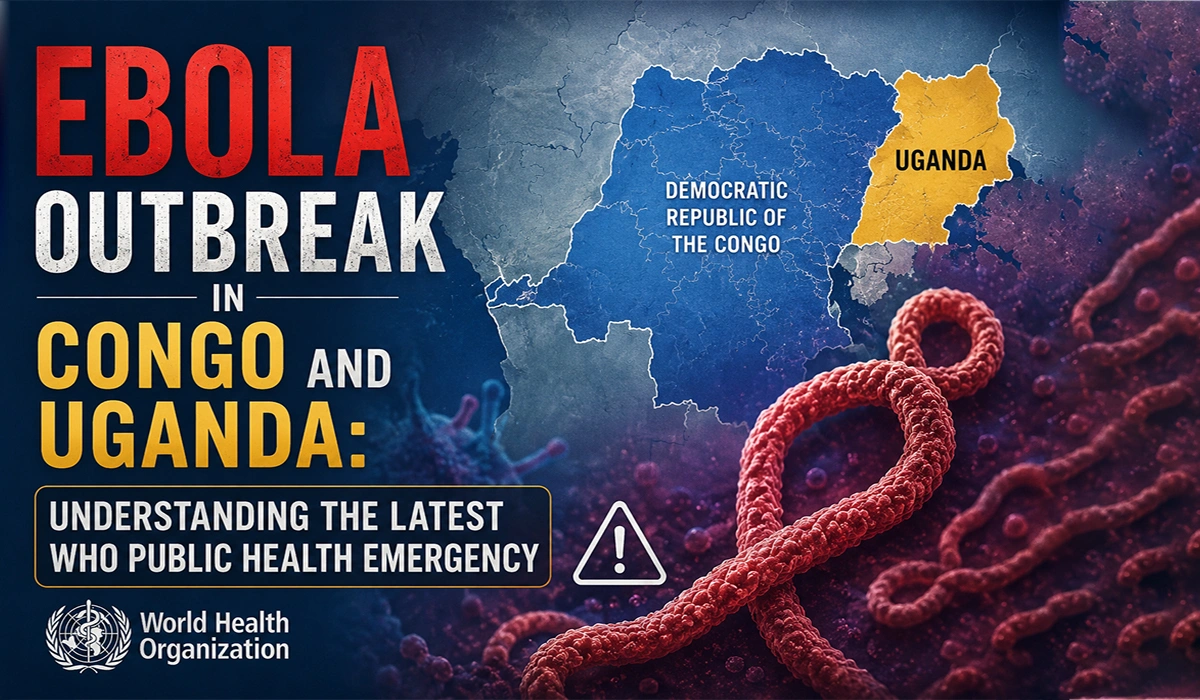
The recent Ebola outbreak in Congo and Uganda: understanding the latest WHO public health emergency has once again placed infectious disease preparedness at the center of global healthcare discussions. While the outbreak is concentrated in parts of Africa, health experts across the United States, India, Europe, and Asia are closely monitoring developments.
Ebola remains one of the world’s most serious viral diseases. Although major advances have been made in surveillance, treatment, and vaccination, outbreaks continue to challenge healthcare systems and communities. Understanding what Ebola is, how it spreads, and why the World Health Organization (WHO) has raised concerns can help individuals make informed decisions and support public health efforts.
What Is the Ebola Virus?
The Ebola virus is a severe and often life-threatening disease caused by infection with viruses from the Ebolavirus family.
It was first identified in 1976 near the Ebola River in what is now the Democratic Republic of Congo.
Key Characteristics of Ebola
- Highly infectious through direct contact
- Causes severe illness
- Can lead to internal and external bleeding
- Requires rapid medical intervention
- Has caused multiple outbreaks across Africa
Ebola is not spread through the air like influenza or COVID-19. Instead, transmission occurs through direct contact with infected bodily fluids.
Why Has WHO Declared a Public Health Emergency?
The phrase Ebola outbreak in Congo and Uganda: understanding the latest WHO public health emergency has gained attention because WHO declarations signal a heightened need for coordinated international action.
A public health emergency may be declared when:
- Disease transmission increases rapidly
- Multiple regions are affected
- Healthcare systems face pressure
- International cooperation becomes necessary
- Public awareness is critical
The declaration helps governments, healthcare organizations, and global partners mobilize resources more efficiently.
Understanding the Current Ebola Outbreak in Congo and Uganda
The Democratic Republic of Congo has experienced several Ebola outbreaks over the past decades.
Uganda has also faced recurring challenges linked to Ebola virus disease.
Recent concerns involve:
- New confirmed cases
- Cross-border monitoring
- Contact tracing efforts
- Public health surveillance
- Community education programs
Health authorities continue working to contain the outbreak and prevent wider spread.
How Does Ebola Spread?
Understanding transmission is essential for prevention.
Ebola spreads through:
- Blood of infected individuals
- Saliva
- Sweat
- Vomit
- Urine
- Breast milk
- Contaminated medical equipment
Ebola does not spread through:
- Casual conversation
- Air conditioning systems
- Drinking water
- Mosquito bites
Direct contact remains the primary transmission route.
Common Symptoms of Ebola Virus Disease
Symptoms typically appear between 2 and 21 days after exposure.
Early Symptoms
- Fever
- Fatigue
- Muscle pain
- Headache
- Sore throat
Advanced Symptoms
- Vomiting
- Diarrhea
- Skin rash
- Abdominal pain
- Internal bleeding
- External bleeding
Early diagnosis greatly improves treatment outcomes.
Why Early Detection Matters
One of the biggest lessons from previous outbreaks is the importance of rapid identification.
Benefits of Early Detection
- Faster treatment
- Better patient outcomes
- Reduced transmission
- Improved contact tracing
- Stronger outbreak control
Healthcare workers play a crucial role in recognizing symptoms quickly.
The Role of Vaccines in Ebola Prevention
Vaccines have transformed Ebola response efforts.
Modern Ebola vaccines help:
- Reduce infection risk
- Protect healthcare workers
- Support outbreak containment
- Improve public health preparedness
Vaccination campaigns are often deployed in high-risk regions during active outbreaks.
How Healthcare Systems Respond to Ebola Emergencies
Managing Ebola requires a coordinated approach.
Key Response Measures
- Isolation units
- Contact tracing
- Laboratory testing
- Community education
- International collaboration
Governments and health organizations work together to prevent large-scale transmission.
What Does This Mean for the United States and India?
Although the outbreak is centered in Africa, countries worldwide remain vigilant.
For the USA
- Airport screening protocols
- Disease surveillance
- Healthcare preparedness
For India
- Monitoring international travel
- Strengthening public health systems
- Emergency response planning
Global travel means infectious diseases can cross borders quickly if not controlled.
Lessons Learned From Previous Ebola Outbreaks
Past outbreaks have taught valuable lessons.
Key Takeaways
- Early intervention saves lives
- Community trust is essential
- Public education reduces fear
- International cooperation improves outcomes
- Prepared healthcare systems respond faster
These lessons continue shaping global health strategies.
Preventive Healthcare and Public Awareness
The Ebola outbreak highlights the importance of preventive healthcare.
Strong public health systems depend on:
- Disease surveillance
- Health education
- Vaccination programs
- Community engagement
Awareness helps individuals recognize symptoms and seek medical assistance promptly.
The Future of Global Outbreak Preparedness
Modern technology is improving disease response.
Emerging tools include:
- AI-assisted outbreak tracking
- Digital surveillance systems
- Faster diagnostic testing
- Advanced vaccine development
These innovations may strengthen future responses to infectious diseases.
Conclusion
The topic Ebola outbreak in Congo and Uganda: understanding the latest WHO public health emergency serves as an important reminder that infectious diseases remain a global challenge.
While healthcare systems today are better equipped than ever before, rapid response, public awareness, vaccination efforts, and international cooperation remain essential for controlling outbreaks.
For individuals in the United States, India, and around the world, staying informed through trusted health organizations is one of the most effective ways to support public health and reduce misinformation.
The lessons learned from Ebola continue to strengthen global preparedness and reinforce the importance of preventive healthcare.