Introduction
Have you ever finished a workday feeling completely exhausted, even though you spent most of it sitting at a desk?
You are not alone.
For millions of professionals in the United States, India, and around the world, workplace stress has become a normal part of daily life. Tight deadlines, long working hours, constant notifications, and increasing responsibilities often leave people feeling overwhelmed. While many consider stress a mental challenge, its effects reach far beyond the mind.
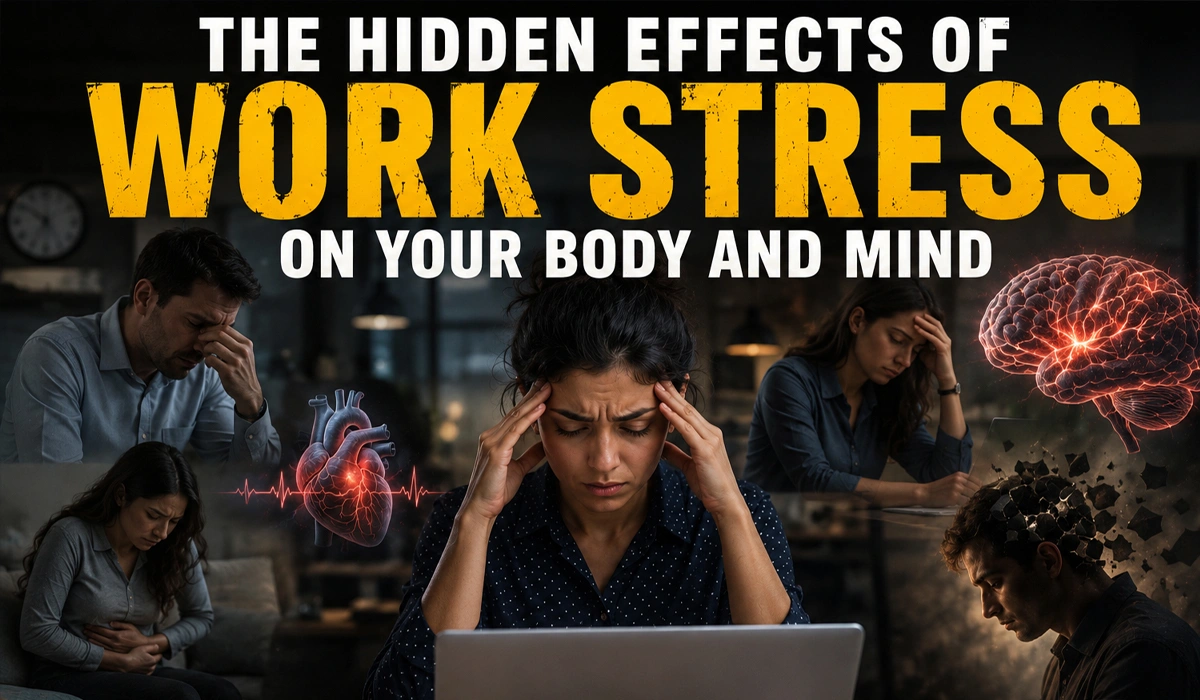
The truth is that the hidden effects of work stress on your body and mind can influence your sleep, heart health, immune system, digestion, productivity, and overall well-being. What begins as occasional pressure can slowly develop into chronic stress, affecting both physical and emotional health.
Understanding how workplace stress impacts the body is the first step toward creating healthier habits and preventing long-term health complications.
What Is Work Stress?
Work stress is the physical and emotional response that occurs when job demands exceed a person’s ability to cope effectively.
Stress at work may result from:
- Excessive workload
- Long working hours
- Lack of work-life balance
- Job insecurity
- Workplace conflicts
- Constant pressure to perform
While short-term stress can sometimes improve focus and performance, long-term stress can have serious consequences for both the body and mind.
Why Workplace Stress Is Increasing Worldwide
Modern workplaces are changing rapidly.
Technology has made it possible to work from almost anywhere, but it has also created a culture of constant availability.
Common causes of rising workplace stress include:
- Remote work challenges
- Digital overload
- High performance expectations
- Economic uncertainty
- Increased competition
In both India and the USA, employee burnout has become a growing concern across industries.
How Stress Affects the Brain
One of the most significant hidden effects of work stress on your body and mind occurs in the brain.
When stress levels rise, the body releases hormones such as cortisol and adrenaline.
While these hormones are useful during emergencies, chronic exposure can affect brain function.
Effects on the brain include:
- Difficulty concentrating
- Memory problems
- Reduced decision-making ability
- Increased anxiety
- Mental fatigue
Many professionals describe this experience as “brain fog.”
The Connection Between Work Stress and Heart Health
Stress does not only affect thoughts and emotions. It also affects the cardiovascular system.
When the body remains in a prolonged stress response:
- Heart rate increases
- Blood pressure rises
- Blood vessels become strained
Over time, chronic workplace stress may contribute to:
- High blood pressure
- Heart disease
- Increased risk of stroke
This is why experts often discuss the relationship between stress and heart health.
How Work Stress Disrupts Sleep
Sleep is one of the first areas affected by workplace stress.
Many people struggle to “switch off” after work.
Common sleep-related symptoms include:
- Difficulty falling asleep
- Frequent waking during the night
- Poor sleep quality
- Feeling tired despite sleeping
Lack of sleep then increases stress levels, creating a difficult cycle.
The Impact of Stress on Mental Health
Work stress and mental health are closely connected.
When stress becomes chronic, it can contribute to:
- Anxiety
- Mood swings
- Irritability
- Emotional exhaustion
- Depression
Mental health challenges often develop gradually, making them difficult to recognize early.
Stress and the Immune System
A healthy immune system helps the body fight infections and maintain wellness.
Chronic stress can weaken immune function by:
- Increasing inflammation
- Reducing immune cell activity
- Slowing recovery from illness
People experiencing high levels of workplace stress may notice:
- Frequent colds
- Low energy
- Longer recovery periods
How Stress Affects Digestion
The digestive system is highly sensitive to stress.
Many people experience digestive symptoms during stressful periods.
These may include:
- Stomach discomfort
- Acid reflux
- Appetite changes
- Bloating
- Digestive irregularities
Researchers continue studying the relationship between stress, gut health, and overall wellness.
Physical Signs Your Body Is Under Stress
The hidden effects of work stress on your body and mind often appear as physical symptoms.
Common warning signs include:
- Headaches
- Neck pain
- Shoulder tension
- Back pain
- Fatigue
- Muscle stiffness
Ignoring these symptoms may allow stress to build over time.
Workplace Burnout: A Growing Concern
Burnout is a state of physical, emotional, and mental exhaustion caused by prolonged workplace stress.
Signs of burnout include:
- Loss of motivation
- Constant fatigue
- Reduced productivity
- Cynicism toward work
- Difficulty focusing
Burnout affects both employees and organizations, making workplace wellness increasingly important.
The Difference Between Healthy Pressure and Harmful Stress
Not all stress is harmful.
Healthy pressure can:
- Improve focus
- Increase motivation
- Support performance
However, stress becomes harmful when:
- Recovery time is limited
- Work demands remain constant
- Physical symptoms develop
Recognizing the difference helps individuals manage stress more effectively.
How Work Stress Affects Relationships
Stress rarely stays at work.
Many people bring workplace pressures into their personal lives.
This can affect:
- Family relationships
- Friendships
- Communication
- Emotional well-being
Healthy boundaries between work and personal life are essential for long-term wellness.
Practical Ways to Reduce Workplace Stress
Managing stress requires consistent habits.
Effective strategies include:
Prioritize Sleep
Aim for 7–8 hours of quality sleep each night.
Take Regular Breaks
Short breaks improve focus and reduce mental fatigue.
Stay Physically Active
Exercise helps reduce cortisol levels and improve mood.
Practice Mindfulness
Deep breathing and meditation can help calm the nervous system.
Maintain Healthy Nutrition
Balanced meals support energy levels and stress resilience.
Set Boundaries
Avoid checking emails or work messages constantly outside work hours.
The Role of Preventive Healthcare in Stress Management
Preventive healthcare focuses on identifying health risks before they become serious problems.
For workplace stress, this includes:
- Regular health checkups
- Mental health awareness
- Wellness programs
- Lifestyle improvements
Taking action early can reduce the long-term effects of stress on the body and mind.
Creating a Healthier Work-Life Balance
Work-life balance is not about working less. It is about creating healthier boundaries and prioritizing recovery.
Simple changes include:
- Scheduling personal time
- Limiting unnecessary overtime
- Spending time with family
- Engaging in hobbies
- Practicing self-care
A balanced lifestyle supports both professional success and personal well-being.
The Future of Workplace Wellness
Organizations are increasingly recognizing the importance of employee health.
Modern workplace wellness initiatives often focus on:
- Mental health support
- Flexible work arrangements
- Stress management programs
- Physical wellness initiatives
These efforts benefit both employees and businesses.
Conclusion
The hidden effects of work stress on your body and mind are often more serious than many people realize.
What begins as daily pressure can gradually affect brain function, sleep quality, heart health, immunity, digestion, and emotional well-being. Recognizing early warning signs and adopting healthier habits can make a significant difference.
Preventive healthcare, stress management, quality sleep, regular exercise, and maintaining work-life balance are powerful tools for protecting long-term health.
The goal is not to eliminate stress completely. It is to manage it effectively so that it does not control your health, happiness, and future well-being.