Introduction
What happens when a virus spreads faster than fear itself?
In 2014, the world watched as Ebola outbreaks created panic across multiple countries. Hospitals struggled, healthcare workers risked their lives, and communities faced uncertainty about how the virus spread and how it could be stopped.
Today, Understanding Ebola Virus: Symptoms, Transmission, Prevention, and Global Healthcare Response remains important because infectious diseases continue to challenge global healthcare systems. While Ebola outbreaks are relatively rare, the virus is highly dangerous and requires rapid public health action.
The good news is that medical science, healthcare awareness, and global cooperation have improved significantly over the years. Researchers now understand much more about Ebola symptoms, transmission methods, vaccines, prevention strategies, and emergency healthcare responses.
This guide explains Ebola virus in simple, easy-to-understand language while helping readers understand why preparedness and awareness matter worldwide.
What Is Ebola Virus?
Ebola virus is a severe and often deadly viral disease that affects humans and some animals.
It belongs to the Filoviridae virus family and can cause Ebola Virus Disease (EVD), previously called Ebola hemorrhagic fever.
The virus was first discovered in 1976 near the Ebola River in the Democratic Republic of Congo.
Since then, outbreaks have occurred mainly in parts of Africa, though global travel has increased international awareness and monitoring.
Why Understanding Ebola Virus Matters
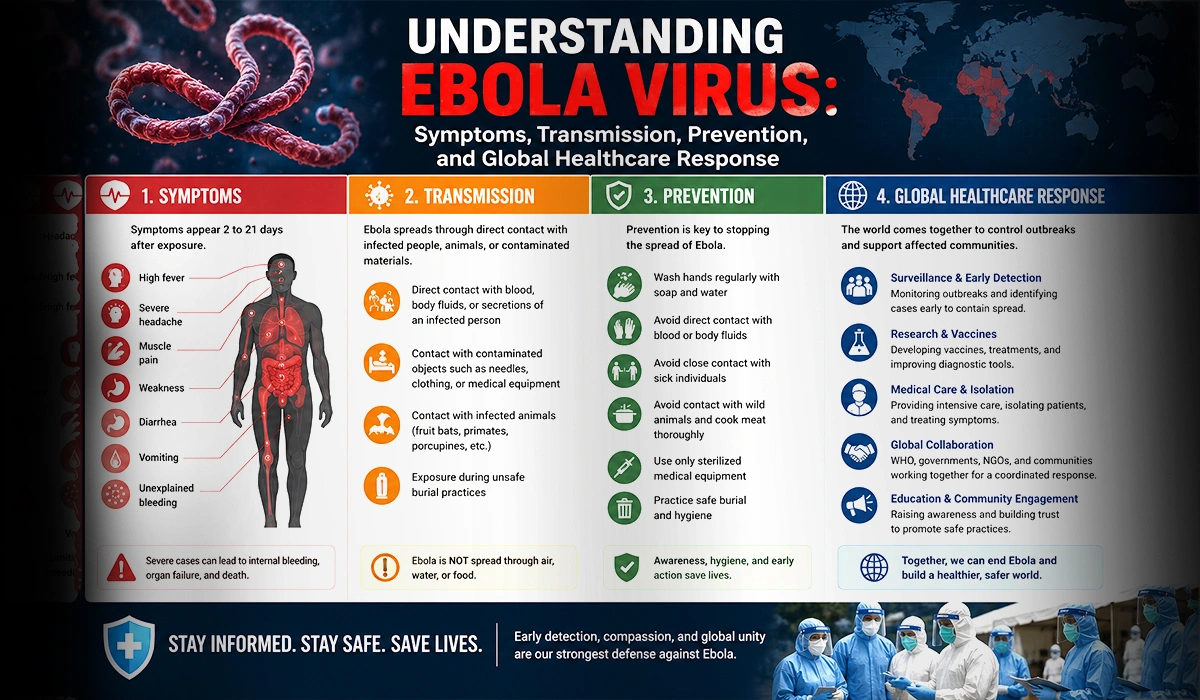
The topic Understanding Ebola Virus: Symptoms, Transmission, Prevention, and Global Healthcare Response matters because infectious diseases can spread quickly when awareness is low.
Ebola is considered dangerous because:
- It spreads through direct contact with infected bodily fluids
- Symptoms may worsen rapidly
- Severe cases can become life-threatening
- Healthcare systems can become overwhelmed during outbreaks
Early awareness and fast medical response are critical for controlling outbreaks.
What Causes Ebola Virus Disease?
Ebola is caused by infection with one of several Ebola virus species.
Scientists believe fruit bats are likely the natural hosts of the virus.
The virus may spread to humans through contact with infected:
- Wild animals
- Blood
- Bodily fluids
- Tissues
Once transmitted to humans, Ebola can spread from person to person.
How Does Ebola Virus Spread?
Understanding Ebola transmission is one of the most important parts of disease prevention.
Ebola spreads through direct contact with:
- Blood
- Vomit
- Saliva
- Sweat
- Urine
- Semen
- Other bodily fluids
The virus can also spread through contaminated:
- Needles
- Medical equipment
- Surfaces
Importantly, Ebola is not typically spread through air like common cold viruses.
What Are the Early Symptoms of Ebola Virus?
Early symptoms may appear similar to common infections, making early diagnosis challenging.
Common Ebola symptoms include:
- Fever
- Severe fatigue
- Muscle pain
- Headache
- Sore throat
As the illness progresses, symptoms may become more serious.
Advanced Symptoms of Ebola Virus Disease
In severe cases, patients may develop:
- Vomiting
- Diarrhea
- Skin rash
- Internal bleeding
- Organ failure
This is why early medical attention is extremely important.
Rapid supportive treatment improves survival chances significantly.
How Long Does It Take for Symptoms to Appear?
The incubation period for Ebola is usually:
- 2 to 21 days after exposure
A person generally becomes contagious only after symptoms begin.
This timing is important for:
- Contact tracing
- Isolation protocols
- Outbreak control
Who Is Most at Risk of Ebola Infection?
Certain groups face higher risks during outbreaks.
High-risk groups include:
- Healthcare workers
- Family caregivers
- Laboratory staff
- People handling infected bodies
Protective equipment and infection-control procedures are critical in high-risk environments.
How Is Ebola Diagnosed?
Doctors use laboratory testing to confirm Ebola infection.
Common diagnostic methods:
- PCR testing
- Blood tests
- Viral detection methods
Because symptoms resemble other diseases, laboratory confirmation is essential.
What Treatments Are Available for Ebola?
There is no simple “cure” for Ebola, but supportive medical care greatly improves survival.
Treatment approaches include:
- Intravenous fluids
- Electrolyte management
- Oxygen support
- Blood pressure stabilization
- Treatment for secondary infections
Recent medical advances have also introduced antibody-based therapies for certain Ebola strains.
Ebola Vaccines and Medical Progress
One of the biggest breakthroughs in global healthcare has been Ebola vaccine development.
Vaccines now help:
- Protect high-risk populations
- Reduce outbreak spread
- Support healthcare workers
This progress shows how scientific research can improve emergency disease response worldwide.
The Importance of Infection Prevention
Preventing Ebola outbreaks requires strong public health systems.
Important prevention measures:
- Hand hygiene
- Protective clothing
- Safe burial practices
- Isolation of infected patients
- Public health education
Awareness campaigns play a major role in preventing fear and misinformation.
Global Healthcare Response to Ebola Outbreaks
The phrase Understanding Ebola Virus: Symptoms, Transmission, Prevention, and Global Healthcare Response also highlights how countries work together during outbreaks.
Global organizations involved include:
- World Health Organization (WHO)
- Centers for Disease Control and Prevention (CDC)
- International healthcare agencies
- Local governments
Their responsibilities include:
- Monitoring outbreaks
- Sending medical teams
- Providing vaccines
- Training healthcare workers
Lessons the World Learned from Ebola
Ebola outbreaks taught the world several important healthcare lessons.
Key lessons include:
- Early detection saves lives
- Strong healthcare systems matter
- Public trust is essential
- Global cooperation improves outcomes
- Healthcare workers need protection
These lessons also influenced global pandemic preparedness strategies.
Ebola and Public Fear: Why Awareness Matters
Fear spreads quickly during disease outbreaks.
Unfortunately, misinformation can sometimes create panic.
Clear healthcare communication helps people:
- Understand real risks
- Follow safety measures
- Avoid harmful rumors
Accurate information remains one of the strongest tools during public health emergencies.
The Role of Research in Fighting Ebola
Medical research continues improving Ebola prevention and treatment strategies.
Scientists are studying:
- Better vaccines
- Faster testing methods
- Antiviral medications
- Immune response mechanisms
Global healthcare systems now respond faster than they did during earlier outbreaks.
Can Ebola Outbreaks Happen Again?
Yes, future outbreaks remain possible.
However, modern healthcare systems are now better prepared because of:
- Improved surveillance
- Vaccine availability
- Faster international response
- Better infection-control training
Preparedness remains essential for global health security.
Practical Safety Tips for Travelers
Travelers visiting outbreak-prone regions should:
- Follow official travel advisories
- Avoid contact with infected individuals
- Practice good hygiene
- Seek medical attention if symptoms appear
Healthcare awareness helps reduce unnecessary risks.
Why Preventive Healthcare Is Important
Preventive healthcare plays a major role in infectious disease control.
This includes:
- Public education
- Vaccination programs
- Early screening
- Strong healthcare infrastructure
Preventive healthcare saves lives before emergencies escalate.
Conclusion
Understanding Ebola Virus: Symptoms, Transmission, Prevention, and Global Healthcare Response is important in today’s connected world.
Although Ebola outbreaks are relatively rare, the virus demonstrates how quickly infectious diseases can impact communities, healthcare systems, and global health security.
The progress made in vaccines, medical research, outbreak response, and public awareness offers hope for stronger future protection.
Preparedness, education, scientific research, and global cooperation remain the foundation of effective healthcare response against dangerous infectious diseases.
The more informed people become, the stronger communities can respond during future health emergencies.