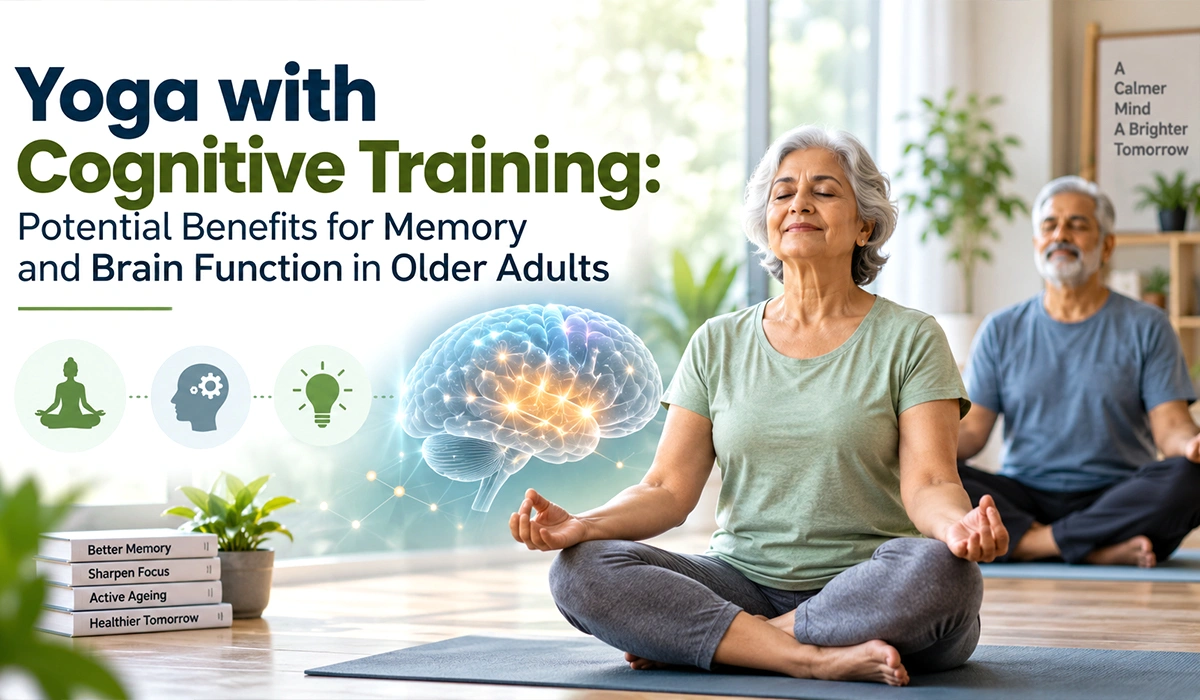
For many older adults, staying mentally sharp is as important as maintaining strength and balance. Could combining yoga with cognitive training offer a practical way to support healthy brain aging? Emerging research suggests that yoga may benefit areas such as memory, attention and executive function, while cognitive training can directly exercise mental skills. However, the evidence is promising rather than conclusive.
What Is Yoga with Cognitive Training?
Quick answer: Yoga with cognitive training combines mind-body exercise, such as Hatha or other yoga practices, with structured activities that challenge memory, attention, reasoning or problem-solving.
Yoga adds movement, breathing and concentration, while cognitive exercises directly engage mental skills. This combination is increasingly being studied as a non-drug approach to healthy cognitive aging.
Can Yoga Improve Memory in Older Adults?
Quick answer: Research suggests yoga may support memory in some older adults, although results vary between studies.
A 2025 randomized controlled trial involving 45 healthy adults with an average age of about 72 found that 12 weeks of Hatha yoga, performed twice weekly, was associated with significant improvements in memory, attention and reasoning.
What Does Cognitive Training Add?
Quick answer: Cognitive training gives the brain specific tasks designed to practice skills such as working memory, attention and reasoning.
A 2023 meta-analysis of 55 randomized controlled trials involving 4,455 older adults found that cognitive training produced significant overall cognitive benefits. Engagement and adherence also appeared important for achieving better results.
Why Combine Yoga and Brain Exercises?
Quick answer: The combination may address both physical and cognitive aspects of healthy aging, although research specifically testing yoga plus cognitive training remains limited.
Yoga can involve movement, balance, breathing and focused attention. Cognitive training adds deliberate mental challenges. Together, they may create a broader healthy-aging routine rather than relying on one type of activity.
What Cognitive Skills Can Be Practised?
Quick answer: Cognitive training can target memory, attention, processing speed, executive function and reasoning.
Simple activities may include:
- Remembering word or picture sequences
- Mental calculations
- Pattern recognition
- Problem-solving games
- Reading and recalling information
- Attention and reaction exercises
The goal is regular mental engagement, not simply completing difficult puzzles.
What Does the Research Say Overall?
Quick answer: The overall evidence is encouraging but inconsistent, so yoga should not be presented as a proven treatment for cognitive decline.
A systematic review of yoga studies in adults aged 60 and older found improvements in some cognitive outcomes in three studies, while two studies found no significant cognitive improvement. Researchers concluded that larger and more rigorous trials are needed.
How Strong Is the Evidence for Yoga?
Quick answer: Evidence ranges from promising to uncertain depending on the population, yoga style and study design.
A 2021 systematic review of randomized trials in healthy adults aged 60 and above found positive cognitive effects in several studies, including memory and executive function, but also highlighted methodological limitations and the need for larger trials.
Is Yoga Safe for Older Adults?
Quick answer: Yoga can be a feasible activity for many older adults, but exercises should be adapted to individual mobility, balance and health needs.
Older adults should begin gradually and choose appropriately trained instructors. Chair-based or modified yoga may be useful for people who cannot comfortably perform floor-based movements. Anyone with significant health problems should discuss a new exercise routine with a healthcare professional.
Yoga vs Cognitive Training: Which Is Better?
| Feature | Yoga | Cognitive Training |
|---|---|---|
| Physical activity | Yes | Usually limited |
| Memory practice | Indirect | Direct |
| Attention | Potential benefit | Direct practice |
| Balance/flexibility | Yes | No |
| Problem-solving | Limited/indirect | Direct |
| Mind-body focus | Strong | Variable |
Best approach: Rather than treating them as competitors, a balanced healthy-aging routine can include physical activity, yoga, mentally stimulating activities, adequate sleep, social engagement and a healthy diet.
How Can Older Adults Start?
Quick answer: Start with manageable sessions and build consistency rather than pursuing intense exercise or complicated cognitive tasks.
A practical routine could include 20–30 minutes of gentle yoga several times a week, followed by 10–15 minutes of memory, attention or reasoning activities. Progress should be gradual, comfortable and appropriate to the person’s abilities.
For older adults in India, community yoga classes, senior wellness programs and supervised sessions can provide opportunities for regular practice, but instructor qualifications and individual safety should remain priorities.
Can Yoga Prevent Dementia?
Quick answer: Current evidence does not establish yoga as a proven method to prevent dementia.
Research suggests possible benefits for cognitive function, but studies differ substantially in participants, yoga methods, duration and outcome measures. Yoga should therefore be considered a complementary healthy-aging activity rather than a replacement for medical evaluation or evidence-based dementia care.
Yoga with Cognitive Training: Frequently Asked Questions
Can yoga improve memory in older adults?
Some studies report improvements in memory and other cognitive functions, but results are not consistent enough to guarantee an effect.
How often should older adults practise yoga?
Research protocols vary. Consistency is more important than assuming one universal schedule. Beginners should follow a safe, individually appropriate routine.
Does cognitive training improve memory?
Evidence from randomized trials suggests cognitive training can improve several cognitive domains, including memory-related abilities, particularly when participants remain engaged with the program.
Is yoga a treatment for dementia?
No. Yoga is not established as a treatment or cure for dementia. It may be considered part of a broader healthy-aging approach.
Conclusion
Yoga with cognitive training is an emerging approach to healthy brain aging. Research suggests potential benefits for memory, attention and executive function, but the evidence remains mixed. The most practical strategy is to combine safe physical activity with regular mental stimulation while maintaining medical care, social connection, good sleep and a healthy lifestyle.
A healthier brain routine does not have to be complicated: move the body, challenge the mind, and stay consistent.