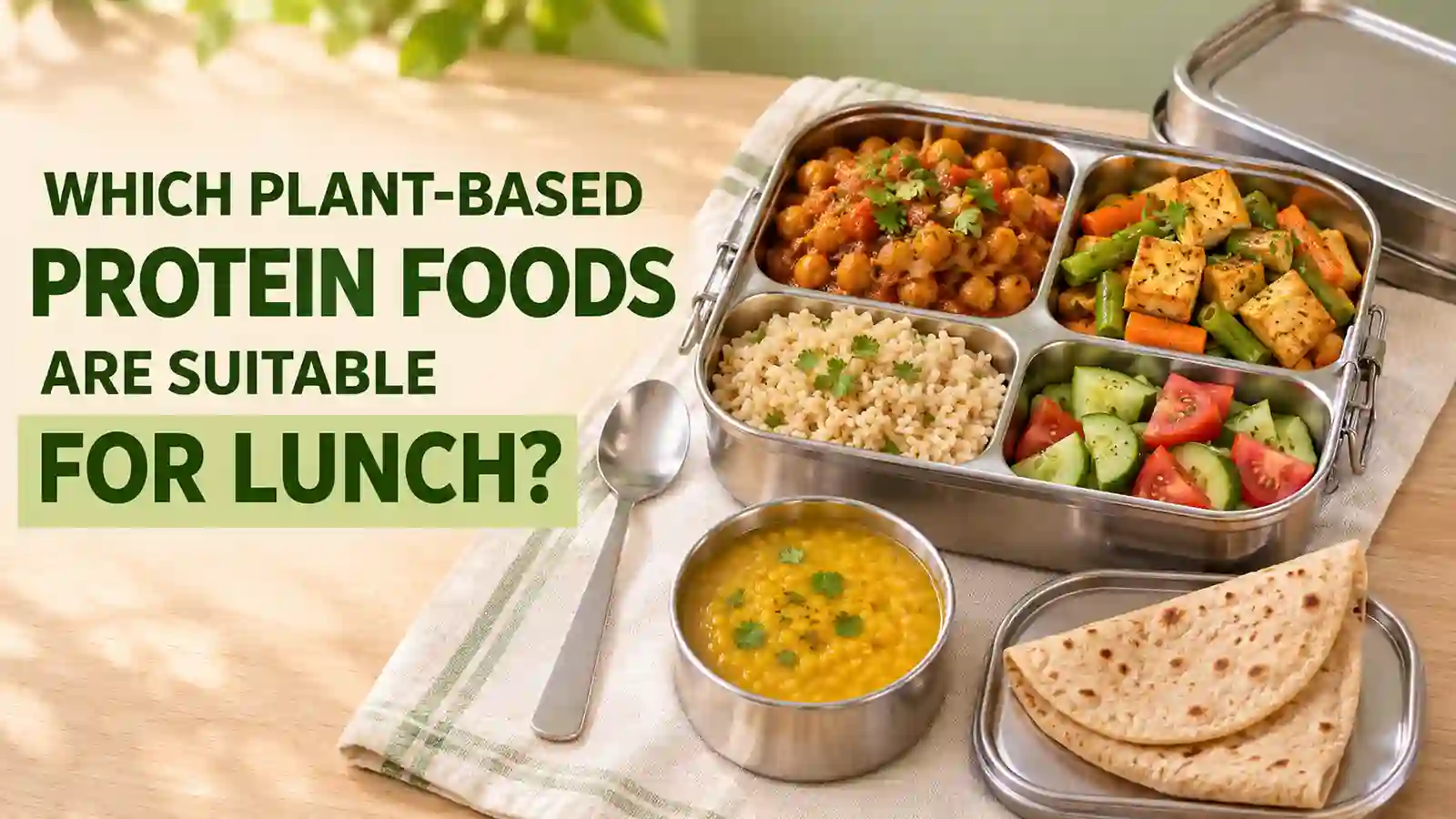
Have you ever finished lunch and felt hungry again just a few hours later? One reason could be that your meal lacks enough protein and fibre. Adding plant-based protein foods for lunch is a simple way to make everyday meals more balanced and satisfying.
From traditional Indian dal and rajma to tofu bowls and chickpea salads, plant-based foods offer plenty of nutritious choices. They provide protein, fibre, vitamins and minerals without requiring meat or fish. Whether you are vegetarian, vegan or simply exploring healthier food options, these ingredients can make your lunch more enjoyable.
1. What Are Plant-Based Protein Foods?
Quick Answer: Plant-based protein foods are foods obtained from plants that provide protein, including lentils, beans, soybeans, nuts, seeds and whole grains.
These foods support muscle maintenance, tissue repair and normal body functions. Including different plant protein sources in your daily diet helps provide essential amino acids.
Example: Dal, chickpeas, tofu and kidney beans.
Practical Tip: Include at least one protein-rich plant food in your lunch.
2. Lentils (Dal): An Everyday Protein Source
Quick Answer: Lentils are affordable and versatile plant-based protein foods commonly used in Indian meals.
Masoor dal, moong dal, toor dal and urad dal provide protein, fibre and important minerals. They are easy to prepare and pair well with rice or roti.
Lunch Idea: Moong dal with brown rice and seasonal vegetables.
Practical Tip: Add spinach or other vegetables to increase the nutritional variety of your meal.
3. Chickpeas (Chana): Protein and Fibre
Quick Answer: Chickpeas provide plant protein and dietary fibre, making them a nutritious lunch ingredient.
You can prepare chana masala, boiled chickpea salads, sandwiches and whole-wheat wraps. Chickpeas are also convenient for meal preparation.
Lunch Idea: Mix boiled chickpeas with cucumber, tomato, onion and lemon juice.
Practical Tip: Prepare boiled chickpeas in advance for quick weekday lunches.
4. Tofu and Soybeans: High-Quality Plant Protein
Quick Answer: Tofu and soybeans are excellent plant-based protein options for vegetarian and vegan meals.
Tofu is made from soybeans and can be grilled, stir-fried or added to curries. Soybeans also provide essential nutrients and protein.
Lunch Idea: Tofu bhurji with whole-wheat roti.
Practical Tip: Choose minimally processed tofu and combine it with fresh vegetables.
5. Kidney Beans (Rajma)
Quick Answer: Kidney beans are nutritious legumes containing protein, fibre and minerals.
Rajma is a popular Indian lunch ingredient that works well with rice, roti and vegetable bowls.
Practical Tip: Soak kidney beans and cook them thoroughly before consumption.
6. Green Peas and Sprouts
Quick Answer: Green peas and sprouts provide plant protein, fibre and several essential nutrients.
They can be added to pulao, salads, sandwiches and vegetable dishes. Cook sprouts thoroughly for better food safety.
Lunch Idea: Moong sprouts vegetable chaat.
Practical Tip: Combine sprouts with tomatoes, cucumber and lemon juice.
7. Nuts and Seeds
Quick Answer: Almonds, peanuts, pumpkin seeds and sunflower seeds contribute protein and healthy fats.
Although they should not be your only protein source, nuts and seeds are useful additions to balanced meals.
Lunch Idea: Add roasted peanuts or pumpkin seeds to a vegetable salad.
Practical Tip: Use moderate portions because nuts and seeds are energy-dense.
8. Quinoa and Whole Grains
Quick Answer: Quinoa, oats and millets provide protein along with carbohydrates, fibre and other nutrients.
Quinoa is useful for grain bowls, while oats and millets can be prepared as savoury Indian lunch dishes.
Lunch Idea: Quinoa with chickpeas and roasted vegetables.
Practical Tip: Pair grains with legumes or tofu to increase the total protein content.
9. Best Plant-Based Protein Foods for Lunch: Comparison
| Food | Approximate protein per 100 g cooked |
|---|---|
| Lentils | 9 g |
| Chickpeas | 9 g |
| Kidney beans | 9 g |
| Green peas | 5 g |
| Quinoa | 4.4 g |
| Tofu | 8–17 g |
Values are approximate and vary by variety, preparation and water content. Tofu values vary considerably by firmness and brand.
10. How to Prepare a Balanced Protein-Rich Lunch
Quick Answer: Combine a protein source with whole grains, vegetables and healthy fats to create a balanced lunch.
Follow these simple steps:
- Choose dal, rajma, chickpeas or tofu.
- Add rice, roti, quinoa or millet.
- Include seasonal vegetables.
- Add a small portion of nuts or seeds.
- Include fruit if desired.
Practical Tip: Plan your lunch ingredients in advance to make healthy eating easier.
11. Plant-Based Protein Foods vs Processed Protein Products
Quick Answer: Whole plant foods provide protein alongside fibre and other nutrients, while packaged protein products offer convenience.
| Feature | Whole plant foods | Packaged protein products |
|---|---|---|
| Fibre | Often higher | Varies |
| Processing | Usually minimal | Varies |
| Convenience | Requires preparation | Often convenient |
| Cost | Often economical | Varies |
Practical Tip: Check protein content, sodium, added sugar and ingredients before purchasing packaged products.
12. Why Choose Plant-Based Protein Foods for Everyday Lunch?
Plant-based meals offer variety, affordability and flexibility. Traditional Indian ingredients such as dal, chana, rajma and soybeans can easily become part of everyday meal planning.
They can also support a balanced eating pattern when combined with vegetables, whole grains and other nutrient-rich foods.
Practical Tip: Start with familiar Indian recipes and gradually introduce tofu, quinoa and other plant-based ingredients.
Frequently Asked Questions About Plant-Based Protein Foods for Lunch
1. Which plant-based food is best for lunch?
Lentils, chickpeas, tofu, kidney beans and soybeans are excellent options for nutritious, protein-rich lunches.
2. What is the cheapest plant-based protein food in India?
Moong dal, masoor dal, chana, peanuts and rajma are generally affordable sources of plant protein.
3. Can plant-based protein help build muscle?
Yes. Plant proteins can support muscle growth when combined with adequate total protein, sufficient calories and regular resistance training.
4. Is tofu a good source of protein?
Yes. Tofu is made from soybeans and provides protein, making it a useful ingredient for vegetarian and vegan meals.
5. Can I eat chickpeas every day for lunch?
Chickpeas can be included regularly as part of a varied and balanced diet, provided they suit your digestion and nutritional needs.
6. Which Indian lunch has the highest plant protein?
Meals combining soybeans, tofu, lentils, chickpeas or rajma can provide substantial plant protein. Actual amounts depend on portions and preparation.
7. Are plant-based protein foods suitable for weight management?
Yes. Many plant protein foods contain fibre, which can help support fullness. Portion sizes and overall calorie intake still matter.
8. Where can I buy plant-based protein foods in India?
You can find lentils, beans, chickpeas, soy products, nuts and seeds at local grocery stores, supermarkets and reputable online retailers.
Conclusion: Build a Better Lunch with Plant Protein
Plant-based protein foods for lunch offer a simple and practical way to improve everyday nutrition. From dal and rajma to chickpeas, tofu and quinoa, there are many affordable options for Indian households.
The key is to choose a variety of protein sources, include vegetables and whole grains, and maintain balanced portions.
Start with one small change in your lunch routine today. A nutritious lunch is not about complicated recipes; it is about making better food choices consistently.