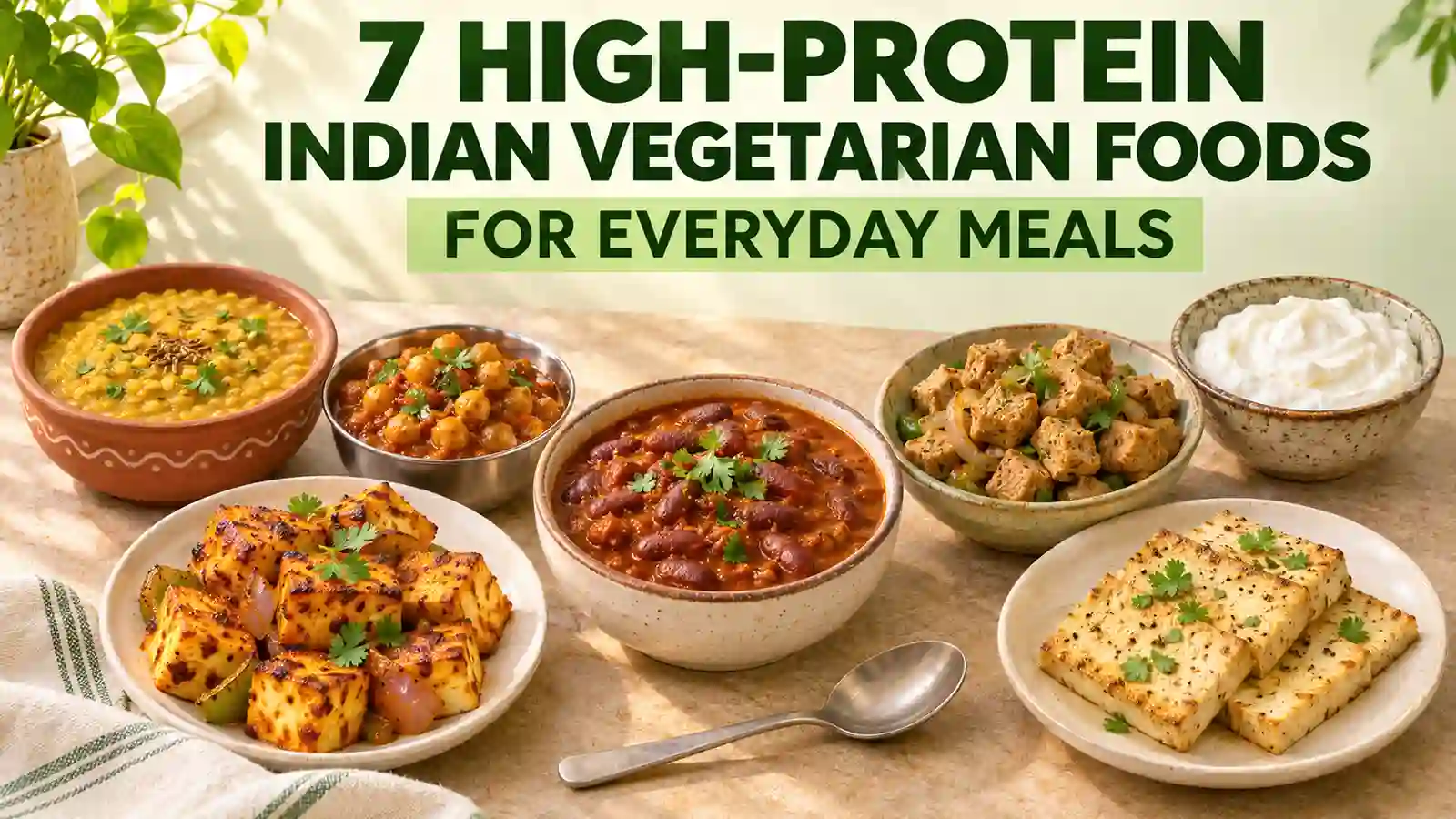
Eating enough protein does not mean you need expensive supplements or complicated meal plans. In Indian households, many everyday ingredients already provide valuable amounts of protein. From a bowl of dal at lunch to paneer at dinner, small food choices can make a meaningful difference to your daily nutrition.
Protein supports muscle repair, growth, immune function and several essential processes in the body. However, many vegetarians struggle to include enough protein in their regular meals. The good news is that affordable, accessible and nutritious options are available across India.
Let’s explore seven high-protein Indian vegetarian foods that can easily become part of your everyday diet.
1. Soya Chunks: An Affordable High-Protein Food
Quick Answer: Soya chunks are among the most protein-dense vegetarian foods commonly available in India. Approximately 30 grams of dry soya chunks can provide around 15–16 grams of protein.
Made from defatted soy flour, soya chunks are an excellent option for people looking for affordable vegetarian protein sources.
How to eat them: Add boiled soya chunks to pulao, vegetable curry, salads or homemade soya keema.
Practical tip: Soak or boil them properly before cooking to improve their texture and make them easier to use in meals.
2. Paneer: A Protein-Rich Dairy Option
Quick Answer: Paneer provides approximately 18–20 grams of protein per 100 grams, although the amount varies by preparation.
Paneer is a popular Indian vegetarian food that supplies protein and calcium. It is particularly useful for people who prefer dairy-based protein sources.
How to eat it: Prepare paneer bhurji, grilled paneer, paneer tikka or add cubes to homemade vegetable dishes.
Practical tip: Choose moderate portions and use less oil when preparing paneer dishes.
3. Dal: Everyday Plant-Based Protein
Quick Answer: Cooked lentils generally provide around 9 grams of protein per 100 grams.
Toor dal, moong dal, masoor dal and urad dal are familiar ingredients in Indian kitchens. They also provide dietary fibre and important minerals.
How to eat it: Combine dal with roti, rice or vegetables for a balanced meal.
Practical tip: Rotate different varieties of dal throughout the week instead of relying on just one type.
4. Chickpeas (Chana): Protein and Fibre Together
Quick Answer: Cooked chickpeas provide approximately 9 grams of protein per 100 grams.
Black chana and kabuli chana are versatile vegetarian foods that supply protein, fibre and several essential nutrients.
How to eat them: Try chana masala, roasted chana, chana salad or homemade hummus.
Practical tip: Soak dried chickpeas overnight and cook them thoroughly before eating.
5. Greek Yogurt and Curd: Convenient Dairy Protein
Quick Answer: Greek yogurt can provide approximately 8–10 grams of protein per 100 grams, depending on the product. Regular curd generally contains less.
These dairy foods are convenient options for breakfast, snacks and light meals. They also provide calcium.
How to eat them: Add Greek yogurt to fruit bowls, smoothies or savoury dips.
Practical tip: Check the nutrition label because protein content differs significantly between regular curd and Greek yogurt.
6. Peanuts: A Budget-Friendly Protein Snack
Quick Answer: Peanuts contain approximately 25–26 grams of protein per 100 grams.
They are widely available in Indian markets and also provide healthy fats, fibre and energy.
How to eat them: Enjoy roasted peanuts, homemade peanut chutney or a small serving of unsweetened peanut butter.
Practical tip: Control portions because peanuts are calorie-dense despite their nutritional benefits.
7. Pumpkin Seeds: A Nutritious Protein Addition
Quick Answer: Pumpkin seeds provide approximately 19–30 grams of protein per 100 grams, depending on the variety and processing.
They also contain magnesium, zinc and healthy fats, making them a useful addition to vegetarian meals.
How to eat them: Sprinkle pumpkin seeds over salads, oats, smoothies or homemade snacks.
Practical tip: Use a small handful rather than treating seeds as your main protein source.
Which Indian Vegetarian Food Has the Most Protein?
The answer depends on the food’s preparation and serving size. Soya chunks and paneer are particularly concentrated protein options, while lentils and chickpeas provide protein alongside fibre.
| Food | Approximate protein |
|---|---|
| Soya chunks (30 g dry) | 15–16 g |
| Paneer (100 g) | 18–20 g |
| Cooked dal (100 g) | 9 g |
| Cooked chickpeas (100 g) | 9 g |
| Greek yogurt (100 g) | 8–10 g |
| Peanuts (100 g) | 25–26 g |
| Pumpkin seeds (100 g) | 19–30 g |
Values are approximate and vary by brand, recipe and preparation.
How to Add More Protein to Your Daily Indian Diet
Increasing protein intake does not require changing your entire lifestyle. Start with simple food combinations:
- Breakfast: Moong dal chilla with curd.
- Lunch: Dal, roti, vegetables and curd.
- Evening snack: Roasted chana or peanuts.
- Dinner: Paneer or soya chunks with vegetables.
- Additional option: Sprinkle pumpkin seeds over salads or oats.
Combining different plant foods throughout the day helps provide a wider range of essential amino acids.
How Much Protein Do You Need Every Day?
Protein requirements depend on body weight, age, activity level and health conditions. For a healthy adult, approximately 0.8–0.83 grams per kilogram of body weight is a commonly used baseline.
For example, a 60 kg adult may need approximately 48–50 grams daily. People who exercise regularly, build muscle, or have specific health needs may require individualised advice.
Frequently Asked Questions About High-Protein Indian Vegetarian Foods
1. Which vegetarian food has the highest protein in India?
Soya chunks are one of the most protein-dense affordable vegetarian options. Peanuts and seeds also contain substantial protein, but are calorie-dense.
2. Can vegetarians get enough protein without supplements?
Yes. A varied diet containing soya, paneer, dal, chickpeas, dairy, nuts and seeds can help meet daily protein requirements.
3. What are the cheapest vegetarian protein foods in India?
Dal, roasted chana, soya chunks and peanuts are generally affordable and widely available choices.
4. Which vegetarian foods are good for muscle growth?
Paneer, soya chunks, lentils, chickpeas and Greek yogurt can support muscle development when combined with adequate total protein, exercise and recovery.
5. Can I eat high-protein foods every day?
Yes, most healthy adults can include protein-rich foods daily. However, people with kidney disease or other relevant medical conditions should consult a healthcare professional about their protein requirements.
Conclusion
Eating a protein-rich vegetarian diet in India can be simple, affordable and enjoyable. Soya chunks, paneer, dal, chickpeas, Greek yogurt, peanuts and pumpkin seeds offer practical ways to improve everyday nutrition.
Instead of depending on one food, build variety into your meals and choose protein sources that suit your budget, preferences and nutritional needs.