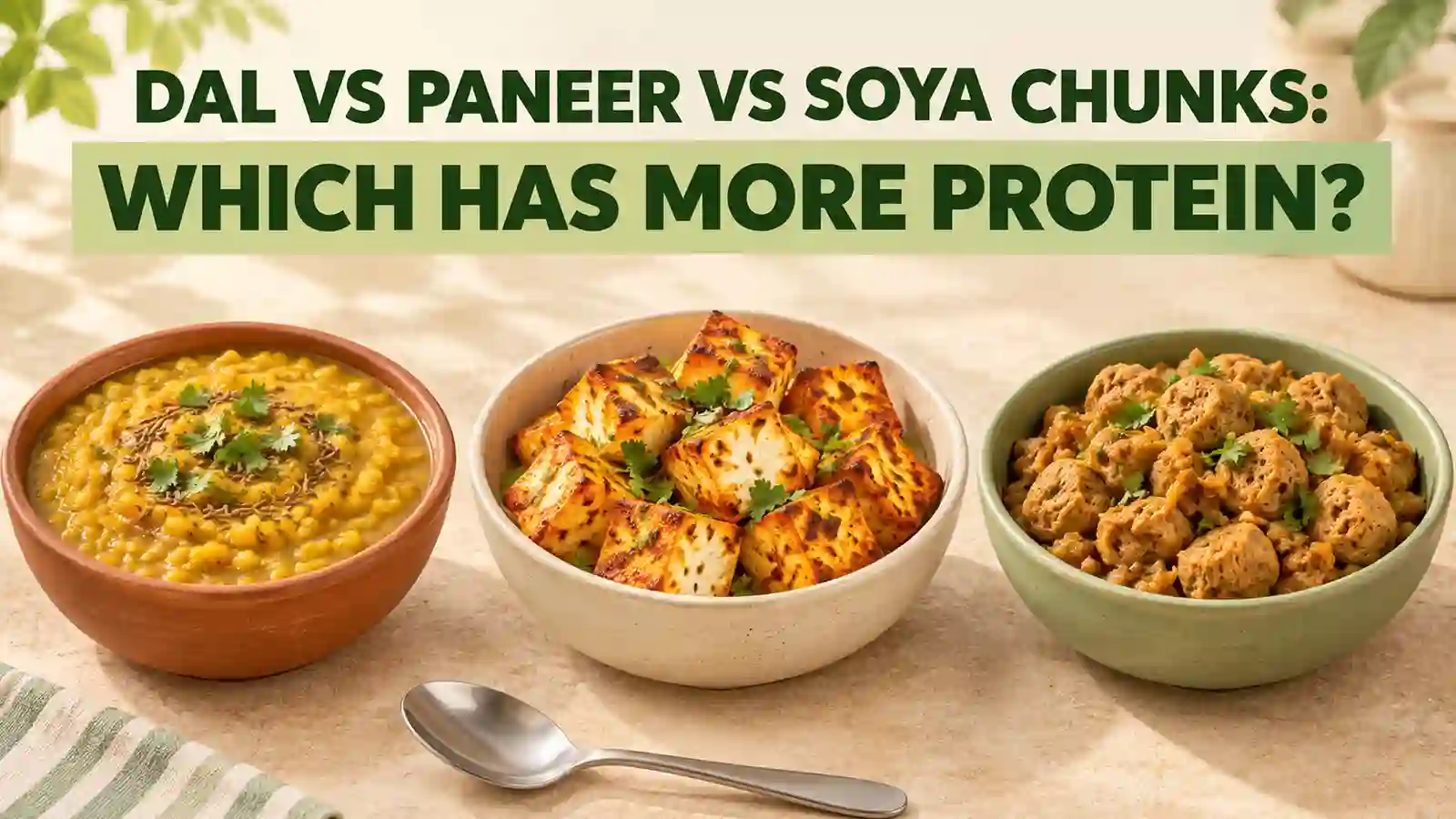
Choosing the right vegetarian protein source can be confusing. You may eat dal every day, enjoy paneer in your meals, or add soya chunks to your diet for extra protein. But have you ever wondered which one actually provides the most protein?
For people in India, these three foods are affordable, widely available, and easy to include in everyday meals. However, their nutritional values are quite different.
In this guide, we compare dal vs paneer vs soya chunks to help you understand their protein content, nutritional benefits, advantages, and which option may suit your fitness and health goals.
1. Dal vs Paneer vs Soya Chunks: Which Has More Protein?
Quick Answer: Soya chunks generally contain the most protein, followed by dal and paneer, depending on the type and preparation. Dry soya chunks provide approximately 50–52g protein per 100g, while raw dal provides around 21–24g and paneer around 16–19g.
Soya chunks are an excellent plant-based protein option. Paneer provides dairy protein, while dal offers protein along with dietary fibre and essential nutrients.
2. How Much Protein Does Dal Contain?
Dal is a staple food in Indian households. Common varieties include moong dal, masoor dal, chana dal, and toor dal.
Quick Answer: Uncooked dal generally contains approximately 21–24g of protein per 100g. However, cooked dal contains around 7–9g per 100g because it absorbs water.
Benefits of eating dal:
- Provides plant-based protein.
- Contains dietary fibre.
- Supports digestive health.
- Provides iron, folate, and other nutrients.
Practical Tip: Combine dal with rice or roti to create a balanced meal with complementary protein sources.
3. How Much Protein Does Paneer Contain?
Paneer is a popular dairy product made by curdling milk. It is commonly used in Indian dishes such as palak paneer, paneer bhurji, and paneer tikka.
Quick Answer: Regular paneer generally provides around 16–19g of protein per 100g, although the amount varies with milk type and preparation.
Benefits of paneer:
- Contains high-quality dairy protein.
- Provides calcium.
- Contains vitamin B12.
- Helps add protein to vegetarian meals.
Practical Tip: Choose lower-fat paneer if you want to manage your overall fat and calorie intake.
4. How Much Protein Do Soya Chunks Contain?
Soya chunks are made from defatted soy flour and are popular among vegetarians looking for affordable protein sources.
Quick Answer: Dry soya chunks generally provide approximately 50–52g of protein per 100g, making them one of the richest vegetarian protein options.
Benefits include:
- High protein concentration.
- Plant-based nutrition.
- Convenient and affordable.
- Easy to prepare in curries, pulao, and stir-fries.
Practical Tip: Boil and rinse soya chunks before cooking. Remember that their weight increases after absorbing water.
5. Protein Comparison: Dal vs Paneer vs Soya Chunks
Here is a quick nutritional comparison:
| Food | Approx. Protein per 100g |
|---|---|
| Dry soya chunks | 50–52g |
| Uncooked dal | 21–24g |
| Fresh paneer | 16–19g |
| Cooked dal | 7–9g |
Values are approximate and depend on the variety, brand, moisture content, and preparation method.
An important point: Always compare foods in the same form. Dry soya chunks and uncooked dal should not be directly compared with cooked paneer or cooked dal without considering water content.
6. Which Is Better for Muscle Building?
Quick Answer: Soya chunks and paneer are convenient protein-rich choices for muscle-building diets, while dal can contribute additional protein.
Muscle growth depends on total daily protein intake, resistance training, recovery, and adequate calories.
For example, you can include:
- Paneer bhurji at breakfast.
- Dal with rice at lunch.
- Soya chunks curry at dinner.
This approach adds variety to your vegetarian diet.
7. Which Is Better for Weight Loss?
Quick Answer: Soya chunks and dal can be useful in weight-management diets because they provide protein, while dal also contributes fibre.
However, total calories matter. Deep-fried paneer, creamy gravies, and excessive cooking oil can increase calorie intake.
Choose boiled, grilled, or lightly cooked preparations and control portion sizes.
8. Can You Eat Dal, Paneer and Soya Chunks Every Day?
Yes, most healthy adults can include these foods regularly as part of a balanced diet.
However, variety is important. Rotate different dals, dairy products, soy foods, vegetables, fruits, and whole grains to obtain a wider range of nutrients.
People with kidney disease, soy allergies, or specific dietary restrictions should seek professional dietary advice.
9. Which Vegetarian Protein Source Is Most Affordable in India?
Soya chunks and dal are generally budget-friendly protein sources. Paneer may cost more depending on the milk used and local market prices.
Compare the price per serving rather than simply comparing the price per kilogram.
For budget-conscious vegetarian diets, combining dal and soya chunks can be a practical strategy.
10. How to Include More Protein in Your Daily Diet
Here are some simple ways to improve your everyday protein intake:
- Include dal with lunch or dinner.
- Add paneer to breakfast or snacks.
- Prepare soya chunks with vegetables.
- Combine pulses with whole grains.
- Include curd and milk if you consume dairy.
- Maintain variety instead of depending on one food.
11. Dal vs Paneer vs Soya Chunks: Final Verdict
There is no single best protein source for everyone.
- Soya chunks: Best for maximum protein per 100g of dry food.
- Paneer: A convenient source of high-quality dairy protein.
- Dal: A nutritious everyday food providing protein, fibre, and other essential nutrients.
The smartest approach is to include different protein sources according to your nutritional requirements, preferences, and budget.
12. Frequently Asked Questions About Dal vs Paneer vs Soya Chunks
Q1. Which has the highest protein: dal, paneer, or soya chunks?
Soya chunks have the highest protein concentration, providing approximately 50–52g per 100g in dry form.
Q2. Is soya chunks better than paneer for protein?
Yes, gram for gram in their usual dry and fresh forms, soya chunks contain considerably more protein. However, their cooked weights are different.
Q3. How much protein is in one bowl of dal?
A typical 150g serving of cooked dal may provide approximately 10–13g of protein, depending on its thickness and recipe.
Q4. Is paneer good for muscle growth?
Yes. Paneer provides high-quality dairy protein that contributes to muscle repair and growth when combined with resistance training.
Q5. Can vegetarians eat soya chunks daily?
Most healthy adults can include moderate portions of soy foods regularly as part of a balanced diet, unless they have an allergy or medical restriction.
Q6. Which is better for weight loss: dal or paneer?
Both can fit into a weight-management diet. Portion sizes, cooking methods, and total calorie intake determine their suitability.
Q7. Can I combine dal and paneer in one meal?
Yes. Combining different protein sources can help increase the overall protein content and variety of your meal.
Q8. Are soya chunks a complete protein?
Yes. Soy protein contains all nine essential amino acids, making it a complete plant-based protein.
Conclusion
When comparing dal vs paneer vs soya chunks, soya chunks win in terms of protein concentration, paneer offers high-quality dairy protein, and dal remains an excellent everyday nutritional choice.
Instead of choosing only one, include a combination of these foods in your diet. A balanced vegetarian diet is not about eating the highest-protein food every day; it is about getting the right nutrients consistently.