Introduction
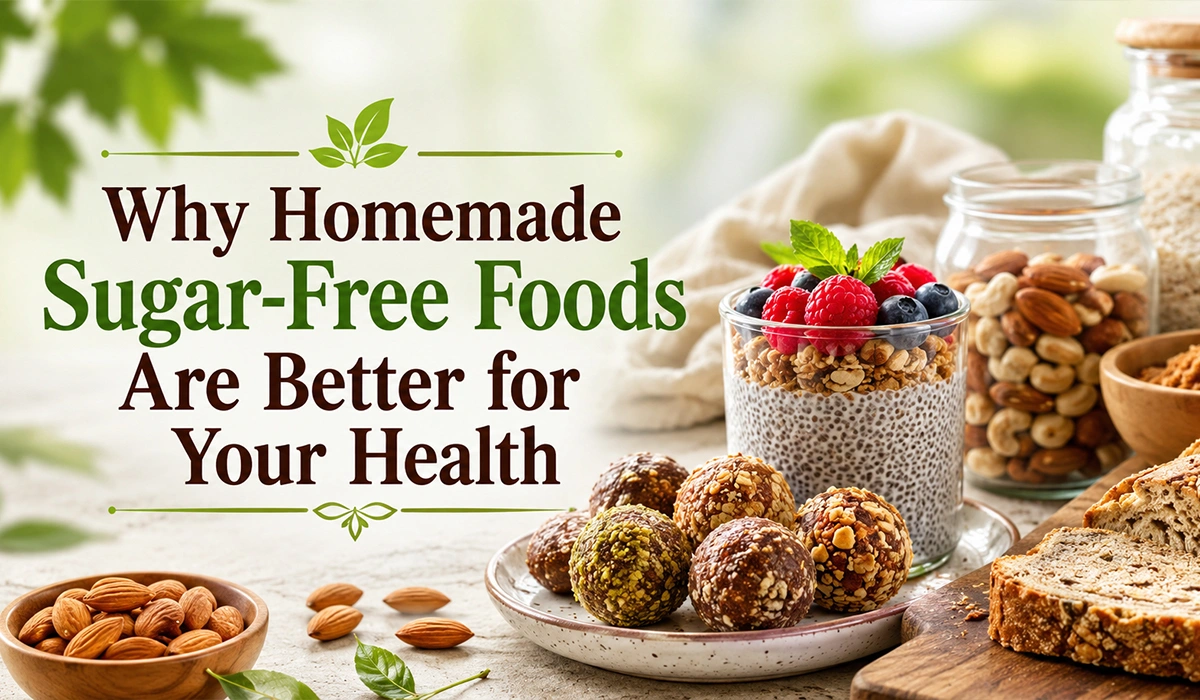
Imagine starting your morning with a freshly made smoothie sweetened with ripe bananas and dates instead of refined sugar. For lunch, you enjoy a homemade vegetable salad with a light lemon dressing, and in the evening, you prepare a bowl of roasted makhana seasoned with herbs instead of reaching for packaged snacks. These simple choices may seem small, but over time, they can have a meaningful impact on your health.
Today, many processed foods and beverages contain added sugars that often go unnoticed. From breakfast cereals and flavored yogurts to sauces and packaged snacks, sugar has become a common ingredient in everyday diets. While enjoying sweet foods occasionally is perfectly fine, regularly consuming high amounts of added sugar may contribute to weight gain, tooth decay, and increase the risk of certain chronic health conditions when combined with other lifestyle factors.
Homemade sugar-free foods offer a healthier alternative because they allow you to control ingredients, reduce unnecessary additives, and focus on wholesome nutrition. Whether you’re preparing meals for your family in Varanasi, Delhi, Mumbai, or anywhere else, cooking at home without added sugar can support a balanced lifestyle.
This guide explores why homemade sugar-free foods are a smart choice, their health benefits, practical cooking tips, and easy ways to make healthier meals every day.
What Are Homemade Sugar-Free Foods?
Homemade sugar-free foods are meals, snacks, or drinks prepared at home without adding refined or processed sugar. They may naturally contain sweetness from fruits, vegetables, or dairy while avoiding added sugars commonly found in processed foods.
Why It Matters
The term “sugar-free” in homemade cooking generally refers to no added refined sugar. Many natural foods, such as apples, bananas, and milk, contain naturally occurring sugars that are part of a balanced diet.
Examples include:
- Fresh fruit smoothies
- Oats with berries
- Vegetable soups
- Homemade yogurt with fruit
- Roasted chickpeas
- Whole-grain salads
- Fresh coconut water
- Lemon water without sugar
Why Is Added Sugar a Health Concern?
Eating too much added sugar may contribute to excess calorie intake and can make it harder to maintain a healthy weight and balanced diet. Reducing added sugar is one step toward supporting long-term health.
Many packaged foods contain sugar under different names, including:
- Sucrose
- Glucose syrup
- High-fructose corn syrup
- Maltose
- Dextrose
- Brown sugar
- Cane sugar
People often consume more sugar than they realize because it is present in:
- Soft drinks
- Bakery products
- Flavored beverages
- Breakfast cereals
- Packaged fruit juices
- Ice creams
- Biscuits
- Sauces and condiments
Homemade vs Packaged Sugar-Containing Foods
| Feature | Homemade Sugar-Free Foods | Packaged Sweet Foods |
|---|---|---|
| Added Sugar | Usually none | Often high |
| Preservatives | Minimal or none | Common |
| Artificial Flavours | Rare | Frequently added |
| Ingredient Control | Complete | Limited |
| Freshness | High | Depends on shelf life |
| Nutritional Quality | Can be tailored | Varies by product |
| Cost Over Time | Often economical | May be more expensive |
Preparing food at home gives you greater control over ingredients, portion sizes, and cooking methods.
Top Health Benefits of Homemade Sugar-Free Foods
1. Better Weight Management
Reducing added sugar may help lower excess calorie intake, making it easier to maintain a healthy weight when combined with balanced eating and regular physical activity.
Homemade meals often include:
- Whole grains
- Fresh vegetables
- Lean protein
- Healthy fats
- Fiber-rich ingredients
These foods can help you feel satisfied for longer.
2. Supports Better Dental Health
Sugar feeds bacteria in the mouth that produce acids capable of damaging tooth enamel. Choosing homemade meals and limiting sugary snacks can support good oral hygiene alongside regular brushing and dental check-ups.
3. Better Ingredient Quality
One of the biggest advantages of cooking at home is knowing exactly what goes into your food.
You can avoid unnecessary:
- Artificial colours
- Preservatives
- Excess sodium
- Artificial flavours
- Trans fats
- Added sugars
Instead, you can use:
- Fresh vegetables
- Seasonal fruits
- Whole grains
- Lentils
- Nuts
- Seeds
- Herbs and spices
4. More Balanced Nutrition
Homemade meals make it easier to include a variety of nutrient-rich foods, such as:
- Leafy greens
- Whole grains
- Pulses
- Fresh fruits
- Dairy or fortified alternatives
- Healthy oils in moderation
This helps create a more balanced diet that supports overall well-being.
Natural Ways to Add Sweetness Without Refined Sugar
If you enjoy sweet flavors, you can use naturally sweet ingredients instead of refined sugar in many recipes.
Some popular options include:
- Ripe bananas
- Dates
- Apples
- Pears
- Raisins
- Figs
- Mango (seasonally)
- Cinnamon for flavor enhancement
- Vanilla extract
- Unsweetened coconut
Remember that these ingredients still contain natural sugars, so portion size remains important.
Homemade Sugar-Free Breakfast Ideas
A healthy breakfast sets the tone for the day. Try options such as:
- Oats topped with fresh berries and nuts
- Vegetable poha with peanuts
- Besan chilla with mint chutney
- Plain yogurt with sliced fruit
- Moong dal cheela
- Sprout salad
- Vegetable upma
- Smoothie made with banana, spinach, and milk or a fortified plant-based drink
These meals provide fiber, protein, vitamins, and minerals without relying on added sugar.
Healthy Sugar-Free Snack Ideas
Instead of processed snacks, consider:
- Roasted makhana
- Roasted chana
- Mixed nuts (unsalted)
- Fresh fruit
- Cucumber and carrot sticks
- Homemade hummus
- Boiled corn
- Fruit chaat
- Homemade vegetable soup
These options are easy to prepare and can help satisfy hunger between meals.E
Why Homemade Foods Are Popular in India
Across cities like Varanasi, families have long prepared traditional meals using fresh ingredients from local markets. Seasonal vegetables, lentils, whole grains, and fruits remain an important part of many regional cuisines.
Simple home-cooked dishes such as dal, sabzi, millet rotis, khichdi, and fresh salads naturally contain little or no added sugar, making them a nutritious foundation for everyday meals.
Buying fresh produce from local vendors also supports regional agriculture while encouraging healthier eating habits.
Practical Tips for Reducing Added Sugar
Making gradual changes is often more sustainable than eliminating sugar overnight. Here are a few practical tips:
- Read nutrition labels and ingredient lists.
- Choose plain yogurt instead of sweetened varieties.
- Drink water or unsweetened beverages instead of sugary drinks.
- Prepare snacks at home when possible.
- Use fruit to add natural sweetness to recipes.
- Limit packaged desserts and confectionery.
- Cook more meals from scratch using fresh ingredients.
Conclusion
Homemade sugar-free foods are more than just a dietary trend—they’re a practical way to take greater control of your nutrition. By preparing meals at home with fresh, minimally processed ingredients and reducing added sugars, you can support healthier eating habits for yourself and your family.
Rather than aiming for perfection, focus on making small, consistent changes. Swapping one sugary snack for fresh fruit, preparing a homemade breakfast, or choosing water instead of a sweetened beverage are simple steps that can add up over time.
A balanced diet, regular physical activity, adequate sleep, and routine health check-ups all play important roles in overall wellness. Homemade meals can be a valuable part of that healthy lifestyle.
Disclaimer: This article is for educational purposes only and should not replace personalized medical or dietary advice. If you have diabetes, kidney disease, or another medical condition requiring dietary modifications, consult a qualified healthcare professional or registered dietitian before making significant changes to your eating pattern.