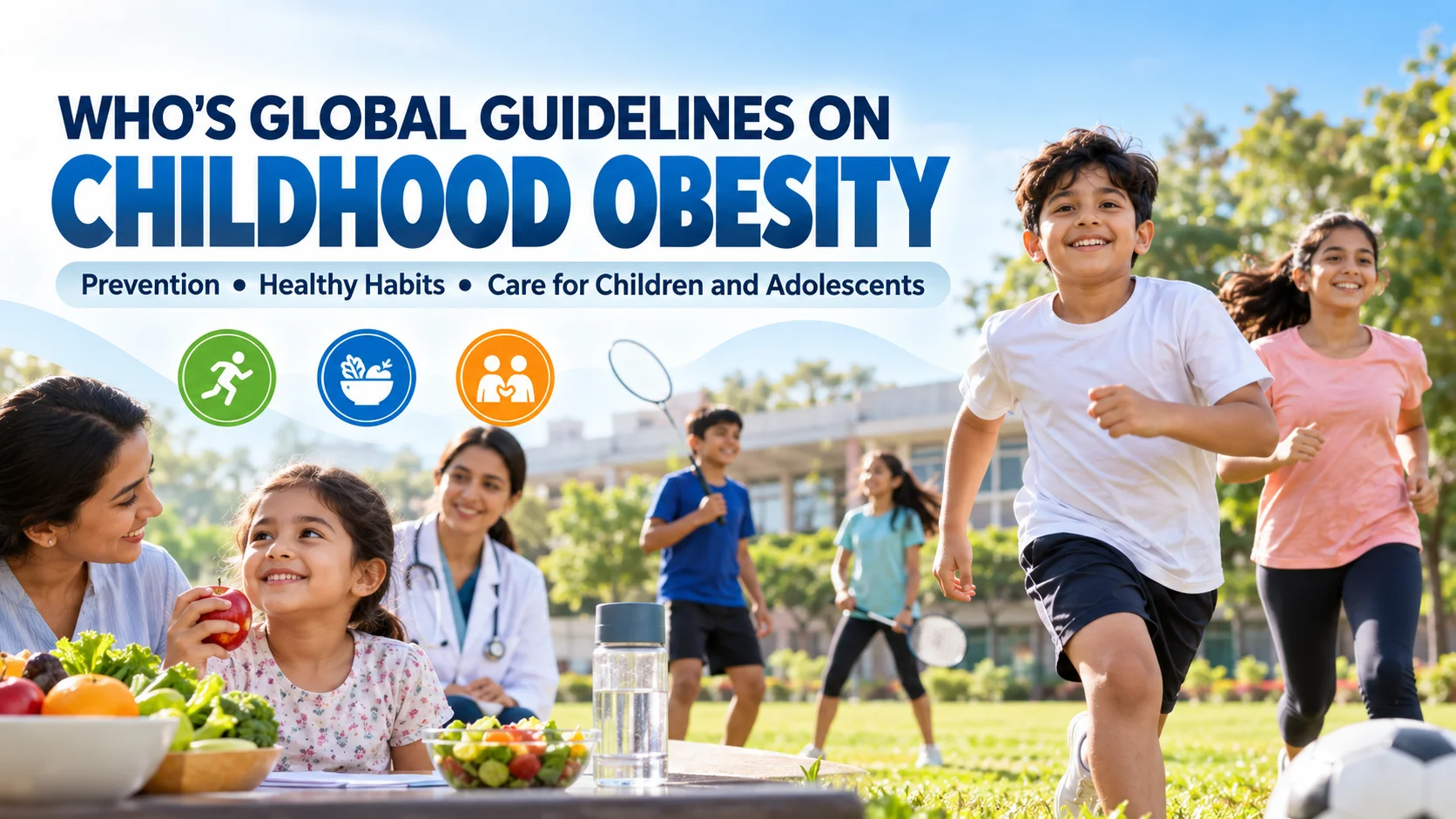
Imagine a child who loves playing outdoors but spends most evenings sitting with a phone, snacking on packaged foods and drinking sugary beverages. Their parents may think it is simply a phase of growing up. However, childhood obesity is a complex health issue that can affect physical health, emotional well-being and future quality of life.
On 7 October 2026, the World Health Organization (WHO) released its first global guidelines specifically addressing the integrated management of obesity in children and adolescents. The announcement comes as an estimated 170 million people aged 5–19 were living with obesity worldwide in 2024.
The guidelines emphasise structured nutrition, physical activity, behaviour-change support and individualised medical care. For families in India and around the world, the message is clear: prevention matters, and children living with obesity deserve supportive, evidence-based care.
1. What Is Childhood Obesity?
Quick answer: Childhood obesity is a chronic health condition involving excess body fat that may harm a child’s health. It develops through a combination of biological, behavioural, social and environmental factors.
Unlike adults, children are growing and developing, so healthcare professionals use age- and sex-specific growth references to assess weight status. Obesity should not be diagnosed from appearance alone.
2. Why Are WHO’s Global Guidelines Important?
Quick answer: The guidelines provide evidence-informed recommendations to help healthcare systems deliver consistent, person-centred obesity care for children and adolescents.
WHO reported that obesity prevalence among people aged 5–19 rose from 2% in 1990 to 8% in 2024. The guidelines aim to improve access to care while recognising children’s individual needs and family circumstances.
3. What Are the Main Recommendations?
WHO recommends structured interventions that combine healthy eating, physical activity and behaviour change. The approach should be tailored to each child rather than based on one universal weight-loss plan.
Key recommendations include:
- Structured dietary support.
- Age-appropriate physical activity.
- Behaviour-change interventions.
- Combined programmes addressing several lifestyle factors.
- Digital health support with parental or caregiver supervision, where appropriate.
4. How Can Parents Encourage Healthy Eating?
Quick answer: Parents can support children’s health by making balanced meals, water and nutritious food choices part of everyday family life.
Include vegetables, fruits, whole grains, pulses and suitable protein sources in meals. In Indian households, options such as dal, seasonal vegetables, curd, fruit and whole-wheat roti can help create balanced eating patterns. Limit frequent sugary drinks and highly processed snacks without labelling foods or children as “good” or “bad.”
5. Why Is Physical Activity Essential?
Quick answer: Regular movement supports children’s physical fitness, healthy development and overall well-being.
Encourage enjoyable activities such as cycling, dancing, outdoor games, walking or team sports. Families can begin with manageable routines and gradually increase activity based on the child’s age, abilities and health needs. The aim is to make movement enjoyable—not a punishment for body weight.
6. What Role Do Sleep and Screen Habits Play?
Quick answer: Consistent sleep routines and balanced screen use can support a healthier daily lifestyle.
Set regular bedtimes, encourage screen-free meals and make room for active play. Screen use should be considered alongside sleep, activity, food access and family routines rather than treated as the sole cause of obesity.
7. Does Childhood Obesity Require Medical Treatment?
Quick answer: Some children need professional assessment and structured treatment, particularly when obesity affects their health or development.
WHO does not recommend weight-loss medicines, bariatric surgery or weight-management devices for children aged 0–9 years. For adolescents aged 10–19, approved medicines may be considered in specific circumstances after supervised lifestyle interventions have not achieved the desired results. Surgery may be considered for severe obesity under strict conditions. These decisions require qualified medical supervision.
8. How Can Families Support a Child Emotionally?
Quick answer: Children benefit from respectful, stigma-free care that focuses on health rather than shame or appearance.
Avoid teasing, comparisons and restrictive diets without medical advice. Listen to the child’s concerns, involve them in practical family changes and seek professional support if bullying, anxiety or low self-esteem becomes a concern. WHO highlights the importance of protecting children’s physical and mental well-being.
9. What Can Schools and Communities Do in India?
Schools can encourage active play, provide healthier food options and teach practical nutrition skills. Communities can improve access to safe parks, sports facilities and affordable nutritious foods.
In cities such as Delhi, Mumbai and Bengaluru, families may seek paediatric or nutrition services for childhood weight concerns. Choose qualified healthcare professionals who use recognised growth assessments and offer age-appropriate, family-centred care.
10. Frequently Asked Questions About WHO’s Childhood Obesity Guidelines
What is the main message of WHO’s 2026 guidelines?
Children need comprehensive, individualised support centred on nutrition, physical activity and sustainable behaviour change.
How many children and adolescents were living with obesity in 2024?
An estimated 170 million people aged 5–19 worldwide were living with obesity.
Risk can be reduced through supportive food environments, regular physical activity and healthy family routines, although not every contributing factor is under individual control.
Should parents give children weight-loss medicines?
No medicine should be started without a qualified clinician’s assessment. Treatment options depend on age, health status and applicable clinical guidance.
Conclusion
WHO’s global childhood obesity guidelines reinforce the need for early support, healthy environments and compassionate medical care. Parents, schools, communities and healthcare professionals all have a role in helping children build sustainable habits without stigma.
Healthy childhoods are built through supportive routines, accessible care and an environment where every child has the opportunity to thrive.