Understanding menopause symptoms, hormonal changes, bone and heart health, and practical ways to support women’s well-being in India and worldwide.
A woman in her late 40s may begin waking up at night feeling unusually hot, notice changes in her periods, or struggle with concentration during the workday. She may wonder whether stress, ageing or another health problem is responsible. Sometimes, these changes are linked to menopause—a natural transition that can affect much more than menstruation.
Menopause is the stage when a person has gone 12 consecutive months without a menstrual period, when no other cause explains the absence. It usually occurs between ages 45 and 55. Changing levels of oestrogen and progesterone can affect physical, emotional and sexual health, although every woman’s experience is different.
1. What Happens to Hormones During Menopause?
Quick answer: The ovaries gradually produce less oestrogen and progesterone as reproductive function changes. These hormonal shifts affect the menstrual cycle and can influence temperature regulation, sleep, mood, bones and the genital and urinary systems.
The years leading up to menopause are called perimenopause. Periods may become irregular, and symptoms can appear before menstruation stops completely. Menopause can also occur earlier because of surgery or certain medical treatments.
2. How Does Menopause Affect the Whole Body?
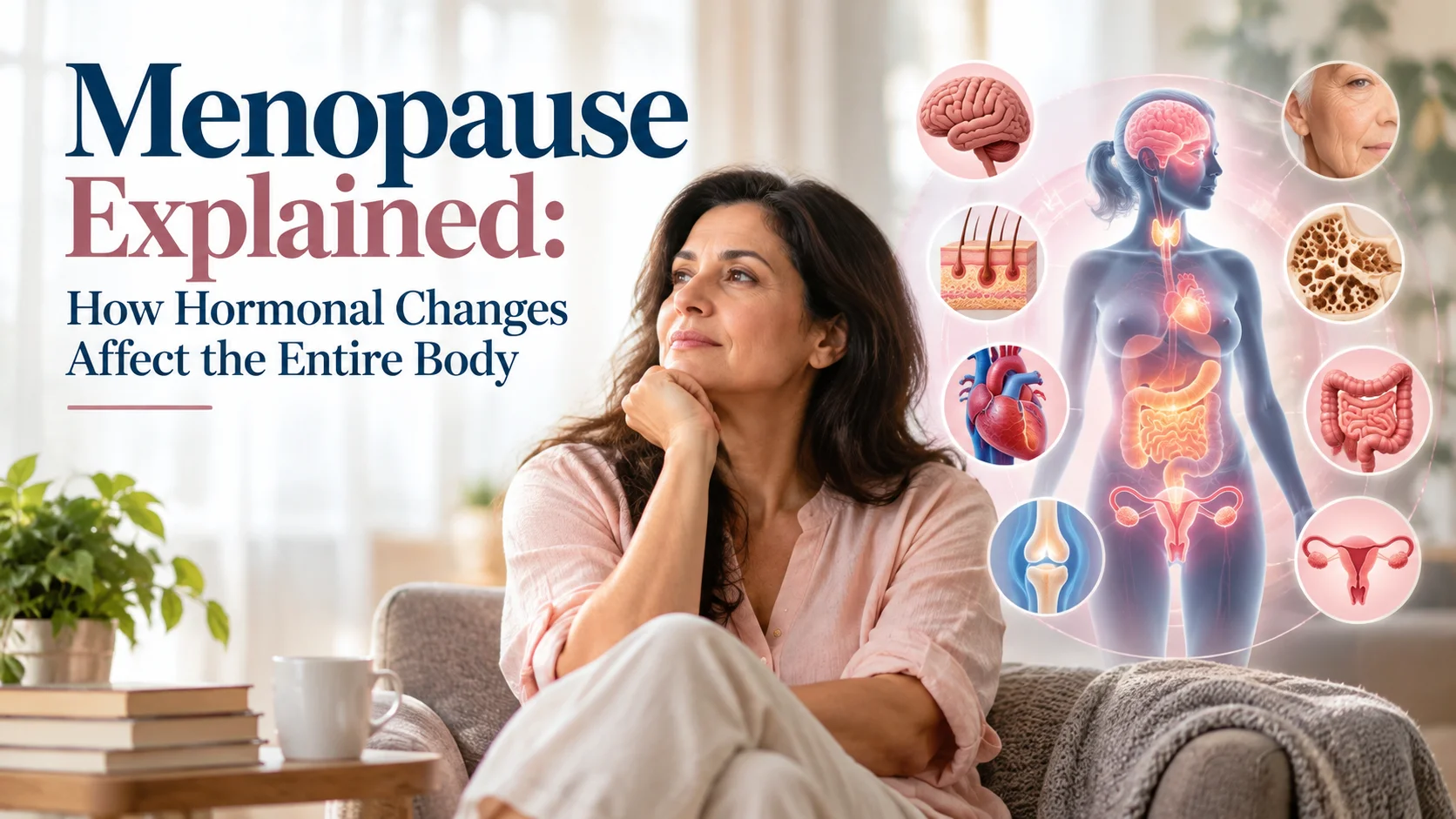
Quick answer: Menopause may affect several body systems, including the brain, heart, bones, skin, sleep and urinary health. The intensity and duration of symptoms vary, and some women experience few noticeable changes.
| Body area | Possible changes |
|---|---|
| Brain and mood | Brain fog, anxiety, low mood |
| Temperature regulation | Hot flashes and night sweats |
| Bones and joints | Bone density loss, joint discomfort |
| Heart and metabolism | Changes in cholesterol and body fat distribution |
| Skin and hair | Dryness, itching or hair thinning |
| Vaginal and urinary health | Dryness, discomfort and urinary symptoms |
3. Why Do Hot Flashes and Night Sweats Happen?
Quick answer: Hormonal changes can affect the brain’s temperature-regulation system, causing sudden feelings of heat, sweating and sometimes a noticeable heartbeat. Night sweats may interrupt sleep and contribute to tiredness during the day.
Keeping the bedroom cool, wearing breathable clothing and tracking potential triggers may help. If symptoms interfere with daily life, discuss treatment options with a healthcare professional.
4. Can Menopause Affect the Brain and Mood?
Quick answer: Yes. Some women experience difficulty concentrating, forgetfulness, irritability, anxiety or low mood during the menopause transition. Sleep disruption and hormonal changes may both contribute, but persistent symptoms should not automatically be attributed to menopause.
Regular sleep routines, physical activity and emotional support may help. Seek professional advice if low mood, anxiety or memory difficulties persist or affect everyday functioning.
5. What Happens to Bones and Joints?
Quick answer: Lower oestrogen levels accelerate bone loss, increasing the risk of osteoporosis and fractures. Some women also report muscle or joint discomfort during the menopause transition.
Weight-bearing exercise, appropriate calcium and vitamin D intake, and avoiding smoking can support bone health. Ask a clinician whether your age, medical history or fracture risk warrants a bone-density assessment.
6. Does Menopause Affect Heart Health and Weight?
Quick answer: Menopause may coincide with changes in cholesterol, body-fat distribution and cardiovascular risk. Ageing, activity levels, blood pressure and other health factors also matter, so these changes should be assessed as part of overall health rather than blamed on hormones alone.
A balanced diet, regular activity, adequate sleep and checks of blood pressure, blood sugar and cholesterol can help support long-term health.
7. How Can Menopause Affect Vaginal and Urinary Health?
Quick answer: Reduced oestrogen can make vaginal tissues drier and more sensitive. Some women experience discomfort during sex, urinary urgency or recurrent urinary tract infections. These symptoms are common, but they do not need to be endured without support.
A healthcare professional can discuss options such as vaginal moisturisers, lubricants or prescription treatments, depending on symptoms and medical history.
8. What Can Help Manage Menopause Symptoms?
Quick answer: Menopause care may include lifestyle changes, psychological support, hormone therapy or non-hormonal treatments. The right approach depends on symptoms, personal preferences, medical history and potential risks.
Helpful steps include:
- Maintain a balanced diet and regular exercise routine.
- Keep a sleep schedule and identify hot-flash triggers.
- Discuss persistent symptoms with a gynaecologist or qualified clinician.
- Review treatment benefits, risks and alternatives before starting medication.
9. Is Hormone Therapy Right for Everyone?
Quick answer: No. Menopausal hormone therapy can relieve symptoms such as hot flashes and may help prevent bone loss in some women, but it is not suitable for everyone. Decisions should be individualised with a healthcare professional.
Do not start hormone medicines or herbal supplements without appropriate advice. A clinician can explain available options, expected benefits and possible risks.
10. When Should You Seek Medical Advice?
Consult a healthcare professional if symptoms affect your daily life, you suspect early menopause, or you need help choosing a treatment. Any vaginal bleeding after 12 months without periods should be medically assessed, even if it occurs only once.
Frequently Asked Questions About Menopause
At what age does menopause usually begin? Natural menopause most commonly occurs between ages 45 and 55, although it can happen earlier.
How long do menopause symptoms last? It varies. Some symptoms improve over time, while others, such as vaginal dryness, may continue after periods stop.
Can menopause cause weight gain? Weight gain is common during midlife, but hormones, ageing, activity, sleep and diet can all contribute.
Where can women in India seek menopause care? Start with a qualified gynaecologist or healthcare provider in your city who can assess symptoms and discuss suitable treatment options.
Conclusion: Menopause Is a Transition, Not an Illness
Menopause is a natural life stage, but its effects can extend beyond periods and hot flashes. Understanding changes in sleep, mood, bone health, cardiovascular risk and intimate health helps women make informed decisions about their well-being.
For women in India and worldwide, the most useful first step is to recognise symptoms, seek evidence-based guidance and create a personalised health plan. Understanding your changing body is the first step towards feeling supported through every stage of life.