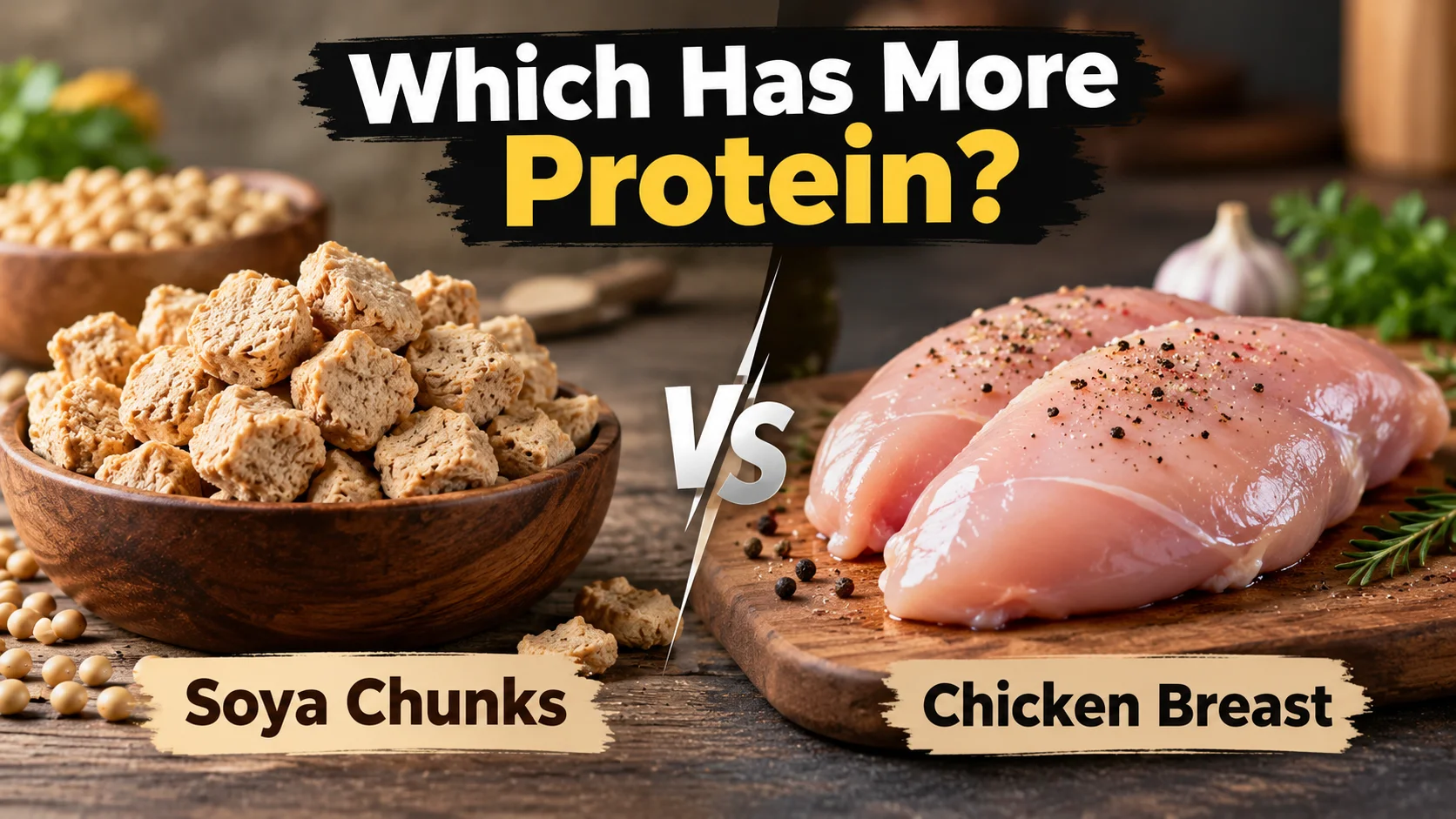
If you want to build muscle, lose fat, or improve your daily nutrition, choosing the right protein source matters. In India, two popular options are soya chunks and chicken breast. But which provides more protein, and which is better for your fitness goals?
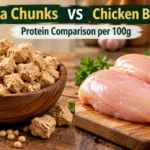
Quick answer: Dry soya chunks contain approximately 50–52 g of protein per 100 g, while raw, skinless chicken breast provides around 22–24 g. However, 100 g of cooked chicken breast provides approximately 30–31 g of protein, compared with around 15–18 g in cooked soya chunks. The comparison depends on whether you measure the food before or after cooking.
1. What Are Soya Chunks?
Soya chunks are a plant-based protein food commonly used in Indian meals. They are generally made from defatted soy flour and are popular among vegetarians, gym-goers, and people looking for affordable protein sources.
Example: Add boiled soya chunks to pulao, curry, salads, or wraps.
Practical tip: Check the nutrition label on your packet because protein content varies by brand.
2. What Is Chicken Breast?
Chicken breast is a lean animal-based protein source containing essential amino acids needed for muscle growth and tissue repair.
Example: Grilled chicken breast with roti, rice, and vegetables can make a balanced meal.
Practical tip: Choose grilled, roasted, or lightly cooked chicken instead of relying on deep-fried preparations.
3. Soya Chunks vs Chicken Breast: Protein Comparison
The following values are approximate and depend on the product and cooking method.
| Nutrition measure | Soya chunks | Chicken breast |
|---|---|---|
| Protein per 100 g, dry/raw | 50–52 g, dry | 22–24 g, raw |
| Protein per 100 g, cooked | 15–18 g | 30–31 g |
| Protein source | Plant-based | Animal-based |
| Dietary fibre | Yes | No |
| All nine essential amino acids | Yes | Yes |
| Suitable for vegetarians | Yes | No |
Sources: typical soya chunk nutrition values and USDA chicken breast nutrition data. Values are estimates, not universal product specifications.
4. Why Does Cooking Change Protein Values?
Cooking changes food weight, mainly because soya chunks absorb water while chicken breast loses moisture.
For example, 100 g of dry soya chunks can provide approximately 50–52 g of protein. After soaking and boiling, the same quantity weighs more, so its protein concentration per 100 g decreases.
Practical tip: Compare dry soya with raw chicken, or cooked soya with cooked chicken. Avoid comparing different preparation stages.
5. Which Is Better for Muscle Building?
Both foods can support muscle growth when combined with appropriate resistance training and sufficient daily protein.
Chicken breast provides highly digestible protein and essential amino acids. Soya protein is also a complete protein, containing all nine essential amino acids.
Practical tip: Choose the option that fits your diet, budget, preferences, and daily protein requirements.
6. Which Is Better for Weight Management?
Both can fit into a weight-management diet. Chicken breast is naturally low in carbohydrates, while soya chunks provide protein, carbohydrates, and dietary fibre.
However, total calories depend on portion size, cooking oil, sauces, and other ingredients.
Practical tip: Use measured portions and limit excess oil, creamy sauces, and deep-frying.
7. Which Is More Affordable in India?
Soya chunks are often an economical way to increase protein intake, particularly for vegetarian households. Chicken prices vary by city, retailer, and product quality.
Practical tip: Compare the price per serving and protein delivered, rather than comparing packet prices alone.
8. Can Vegetarians Get Enough Protein from Soya Chunks?
Yes. Soya chunks can contribute significantly to a vegetarian diet. You can combine them with dal, beans, dairy products, nuts, seeds, and whole grains to increase dietary variety.
Practical tip: Include different protein-rich foods throughout the day instead of depending on a single ingredient.
9. Are Soya Chunks and Chicken Breast Equally Nutritious?
Both provide valuable protein, but their nutritional profiles differ. Soya chunks provide fibre and plant compounds, while chicken breast supplies nutrients such as vitamin B12 and niacin.
Neither food is automatically better for everyone. Individual requirements, dietary restrictions, and overall meal quality matter.
10. How Much Protein Should You Eat Daily?
Protein requirements depend on body weight, age, activity level, health status, and fitness goals. People who exercise regularly may need more protein than sedentary adults.
Practical tip: Calculate your daily requirement based on your circumstances, and consult a qualified dietitian if you have a medical condition or specific dietary needs.
Soya Chunks vs Chicken Breast: Frequently Asked Questions
Which has more protein per 100 g?
Dry soya chunks contain more protein per 100 g than raw chicken breast. Cooked chicken breast generally contains more protein per 100 g than cooked soya chunks.
Can I eat soya chunks every day?
Soya chunks can be part of a balanced diet if you tolerate soy and vary your food choices. Follow appropriate portions and consider individual allergies or medical advice.
Are soya chunks good for gym beginners?
Yes. They offer affordable plant-based protein and can support a balanced diet alongside regular training.
Is chicken breast better than soya chunks for weight loss?
Neither guarantees weight loss. Your overall calorie intake, activity, portion sizes, and dietary consistency matter most.
Conclusion
Soya chunks vs chicken breast: which has more protein? The answer depends on how you measure them. Dry soya chunks have more protein per 100 g than raw chicken breast, but cooked chicken breast generally has more protein per 100 g than cooked soya chunks.
Choose according to your nutritional needs, budget, and dietary preferences. Ultimately, consistent, balanced eating matters more than relying on one protein source.