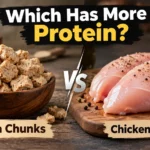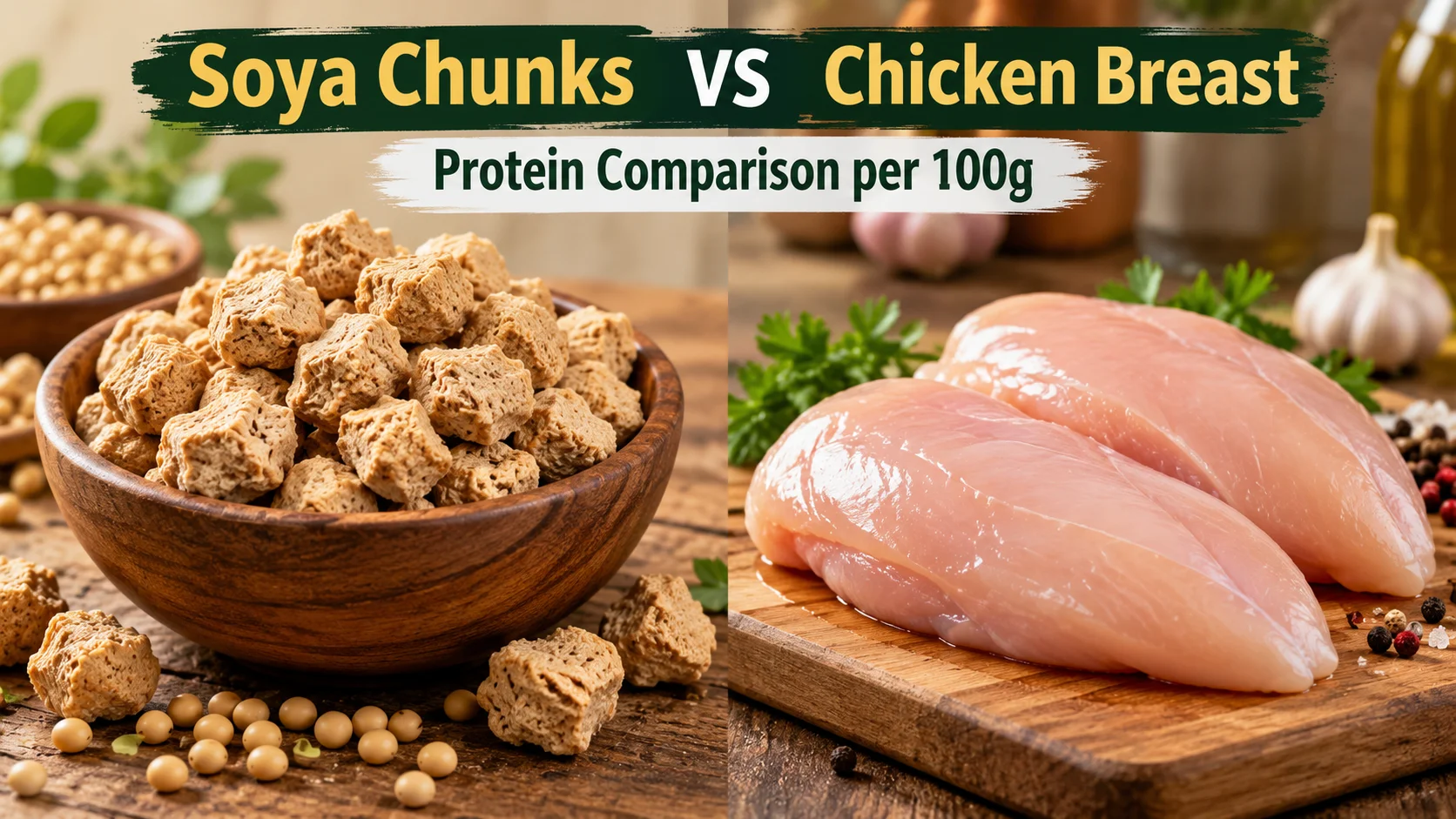
Building muscle, managing weight, or simply eating better starts with choosing the right protein sources. In India, two popular options are affordable soya chunks and lean chicken breast. But which provides more protein per 100 grams, and which is better for your daily diet?
The answer depends on whether you weigh soya chunks dry or cooked and chicken raw or cooked.
1. How Much Protein Is in Soya Chunks per 100g?
Quick answer: 100 g of dry soya chunks typically provides approximately 50–52 g of protein. Once boiled, the protein concentration per 100 g decreases because the chunks absorb water.
Soya chunks, also called meal maker or textured soy protein, are made from defatted soy flour. They are popular in Indian households because they provide concentrated plant protein at an affordable price.
For example, a 30 g dry serving provides approximately 15–16 g of protein. After soaking and boiling, it becomes a larger portion.
Practical tip: Weigh soya chunks before soaking if you want to calculate protein using the nutrition information on the packet.
2. How Much Protein Is in Chicken Breast per 100g?
Quick answer: Raw, skinless chicken breast contains approximately 22.5 g of protein per 100 g. Cooked, roasted chicken breast contains around 31 g per 100 g because cooking reduces its water content.
Chicken breast is a complete animal-protein source containing all nine essential amino acids. It also supplies nutrients such as vitamin B6, niacin, and selenium.
Grilled, roasted, or boiled chicken breast can fit into a balanced diet. The final calorie content depends on the cooking method and added ingredients.
3. Soya Chunks vs Chicken Breast: Nutrition Comparison
Quick answer: Dry soya chunks contain more protein per 100 g than raw chicken breast. However, comparing dry soya with cooked chicken directly is misleading because their moisture levels differ.
| Nutrient per 100 g | Soya chunks, dry | Chicken breast, raw | Chicken breast, roasted |
|---|---|---|---|
| Protein | 50–52 g | 22.5 g | 31 g |
| Calories | Approximately 345 kcal | 120 kcal | 165 kcal |
| Fat | Approximately 0.5–1 g | 2.6 g | 3.6 g |
| Carbohydrates | Approximately 33 g | 0 g | 0 g |
| Dietary fibre | Present | 0 g | 0 g |
Values are approximate reference figures. Brands and cooking methods can change nutritional values.
4. Which Is Better for Muscle Building?
Quick answer: Both foods can support muscle growth when combined with adequate total protein, resistance training, and sufficient calories.
Chicken breast provides concentrated protein with no carbohydrates. Soya chunks offer plant protein alongside carbohydrates and fibre.
Soy protein contains all nine essential amino acids, making it a useful option for vegetarian diets. Your overall protein intake, training routine, sleep, and recovery matter more than choosing only one food.
Practical tip: Include the protein source you enjoy and can consistently afford.
5. Which Is Better for Weight Management?
Quick answer: Both can fit into a weight-management diet. The better choice depends on portion size, total calories, cooking oil, and the rest of your meals.
Chicken breast is naturally low in carbohydrates. Dry soya chunks contain more carbohydrates and fibre, but they also provide substantial protein.
For either option, avoid assuming that deep-fried preparations or heavy gravies have the same nutrition as plain cooked ingredients.
6. Soya Chunks vs Chicken Breast: Which Is More Affordable?
Quick answer: Soya chunks are often a budget-friendly vegetarian protein option in India. Chicken breast prices vary by city, retailer, quality, and availability.
Compare the cost of the actual serving you eat rather than only the price per kilogram. Calculate how much protein you receive from each rupee spent.
This approach helps students, families, and fitness enthusiasts make practical food choices without exceeding their budgets.
7. How Should You Prepare Soya Chunks?
Quick answer: Boil soya chunks, drain them, squeeze out excess water, and cook them with your preferred ingredients.
Try these everyday Indian preparations:
- Soya chunk curry with roti.
- Soya pulao with vegetables.
- Soya bhurji with spices.
- Soya chunks added to salads or wraps.
Measure the dry quantity before cooking for easier nutrition tracking.
8. How Should You Prepare Chicken Breast?
Quick answer: Grilling, roasting, or boiling chicken breast can help you prepare a protein-rich meal without relying on deep frying.
Try grilled chicken with vegetables, boiled chicken in a salad, or homemade chicken curry with a measured amount of oil.
Cook chicken thoroughly and follow safe food-handling practices.
9. Can Vegetarians Replace Chicken With Soya Chunks?
Quick answer: Yes. Soya chunks can be an important protein source in a vegetarian diet, although portion sizes and the overall balance of nutrients matter.
They provide protein, fibre, and other nutrients. Pair them with vegetables, whole grains, pulses, and other foods to create varied meals.
People with soy allergies should avoid soya chunks. Anyone following a medically restricted diet should seek personalised guidance from a qualified healthcare professional or registered dietitian.
10. Which Protein Source Should You Choose?
Quick answer: Choose soya chunks if you prefer plant-based protein and affordability. Choose chicken breast if you eat animal products and prefer a lean protein source with no carbohydrates.
Neither food is universally better. Your dietary preferences, nutritional needs, budget, and meal plan should guide your decision.
11. Frequently Asked Questions
Are soya chunks higher in protein than chicken breast?
Per 100 g dry, soya chunks typically contain 50–52 g of protein. Raw chicken breast contains about 22.5 g per 100 g. Always compare foods in the same state.
How much protein does 50 g of dry soya chunks provide?
Approximately 25–26 g of protein, depending on the brand.
Is chicken breast better than soya chunks for muscle gain?
Both can support muscle growth as part of a suitable diet and resistance-training programme.
Can I eat soya chunks every day?
Soya chunks can be included regularly in a balanced diet if tolerated. Portion sizes should suit your nutritional needs and overall food intake.
Which is better for vegetarians in India?
Soya chunks are a convenient, widely available vegetarian option. Check the product label for exact nutritional values.
12. Conclusion: Soya Chunks vs Chicken Breast
Soya chunks and chicken breast are both valuable protein sources. Dry soya chunks offer approximately 50–52 g of protein per 100 g, while raw chicken breast provides around 22.5 g and roasted chicken breast around 31 g per 100 g.
The most important lesson is to compare like with like. Dry and cooked weights can produce very different numbers, even when the underlying food portion is similar.
Choose a source that matches your dietary preferences, budget, and fitness goals—and build your meals around a varied, balanced diet.