Introduction
Imagine preparing a fresh cucumber, tomato, or lettuce salad for lunch. The vegetables look clean, but are they actually safe to eat? Fresh vegetables can collect dirt, bacteria, and other contaminants during growing, harvesting, transportation, and handling. That is why washing them properly is an important part of everyday food safety.
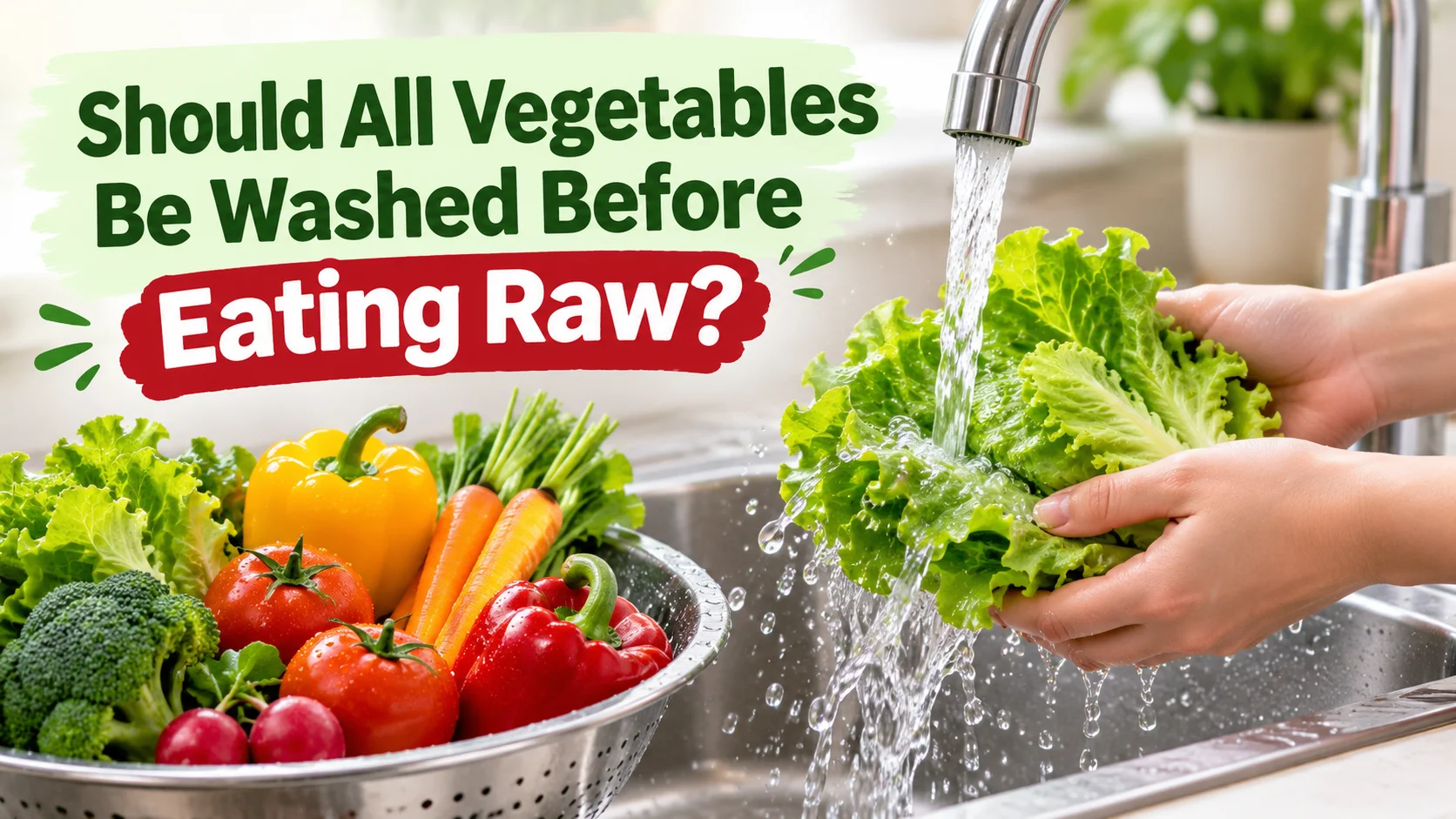
Should All Vegetables Be Washed Before Eating Raw?
Yes. Most fresh vegetables should be washed under clean, running water before eating them raw. Washing helps remove dirt and may reduce bacteria on the surface, although it cannot eliminate every harmful microorganism. Even vegetables grown at home or purchased from trusted markets should be washed before preparation.
The US Food and Drug Administration (FDA) recommends washing fresh produce before eating or preparing it. This includes vegetables whose skin or peel will not be eaten.
Why Is Washing Raw Vegetables Important?
Vegetables may come into contact with soil, contaminated water, unclean hands, equipment, or surfaces during handling. These contaminants may not always be visible.
Washing vegetables can help:
- Remove visible dirt and debris.
- Reduce some bacteria on the surface.
- Improve cleanliness before cutting or eating.
- Lower the risk of transferring contaminants from the outside to the edible portion.
However, washing is not a guarantee of safety. Fresh vegetables should also be stored and handled properly.
Which Vegetables Need Washing?
Almost all fresh vegetables should be washed before eating raw or cutting.
| Vegetable | Recommended cleaning method |
|---|---|
| Cucumber | Rinse and scrub with a clean brush |
| Tomatoes | Gently rinse under running water |
| Lettuce and leafy greens | Separate leaves and rinse carefully |
| Carrots | Scrub under running water |
| Capsicum | Rinse and rub the surface |
| Radish | Scrub to remove soil |
| Broccoli and cauliflower | Rinse thoroughly and inspect between florets |
For leafy vegetables, remove damaged outer leaves before washing. Use clean water and avoid reusing water that has become dirty.
How to Wash Vegetables Before Eating Raw
Follow these simple steps:
- Wash your hands: Use soap and water for at least 20 seconds.
- Clean the preparation area: Wash the sink, counter, knife, and cutting board.
- Remove damaged portions: Discard rotten parts and trim bruised areas.
- Rinse under running water: Gently rub vegetables while rinsing.
- Scrub firm vegetables: Use a clean produce brush for cucumbers, carrots, and similar vegetables.
- Dry safely: Use a clean paper towel or cloth before serving.
Wash vegetables before peeling or cutting them. This helps prevent dirt and bacteria from transferring from the outer surface to the inside.
Should Vegetables Be Washed With Salt, Vinegar, or Soap?
Plain, potable running water is generally recommended for washing fresh vegetables at home. Do not use soap, detergent, bleach, household disinfectants, or unapproved chemical cleaners.
Soap and detergents may leave residues that can be harmful if consumed. Salt, vinegar, and lemon juice should not be treated as guaranteed methods for eliminating harmful bacteria.
Do Pre-Washed Vegetables Need Washing Again?
Vegetables clearly labelled “pre-washed” or “ready-to-eat” can generally be used according to package instructions. Washing them again may introduce contamination if the sink, hands, or utensils are not clean.
Always check the packaging and follow the manufacturer’s storage and handling directions.
Common Mistakes to Avoid
- Washing vegetables with soap or detergent.
- Using dirty kitchen sinks or cutting boards.
- Cutting vegetables before washing them.
- Using the same board for raw meat and salad vegetables.
- Leaving cut vegetables at room temperature for extended periods.
- Assuming washing removes every pesticide residue or harmful microorganism.
Keep raw vegetables separate from raw meat, poultry, and seafood to prevent cross-contamination.
Frequently Asked Questions
Should I wash vegetables even if I peel them?
Yes. Wash them before peeling to prevent contaminants on the outside from transferring to the edible portion.
Is washing vegetables enough to make them completely safe?
No. Washing reduces some contaminants but does not eliminate all bacteria. Proper storage, handling, and cooking where appropriate are also important.
Should vegetables be washed before storing?
For many vegetables, washing immediately before preparation helps maintain quality. Store produce according to its type and refrigeration requirements.
Can I eat vegetables directly after washing?
Yes, if they are intended to be eaten raw, washed with safe water, handled hygienically, and stored properly.
Conclusion
Washing fresh vegetables before eating them raw is a simple but important food-safety habit. Use clean, running water, scrub firm vegetables, handle leafy greens carefully, and avoid soaps or household chemicals. Remember: clean vegetables begin with clean hands, safe water, and proper handling.