Vegetables are an essential part of a balanced diet, but does the way you cook them affect their nutritional value? Imagine preparing broccoli for dinner. Should you boil it, steam it, roast it, or eat it raw?
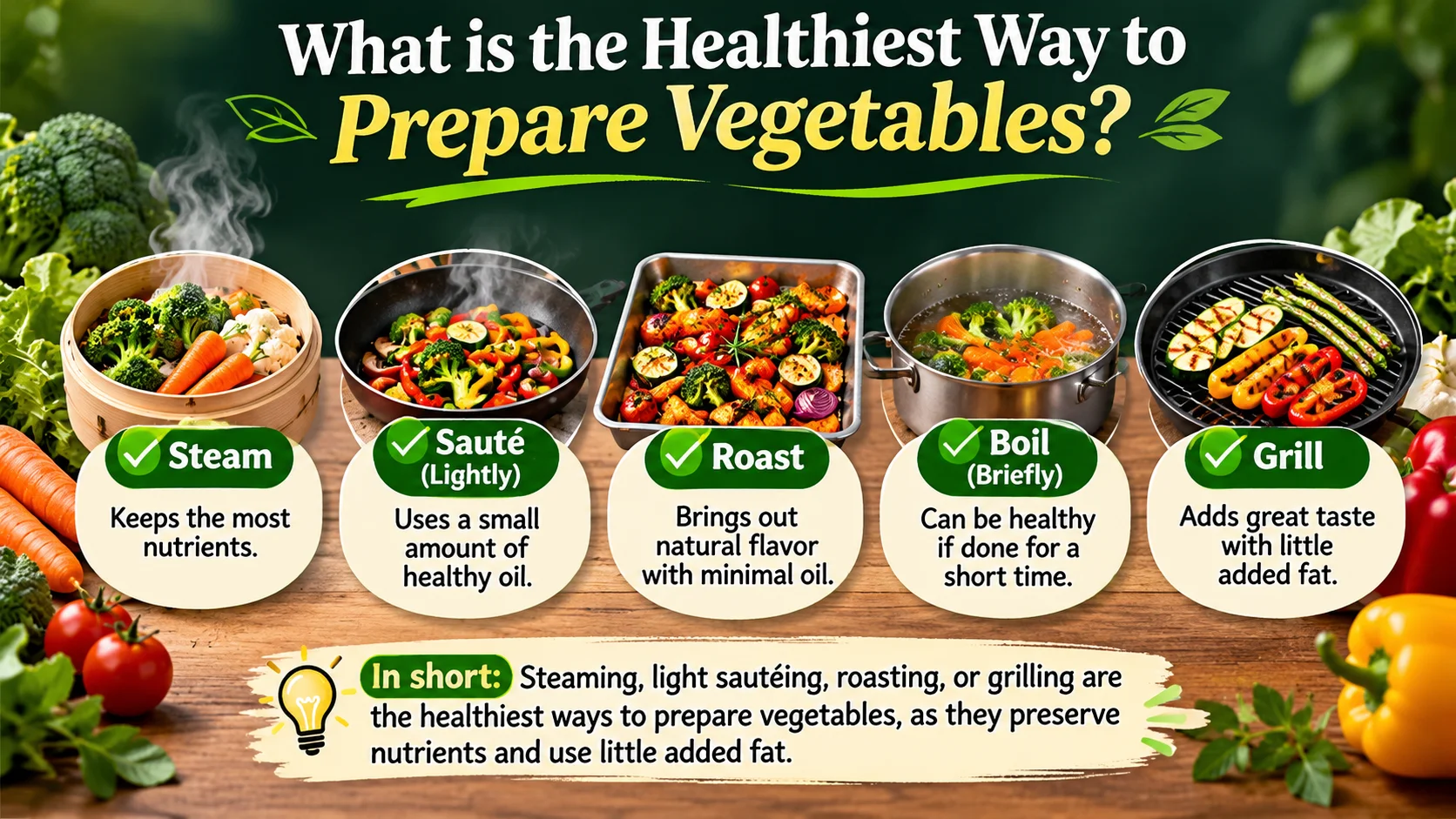
The answer depends on the vegetable, cooking method, and nutrients you want to preserve. The healthiest way to prepare vegetables is generally to use minimal water, avoid overcooking, and choose methods such as steaming, microwaving, or lightly sautéing.
1. What Is the Healthiest Way to Prepare Vegetables?
Steaming and microwaving are among the best methods for preserving nutrients because they use relatively little water and require shorter cooking times. However, raw vegetables, roasting, and stir-frying can also contribute to a healthy diet.
The goal is to retain nutrients while making vegetables enjoyable and easy to eat.
2. Is Steaming Vegetables Healthier Than Boiling?
Steaming often preserves more water-soluble vitamins than boiling because vegetables do not sit directly in cooking water.
Boiling can cause vitamin C and some B vitamins to move into the water. If you boil vegetables, consider using the cooking liquid in soups or curries instead of discarding it.
3. Is Microwaving Vegetables Healthy?
Yes. Microwaving vegetables with a small amount of water is a convenient and nutritious cooking method.
Short cooking times and limited water can help preserve heat-sensitive nutrients. Use microwave-safe cookware and avoid excessive cooking.
4. Raw vs. Cooked Vegetables: Which Is Better?
Both raw and cooked vegetables provide important nutrients.
| Vegetable | Preparation | Nutritional consideration |
|---|---|---|
| Tomatoes | Cooked | Cooking can increase lycopene availability |
| Carrots | Cooked | Cooking may improve beta-carotene availability |
| Bell peppers | Raw or lightly cooked | Helps retain vitamin C |
| Broccoli | Steamed or lightly cooked | Reduces nutrient loss compared with prolonged boiling |
Research indicates that cooking can improve the availability of certain nutrients while reducing others. Variety is more important than choosing only raw or cooked vegetables.
5. Is Stir-Frying Vegetables Healthy?
Stir-frying can be a healthy choice when vegetables are cooked quickly using a small amount of oil.
It works well for Indian vegetables such as capsicum, beans, carrots, cabbage, and broccoli.
Practical tip: Use a small amount of unsaturated oil and avoid overcooking.
6. Are Roasted Vegetables Healthy?
Roasting brings out the natural sweetness and flavour of vegetables.
Carrots, cauliflower, pumpkin, potatoes, and sweet potatoes work particularly well. Use moderate amounts of oil and avoid burning or excessive charring.
Roasting is nutritious, although prolonged high heat may reduce certain heat-sensitive vitamins.
7. Which Cooking Methods Should You Limit?
Deep-frying can substantially increase the fat and calorie content of vegetables.
Prolonged boiling may also cause greater losses of water-soluble nutrients.
| Method | General recommendation |
|---|---|
| Steaming | Excellent everyday option |
| Microwaving | Excellent convenient option |
| Stir-frying | Healthy with limited oil |
| Roasting | Nutritious when not excessively charred |
| Boiling | Fine when cooking time is controlled |
| Deep-frying | Limit for everyday meals |
8. How to Prepare Vegetables Without Losing Nutrients
Follow these practical steps:
- Wash vegetables under clean running water before cutting.
- Avoid peeling vegetables unnecessarily when the skin is edible.
- Cut vegetables into reasonably large pieces.
- Use minimal water during cooking.
- Cook until tender rather than excessively soft.
- Avoid repeatedly reheating vegetables.
- Add herbs, spices, garlic, and lemon for flavour.
9. How to Prepare Vegetables for Indian Meals
Indian cooking offers many nutritious options.
Try lightly sautéed bhindi, steamed broccoli, vegetable stir-fry, roasted cauliflower, or vegetables incorporated into dal and soups.
Use moderate amounts of oil, salt, and rich sauces. Frozen vegetables can also be nutritious and convenient.
10. Frequently Asked Questions
What is the healthiest way to cook vegetables?
Steaming and microwaving with minimal water are excellent choices. However, different vegetables benefit from different cooking methods.
Does boiling vegetables destroy nutrients?
Boiling does not destroy all nutrients, but some water-soluble vitamins may leach into the cooking water.
Are frozen vegetables healthy?
Yes. Frozen vegetables can provide important nutrients and are a convenient alternative to fresh vegetables.
Is eating vegetables raw better than cooking them?
Not necessarily. Some nutrients are more available after cooking, while others are better preserved in raw vegetables.
Which cooking method is best for vegetables in India?
Steaming, lightly sautéing, microwaving, and incorporating vegetables into soups or curries are practical options.
Conclusion
The healthiest way to prepare vegetables is not about following one cooking method every day. Steaming, microwaving, roasting, and lightly sautéing can all support a nutritious diet.
Choose different vegetables, vary your preparation methods, and avoid excessive cooking.
The best vegetables are the ones you enjoy eating regularly.