Imagine waking up feeling exhausted, anxious, or overwhelmed after a stressful week at work. Does that mean you have a mental illness? Not necessarily.
Every person experiences emotional ups and downs. Feeling stressed before an exam, grieving after losing a loved one, or feeling anxious during major life changes is part of being human. However, when emotional, behavioral, or psychological changes become persistent and significantly affect daily life, they may indicate a mental illness.
One of the biggest misconceptions today is that mental health and mental illness mean the same thing. They don’t.
Understanding this difference helps reduce stigma, encourages early support, and empowers people to care for their emotional well-being before problems become severe.
This guide explains everything you need to know about Mental Health vs Mental Illness, including definitions, differences, symptoms, myths, treatments, prevention strategies, and practical ways to maintain better mental well-being.
What Is Mental Health?
Mental health refers to a person’s emotional, psychological, and social well-being. It affects how people think, feel, make decisions, manage stress, and build relationships.
Understanding Mental Health
Just as physical health changes throughout life, mental health also exists on a spectrum.
Good mental health allows people to:
- Handle everyday stress
- Build healthy relationships
- Make thoughtful decisions
- Stay productive
- Adapt to life’s challenges
- Enjoy life
Having good mental health doesn’t mean feeling happy all the time. It means having the resilience to recover from setbacks and manage emotions effectively.
Example
A student may feel nervous before exams but still attend classes, study effectively, and maintain friendships. This reflects healthy mental functioning despite temporary stress.
What Is Mental Illness?
Mental illness refers to diagnosable medical conditions that significantly affect a person’s thinking, mood, emotions, or behavior and often require professional treatment.
Understanding Mental Illness
Mental illnesses vary in severity and duration.
Some are temporary.
Others require lifelong management.
Common examples include:
- Depression
- Anxiety disorders
- Bipolar disorder
- Obsessive-compulsive disorder (OCD)
- Schizophrenia
- Eating disorders
- Post-traumatic stress disorder (PTSD)
Mental illness is not caused by weakness or lack of willpower.
It results from a combination of:
- Genetics
- Brain chemistry
- Trauma
- Environment
- Life experiences
- Medical conditions
Mental Health vs Mental Illness: What’s the Difference?
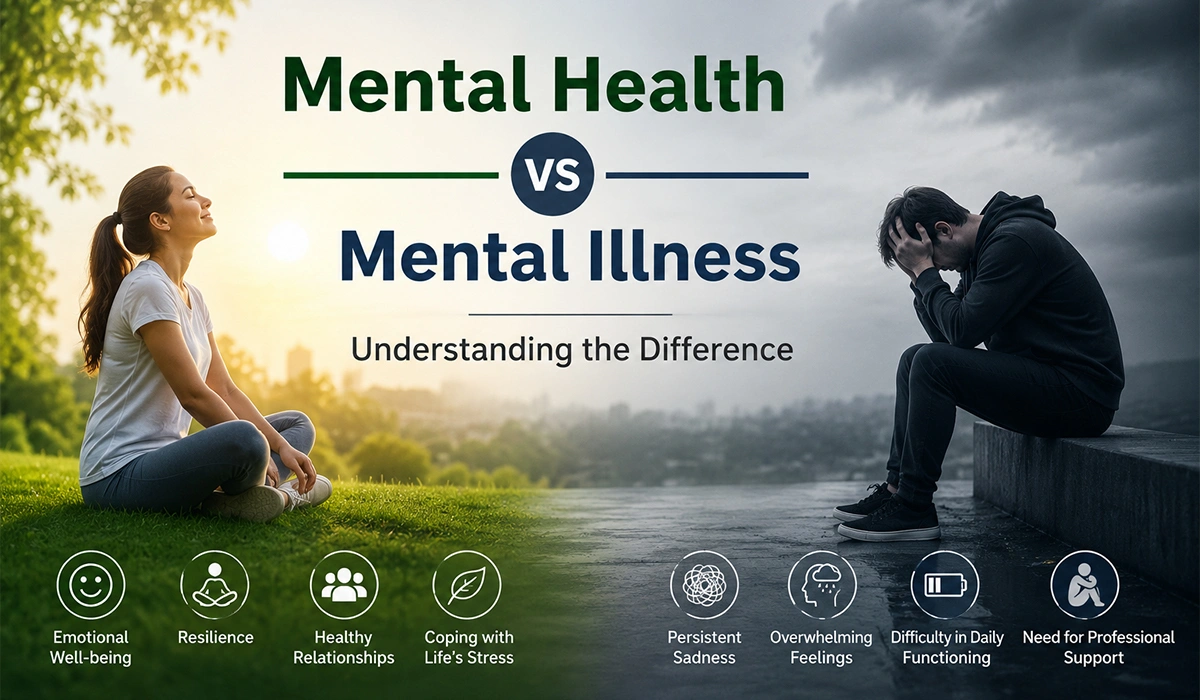
Everyone has mental health, but not everyone has a mental illness.
Mental health refers to overall emotional well-being, while mental illness is a diagnosable condition that affects mental functioning.
| Mental Health | Mental Illness |
|---|---|
| Everyone has it | Not everyone experiences it |
| Changes daily | Medical diagnosis |
| Can be positive or poor | Usually requires professional care |
| Focuses on emotional wellness | Focuses on disorders |
| Can improve through lifestyle | Often requires therapy, medication, or both |
Think of it this way:
Physical health is to the body what mental health is to the mind.
Just as someone can have poor physical health without a disease, someone can experience poor mental health without having a mental illness.
Can Someone Have Poor Mental Health Without Mental Illness?
Yes.
People may experience poor mental health due to stress, burnout, grief, financial pressure, or relationship problems without meeting the criteria for a mental illness.
Common situations include:
- Work stress
- Examination anxiety
- Divorce
- Job loss
- Caregiver fatigue
- Lack of sleep
- Financial concerns
Improving sleep, exercise, social support, and stress management often restores emotional well-being.
Can Someone with Mental Illness Have Good Mental Health?
Yes.
With proper treatment and support, many people with mental illness live healthy, productive, and fulfilling lives.
Recovery may include:
- Therapy
- Medication
- Lifestyle improvements
- Family support
- Workplace accommodations
- Community engagement
Mental illness does not define a person’s abilities or future.
Common Signs of Poor Mental Health
Watch for changes such as:
- Feeling overwhelmed
- Constant stress
- Low motivation
- Sleep disturbances
- Difficulty concentrating
- Mood swings
- Social withdrawal
- Irritability
- Reduced productivity
Early recognition often prevents more serious problems.
Common Symptoms of Mental Illness
Symptoms vary depending on the condition but may include:
- Persistent sadness
- Excessive anxiety
- Panic attacks
- Hallucinations
- Delusions
- Extreme mood changes
- Self-harm thoughts
- Significant appetite changes
- Loss of interest in activities
- Difficulty functioning at work or school
If symptoms last for several weeks or interfere with daily life, professional evaluation is recommended.
What Causes Mental Illness?
Mental illness usually develops from multiple interacting factors rather than a single cause.
Common contributing factors include:
Biological
- Genetics
- Brain chemistry
- Hormonal changes
Psychological
- Childhood trauma
- Abuse
- Chronic stress
Environmental
- Poverty
- Family conflict
- Social isolation
- Substance misuse
Medical
- Chronic illnesses
- Neurological disorders
- Certain medications
Understanding these factors helps reduce stigma and promotes compassion.
How to Maintain Good Mental Health
Maintaining mental health is an ongoing process.
Helpful habits include:
- Getting enough sleep
- Exercising regularly
- Eating a balanced diet
- Managing stress
- Staying socially connected
- Practicing mindfulness
- Limiting alcohol and substance use
- Seeking support when needed
Small, consistent habits often have the greatest long-term impact.
When Should You Seek Professional Help?
Consider consulting a mental health professional if:
- Symptoms persist for more than two weeks.
- Daily functioning becomes difficult.
- Relationships are affected.
- You experience panic attacks.
- Anxiety feels uncontrollable.
- You lose interest in everyday activities.
- You have thoughts of self-harm or suicide.
Seeking help early often leads to better outcomes.
Common Myths About Mental Health and Mental Illness
| Myth | Reality |
|---|---|
| Mental illness is rare | Millions of people experience mental illnesses worldwide. |
| Mental illness means weakness | Mental illnesses are medical conditions. |
| Therapy is only for severe problems | Therapy benefits many people dealing with stress, anxiety, and life transitions. |
| Children don’t experience mental illness | Mental health conditions can affect people of all ages. |
| Recovery isn’t possible | Many individuals recover or effectively manage their conditions with treatment. |
Treatment Options for Mental Illness
Treatment depends on the diagnosis and individual needs.
Common approaches include:
Psychotherapy
Talking therapies such as cognitive behavioral therapy (CBT) help people identify and change unhelpful thought patterns.
Medication
Certain mental illnesses may benefit from prescription medications prescribed by qualified healthcare professionals.
Lifestyle Changes
- Exercise
- Healthy nutrition
- Better sleep
- Stress management
- Mindfulness practices
Support Systems
Family, friends, support groups, schools, and workplaces all contribute to recovery.
Why Reducing Stigma Matters
Stigma often prevents people from asking for help.
Supportive conversations encourage:
- Earlier diagnosis
- Better treatment outcomes
- Stronger relationships
- Greater workplace inclusion
- Improved quality of life
Simple acts of listening without judgment can make a meaningful difference.
Practical Tips to Support Someone Struggling
If someone you know is experiencing mental health challenges:
- Listen without interrupting.
- Avoid criticism.
- Encourage professional support.
- Stay connected.
- Respect privacy.
- Learn about their condition.
- Offer practical help.
Support is often more powerful than advice.
Mental Health vs Mental Illness: Key Takeaways
- Everyone has mental health.
- Not everyone experiences mental illness.
- Poor mental health can improve with healthy habits.
- Mental illness is a medical condition requiring appropriate care.
- Early support improves recovery.
- Mental well-being deserves the same attention as physical health.
Understanding the difference helps create healthier individuals, families, schools, workplaces, and communities.
Mental Health vs Mental Illness Frequently Asked Questions
Is mental health the same as mental illness?
No. Mental health refers to overall emotional and psychological well-being, while mental illness refers to diagnosable mental health conditions.
Can stress cause mental illness?
Chronic stress can increase the risk of mental illness, especially when combined with other biological or environmental factors.
Can mental illness be cured?
Some mental illnesses can resolve completely, while others are managed successfully through treatment and ongoing support.
Is anxiety always a mental illness?
No. Temporary anxiety is a normal human response. Persistent, excessive anxiety that interferes with daily life may indicate an anxiety disorder.
Can children develop mental illness?
Yes. Mental health conditions can affect children, adolescents, adults, and older adults.
How can I improve my mental health?
Healthy sleep, regular physical activity, balanced nutrition, stress management, social support, and seeking professional help when needed all contribute to better mental health.
What is the first step if I think I have a mental illness?
Speak with a qualified healthcare professional or mental health specialist for an accurate assessment and guidance
Conclusion
Mental health and mental illness are closely related but not the same. Every person has mental health, and caring for it is just as important as caring for physical health. Recognizing the difference between everyday emotional challenges and diagnosable mental health conditions empowers individuals to seek timely support, reduce stigma, and build healthier communities.
Whether you’re supporting yourself or someone you care about, remember that seeking help is a sign of strength—not weakness. With greater awareness, compassion, and access to appropriate care, people can improve their mental well-being and lead meaningful, fulfilling lives.