Introduction
It started with feeling tired every day.
Priya, a 29-year-old working professional from Delhi, assumed her busy schedule was the reason she constantly felt exhausted. She struggled to climb stairs, experienced frequent headaches, noticed excessive hair fall, and often felt dizzy after standing up. She blamed stress, lack of sleep, and long office hours.
A routine blood test revealed the real cause—iron deficiency.
Priya’s story is not unique. Millions of women across India and around the world experience iron deficiency without realizing it. Many dismiss the symptoms as normal fatigue, hormonal changes, or the pressures of modern life.
Iron deficiency is one of the most common nutritional deficiencies worldwide, especially among women. Heavy menstrual bleeding, pregnancy, poor dietary intake, and certain health conditions all contribute to low iron levels.
The encouraging news is that iron deficiency can often be identified early and managed effectively through proper nutrition, lifestyle changes, and medical care when needed.
In this guide, you’ll learn how to recognize the warning signs, understand the causes, explore treatment options, and discover practical ways to maintain healthy iron levels throughout life.
What Is Iron Deficiency?
Iron deficiency occurs when the body does not have enough iron to produce adequate hemoglobin, the protein in red blood cells that carries oxygen throughout the body. Without enough iron, tissues receive less oxygen, leading to fatigue and other health problems.
Iron is an essential mineral required for:
- Healthy red blood cells
- Oxygen transport
- Energy production
- Brain function
- Immune health
- Muscle function
- Pregnancy support
When iron stores become depleted, the body cannot perform these functions efficiently.
Why Are Women More Prone to Iron Deficiency
Women have higher iron requirements than men due to menstruation, pregnancy, breastfeeding, and increased nutritional demands during reproductive years.
Common Reasons
- Heavy menstrual periods
- Pregnancy
- Breastfeeding
- Vegetarian or vegan diets
- Frequent dieting
- Poor nutritional intake
- Blood loss after childbirth
- Certain digestive disorders
In India, nutritional deficiencies, limited dietary diversity, and recurrent pregnancies further increase the risk.
How Common Is Iron Deficiency?
Iron deficiency affects millions of women globally.
It is especially common among:
- Teenage girls
- Women with heavy periods
- Pregnant women
- New mothers
- Vegetarian women
- Women with chronic illnesses
In India, iron deficiency anemia remains a significant public health concern, highlighting the importance of balanced nutrition and regular health check-ups.
Early Signs of Iron Deficiency You Shouldn’t Ignore
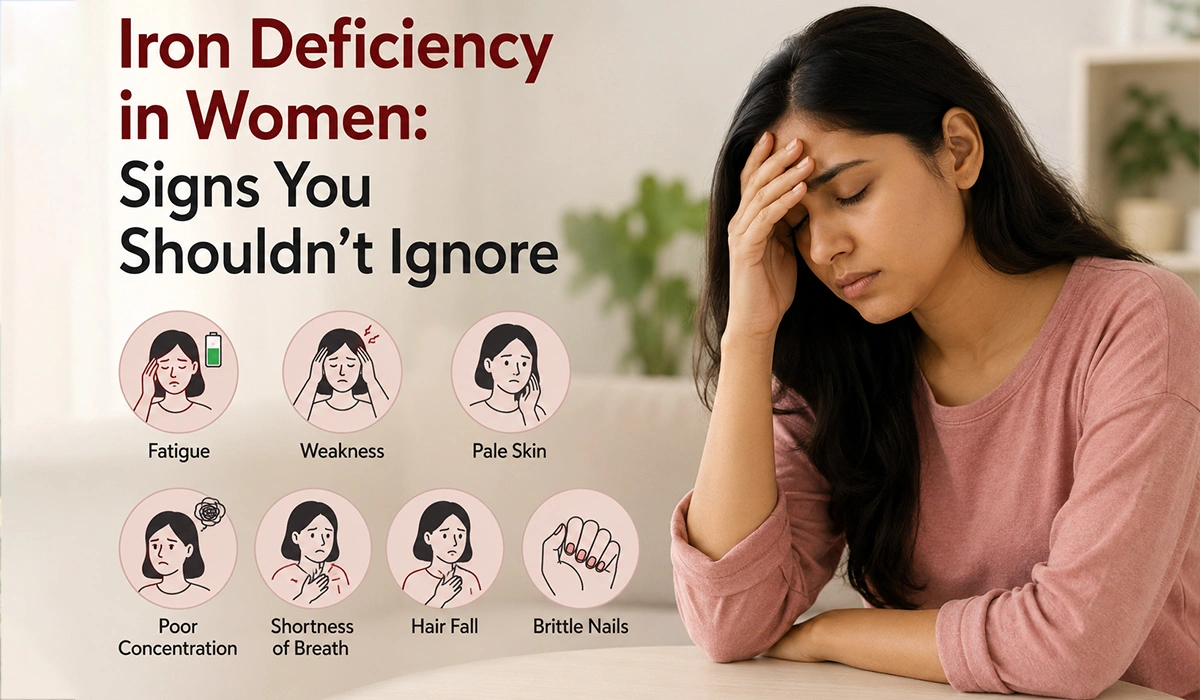
Early symptoms are often mild but become more noticeable as iron levels decline.
Common Symptoms
- Persistent tiredness
- Weakness
- Pale skin
- Frequent headaches
- Dizziness
- Cold hands and feet
- Shortness of breath
- Poor concentration
- Reduced exercise tolerance
- Increased irritability
Many women mistake these symptoms for stress or a busy lifestyle, delaying diagnosis.
Symptoms of Mild vs Severe Iron Deficiency
| Mild Iron Deficiency | Moderate to Severe Iron Deficiency |
|---|---|
| Fatigue | Extreme exhaustion |
| Difficulty concentrating | Rapid heartbeat |
| Hair fall | Chest discomfort |
| Headaches | Breathlessness during routine activities |
| Weakness | Fainting episodes |
| Pale skin | Severe dizziness |
| Brittle nails | Reduced work performance |
Recognizing symptoms early can help prevent complications.
Common Causes of Iron Deficiency
Iron deficiency can develop due to several reasons.
1. Heavy Menstrual Bleeding
One of the leading causes among women of reproductive age.
2. Pregnancy
Iron requirements nearly double to support fetal growth and increased blood volume.
3. Poor Diet
Low intake of iron-rich foods may gradually reduce iron stores.
4. Blood Loss
Including surgery, gastrointestinal bleeding, or injuries.
5. Digestive Disorders
Conditions affecting nutrient absorption include:
- Celiac disease
- Inflammatory bowel disease
- Gastric surgery
6. Frequent Blood Donation
Repeated blood donation without adequate recovery may contribute to lower iron levels.
Who Is Most at Risk?
Women at higher risk include:
- Adolescents
- Pregnant women
- Breastfeeding mothers
- Women with heavy periods
- Athletes
- Vegetarians
- Vegans
- Women with chronic kidney disease
- Individuals with digestive disorders
- Older women with chronic illnesses
Routine screening may be beneficial for those at increased risk.
Why Iron Is Important for Overall Health
Iron supports multiple body functions.
Brain Health
Helps maintain concentration, memory, and cognitive function.
Energy Production
Supports oxygen delivery to muscles and tissues.
Immunity
Contributes to normal immune system function.
Healthy Pregnancy
Supports fetal growth and maternal health.
Physical Performance
Helps maintain endurance and exercise capacity.
Iron-Rich Foods for Women
Animal Sources (Heme Iron)
- Lean red meat
- Chicken
- Fish
- Liver (consume in moderation)
- Eggs
Plant Sources (Non-Heme Iron)
- Spinach
- Fenugreek leaves
- Lentils
- Chickpeas
- Kidney beans
- Soybeans
- Tofu
- Pumpkin seeds
- Sesame seeds
- Dates
- Raisins
Foods That Improve Iron Absorption
Vitamin C enhances iron absorption.
Include foods like:
- Oranges
- Guava
- Amla
- Lemon
- Tomatoes
- Bell peppers
- Kiwi
- Strawberries
A simple example is adding lemon juice to dal or squeezing lemon over leafy vegetables.
Foods That May Reduce Iron Absorption
Avoid consuming these immediately with iron-rich meals:
- Tea
- Coffee
- Excess calcium supplements
- Large amounts of bran
- Highly processed foods
Spacing these foods from iron-rich meals may improve absorption.
Lifestyle Tips to Prevent Iron Deficiency
- Eat balanced meals.
- Include iron-rich foods daily.
- Pair iron with vitamin C sources.
- Stay physically active.
- Avoid unnecessary dieting.
- Attend regular health check-ups.
- Follow medical advice during pregnancy.
- Take prescribed supplements only when recommended.
How Is Iron Deficiency Diagnosed?
Iron deficiency is diagnosed through a combination of symptom evaluation, medical history, physical examination, and laboratory blood tests. Early diagnosis allows timely treatment and helps prevent complications such as iron deficiency anemia.
Common Diagnostic Tests
Your healthcare professional may recommend:
| Test | Purpose |
|---|---|
| Complete Blood Count (CBC) | Measures hemoglobin and red blood cells |
| Serum Ferritin | Checks the body’s iron stores |
| Serum Iron | Measures iron circulating in the blood |
| Total Iron Binding Capacity (TIBC) | Evaluates iron transport |
| Transferrin Saturation | Determines how much iron is available for use |
| Peripheral Blood Smear | Examines the appearance of blood cells |
Women experiencing persistent fatigue, heavy menstrual bleeding, or recurrent dizziness should discuss iron testing with a healthcare professional.
When Should You Consult a Doctor?
If symptoms last for more than two weeks, worsen over time, or interfere with daily activities, it is important to seek medical evaluation.
Consult a Healthcare Professional If You Experience:
- Constant fatigue despite adequate sleep
- Frequent dizziness
- Shortness of breath
- Pale skin
- Chest discomfort
- Rapid heartbeat
- Heavy menstrual bleeding
- Unexplained hair loss
- Difficulty concentrating
- Pregnancy with suspected anemia
Prompt diagnosis can prevent serious health complications.
Treatment Options for Iron Deficiency
Treatment depends on the underlying cause and the severity of iron deficiency. It often includes dietary improvements, iron supplements, and treatment of any underlying medical condition.
1. Dietary Changes
Increase intake of iron-rich foods.
Examples include:
- Spinach
- Lentils
- Kidney beans
- Chickpeas
- Soybeans
- Eggs
- Fish
- Lean meat
- Pumpkin seeds
- Sesame seeds
2. Iron Supplements
Iron supplements should only be taken under medical supervision.
Healthcare professionals determine:
- Appropriate dosage
- Duration of treatment
- Best formulation
- Monitoring schedule
Self-medication can sometimes lead to excessive iron intake or gastrointestinal side effects.
3. Treating the Underlying Cause
Treatment may also involve addressing:
- Heavy menstrual bleeding
- Digestive disorders
- Nutritional deficiencies
- Chronic diseases
- Blood loss
Managing the root cause helps prevent recurrence.
Iron-Rich Foods vs Iron Supplements
| Iron-Rich Foods | Iron Supplements |
|---|---|
| Natural source | Concentrated iron |
| Fewer side effects | May cause constipation or stomach upset |
| Best for prevention | Best for diagnosed deficiency |
| Provides additional nutrients | Used under medical advice |
| Suitable for daily diet | Used for a specific treatment duration |
For most people, a balanced diet remains the foundation of good nutrition.
Best Daily Habits to Improve Iron Levels Naturally
Small daily habits can make a significant difference.
Include Iron in Every Meal
Examples:
Breakfast
- Sprouted moong
- Eggs
- Whole grains
Lunch
- Dal
- Spinach
- Brown rice
- Salad with lemon
Dinner
- Chickpeas
- Vegetable curry
- Millet roti
Snacks
- Dates
- Raisins
- Pumpkin seeds
Pair Iron with Vitamin C
Vitamin C improves iron absorption.
Good combinations include:
- Spinach + Lemon
- Dal + Tomato
- Chickpeas + Bell Pepper
- Iron-rich meals + Orange
Avoid Tea or Coffee Immediately After Meals
Tea and coffee contain compounds that reduce iron absorption.
Wait at least one to two hours after eating before consuming them.
Common Myths About Iron Deficiency
| Myth | Fact |
|---|---|
| Only pregnant women need iron. | Women of all ages may develop iron deficiency. |
| Fatigue always means stress. | It may be caused by low iron levels. |
| Vegetarians cannot get enough iron. | Proper meal planning can meet iron needs. |
| Supplements should be taken without testing. | Iron supplementation should follow medical advice. |
| Iron deficiency only affects blood. | It also impacts the brain, muscles, and immune system. |
Understanding the facts helps people make informed healthcare decisions.
Iron Deficiency During Pregnancy
Pregnancy increases iron requirements because the mother’s body must support:
- Baby’s growth
- Placenta development
- Increased blood volume
Low iron during pregnancy may increase the risk of:
- Maternal fatigue
- Low birth weight
- Premature birth
- Reduced oxygen supply
Regular prenatal check-ups and appropriate supplementation help maintain healthy iron levels.
Iron Deficiency in Adolescent Girls
Teenage girls are particularly vulnerable because of:
- Rapid growth
- Menstruation
- Poor eating habits
- Increased nutritional needs
Healthy habits include:
- Balanced meals
- Regular health check-ups
- Iron-rich snacks
- Adequate sleep
- Physical activity
Schools and families play an important role in promoting nutritional awareness.
How Lifestyle Influences Iron Levels
Modern lifestyles can contribute to iron deficiency.
Common factors include:
- Skipping meals
- Highly processed foods
- Frequent dieting
- Lack of fruits and vegetables
- Poor sleep
- Chronic stress
Healthy lifestyle changes can support better overall nutrition.
Long-Term Complications if Left Untreated
Ignoring iron deficiency may lead to:
- Iron deficiency anemia
- Reduced physical performance
- Poor concentration
- Frequent infections
- Pregnancy complications
- Reduced work productivity
- Poor academic performance
- Lower quality of life
Early treatment helps prevent these complications.
Practical Tips for Busy Women
Simple habits that support healthy iron levels:
- Don’t skip breakfast.
- Include leafy vegetables several times a week.
- Carry healthy snacks like roasted chickpeas or nuts.
- Add lemon to iron-rich meals.
- Stay hydrated.
- Schedule routine health check-ups.
- Follow prescribed supplements if advised.
- Avoid crash diets.
- Maintain a healthy sleep routine.
- Stay physically active.
Expert Insight
Healthcare professionals recommend that women experiencing persistent fatigue, heavy menstrual bleeding, or symptoms of low iron should not rely solely on supplements without evaluation. Identifying the underlying cause is just as important as restoring iron levels.
A balanced diet, timely blood tests, and personalized medical guidance remain the safest and most effective approach.