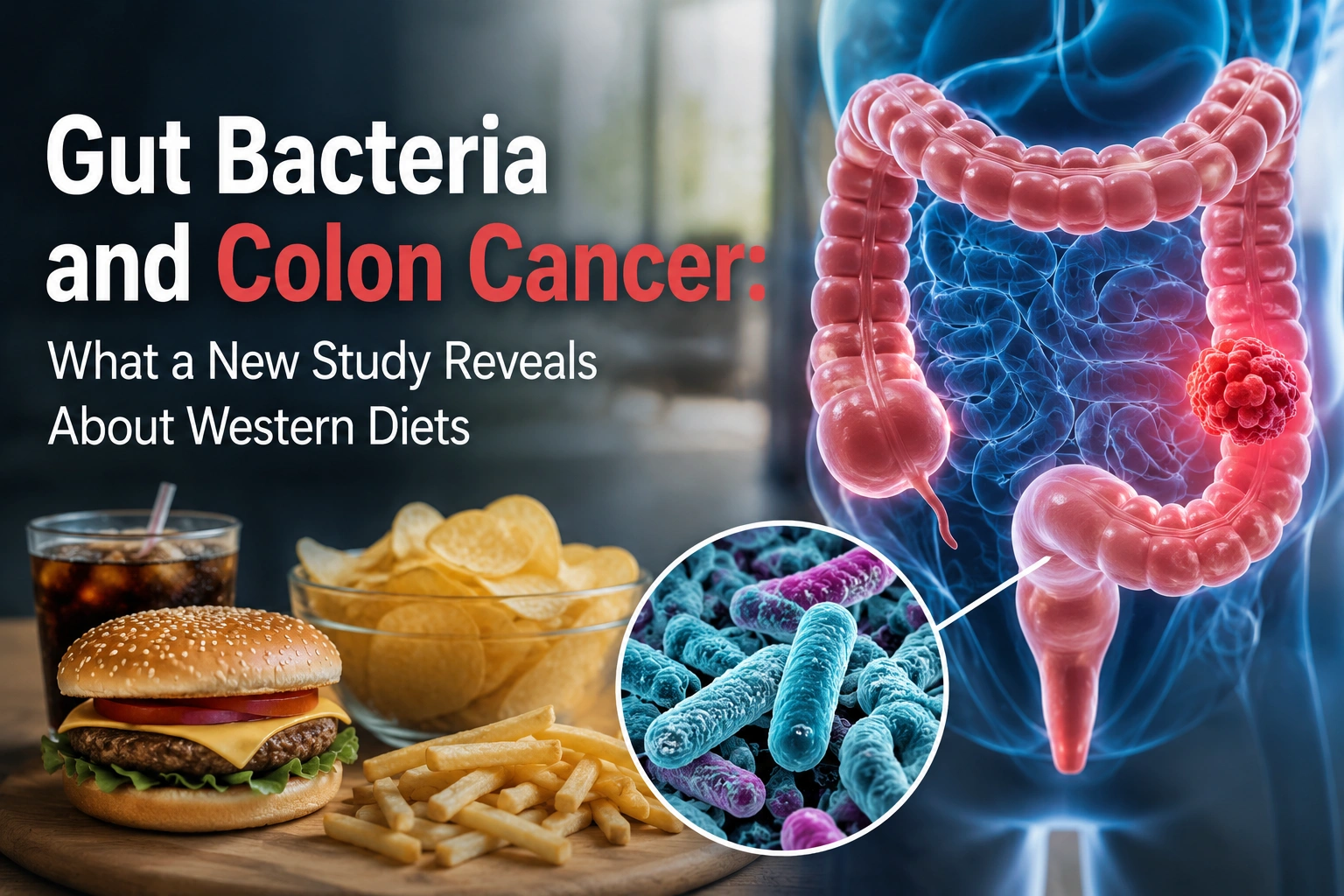
What if the food we eat could influence cancer risk not only through our own cells, but also through the trillions of microorganisms living inside our digestive system?
That question is becoming increasingly important in colorectal cancer research.
Scientists have long observed an association between Western-style dietary patterns and colorectal cancer. Diets characterized by higher amounts of meat and fat and lower amounts of plant foods and fiber have been investigated as one possible contributor to colorectal cancer risk. But an important question remained: How could diet actually influence the development of tumors?
A new study published in Gut provides an important piece of the puzzle. Researchers investigated how certain gut bacteria can transform bile acids into deoxycholic acid (DCA), a secondary bile acid that may promote conditions associated with colorectal tumor development. The researchers combined experiments in genetically modified pigs, mice, human colon organoids and analysis of human microbiome data.
The findings do not mean that eating a particular meal will cause colon cancer. Instead, they add evidence that the interaction between diet, gut bacteria and chemical compounds produced in the intestine may influence colorectal cancer biology.
What Did the New Study Discover?
The study found experimental evidence that certain gut bacteria can convert bile acids into secondary bile acids, particularly deoxycholic acid (DCA). Under a Western-style dietary environment, this pathway was associated with increased colon-cell proliferation and greater tumor burden in animal models. The researchers also identified related bacterial activity more frequently in stool samples from people with colorectal cancer.
What the researchers studied
The research team used several complementary approaches:
- A genetically engineered pig model of colorectal cancer
- Gnotobiotic mouse models
- Human colon organoids
- Microbiome and metagenomic analysis
- Data from multiple human cohorts
This is important because no single experimental model can answer every question about cancer.
The pig experiments helped researchers examine how diet affected tumor development in an organism with gastrointestinal characteristics relevant to humans. Mouse experiments allowed the researchers to manipulate specific bacterial communities. Human organoids provided another laboratory model for studying how bacterial metabolites affect colon cells.
The researchers also examined human microbiome data to determine whether bacteria capable of producing these secondary bile acids were more common in people with colorectal cancer.
What Is the Gut Microbiome?
The gut microbiome is the community of microorganisms living throughout the digestive tract. It includes bacteria, viruses, fungi and other microbes. These organisms interact with food, bile acids and intestinal cells, and they can produce substances that influence digestion, metabolism and the local environment of the colon.
Why does it matter?
Your digestive system is not simply a tube carrying food through the body.
It is an active biological environment where food components interact with:
Food → digestion → bile acids → gut bacteria → microbial metabolites → intestinal cells
Some microbial products may support normal intestinal function, while others can contribute to inflammation or cellular changes under certain conditions.
The microbiome is also highly individual. Age, diet, medications, geography, physical activity and other factors can influence the types and amounts of bacteria present.
This means there is no single definition of a “healthy microbiome” that applies perfectly to everyone.
Practical takeaway
Instead of trying to eliminate individual bacteria, focus on dietary and lifestyle patterns that support overall health.
How Can a Western Diet Affect Gut Bacteria?
A Western-style diet generally refers to a dietary pattern characterized by relatively high intake of foods such as red and processed meat and dietary fat, alongside lower intake of many plant-based foods. Such patterns can influence bile acid metabolism and the composition and activity of gut microbes, potentially changing the chemical environment of the colon.
It is important to understand that “Western diet” is a research term describing a dietary pattern, not a statement that all Western foods are unhealthy.
The concern is the overall pattern.
For example, a diet consistently dominated by:
- Processed meat
- Large amounts of red meat
- High-fat foods
- Highly processed foods
- Refined carbohydrates
- Sugary foods and beverages
- Low-fiber plant foods
can look very different from a diet containing a wide variety of vegetables, fruits, legumes, whole grains, nuts and seeds.
The World Health Organization identifies diets high in processed and red meat and low in fruits and vegetables among lifestyle factors associated with colorectal cancer risk.
The Bile Acid Connection: Where Does DCA Come From?
Bile acids are produced by the liver and help the body digest fats. After reaching the intestine, gut bacteria can chemically modify some bile acids into secondary bile acids. The new study focused on bacteria capable of a process called 7α-dehydroxylation, which can generate deoxycholic acid, or DCA.
This is one of the most interesting parts of the research.
The process can be simplified as:
Dietary fat → increased bile acid production → gut bacteria modify bile acids → secondary bile acids such as DCA
The researchers found that a Western diet increased DCA levels in their pig model and was accompanied by increased proliferation of cells lining the colon.
In mouse models, introducing certain bacteria capable of producing these secondary bile acids increased tumor burden.
The researchers also found that reducing the relevant bacterial activity could reduce some of the tumor-promoting effects in experimental models.
This provides evidence for a biological pathway connecting:
Diet → microbiome → bile acid metabolism → colon environment → tumor development
However, researchers still need more human studies to determine how strongly this pathway contributes to cancer risk in everyday populations
Which Gut Bacteria Are Involved?
The study focused on bacteria with 7α-dehydroxylating activity, including Clostridium scindens and related organisms. The researchers found that introducing certain bacteria into experimental mouse models increased DCA production and colon tumor burden. Human microbiome analyses also showed higher occurrence of relevant bacterial genes in colorectal cancer cohorts.
One important point is that bacteria should not simply be labeled “good” or “bad.”
The effects of a microorganism can depend on:
- The surrounding microbial community
- Diet
- Host genetics
- Immune function
- Intestinal conditions
- Metabolic products
- The amount and activity of the organism
The study’s findings therefore should not be interpreted as “one bacterium causes colon cancer.”
Instead, they reveal a specific biological pathway that could become important in future colorectal cancer prevention research.
Does This Mean a Western Diet Causes Colon Cancer?
No. The study strengthens evidence for a biological mechanism connecting certain dietary conditions, gut bacteria and colorectal tumor development, but it does not prove that eating a Western-style diet alone causes cancer in an individual person. Human cancer risk is influenced by diet, genetics, age, lifestyle, medical history and other factors.
This distinction is especially important when communicating new health research.
The strongest causal evidence in this study came from experimental animal and laboratory models. Human microbiome data supported the biological relevance of the bacterial pathway, but those human observations do not establish that the pathway causes cancer in every person.
Why this matters
Science often develops in stages:
Observation → association → mechanism → experimental evidence → human validation → clinical application
This study advances the mechanism and experimental evidence.
It does not mean doctors can currently use a person’s gut bacteria to predict whether they will develop colon cancer.
What Does This Mean for Gut Health?
The research suggests that gut health should be viewed as part of a broader lifestyle picture rather than as a search for one “perfect” probiotic or supplement. A balanced eating pattern, adequate plant foods, physical activity, healthy body weight, limited alcohol and avoiding tobacco are established approaches that support overall colorectal health.
A practical approach is to build meals around a variety of minimally processed foods.
Foods that can support a balanced diet
| Food group | Examples |
|---|---|
| Vegetables | Spinach, carrots, beans, cauliflower |
| Fruits | Apples, oranges, bananas, berries |
| Whole grains | Oats, whole-wheat roti, brown rice |
| Legumes | Dal, chickpeas, rajma, peas |
| Nuts & seeds | Almonds, walnuts, flaxseed |
| Protein | Fish, eggs, poultry, legumes |
| Fermented foods | Curd/yogurt and other suitable fermented foods |
This does not mean that every food must be “natural” or that people must completely eliminate meat.
The goal is a balanced dietary pattern.
Fiber, Gut Bacteria and Colon Health
Dietary fiber reaches the colon in forms that can be used by gut microbes, making fiber-rich foods an important part of a healthy eating pattern. However, the relationship between fiber, specific microbiome changes and colorectal cancer is complex, and fiber should be considered one part of an overall healthy diet rather than a guaranteed cancer-prevention treatment.
Fiber is found in:
- Fruits
- Vegetables
- Whole grains
- Beans
- Lentils
- Chickpeas
- Nuts
- Seeds
For many people, increasing fiber gradually can support bowel regularity and overall digestive health.
However, people with certain gastrointestinal conditions may need individualized dietary advice.
A simple Indian diet example
Instead of focusing on expensive “gut health” products, everyday foods can provide substantial dietary diversity:
Breakfast: Oats + fruit + nuts
Lunch: Dal + vegetables + whole-grain roti
Snack: Fruit or unsalted nuts
Dinner: Vegetables + pulses/fish/other protein + whole grains
The exact diet should be adapted to individual nutritional needs.
Red Meat and Processed Meat: What Should You Know?
Evidence from major cancer research organizations links processed meat to colorectal cancer risk and recommends limiting red meat. The World Cancer Research Fund recommends no more than moderate amounts of red meat and little, if any, processed meat.
Processed meat includes products that have been transformed through processes such as:
- Salting
- Curing
- Smoking
- Fermentation
- Preservation
Examples include some forms of:
- Ham
- Bacon
- Salami
- Sausages
Red meat includes mammalian muscle meat such as beef, lamb, goat and pork.
For people who eat meat, replacing some red or processed meat with alternatives such as fish, poultry, eggs or plant proteins can increase dietary variety.
Importantly, red meat also supplies nutrients such as protein, iron, zinc and vitamin B12. The goal is not necessarily to label a single food as “toxic,” but to consider quantity, frequency and the overall dietary pattern.
What Other Factors Influence Colorectal Cancer Risk?
Diet is only one part of colorectal cancer risk. Age, family history, inherited conditions, previous polyps or colorectal cancer, obesity, physical inactivity, smoking and alcohol consumption can also influence risk. This is why prevention requires both healthy lifestyle choices and appropriate medical screening.
Major risk factors
| Factor | Why it matters |
|---|---|
| Age | Risk increases with age |
| Family history | Can increase inherited and familial risk |
| Certain genetic conditions | Can substantially increase risk |
| Previous colorectal polyps | Some polyps can develop into cancer |
| Obesity | Associated with increased colorectal cancer risk |
| Physical inactivity | Associated with higher risk |
| Smoking | Associated with colorectal cancer |
| Alcohol | Associated with increased risk |
| Diet | Certain dietary patterns are associated with risk |
Having a risk factor does not mean someone will develop cancer.
Likewise, having no obvious risk factors does not eliminate the possibility.
Can Lifestyle Changes Reduce Colon Cancer Risk?
Yes, healthy lifestyle choices can help reduce colorectal cancer risk, although no lifestyle plan can guarantee prevention. WHO recommends maintaining a healthy weight, staying physically active, eating a healthy diet rich in fruits and vegetables, avoiding tobacco and limiting alcohol.
Five practical habits
1. Eat more plant foods
Include vegetables, fruits, legumes and whole grains regularly.
2. Limit processed meat
Keep processed meat intake as low as practical.
3. Stay physically active
Walking, cycling, swimming, strength training and other activities can contribute to overall health.
4. Avoid tobacco
Smoking is a recognized colorectal cancer risk factor.
5. Maintain a healthy body weight
Excess body weight is associated with colorectal cancer risk.
Symptoms of Colorectal Cancer You Should Not Ignore
Colorectal cancer can have no symptoms during its early stages. When symptoms occur, they may include persistent changes in bowel habits, blood in the stool, abdominal pain or bloating, unexplained weight loss, fatigue and iron-deficiency anemia. Persistent or concerning symptoms should be evaluated by a healthcare professional.
Possible warning signs include:
- Blood in stool
- Persistent constipation
- Persistent diarrhea
- Change in stool shape or bowel habits
- Ongoing abdominal pain
- Unexplained weight loss
- Persistent fatigue
- Iron-deficiency anemia
These symptoms do not automatically mean cancer.
Hemorrhoids, infections, inflammatory bowel conditions and other problems can cause similar symptoms.
The important point is not to ignore persistent changes.
Why Colorectal Cancer Screening Matters
Screening can identify colorectal cancer earlier and, in some cases, detect precancerous polyps before they become cancer. Screening methods can include stool-based tests, colonoscopy and other examinations. The appropriate age and interval depend on national guidelines and individual risk factors.
Screening is different from diagnostic testing.
Screening:
For people who may not have symptoms.
Diagnostic testing:
Used when symptoms or other findings require investigation.
People with a family history of colorectal cancer, inherited cancer syndromes, previous advanced polyps or certain inflammatory bowel diseases may need earlier or more frequent screening.
For people in India, screening decisions should be discussed with a qualified healthcare professional because recommendations may depend on age, symptoms, family history and local healthcare guidance.
What Does the Study Mean for People in India?
The new research is relevant to India because colorectal cancer is a global health concern, while dietary patterns are changing across many populations. However, the study does not show that a particular Indian diet causes or prevents colorectal cancer. People in India should focus on dietary diversity, physical activity, healthy weight, avoiding tobacco and appropriate medical evaluation.
Indian diets already include many foods that can contribute to a plant-rich dietary pattern:
- Dal
- Rajma
- Chana
- Vegetables
- Seasonal fruits
- Whole grains
- Nuts
- Seeds
- Traditional fermented foods
At the same time, urban diets can include increasing amounts of packaged foods, fast foods, sugary beverages and processed meats.
The useful lesson is not to copy or reject an entire country’s cuisine.
It is to evaluate the overall dietary pattern.
Gut Bacteria and Colon Cancer: What Researchers Still Don’t Know
Scientists still do not know whether changing specific gut bacteria in humans can reliably prevent colorectal cancer. The new study provides strong experimental evidence for a potential mechanism, but clinical applications such as microbiome testing, targeted bacterial therapies or specific supplements require further research and validation.
Several questions remain:
1. Can microbiome testing predict cancer risk?
Not yet as a routine clinical tool.
2. Can eliminating specific bacteria prevent cancer?
There is insufficient evidence to recommend doing this outside research or medical care.
3. Should everyone take probiotics?
No. Probiotics have specific uses and effects vary by strain and individual. They should not be promoted as a universal cancer-prevention strategy.
4. Can diet change the microbiome?
Yes, diet can influence microbial communities and their metabolic activity, but individual responses vary.
5. Could future treatments target bacterial metabolites?
Possibly. The study specifically suggests that targeting secondary bile acid production could be an area for future prevention research.
Western Diet vs Balanced Diet: A Practical Comparison
| Feature | Western-style pattern | More balanced pattern |
|---|---|---|
| Vegetables | Often limited | Regular variety |
| Fruits | May be limited | Regular intake |
| Whole grains | Often lower | Included regularly |
| Legumes | May be limited | Regular inclusion |
| Processed meat | Higher | Limited |
| Red meat | May be higher | Moderate |
| Ultra-processed foods | Often higher | Limited |
| Dietary diversity | Lower | Higher |
| Physical activity | May be lower | Regular activity encouraged |
This table is a simplified educational comparison, not a classification of every person’s diet.
What Should You Actually Do After Reading This Study?
The headline may sound alarming, but the practical message is relatively straightforward.
You do not need to panic about your gut bacteria.
You do not need to buy an expensive microbiome test.
You do not need to completely eliminate every food associated with a Western diet.
Instead:
Build a healthier pattern.
Eat more:
- Vegetables
- Fruits
- Dal and legumes
- Whole grains
- Nuts and seeds
- Diverse plant foods
Eat less:
- Processed meat
- Excess red meat
- Highly processed foods
- Excess alcohol
- Sugary drinks
Also:
- Stay physically active
- Avoid tobacco
- Maintain a healthy weight
- Pay attention to persistent bowel symptoms
- Follow appropriate cancer-screening recommendations
WHO currently identifies healthy diet, physical activity, healthy body weight, avoiding tobacco and limiting alcohol as important measures for reducing colorectal cancer risk.
Frequently Asked Questions: Gut Bacteria and Colon Cancer
1. Can gut bacteria cause colon cancer?
Certain gut bacteria and their metabolic products may contribute to processes involved in colorectal cancer. The new study provides experimental evidence that specific bacteria can produce DCA and promote tumor development in animal models under particular dietary conditions. It does not mean that all gut bacteria cause cancer.
2. What did the new Western diet study find?
Researchers found that a Western-style diet increased DCA levels and tumor-related changes in an experimental pig model. Certain 7α-dehydroxylating bacteria increased DCA production and tumor burden in mouse models. Related bacterial activity was also more common in human colorectal cancer datasets.
3. What is deoxycholic acid?
Deoxycholic acid, or DCA, is a secondary bile acid produced when certain gut bacteria chemically modify primary bile acids. The new research suggests that increased DCA production may contribute to colorectal tumor-promoting processes under certain conditions.
4. Should I avoid all red meat?
Not necessarily. Evidence supports limiting red meat and consuming little, if any, processed meat. Red meat also provides useful nutrients. The focus should be on moderation and an overall balanced dietary pattern.
5. Are fruits and vegetables good for gut health?
Fruits and vegetables are important components of a healthy diet and are recommended by WHO as part of colorectal cancer prevention. They also provide dietary fiber and a wide range of nutrients.
6. Can probiotics prevent colon cancer?
There is currently insufficient evidence to recommend probiotics as a guaranteed method of preventing colorectal cancer. Different probiotic strains have different effects, and microbiome research is still developing.
7. Does having unhealthy gut bacteria mean I have cancer?
No. The presence or absence of particular bacteria cannot by itself diagnose colorectal cancer. Cancer diagnosis requires appropriate medical evaluation and, when indicated, diagnostic tests.
8. What are early signs of colorectal cancer?
Possible signs include blood in stool, persistent bowel changes, abdominal discomfort, unexplained weight loss, fatigue and iron-deficiency anemia. However, early colorectal cancer may cause no symptoms.
9. Can exercise reduce colorectal cancer risk?
Regular physical activity is associated with a lower risk of colorectal cancer and is an important part of a healthy lifestyle.
10. Is colorectal cancer becoming more common in younger adults?
Although colorectal cancer remains more common in older adults, WHO notes a rising burden among adults aged 30–50 in some settings. Persistent symptoms should therefore be evaluated rather than dismissed because of age.
11. Can changing my diet reverse gut bacteria linked to cancer?
Diet can influence the gut microbiome, but there is not currently enough evidence to say that changing diet will reliably eliminate cancer-associated bacteria or reverse cancer risk. Dietary changes should be viewed as part of overall health management.
12. Should I get a gut microbiome test?
Routine commercial microbiome testing is not currently a substitute for colorectal cancer screening or medical evaluation. If you have symptoms or significant risk factors, speak with a healthcare professional instead.
13. When should I see a doctor?
Seek medical advice if you experience persistent blood in the stool, unexplained weight loss, ongoing bowel changes, persistent abdominal pain, unusual fatigue or other concerning symptoms.
14. Can colon cancer be prevented?
Not every case can be prevented, but risk can be reduced through healthy lifestyle choices and appropriate screening. Finding and removing precancerous polyps can also help prevent some colorectal cancers.
15. Is the new study proof that Western food causes cancer?
No. It provides experimental evidence for a biological mechanism involving diet, gut bacteria and secondary bile acids. Human cancer risk is more complex and cannot be attributed to one dietary pattern alone.
Expert Perspective: What Is the Most Important Message?
The most useful interpretation of this research is not “never eat this food.”
It is that the human body is an interconnected system.
Food affects metabolism.
Metabolism affects bile acids.
Bile acids interact with gut microbes.
Gut microbes produce metabolites.
Those metabolites interact with intestinal cells.
Researchers are increasingly trying to understand this chain.
The new study is valuable because it moves beyond simply observing that Western diets and colorectal cancer are associated. It provides experimental evidence for a possible mechanism involving 7α-dehydroxylating bacteria and DCA.
But responsible health communication requires acknowledging the limits of the research.
The study does not establish a specific human dietary prescription, does not prove that one bacterium causes cancer in humans and does not justify replacing medical screening with supplements or microbiome tests.
Why This Research Matters for Future Cancer Prevention
The next generation of colorectal cancer prevention may involve more than simply asking what a person eats.
Researchers may eventually consider:
Diet + genetics + gut microbiome + microbial metabolites + lifestyle + screening history
This could potentially lead to more personalized prevention strategies.
The authors of the study specifically point toward future research into interventions that could reduce harmful secondary bile acid production and potentially identify people at higher risk through microbiome-related markers.
However, these are future research possibilities, not established clinical treatments.
For now, the strongest practical approach remains remarkably familiar: eat a balanced diet, stay active, avoid tobacco, limit alcohol, maintain a healthy weight and follow appropriate colorectal cancer screening and medical advice.
Conclusion
The relationship between gut bacteria and colon cancer is becoming one of the most important areas of modern cancer research.
A new study published in Gut provides experimental evidence that certain gut bacteria can convert bile acids into deoxycholic acid (DCA) and that this pathway can promote colorectal tumor development under Western-style dietary conditions in experimental models. The research also found related bacterial activity in human colorectal cancer datasets.
But the message should be balanced.
This is not proof that eating Western food automatically causes colon cancer.
It is evidence that diet and the gut microbiome can interact in complex ways that may influence the colon’s biological environment.
For people in India and around the world, the practical lesson is simple: build a varied diet rich in vegetables, fruits, legumes and whole grains; limit processed meat and excessive red meat; remain physically active; avoid tobacco; limit alcohol; maintain a healthy weight; and do not ignore persistent bowel symptoms.
Your gut is more than a digestive system. It is an ecosystem—and understanding that ecosystem may become an important part of the future of cancer prevention.