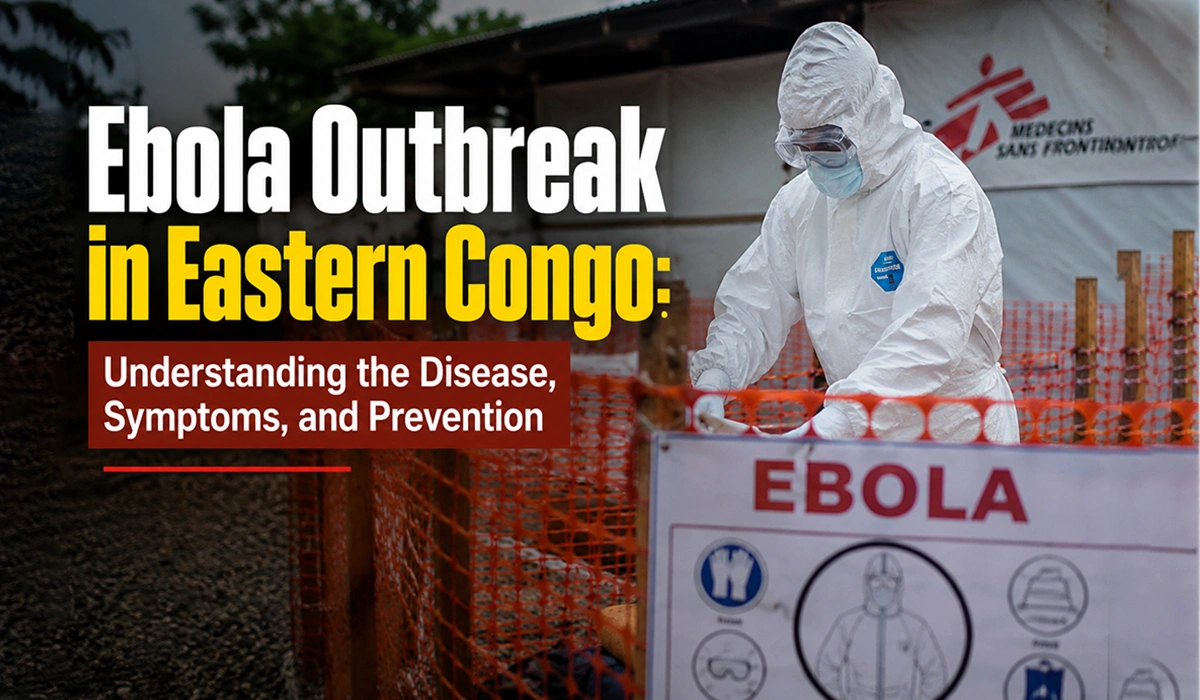
Introduction
Imagine waking up to news that a deadly virus has once again begun affecting families, healthcare workers, and entire communities. Schools become quieter, hospitals become busier, and people become more cautious about everyday interactions.
This is the reality many communities in Eastern Democratic Republic of Congo (DRC) have faced during Ebola outbreaks.
Although Ebola is not a new disease, every outbreak reminds the world how quickly infectious diseases can threaten public health. Fortunately, advances in medical research, vaccination, surveillance, and international cooperation have significantly improved the ability to detect and respond to outbreaks.
Understanding Ebola—how it spreads, its symptoms, and the importance of prevention—helps individuals stay informed without unnecessary fear.
What is the Ebola outbreak in Eastern Congo?
The Ebola outbreak in Eastern Congo refers to confirmed cases of Ebola Virus Disease (EVD) occurring in the eastern provinces of the Democratic Republic of Congo. Ebola is a severe viral illness that spreads through direct contact with infected body fluids or contaminated materials. Early diagnosis, isolation, supportive care, vaccination of contacts, and infection prevention measures are critical to controlling outbreaks.
What Is Ebola?
Ebola Virus Disease (EVD) is a rare but serious viral illness caused by viruses in the Ebolavirus genus. Without timely medical care, it can become life-threatening.
Detailed Explanation
Ebola primarily affects humans and certain animals.
The disease was first identified in 1976 near the Ebola River, from which it takes its name.
Since then, multiple outbreaks have occurred in Central and West Africa.
Modern healthcare systems now have better diagnostic tools, vaccines, and supportive treatment than were available decades ago.
Why Is Eastern Congo Frequently Affected?
Eastern Congo experiences repeated Ebola outbreaks because of ecological, geographical, and healthcare challenges.
Contributing Factors
- Dense tropical forests where wildlife reservoirs exist
- Remote villages with limited healthcare access
- Population movement across borders
- Conflict affecting healthcare delivery
- Difficulty tracing contacts
- Limited medical infrastructure
These factors make rapid outbreak control more challenging.
How Does Ebola Spread?
Ebola spreads through direct contact with infected body fluids or contaminated objects. It is not spread through the air like influenza or COVID-19.
Common Routes of Transmission
| Source | Risk |
|---|---|
| Blood | High |
| Vomit | High |
| Saliva | Possible |
| Urine | Possible |
| Sweat | Possible |
| Breast milk | Possible |
| Semen | Possible |
| Contaminated needles | High |
| Medical equipment | High |
People are generally not contagious before symptoms begin.
Can Ebola Spread Through Air?
No. Current scientific evidence indicates that Ebola does not spread through the air under normal conditions.
Instead, transmission requires direct exposure to infected body fluids or contaminated surfaces.
Early Symptoms of Ebola
Symptoms usually appear 2–21 days after exposure.
Common Early Symptoms
- Sudden fever
- Severe headache
- Muscle pain
- Weakness
- Fatigue
- Sore throat
- Loss of appetite
Because these symptoms resemble malaria, typhoid, or influenza, laboratory testing is necessary for diagnosis.
Advanced Symptoms
As the illness progresses, symptoms may include:
- Vomiting
- Diarrhea
- Severe dehydration
- Abdominal pain
- Skin rash
- Red eyes
- Internal bleeding
- External bleeding (in some patients)
- Organ dysfunction
Not every patient develops visible bleeding.
Incubation Period
| Stage | Time |
|---|---|
| Exposure | Day 0 |
| Incubation | 2–21 days |
| Symptoms begin | Usually 8–10 days |
| Infectious | After symptoms appear |
Who Is at Higher Risk?
Higher-risk groups include:
- Healthcare workers
- Family caregivers
- Laboratory personnel
- Burial teams
- Individuals with direct contact with infected patients
- People exposed to infected wildlife
Proper personal protective equipment (PPE) significantly reduces risk.
How Is Ebola Diagnosed?
Diagnosis relies on laboratory testing because early symptoms overlap with many other infectious diseases.
Doctors may use:
- PCR testing
- Blood tests
- Medical history
- Exposure assessment
- Contact tracing
Rapid diagnosis helps prevent further transmission.
Treatment Options
There is no simple cure, but early supportive medical care greatly improves survival.
Treatment may include:
- Intravenous fluids
- Electrolyte replacement
- Oxygen support
- Blood pressure management
- Pain relief
- Treatment of secondary infections
- Nutritional support
Certain monoclonal antibody therapies have also been used in appropriate clinical settings.
Can Ebola Be Prevented?
Prevention strategies include:
- Avoid contact with infected individuals’ body fluids.
- Wash hands frequently with soap or alcohol-based sanitizer.
- Use appropriate PPE in healthcare settings.
- Follow safe burial practices.
- Avoid handling sick or dead wildlife.
- Seek medical attention promptly if symptoms develop after exposure.
Vaccination Against Ebola
Vaccination has become an important tool in outbreak control.
Healthcare authorities may vaccinate:
- Close contacts of confirmed cases
- Contacts of contacts
- Frontline healthcare workers
- Outbreak response teams
This “ring vaccination” strategy helps reduce transmission during outbreaks.
Why Early Detection Matters
Early diagnosis allows:
- Faster treatment
- Isolation of infected individuals
- Protection of healthcare workers
- Contact tracing
- Reduced community spread
Prompt reporting of symptoms after possible exposure is essential.
How Global Health Organizations Respond
Organizations such as the World Health Organization (WHO) and national public health authorities work together to:
- Monitor outbreaks
- Support laboratory testing
- Train healthcare workers
- Provide vaccines
- Improve infection prevention and control
- Conduct public education campaigns
International collaboration plays a critical role in outbreak response.
Myth vs Fact
| Myth | Fact |
|---|---|
| Ebola spreads through the air | No, it spreads through direct contact with infected body fluids |
| Every patient experiences bleeding | Not all patients develop bleeding symptoms |
| Ebola cannot be treated | Early supportive care improves survival |
| Vaccines are unavailable | Vaccines are available for outbreak response in certain settings |
| Healthy people spread Ebola | People generally become contagious after symptoms begin |