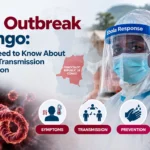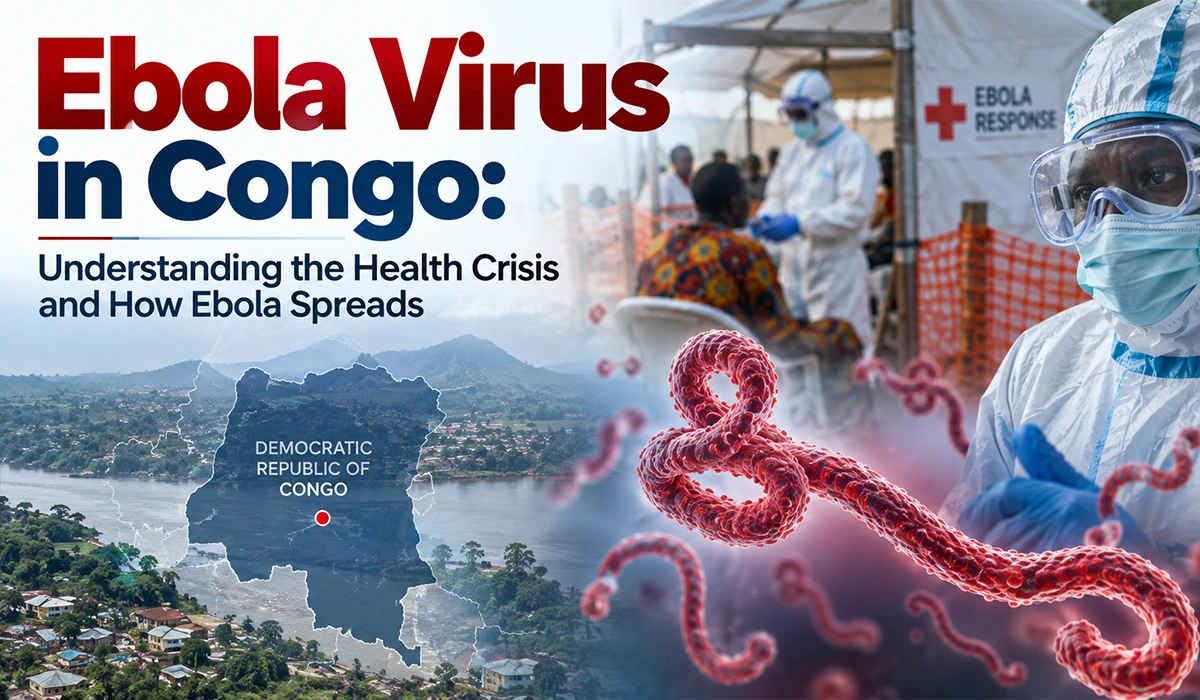
The Democratic Republic of the Congo (DRC) is facing its largest Ebola outbreak ever recorded in the country. The current outbreak involves Bundibugyo virus disease (BVD), a form of Ebola disease first identified in Uganda in 2007. As of 4 September 2026, WHO reported 6,522 confirmed cases and 3,134 confirmed deaths in the DRC, with a confirmed case-fatality ratio of about 48%.
The outbreak is especially concerning because transmission has expanded across multiple provinces and health zones. Understanding how Ebola spreads, its symptoms, who is most at risk and how outbreaks are controlled is essential for public health awareness.
What Is Ebola Virus Disease?
Quick answer: Ebola disease is a rare but severe viral illness caused by viruses in the Orthoebolavirus genus. Different Ebola viruses can cause different diseases, including Ebola virus disease and Bundibugyo virus disease.
The current DRC outbreak is caused by Bundibugyo virus, rather than the Zaire ebolavirus responsible for several earlier major Ebola outbreaks.
What Is Happening in Congo?
WHO confirmed the 2026 DRC outbreak in May. By early September, confirmed cases had risen to more than 6,500, with more than 3,100 confirmed deaths. The outbreak has affected several provinces, including Ituri, North Kivu, South Kivu, Haut-Uélé, Tshopo and Bas-Uélé.
WHO describes the outbreak as rapidly expanding and notes that conflict, insecurity, population movement and healthcare-access challenges are complicating the response.
How Does Ebola Spread?
Quick answer: Ebola mainly spreads through direct contact with the blood or other body fluids of an infected person or someone who has died from Ebola. The virus can enter through broken skin or mucous membranes such as the eyes, nose or mouth.
Transmission can occur through:
- Blood
- Vomit and faeces
- Saliva and sweat
- Other infected body fluids
- Contaminated objects
- Contact with the bodies of people who died from Ebola
Ebola does not spread simply because someone is nearby. A person with Ebola generally becomes infectious after symptoms develop.
What Are the Symptoms of Ebola?
Early symptoms can resemble other infections, making laboratory testing important.
Common symptoms include:
- Fever
- Severe tiredness
- Muscle pain
- Headache
- Sore throat
- Vomiting
- Diarrhoea
- Abdominal pain
- Rash
Some patients can develop kidney or liver problems and, less commonly, internal or external bleeding.
How Long Does Ebola Take to Cause Symptoms?
The incubation period is generally 2 to 21 days. Importantly, WHO states that a person infected with Ebola cannot transmit the disease before symptoms begin.
Anyone with compatible symptoms and a possible exposure history should seek urgent medical assessment rather than attempting self-diagnosis.
Why Is the 2026 Outbreak Different?
The current outbreak is caused by Bundibugyo virus, for which there is currently no licensed vaccine or specific approved antiviral treatment, according to WHO. This differs from Zaire ebolavirus, for which a licensed vaccine exists.
WHO is supporting clinical research into potential treatments and has recommended evaluating the licensed Ervebo vaccine in a clinical trial for possible protection against Bundibugyo virus.
How Is Ebola Diagnosed?
Symptoms alone cannot reliably confirm Ebola because early illness can resemble diseases such as malaria, typhoid and meningitis.
Laboratory testing is therefore essential. WHO reports that PCR and other laboratory methods can be used to confirm infection.
Rapid diagnosis helps health authorities isolate patients, trace contacts and interrupt further transmission.
How Is the Ebola Outbreak Controlled?
Effective outbreak control requires several measures working together:
| Response measure | Why it matters |
|---|---|
| Early case detection | Identifies infections quickly |
| Laboratory testing | Confirms suspected cases |
| Isolation and care | Reduces exposure to others |
| Contact tracing | Finds people who may have been exposed |
| Infection prevention | Protects patients and healthcare workers |
| Safe burials | Reduces transmission from deceased patients |
| Community engagement | Builds trust and encourages early reporting |
WHO says rapid case identification, isolation, contact tracing, safe burials and community engagement are central to controlling the current outbreak.
What Can People Do to Reduce Risk?
During an outbreak, people should follow guidance from local health authorities and avoid contact with blood or body fluids from suspected or confirmed cases.
Practical precautions include:
- Avoid contact with suspected patients’ body fluids.
- Do not handle the bodies of people who may have died from Ebola.
- Follow official infection-control instructions.
- Seek medical care promptly after a potential exposure.
- Cooperate with contact-tracing teams.
- Avoid sharing unverified information about suspected cases.
Healthcare workers require particularly strong infection-prevention measures because occupational exposure can occur while caring for infected patients.
Does Ebola Pose a Risk to India?
Quick answer: The current outbreak is centred in the DRC, but international travel and population movement mean countries need continued surveillance and preparedness.
WHO has been monitoring international signals linked to the outbreak. Most investigated signals outside affected areas have not been confirmed as Ebola.
For people in India, the most useful response is awareness rather than panic: travellers returning from affected areas who develop compatible symptoms should promptly tell healthcare professionals about their travel and possible exposure history.
Frequently Asked Questions About Ebola Virus in Congo
How does Ebola spread?
Ebola mainly spreads through direct contact with blood or other body fluids from an infected person or deceased person.
What causes the current Ebola outbreak in Congo?
The 2026 outbreak in the DRC is caused by Bundibugyo virus, a species of Ebola virus.
What are the main symptoms of Ebola?
Fever, fatigue, muscle pain, headache and sore throat can occur initially, followed by gastrointestinal symptoms such as vomiting and diarrhoea.
Is there a vaccine for the current Bundibugyo outbreak?
There is currently no licensed vaccine specifically approved for Bundibugyo virus disease. Research is underway to evaluate potential vaccine and treatment options.
How serious is the 2026 Congo Ebola outbreak?
As of 4 September 2026, WHO reported 6,522 confirmed cases and 3,134 confirmed deaths in the DRC, making it the country’s largest recorded Ebola outbreak.
Conclusion
The 2026 Ebola virus crisis in the Democratic Republic of the Congo demonstrates how quickly an infectious disease can expand when transmission, geographic spread and healthcare challenges occur together. Knowing how Ebola spreads and recognizing symptoms early can help people make informed decisions.
For India and other countries, continued surveillance, travel preparedness, laboratory capacity and public-health communication remain important. The most effective response to Ebola is not panic—it is early detection, appropriate medical care, infection prevention and trusted public-health action.