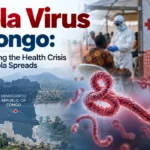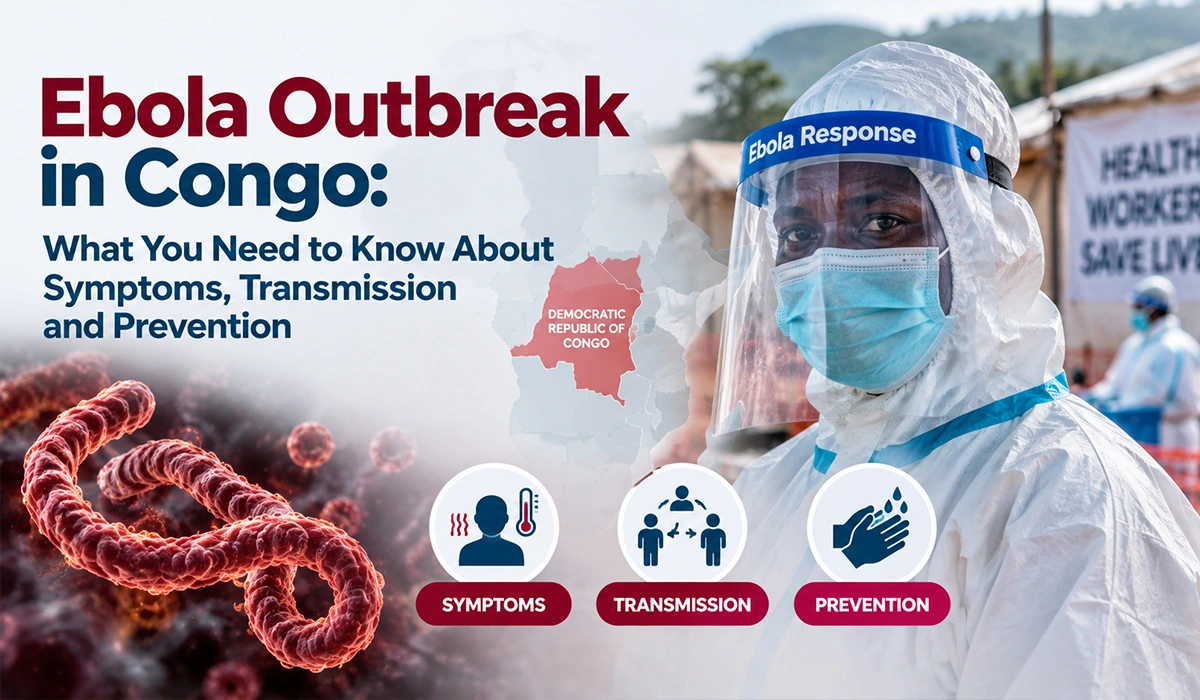
The Democratic Republic of the Congo (DRC) is facing a major outbreak of Bundibugyo virus disease (BVD), a form of Ebola disease. The outbreak was declared in May 2026 and has continued to expand across the country. As of 26 August 2026, WHO reported 5,794 confirmed cases and 2,786 deaths in the DRC, with cases detected across 60 health zones in six provinces.
For people in India and elsewhere, the situation is a reminder of why understanding Ebola symptoms, transmission and prevention matters—especially for people travelling to or working in affected regions.
What Is Ebola Disease?
Ebola disease is a severe viral infection that can cause fever, weakness, gastrointestinal symptoms and, in some cases, bleeding. The current outbreak in the DRC is caused by Bundibugyo virus, one of the viruses in the Orthoebolavirus group.
Unlike Ebola virus disease, for which vaccines and specific treatments are available, there is currently no licensed vaccine or specific approved treatment for Bundibugyo virus disease. Early supportive care remains extremely important.
Why Is the Congo Outbreak Concerning?
The 2026 outbreak is significant because of its scale, rapid spread and high mortality. WHO reported that the outbreak had become the largest Ebola outbreak ever documented in the DRC, surpassing the 2018–2020 outbreak in confirmed cases.
The outbreak is occurring amid insecurity, population displacement and difficulties accessing healthcare, which can make surveillance, contact tracing and treatment more challenging.
What Are the Symptoms of Ebola?
Early Ebola symptoms can resemble other infections, making early recognition difficult. Symptoms may begin suddenly and include fever, fatigue, muscle pain, headache and sore throat. Vomiting, diarrhoea, abdominal pain and rash may follow.
Common symptoms include:
- Fever
- Severe tiredness or weakness
- Muscle pain
- Headache
- Sore throat
- Vomiting
- Diarrhoea
- Abdominal pain
- Rash
Bleeding can occur, but it is not present in every patient and may develop later.
How Long Does Ebola Take to Cause Symptoms?
The incubation period for Ebola disease is generally 2–21 days. People infected with Ebola are not considered infectious before symptoms develop, according to WHO.
Because early symptoms can look like malaria, typhoid and other infections, laboratory testing is required to confirm Ebola.
How Does Ebola Spread?
Ebola mainly spreads through direct contact with blood or other body fluids of an infected person or someone who has died from the disease. Transmission can also occur through contaminated objects and surfaces.
The virus can also enter people through broken skin or mucous membranes such as the eyes, nose or mouth.
Healthcare workers, caregivers and family members can face increased exposure when appropriate infection-prevention measures are not followed. Unsafe burial practices involving direct contact with the deceased can also contribute to transmission.
Can Ebola Spread Through the Air?
Ebola is not considered an airborne infection in the way diseases such as measles are. Transmission is primarily associated with direct contact with infected body fluids or contaminated materials.
This distinction is important because misinformation can create unnecessary fear and stigma.
How Is Ebola Diagnosed?
Ebola cannot be reliably diagnosed from symptoms alone. Early symptoms overlap with several other serious infections, so laboratory testing is needed for confirmation. WHO lists methods including RT-PCR, antigen detection and antibody-based testing.
People suspected of having Ebola should be assessed by trained healthcare professionals rather than attempting home diagnosis.
Is There Treatment for Ebola?
Early, intensive supportive care can improve survival. This may include rehydration, management of symptoms, nutritional support, monitoring and treatment of complications. WHO released comprehensive clinical-management guidance in 2026 covering Ebola and other filovirus diseases.
For Bundibugyo virus disease specifically, there is currently no approved specific therapeutic or licensed vaccine, although candidate products are being studied.
How Can Ebola Be Prevented?
Prevention focuses on avoiding exposure, identifying cases quickly and interrupting transmission. WHO recommends a combination of surveillance, contact tracing, infection prevention, laboratory testing, supportive care and safe, dignified burials.
Key precautions include:
- Avoid direct contact with people suspected or confirmed to have Ebola.
- Avoid contact with blood and other body fluids.
- Do not handle the bodies of people who died from suspected Ebola.
- Follow local public-health instructions when visiting affected areas.
- Healthcare workers should follow appropriate infection-prevention and control procedures.
- Seek medical assessment promptly if compatible symptoms develop after potential exposure.
What Should Travellers from India Know?
Travellers should follow official health advice rather than relying on social-media rumours. WHO has not recommended general travel or trade restrictions related to this outbreak based on the available information.
People travelling to affected areas should monitor official updates, understand potential exposure risks and seek medical advice promptly if symptoms develop after a possible exposure.
Why Community Action Matters
Stopping Ebola requires more than hospitals and medicines. Community trust, early reporting, contact follow-up, safe care and cooperation with public-health teams are essential to breaking transmission. WHO and Africa CDC have specifically called for stronger community-led action in the DRC.
Stigma can also discourage people from seeking care, making outbreaks harder to control.
Ebola Outbreak in Congo: Key Takeaways
The 2026 DRC outbreak is a serious public-health emergency involving Bundibugyo virus disease. The most important facts are:
| Question | Quick Answer |
|---|---|
| What causes it? | Bundibugyo virus |
| Main symptoms? | Fever, fatigue, muscle pain, headache, sore throat, vomiting and diarrhoea |
| Incubation period? | 2–21 days |
| How does it spread? | Mainly through direct contact with infected body fluids |
| Is it airborne? | No, it is not considered an airborne infection |
| Specific treatment for BVD? | No approved specific treatment currently |
| Can early care help? | Yes, early supportive care can improve survival |
| Best prevention? | Avoid exposure, early detection, infection control and safe burials |
Ebola Outbreak in Congo Frequently Asked Questions
Is Ebola still spreading in Congo in 2026?
Yes. WHO reported sustained transmission and geographic expansion in its latest August 2026 update.
What is the first symptom of Ebola?
Fever is commonly among the early symptoms, along with fatigue, muscle pain, headache and sore throat. These symptoms are not specific to Ebola, so testing is essential.
Can Ebola be prevented?
Yes. Avoiding contact with infected body fluids, strengthening infection control, rapid detection, contact tracing and safe burials are important prevention measures.
Should people in India be worried about Ebola?
For the general public in India, the key approach is accurate information rather than panic. People who have travelled to or had potential exposure in an affected area should follow public-health advice and seek medical evaluation if compatible symptoms occur.
Conclusion
The Ebola outbreak in the DRC highlights how quickly infectious diseases can expand when healthcare access, security and population movement create additional challenges. Understanding Ebola symptoms, transmission and prevention can help reduce fear, encourage early medical attention and support responsible public-health action.
For India and the wider world, the lesson is simple: early detection, trusted information and community cooperation can save lives.