Introduction: Why the 2026 Ebola Outbreak Is Drawing Global Attention
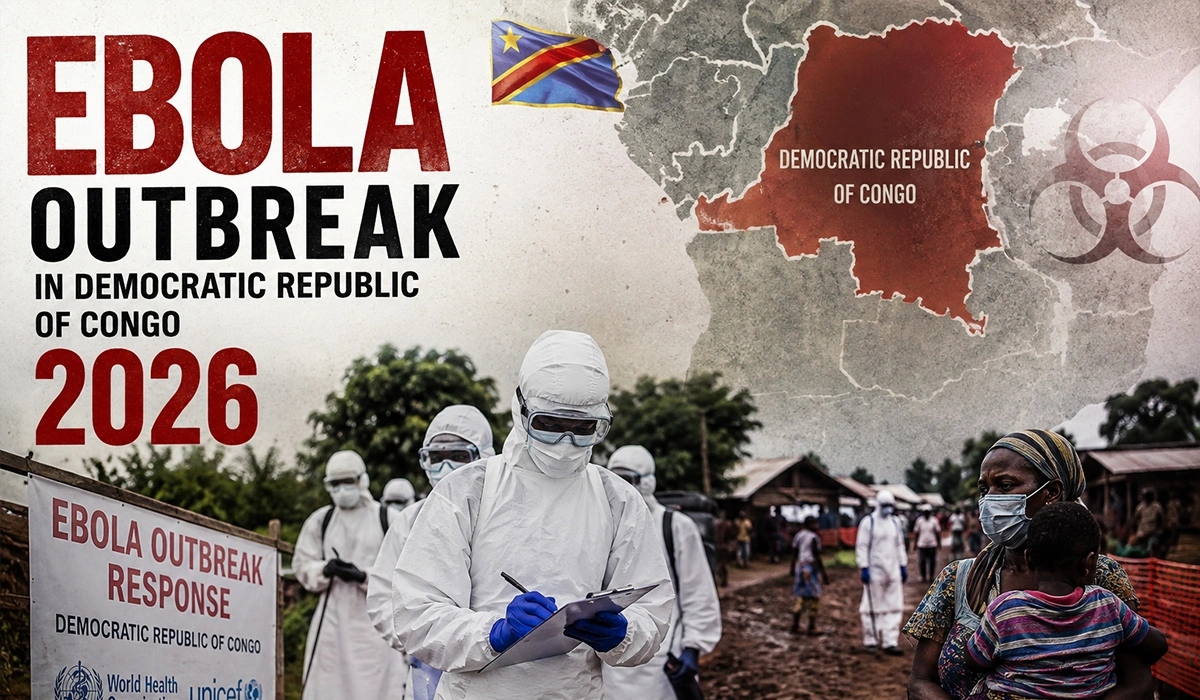
In May 2026, health authorities in the Democratic Republic of the Congo (DRC) confirmed a new Ebola outbreak in Ituri Province. What initially appeared to be clusters of severe illness quickly became a major public-health emergency.
The outbreak is caused by Bundibugyo virus, a species of Ebola virus that has caused outbreaks before but is much less common than some other Ebola species. WHO says the DRC outbreak was declared on 15 May, and on 17 May the WHO Director-General determined that the outbreak in DRC and Uganda constituted a Public Health Emergency of International Concern (PHEIC).
The situation has since changed dramatically.
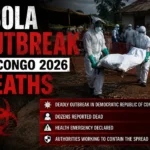
As of 17 August 2026, reports put the outbreak at 4,945 confirmed cases and at least 2,325 deaths, making it the deadliest Ebola outbreak in the DRC’s history. It has expanded to six provinces, with Ituri remaining the main centre of transmission.
WHO says the outbreak could still potentially be brought under control within months if sufficient resources are mobilized, but delayed detection, insecurity, strained healthcare systems and gaps in surveillance remain major challenges.
So what exactly is happening?
What is Bundibugyo virus? How does Ebola spread? What are the symptoms? And what can communities and travellers do to reduce the risk?
Let’s break it down.
What Is the Ebola Outbreak in the Democratic Republic of Congo 2026?
The 2026 DRC Ebola outbreak is an ongoing outbreak of Bundibugyo virus disease, first confirmed in Ituri Province in May 2026. It has since spread to multiple provinces and across borders, including Uganda. WHO and national authorities are coordinating surveillance, testing, treatment, infection prevention and community engagement.
Ebola is a severe viral disease that can cause serious illness and death.
The 2026 outbreak is unusual because it involves Bundibugyo virus, rather than the more commonly discussed Zaire ebolavirus.
The outbreak began in northeastern DRC, with the initial cluster linked to the Mongbwalu and Rwampara health zones in Ituri Province. Laboratory testing by the National Institute of Biomedical Research confirmed the virus.
Why it matters
The outbreak is occurring in an area affected by:
- Insecurity and armed conflict
- Population movement
- Mining activity
- Limited healthcare access
- Cross-border travel
- Displacement
- Misinformation
These factors can make it harder to identify cases quickly and trace people who may have been exposed.
How Large Is the Ebola Outbreak in DRC?
The outbreak has grown rapidly. WHO reported 3,605 confirmed cases and 1,587 deaths by 30 July. By 17 August, media reports citing health authorities reported 4,945 confirmed cases and at least 2,325 deaths. The outbreak has expanded from Ituri to six provinces.
The numbers have increased partly because surveillance and testing have expanded.
This is important when interpreting outbreak statistics.
An increase in reported cases can sometimes reflect better detection, not only a sudden increase in transmission.
However, in this outbreak, WHO has also documented sustained transmission and geographic expansion.
By late July, WHO described it as the largest Ebola outbreak ever reported in the DRC. At that stage, cases had been identified across five provinces and 49 health zones.
The outbreak later expanded to Bas-Uele, becoming the sixth affected province.
Current situation at a glance
| Indicator | 2026 situation |
|---|---|
| Country | Democratic Republic of the Congo |
| Virus | Bundibugyo virus |
| First confirmed | May 2026 |
| Main epicentre | Ituri Province |
| Provinces affected | Six by mid-August |
| International spread | Uganda reported linked cases |
| International status | PHEIC declared in May |
| Main challenges | Surveillance, insecurity, healthcare capacity and resources |
Because the outbreak is ongoing, readers should use WHO and DRC Ministry of Health updates for the newest numbers.
What Is Bundibugyo Virus?
Bundibugyo virus is one of the viruses that causes Ebola disease. It was first identified in Uganda’s Bundibugyo district in 2007. It can cause severe disease, and previous outbreaks have had case-fatality rates ranging from roughly 30% to 50%, according to WHO.
The virus belongs to the group of viruses responsible for Ebola disease.
One important feature of the 2026 outbreak is that there is no licensed vaccine or specific treatment specifically approved for Bundibugyo virus, according to WHO’s outbreak information. Research into candidate vaccines and treatments is ongoing.
This does not mean patients have no medical care.
Supportive treatment is extremely important.
Healthcare teams can manage complications, maintain hydration, monitor vital functions and provide intensive supportive care.
Early medical care can make an important difference.
Where Did the 2026 Ebola Outbreak Begin?
The outbreak was first detected in Mongbwalu Health Zone in Ituri Province, northeastern DRC. WHO was alerted on 5 May after reports of severe illness and deaths, including deaths among healthcare workers. Laboratory testing confirmed Bundibugyo virus on 15 May.
Ituri is an important region for understanding why this outbreak has been difficult to control.
The province has:
- Major population movement
- Mining activity
- Remote communities
- International borders
- Security challenges
- Limited infrastructure in some areas
The initial outbreak was associated with areas where people move for work, healthcare and trade.
That creates challenges for contact tracing.
If someone becomes infected in one location and travels before symptoms are recognized, health authorities must identify and monitor people who may have been exposed.
How Does Ebola Spread?
Ebola spreads primarily through direct contact with the blood or other body fluids of an infected person who has symptoms, or through contact with contaminated materials. Transmission can also occur during unsafe handling of bodies after death. Ebola is not spread simply by being near someone in the same room without contact.
The virus can be present in bodily fluids such as:
- Blood
- Vomit
- Diarrhoeal fluids
- Urine
- Saliva
- Breast milk
- Semen
- Other body fluids
Risk increases when people provide close physical care to someone who is sick without appropriate protection.
Traditional burial practices can also become a transmission risk if mourners come into contact with the body.
This is why safe and dignified burial procedures are a major part of Ebola outbreak response.
Practical takeaway
The safest approach is not to handle the body or bodily fluids of someone suspected or confirmed to have Ebola and to follow instructions from public-health authorities.