Introduction
Have you ever wondered why your energy suddenly drops, your mood changes without warning, or your sleep becomes restless even though nothing in your routine has changed?
For many people, the answer lies in hormones.
Hormones quietly regulate almost every important function in the body. They influence growth, metabolism, emotions, sleep, reproduction, digestion, immunity, and even memory. When hormone levels change naturally or become imbalanced, they can affect both physical and mental health.
Hormonal changes are a normal part of life. They occur during puberty, pregnancy, menopause, aging, and even because of everyday stress. However, persistent hormonal imbalances may require medical evaluation and treatment.
In India and around the world, lifestyle changes, irregular eating habits, lack of physical activity, poor sleep, and chronic stress have contributed to an increasing number of hormone-related health concerns. Understanding how hormones work is the first step toward maintaining better health.
This guide explains how hormonal changes affect overall health, common symptoms, causes, diagnosis, treatment options, and practical lifestyle strategies to support hormonal balance.
What Are Hormones?
Hormones are chemical messengers produced by glands in the endocrine system. They travel through the bloodstream and help regulate essential body functions, including metabolism, growth, mood, reproduction, sleep, and energy production.
Without hormones, the body cannot maintain normal biological processes.
Some of the most important hormone-producing glands include:
- Pituitary gland
- Thyroid gland
- Adrenal glands
- Pancreas
- Ovaries
- Testes
- Pineal gland
Each gland releases specific hormones that work together to keep the body functioning properly.
Why Are Hormones Important for Overall Health?
Hormones coordinate communication between organs and tissues. Balanced hormone levels help maintain physical, emotional, and mental well-being.
Hormones influence:
- Energy levels
- Body weight
- Blood sugar regulation
- Heart health
- Sleep cycles
- Mood
- Brain function
- Fertility
- Bone strength
- Muscle growth
- Skin health
- Immune response
Even small hormonal fluctuations can affect multiple body systems.
Major Hormones and Their Functions
| Hormone | Produced By | Main Function |
|---|---|---|
| Insulin | Pancreas | Regulates blood sugar |
| Thyroxine (T3/T4) | Thyroid | Controls metabolism |
| Cortisol | Adrenal glands | Stress response |
| Estrogen | Ovaries | Female reproductive health |
| Progesterone | Ovaries | Supports menstrual cycle and pregnancy |
| Testosterone | Testes/Ovaries | Muscle strength, libido, bone health |
| Melatonin | Pineal gland | Sleep regulation |
| Growth Hormone | Pituitary | Growth and tissue repair |
| Oxytocin | Pituitary | Bonding and childbirth |
| Serotonin | Brain | Mood and emotional well-being |
What Causes Hormonal Changes?
Hormonal changes can occur naturally throughout life or develop because of medical conditions, medications, or lifestyle factors.
Common Causes
- Puberty
- Pregnancy
- Menopause
- Aging
- Chronic stress
- Poor nutrition
- Obesity
- Diabetes
- Thyroid disorders
- Polycystic Ovary Syndrome (PCOS)
- Certain medications
- Lack of sleep
- Excessive exercise
- Chronic illness
Some hormonal changes are temporary, while others require long-term management.
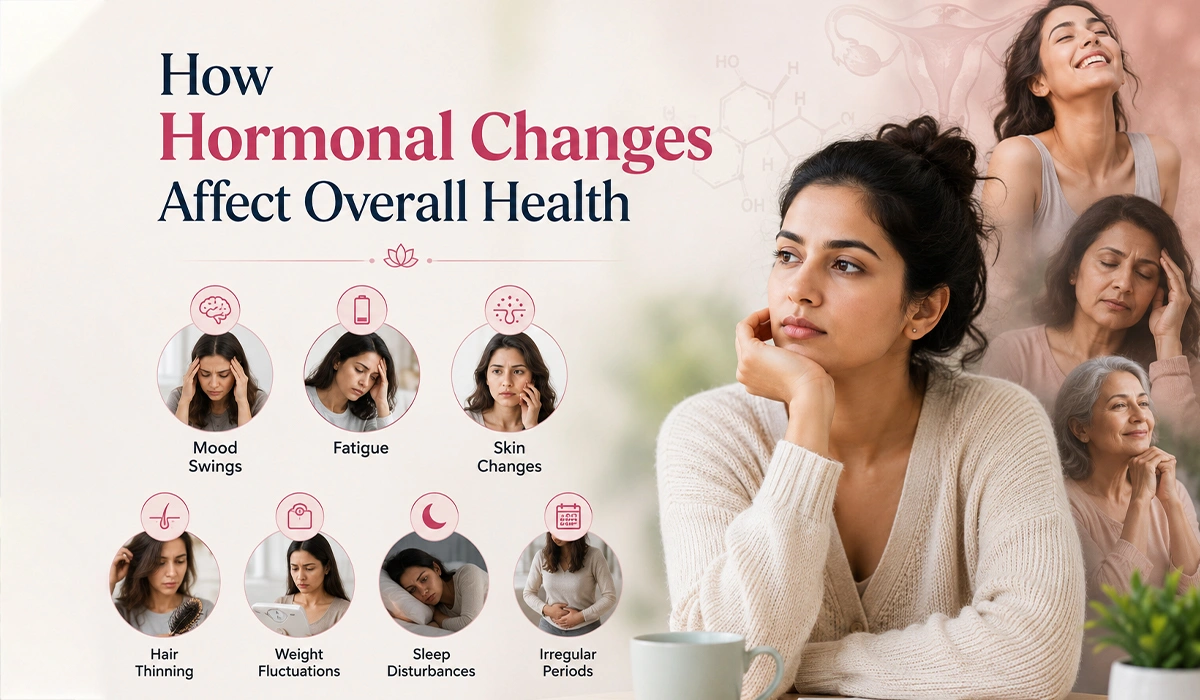
Common Signs of Hormonal Changes
Hormonal changes affect people differently depending on age, gender, and overall health.
Physical Symptoms
- Unexplained weight gain or loss
- Fatigue
- Hair thinning
- Acne
- Dry skin
- Increased sweating
- Hot flashes
- Reduced muscle strength
- Joint discomfort
Emotional Symptoms
- Mood swings
- Anxiety
- Irritability
- Depression
- Difficulty concentrating
- Brain fog
Reproductive Symptoms
- Irregular menstrual cycles
- Fertility concerns
- Low libido
- Erectile dysfunction
- Vaginal dryness
Sleep Symptoms
- Difficulty falling asleep
- Frequent nighttime awakening
- Poor sleep quality
If symptoms persist, consult a qualified healthcare professional.
How Hormonal Changes Affect Different Body Systems
Hormones influence nearly every organ.
Brain
Hormonal fluctuations may affect:
- Memory
- Concentration
- Mood
- Learning
- Stress response
Heart
Certain hormone imbalances may influence:
- Blood pressure
- Cholesterol levels
- Heart rhythm
Bones
Reduced estrogen and testosterone levels may contribute to decreased bone density over time.
Muscles
Hormonal imbalance may lead to:
- Muscle weakness
- Reduced endurance
- Slower recovery
Skin
Hormonal changes may contribute to:
- Acne
- Dryness
- Oiliness
- Pigmentation changes
Hormonal Changes in Women
Women experience several natural hormonal transitions throughout life.
Puberty
- Breast development
- Menstrual cycles begin
- Growth spurts
- Emotional changes
Pregnancy
- Increased estrogen
- Increased progesterone
- Physical and emotional changes
Menopause
Common symptoms include:
- Hot flashes
- Night sweats
- Mood changes
- Sleep disturbances
- Bone density changes
Hormonal Changes in Men
Hormone levels also change in men, especially with aging.
Common symptoms include:
- Reduced energy
- Lower muscle mass
- Mood changes
- Reduced libido
- Difficulty concentrating
- Fatigue
Lifestyle habits often play an important role in maintaining hormonal health.
Stress and Hormonal Balance
Stress is one of the most common causes of hormonal disruption.
During stress, the body releases cortisol.
Long-term elevated cortisol may affect:
- Sleep
- Blood sugar
- Appetite
- Weight
- Immune function
- Mood
Stress management techniques such as meditation, exercise, deep breathing, and adequate rest may help support overall well-being.
Nutrition and Hormonal Health
A balanced diet supports healthy hormone production.
Include:
- Fresh fruits
- Vegetables
- Whole grains
- Lean proteins
- Healthy fats
- Nuts and seeds
- Dairy or fortified alternatives
- Plenty of water
Limit:
- Excess sugar
- Highly processed foods
- Trans fats
- Excess alcohol
Proper nutrition supports metabolism and overall endocrine function.
How Are Hormonal Imbalances Diagnosed?
Hormonal imbalances are diagnosed using a combination of medical history, physical examination, laboratory tests, and imaging studies when necessary. The goal is to identify the underlying cause rather than treating only the symptoms.
If you experience persistent symptoms such as fatigue, unexplained weight changes, irregular menstrual cycles, excessive hair loss, or mood disturbances, a healthcare professional may recommend further evaluation.
Common Diagnostic Tests
| Test | Purpose |
|---|---|
| Blood Tests | Measure hormone levels such as thyroid hormones, estrogen, testosterone, insulin, and cortisol |
| Urine Tests | Evaluate hormone metabolites over 24 hours |
| Saliva Tests | Assess cortisol levels in selected situations |
| Ultrasound | Detect ovarian cysts or thyroid abnormalities |
| MRI or CT Scan | Examine pituitary or adrenal glands when indicated |
Early diagnosis often leads to better management and improved quality of life.
Common Hormonal Disorders
Hormonal changes are sometimes linked to medical conditions requiring professional care.
Thyroid Disorders
The thyroid gland regulates metabolism.
Hypothyroidism
Symptoms include:
- Fatigue
- Weight gain
- Cold intolerance
- Dry skin
- Slow heart rate
- Constipation
Hyperthyroidism
Symptoms include:
- Weight loss
- Rapid heartbeat
- Anxiety
- Tremors
- Excessive sweating
- Heat intolerance
Both conditions can usually be managed effectively with medical treatment.
Diabetes
Insulin regulates blood glucose.
When insulin production or function is impaired, blood sugar levels rise.
Common symptoms include:
- Frequent urination
- Increased thirst
- Fatigue
- Blurred vision
- Slow wound healing
Lifestyle management and medical treatment are essential.
Polycystic Ovary Syndrome (PCOS)
PCOS is one of the most common hormonal disorders among women of reproductive age.
Symptoms include:
- Irregular periods
- Acne
- Weight gain
- Increased facial hair
- Difficulty conceiving
Early diagnosis and appropriate treatment can help manage symptoms.
Adrenal Disorders
The adrenal glands produce cortisol and other hormones.
Excess or insufficient cortisol production may affect:
- Blood pressure
- Weight
- Mood
- Energy
- Immunity
Hormonal Changes Across Different Life Stages
Hormonal health changes naturally throughout life.
| Life Stage | Common Hormonal Changes |
|---|---|
| Childhood | Growth hormone supports development |
| Puberty | Increased estrogen or testosterone |
| Reproductive Years | Monthly hormonal fluctuations |
| Pregnancy | Significant increase in reproductive hormones |
| Menopause | Decline in estrogen and progesterone |
| Older Age | Gradual decline in several hormones |
Understanding these stages helps distinguish normal changes from medical concerns.
Lifestyle Habits That Support Hormonal Balance
Healthy daily habits can positively influence hormone regulation and overall health.
1. Eat a Balanced Diet
Choose foods rich in:
- Fruits
- Vegetables
- Whole grains
- Healthy fats
- Lean protein
- Fiber
Avoid excessive:
- Refined sugar
- Processed foods
- Sugary beverages
2. Exercise Regularly
Regular physical activity helps support:
- Insulin sensitivity
- Weight management
- Mood
- Sleep quality
- Heart health
Aim for at least 150 minutes of moderate physical activity each week, along with strength training on two or more days, as appropriate for your health status.
3. Prioritize Sleep
Sleep plays an important role in hormone regulation.
Adults generally benefit from 7–9 hours of quality sleep each night.
Poor sleep may influence:
- Cortisol
- Insulin
- Growth hormone
- Melatonin
4. Manage Stress
Long-term stress affects hormone production.
Helpful strategies include:
- Meditation
- Yoga
- Deep breathing
- Reading
- Walking
- Spending time outdoors
- Talking with family or friends
5. Maintain a Healthy Weight
Healthy body weight supports:
- Insulin balance
- Estrogen regulation
- Testosterone production
- Thyroid function
Foods That Support Hormonal Health
| Food Group | Examples | Potential Benefits |
|---|---|---|
| Healthy Fats | Nuts, seeds, olive oil | Hormone production |
| Protein | Eggs, fish, legumes | Tissue repair |
| Fiber | Oats, vegetables, fruits | Blood sugar balance |
| Omega-3 Foods | Flaxseed, walnuts, fatty fish | Heart and brain health |
| Leafy Greens | Spinach, kale | Essential nutrients |
| Dairy/Fortified Foods | Milk, yogurt | Bone health |
| Whole Grains | Brown rice, millet | Sustained energy |
Lifestyle Habits That May Affect Hormonal Health
| Healthy Habits | Habits That May Disrupt Hormonal Health |
|---|---|
| Regular exercise | Sedentary lifestyle |
| Balanced meals | Excess processed foods |
| Good sleep | Chronic sleep deprivation |
| Stress management | Persistent stress |
| Staying hydrated | Dehydration |
| Healthy body weight | Obesity |
| Routine medical checkups | Ignoring symptoms |
When Should You Consult a Healthcare Professional?
Seek medical advice if you experience:
- Persistent fatigue
- Rapid weight changes
- Irregular menstrual cycles
- Severe mood changes
- Hair loss
- Difficulty sleeping
- Persistent acne
- Low libido
- Fertility concerns
- Excessive thirst or urination
Timely evaluation can help identify the underlying cause and guide appropriate management.
Can Hormonal Changes Be Prevented?
Not all hormonal changes can be prevented because many are a normal part of life, such as puberty, pregnancy, and menopause.
However, healthy habits may help support overall hormonal health:
- Eat nutritious meals.
- Stay physically active.
- Get enough sleep.
- Manage stress.
- Avoid smoking and excessive alcohol.
- Attend regular health check-ups.
- Follow medical advice for existing conditions.
Myths vs Facts About Hormonal Changes
| Myth | Fact |
|---|---|
| Hormonal changes affect only women. | Men also experience hormonal changes throughout life. |
| Mood swings always mean hormonal imbalance. | Mood changes can have many different causes. |
| Every weight gain is caused by hormones. | Diet, activity, sleep, and medical conditions also influence weight. |
| Supplements alone fix hormonal imbalance. | Treatment depends on the underlying cause and should be guided by a healthcare professional. |
| Hormonal disorders cannot be managed. | Many conditions can be effectively managed with appropriate medical care and healthy lifestyle changes. |