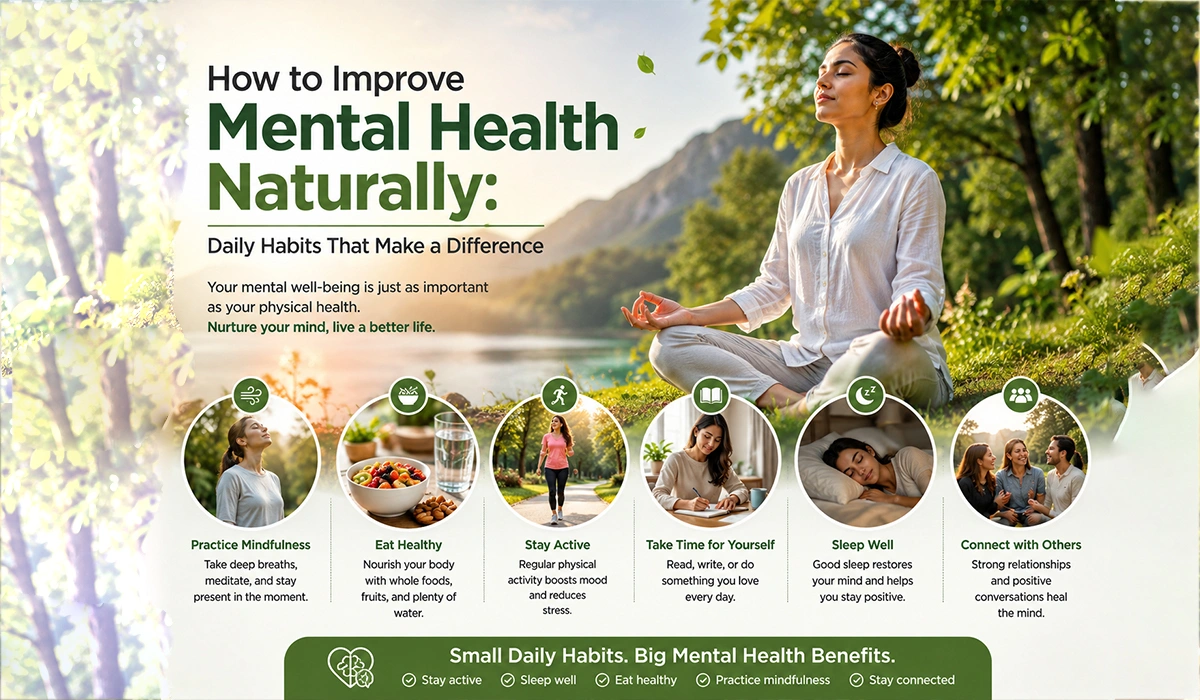
Introduction: Small Daily Choices Can Change Your Mental Health
Imagine waking up every morning feeling overwhelmed before your day has even begun. Your phone is full of notifications, work deadlines are piling up, and personal responsibilities never seem to end. For millions of people, this has become a daily reality.
The good news is that improving mental health doesn’t always require dramatic life changes. Often, the most meaningful improvements come from simple habits practiced consistently.
Mental health is just as important as physical health. It affects how we think, feel, make decisions, build relationships, and handle stress. While professional support is essential for many mental health conditions, everyday lifestyle choices can play a powerful role in improving emotional well-being.
In this comprehensive guide, you’ll learn practical, research-backed ways to improve mental health naturally through daily habits that support a happier, healthier, and more balanced life.
What Does Mental Health Mean?
Mental health refers to emotional, psychological, and social well-being. It influences how we think, manage emotions, cope with stress, build relationships, and make decisions.
Why It Matters
Good mental health helps people:
- Handle everyday challenges
- Build healthy relationships
- Stay productive
- Make informed decisions
- Enjoy life more fully
Poor mental health may affect sleep, concentration, physical health, work performance, and relationships.
Why Natural Habits Matter for Mental Well-Being
Healthy daily habits create a strong foundation for emotional resilience by supporting brain function, reducing stress hormones, and improving overall physical health.
Daily habits influence:
- Brain chemistry
- Hormone balance
- Sleep quality
- Energy levels
- Emotional resilience
Natural lifestyle improvements complement—not replace—professional treatment when needed.
Signs Your Mental Health May Need Attention
Everyone experiences difficult days, but ongoing symptoms deserve attention.
Common signs include:
- Constant stress
- Feeling anxious frequently
- Persistent sadness
- Loss of motivation
- Poor concentration
- Irritability
- Sleep problems
- Fatigue
- Social withdrawal
- Loss of interest in hobbies
Early recognition often leads to better outcomes.
Daily Habit #1: Prioritize Quality Sleep
Adults generally benefit from 7–9 hours of quality sleep each night to support emotional balance and cognitive function.
Why Sleep Matters
Poor sleep increases:
- Stress
- Anxiety
- Mood swings
- Irritability
- Poor decision-making
Better sleep supports:
- Memory
- Emotional regulation
- Productivity
- Immune function
Practical Tips
- Sleep at the same time daily
- Avoid caffeine late in the day
- Reduce screen time before bed
- Keep your bedroom cool and quiet
- Follow a relaxing bedtime routine
Daily Habit #2: Exercise Regularly
Physical activity naturally boosts endorphins, reduces stress, and improves mood.
Exercise benefits include:
- Reduced anxiety
- Better focus
- Increased confidence
- Improved sleep
- Higher energy
Recommended Activities
| Activity | Duration |
|---|---|
| Walking | 30 minutes |
| Yoga | 20–40 minutes |
| Cycling | 30 minutes |
| Swimming | 30 minutes |
| Dancing | 30 minutes |
Consistency matters more than intensity.
Daily Habit #3: Eat a Brain-Healthy Diet
Nutritious foods support healthy brain function and emotional well-being.
Include:
- Fresh fruits
- Vegetables
- Whole grains
- Lean proteins
- Nuts
- Seeds
- Healthy fats
Limit:
- Sugary drinks
- Processed foods
- Excess alcohol
- Highly refined snacks
Hydration also plays an important role in mental performance.
Daily Habit #4: Practice Mindfulness
Mindfulness means paying attention to the present moment without judgment.
Benefits include:
- Lower stress
- Better concentration
- Improved emotional awareness
- Reduced anxiety
Simple mindfulness exercises:
- Deep breathing
- Guided meditation
- Body scans
- Nature walks
- Gratitude journaling
Just 10 minutes daily can make a noticeable difference.
Daily Habit #5: Build Meaningful Relationships
Strong social connections protect mental health.
Spend quality time with:
- Family
- Friends
- Neighbours
- Community groups
Healthy conversations reduce feelings of loneliness and provide emotional support during difficult times.
Daily Habit #6: Reduce Digital Overload
Constant notifications can increase stress and reduce attention.
Healthy digital habits include:
- Screen-free mornings
- Phone-free meals
- Scheduled social media breaks
- Digital detox weekends
- Turning off unnecessary notifications
Replacing screen time with real-life experiences often improves mood.
Daily Habit #7: Spend Time in Nature
Research consistently shows that spending time outdoors benefits mental health.
Nature can help:
- Lower stress hormones
- Improve concentration
- Reduce anxiety
- Increase happiness
Simple ideas:
- Walk in a local park
- Garden
- Watch sunrise
- Visit green spaces
- Sit outdoors during breaks
Daily Habit #8: Learn Stress Management Techniques
Stress cannot always be avoided, but it can be managed effectively.
Helpful strategies:
- Deep breathing
- Meditation
- Time management
- Exercise
- Journaling
- Relaxation techniques
Recognizing stress triggers helps you respond more calmly.
Daily Habit #9: Set Realistic Goals
Large goals often feel overwhelming.
Instead:
- Break tasks into smaller steps.
- Celebrate small wins.
- Track progress.
- Avoid perfectionism.
Small achievements improve confidence and motivation.
Daily Habit #10: Practice Gratitude Every Day
Gratitude shifts attention toward positive experiences.
Daily gratitude may improve:
- Happiness
- Optimism
- Sleep
- Relationships
- Emotional resilience
Simple practice:
Write three things you’re grateful for every evening.
Daily Habit #11: Limit Negative Self-Talk
Everyone has an inner voice.
Replace:
❌ “I’m not good enough.”
With:
✔ “I’m learning and improving.”
Positive self-talk supports healthier emotional habits over time.
Daily Habit #12: Know When to Seek Professional Help
Natural habits are valuable, but professional care is equally important when symptoms become severe or persistent.
Seek help if you experience:
- Ongoing depression
- Panic attacks
- Thoughts of self-harm
- Severe anxiety
- Difficulty functioning daily
Mental health professionals provide evidence-based care tailored to individual needs.
Comparison Table: Healthy Habits and Their Benefits
| Daily Habit | Mental Health Benefit |
|---|---|
| Quality Sleep | Emotional balance |
| Exercise | Better mood |
| Healthy Diet | Brain health |
| Mindfulness | Reduced stress |
| Gratitude | Positive thinking |
| Social Connection | Emotional support |
| Nature Exposure | Lower anxiety |
| Digital Detox | Better focus |
| Goal Setting | Motivation |
| Journaling | Emotional awareness |
Common Myths About Mental Health
| Myth | Fact |
|---|---|
| Mental health only matters during illness. | Mental health affects everyone. |
| Asking for help is weakness. | Seeking help shows strength. |
| Exercise only benefits physical health. | It supports mental health too. |
| Stress is always harmful. | Manageable stress can build resilience. |
| Mental health problems disappear on their own. | Early support often leads to better outcomes. |
Practical Daily Mental Wellness Routine
Morning
- Drink water
- Stretch
- Deep breathing
- Healthy breakfast
- Positive affirmation
Afternoon
- Balanced lunch
- Walk outdoors
- Short mindfulness break
Evening
- Family time
- Light exercise
- Gratitude journal
- Screen-free bedtime
- Sleep on schedule
Expert Tips for Long-Term Mental Well-Being
Mental wellness is built through consistency rather than perfection.
Experts recommend:
- Maintain regular routines.
- Stay physically active.
- Prioritize sleep.
- Eat nutritious foods.
- Stay socially connected.
- Continue learning.
- Seek professional support when necessary.
Small daily actions often produce significant long-term improvements.
How to Improve Mental Health Naturally Frequently Asked Questions
How can I improve my mental health naturally?
Improving mental health naturally involves healthy habits such as regular exercise, quality sleep, balanced nutrition, mindfulness, stress management, and maintaining strong social connections.
Which foods support mental health?
Foods rich in omega-3 fatty acids, whole grains, vegetables, fruits, nuts, seeds, and lean proteins help support brain health and emotional well-being.
Can exercise reduce stress?
Yes. Regular physical activity helps release endorphins, improve mood, reduce stress, and support overall mental wellness.
How much sleep is good for mental health?
Most adults benefit from 7–9 hours of quality sleep each night for optimal emotional and cognitive health.
Does meditation really help anxiety?
Mindfulness meditation has been shown to reduce stress, improve emotional regulation, and support overall mental well-being when practiced consistently.
Can spending time outdoors improve mental health?
Yes. Nature exposure may reduce stress, improve mood, increase focus, and promote relaxation.
Is professional help necessary?
If symptoms become severe, persistent, or interfere with daily life, consulting a qualified mental health professional is strongly recommended.
Conclusion
Improving mental health naturally isn’t about making one dramatic change—it’s about building small, sustainable habits that support emotional and physical well-being over time. Prioritizing quality sleep, eating nutritious foods, staying active, practicing mindfulness, managing stress, and nurturing meaningful relationships can all contribute to a healthier mind and a more balanced life.
Every positive choice, no matter how small, brings you one step closer to better mental wellness. Start with one habit today, stay consistent, and remember that seeking professional support is an important part of caring for your mental health whenever it’s needed.