Imagine trying to build a strong house without a solid foundation. No matter how beautiful the walls or roof may look, the structure eventually weakens. The human body works the same way. Bones are the framework that supports every step, jump, and movement we make.
Many people only think about bone health after experiencing pain or fractures. However, healthy bones are built over a lifetime. Two nutrients play the biggest role in this process: Calcium and Vitamin D3.
According to health experts, inadequate calcium intake and low Vitamin D levels are common worldwide, affecting children, adults, and older individuals alike. Maintaining adequate nutrition can help support normal bone development, muscle function, and overall wellness.
This guide explains how Calcium and Vitamin D3 work together, why they matter, and practical ways to support lifelong bone health.
What Are Calcium and Vitamin D3?
Quick Answer
Calcium is an essential mineral that supports bones and teeth, while Vitamin D3 helps the body absorb and utilize calcium effectively.
Detailed Explanation
Nearly 99% of the body’s calcium is stored in bones and teeth. The remaining amount supports muscle contraction, nerve signaling, and blood clotting.
Vitamin D3, also called cholecalciferol, helps the intestines absorb calcium from food. Without enough Vitamin D3, the body cannot efficiently use the calcium consumed.
Why Are Strong Bones Important?
Direct Answer
Healthy bones support movement, protect organs, store minerals, and contribute to overall physical well-being.
Bone Functions
- Supports body structure
- Protects vital organs
- Stores calcium and phosphorus
- Helps produce blood cells
- Supports muscle movement
Strong bones also contribute to maintaining an active lifestyle as people age.
How Calcium and Vitamin D3 Work Together
Simple Explanation
Think of calcium as the building material and Vitamin D3 as the delivery system.
Without Vitamin D3:
- Calcium absorption decreases
- Bone mineralization may be affected
- Nutritional balance becomes more difficult
Together, they help support:
- Bone density
- Muscle function
- Skeletal development
- General wellness
Top Benefits of Calcium and Vitamin D3 for Bone Health
1. Supports Healthy Bone Density
Adequate intake helps maintain normal bone mineralization throughout life.
2. Helps Maintain Strong Teeth
Calcium is a major structural component of teeth and supports oral health.
3. Supports Muscle Function
Vitamin D contributes to normal muscle function, helping maintain strength and mobility.
4. Aids Calcium Absorption
Vitamin D3 enhances the body’s ability to absorb dietary calcium.
5. Supports Healthy Aging
Proper nutrition may help maintain bone health as age-related changes occur.
6. Encourages Active Living
Strong bones and muscles help people remain physically active.
Signs That May Indicate Low Calcium or Vitamin D
Common Signs
- Muscle weakness
- Fatigue
- Bone discomfort
- Frequent cramps
- Dental concerns
- General weakness
These symptoms may have multiple causes. Professional medical evaluation is recommended.
Who May Need More Attention to Bone Health?
Higher-Risk Groups
| Group | Reason |
|---|---|
| Older adults | Natural bone changes |
| Post-menopausal women | Hormonal changes |
| Growing children | Rapid bone development |
| Individuals with limited sunlight exposure | Lower Vitamin D production |
| People with restricted diets | Reduced nutrient intake |
Natural Sources of Calcium
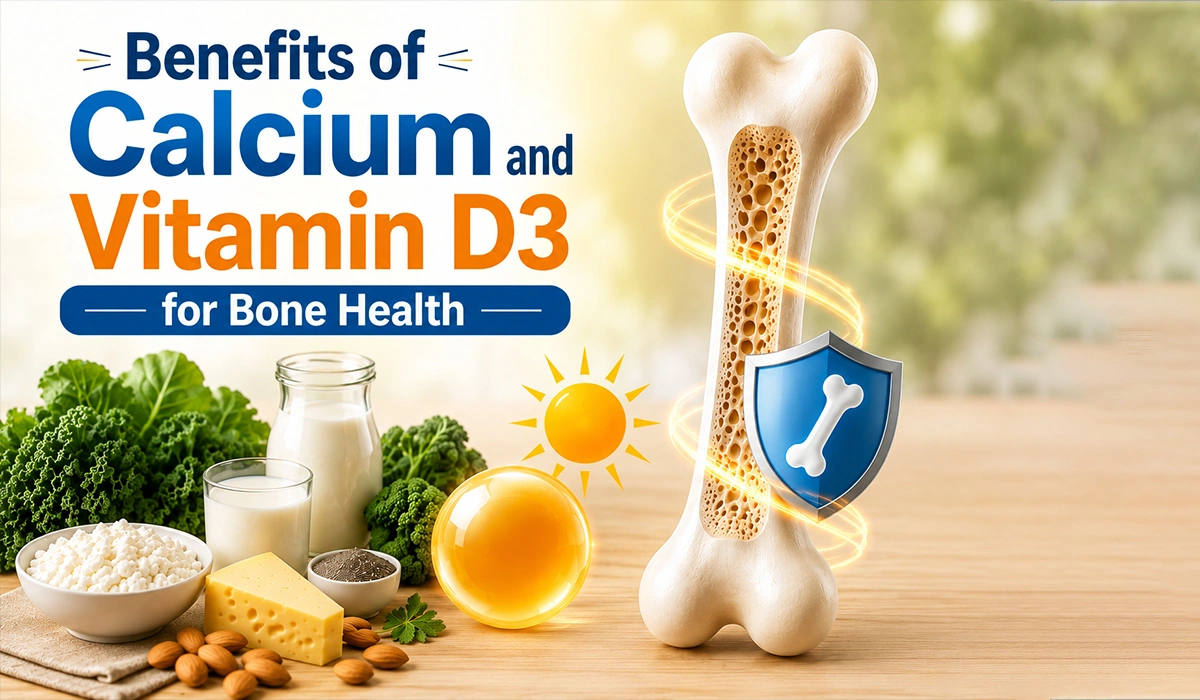
Foods Rich in Calcium
- Milk
- Yogurt
- Cheese
- Leafy green vegetables
- Almonds
- Sesame seeds
- Fortified foods
Practical Tip
Include calcium-rich foods in daily meals rather than relying on a single source.
Natural Sources of Vitamin D3
Main Sources
- Sunlight exposure
- Fatty fish
- Egg yolks
- Fortified dairy products
- Fortified cereals
Balanced sun exposure and a healthy diet can support Vitamin D levels.
Calcium vs Vitamin D3: Comparison Table
| Feature | Calcium | Vitamin D3 |
|---|---|---|
| Type | Mineral | Vitamin |
| Primary Role | Builds bones | Helps absorb calcium |
| Found In | Dairy, greens, nuts | Sunlight, fish, eggs |
| Supports | Bones and teeth | Bone and muscle function |
| Works Best | With Vitamin D3 | With Calcium |
Lifestyle Habits That Support Bone Health
Daily Habits
✔ Regular physical activity
✔ Weight-bearing exercises
✔ Balanced nutrition
✔ Healthy body weight
✔ Adequate sleep
✔ Avoid excessive smoking and alcohol
Healthy habits work together with proper nutrition.
Bone Health Across Different Life Stages
Children
Support normal growth and development.
Adults
Maintain bone strength and active lifestyles.
Older Adults
Help preserve mobility and independence.
Bone health should be a lifelong priority.
Why Many Healthcare Professionals Recommend Combined Support
Experts often emphasize that Calcium and Vitamin D3 complement one another.
Benefits include:
- Better nutritional balance
- Improved calcium utilization
- Comprehensive bone support
- Daily wellness maintenance
Practical Example
A working professional spends most of the day indoors and avoids dairy products. Over time, dietary calcium intake and sunlight exposure may decrease.
Adding calcium-rich foods, safe sunlight exposure, regular exercise, and professional nutritional guidance can help support long-term bone wellness.
Why Quality Nutritional Solutions Matter
When selecting nutritional supplements, important factors include:
- Quality manufacturing
- Trusted ingredients
- Regulatory compliance
- Reliable sourcing
- Clear labeling
- Professional guidance
Choosing reputable healthcare brands helps support consumer confidence.
Benefits of Calcium and Vitamin D3 for Bone Health Frequently Asked Questions
What are the benefits of Calcium and Vitamin D3?
They help support bone health, calcium absorption, muscle function, and overall wellness.
Why does the body need both Calcium and Vitamin D3?
Vitamin D3 helps the body absorb and use calcium effectively.
Can I get Calcium and Vitamin D naturally?
Yes. Dairy products, leafy vegetables, sunlight, fish, and fortified foods are common sources.
Who should pay attention to bone health?
Children, older adults, post-menopausal women, and people with limited sunlight exposure may particularly benefit from maintaining healthy nutrient intake.
Does exercise help bone health?
Yes. Weight-bearing exercises help support strong bones and muscles.
What foods are rich in Calcium?
Milk, yogurt, cheese, almonds, leafy greens, and fortified foods.
What is the best source of Vitamin D3?
Sunlight is a natural source, while fish and fortified foods also contribute.
Can lifestyle affect bone health?
Yes. Diet, exercise, smoking, alcohol intake, and overall wellness habits influence bone health.
Conclusion
Bone health is not something to think about only later in life. Every meal, every walk, and every healthy habit contributes to building and maintaining strong bones.
Calcium provides the essential building blocks, while Vitamin D3 helps the body use those building blocks efficiently. Together, they support movement, strength, and everyday wellness.
The best approach combines balanced nutrition, active living, healthy lifestyle choices, and professional healthcare guidance.
After all, strong bones are not built in a day—they are built through consistent care over a lifetime.