Introduction
Have you ever felt tired even after a full night’s sleep? Or noticed frequent hair fall, weak bones, or low energy despite eating regular meals?
Many people assume these problems are caused by a busy lifestyle. However, the real reason may be something much simpler—nutritional deficiencies.
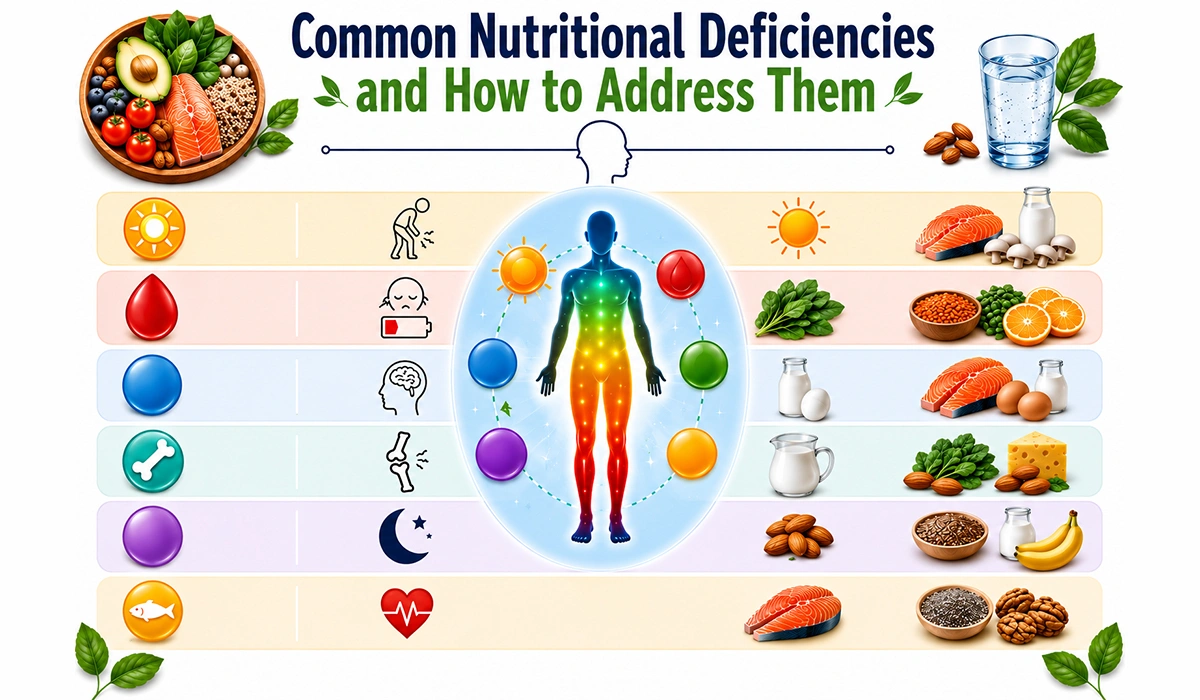
Today, common nutritional deficiencies and how to address them has become an important healthcare topic, especially in India, where changing food habits, busy schedules, and lifestyle factors affect millions of people every year.
Good nutrition is the foundation of good health. The body depends on vitamins, minerals, proteins, and other nutrients to function properly. When these nutrients are missing, even small deficiencies can slowly affect energy, immunity, bone strength, and overall well-being.
Understanding the signs of nutritional deficiencies and taking early action can help people live healthier and more active lives.
What Are Nutritional Deficiencies?
Nutritional deficiencies occur when the body does not receive enough essential nutrients to perform its normal functions.
These nutrients include:
- Vitamins
- Minerals
- Proteins
- Healthy fats
- Trace elements
A deficiency may develop because of:
- Poor eating habits
- Limited food variety
- Digestive disorders
- Increased nutritional needs
- Aging
- Pregnancy
Early detection can prevent many long-term health problems.
Why Nutritional Deficiencies Are Common in India
India has made significant progress in healthcare, but nutritional deficiencies remain a challenge.
Several factors contribute to this:
- Busy lifestyles
- Processed food consumption
- Vegetarian dietary patterns
- Poor eating schedules
- Lack of sun exposure
- Economic and social factors
Even people who eat enough calories may not get enough essential nutrients.
Signs Your Body May Be Missing Important Nutrients
The body often gives warning signals.
Common symptoms include:
- Constant fatigue
- Weakness
- Hair fall
- Dry skin
- Poor immunity
- Muscle cramps
- Bone pain
- Difficulty concentrating
- Slow wound healing
Ignoring these signs may allow deficiencies to worsen over time.
Iron Deficiency: One of the Most Common Nutritional Problems
Iron helps produce hemoglobin, which carries oxygen through the body.
Symptoms of iron deficiency:
- Low energy
- Pale skin
- Dizziness
- Shortness of breath
- Brittle nails
Iron-rich foods:
- Green leafy vegetables
- Beans
- Lentils
- Dates
- Lean meat
- Fortified cereals
Vitamin C-rich foods may improve iron absorption.
Vitamin D Deficiency and Bone Health
Vitamin D helps the body absorb calcium and maintain healthy bones.
In India, Vitamin D deficiency is common because many people spend limited time in direct sunlight.
Symptoms include:
- Bone pain
- Muscle weakness
- Fatigue
- Frequent illness
Sources of Vitamin D:
- Morning sunlight
- Fortified milk
- Egg yolks
- Fatty fish
- Nutritional supplements when needed
Calcium Deficiency and Strong Bones
Calcium is essential for:
- Bone strength
- Teeth health
- Muscle function
- Heart rhythm
Signs of low calcium:
- Muscle cramps
- Weak bones
- Dental problems
- Brittle nails
Calcium-rich foods:
- Milk
- Yogurt
- Cheese
- Sesame seeds
- Almonds
- Green vegetables
Vitamin D helps improve calcium absorption.
Vitamin B12 Deficiency and Energy Levels
Vitamin B12 supports nerve health and red blood cell production.
Vegetarians may face a higher risk because many natural sources come from animal-based foods.
Common symptoms:
- Fatigue
- Numbness
- Memory problems
- Weakness
- Mood changes
Good sources:
- Dairy products
- Eggs
- Fish
- Meat
- Fortified foods
Protein Deficiency and Muscle Health
Protein supports:
- Muscle growth
- Tissue repair
- Hormone production
- Immune function
Signs of protein deficiency:
- Muscle weakness
- Slow recovery
- Hair thinning
- Frequent infections
Healthy protein sources:
- Lentils
- Chickpeas
- Dairy products
- Eggs
- Fish
- Soy products
- Nuts
Zinc Deficiency and Immunity
Zinc plays an important role in immune health.
Low zinc levels may cause:
- Slow wound healing
- Frequent infections
- Hair loss
- Reduced appetite
Zinc-rich foods include:
- Pumpkin seeds
- Nuts
- Beans
- Whole grains
- Seafood
Magnesium Deficiency and Stress
Magnesium helps regulate:
- Muscle function
- Sleep quality
- Heart rhythm
- Nervous system health
Symptoms may include:
- Muscle cramps
- Fatigue
- Anxiety
- Poor sleep
Magnesium-rich foods include nuts, seeds, whole grains, and leafy vegetables.
Folic Acid Deficiency
Folic acid is essential for healthy cell growth.
It is particularly important during pregnancy.
Signs of deficiency:
- Fatigue
- Weakness
- Mouth ulcers
- Poor concentration
Food sources:
- Spinach
- Broccoli
- Lentils
- Citrus fruits
Children and Nutritional Deficiencies
Growing children need balanced nutrition for healthy development.
Common childhood deficiencies include:
- Iron
- Vitamin D
- Calcium
- Protein
Parents should encourage balanced meals and healthy eating habits.
Women’s Nutritional Needs
Women often have increased nutritional requirements due to menstruation, pregnancy, and menopause.
Key nutrients include:
- Iron
- Calcium
- Vitamin D
- Folic acid
- Vitamin B12
Regular health checkups can help identify deficiencies early.
Older Adults and Nutritional Health
As people age, nutrient absorption may decrease.
Older adults may require additional attention to:
- Bone health
- Muscle strength
- Immunity
- Brain function
Balanced diets and healthcare guidance can support healthy aging.
Can Nutritional Supplements Help?
Food should always be the primary source of nutrition.
However, supplements may be helpful when:
- Deficiencies are diagnosed
- Dietary restrictions exist
- Medical conditions affect absorption
Healthcare professionals can recommend suitable nutritional support.
Healthy Habits to Prevent Nutritional Deficiencies
Simple daily habits can improve nutritional health.
Tips include:
- Eat colorful fruits and vegetables
- Include protein in every meal
- Drink enough water
- Spend time in sunlight
- Limit processed foods
- Exercise regularly
- Get routine health checkups
Consistency is more important than perfection.
The Role of Preventive Healthcare
Preventive healthcare helps identify nutritional gaps before they become serious.
Regular health screenings can monitor:
- Iron levels
- Vitamin D
- Blood sugar
- Bone health
- Overall wellness
Early action often leads to better health outcomes.
Common Nutritional Deficiencies and How to Address Them – Frequently Asked Questions
What are the most common nutritional deficiencies?
Iron, Vitamin D, Calcium, Vitamin B12, Protein, Zinc, and Magnesium deficiencies are among the most common.
How do I know if I have a nutritional deficiency?
Symptoms such as fatigue, weakness, hair fall, muscle cramps, and poor immunity may indicate a deficiency.
Can nutritional deficiencies be corrected naturally?
Many deficiencies improve through balanced diets rich in vitamins and minerals.
Is Vitamin D deficiency common in India?
Yes. Limited sunlight exposure and lifestyle factors contribute to widespread Vitamin D deficiency.
Who is most at risk for nutritional deficiencies?
Children, women, older adults, vegetarians, and people with certain medical conditions may have higher risks.
Should I take nutritional supplements every day?
Supplements should be taken based on healthcare advice and individual nutritional needs.
Conclusion
Understanding common nutritional deficiencies and how to address them is one of the most important steps toward better health.
Many everyday problems such as fatigue, weak immunity, poor bone health, and low energy may be linked to missing nutrients rather than serious illness.
Balanced nutrition, healthy lifestyle habits, regular checkups, and early awareness can help prevent deficiencies before they affect quality of life.
Small improvements in daily eating habits can create long-term health benefits for individuals and families across India and beyond.