You have changed your diet. You may be walking every morning, exercising regularly and trying to lose weight. Yet, when your next blood test arrives, the cholesterol numbers still do not look the way you expected.
It can be frustrating.
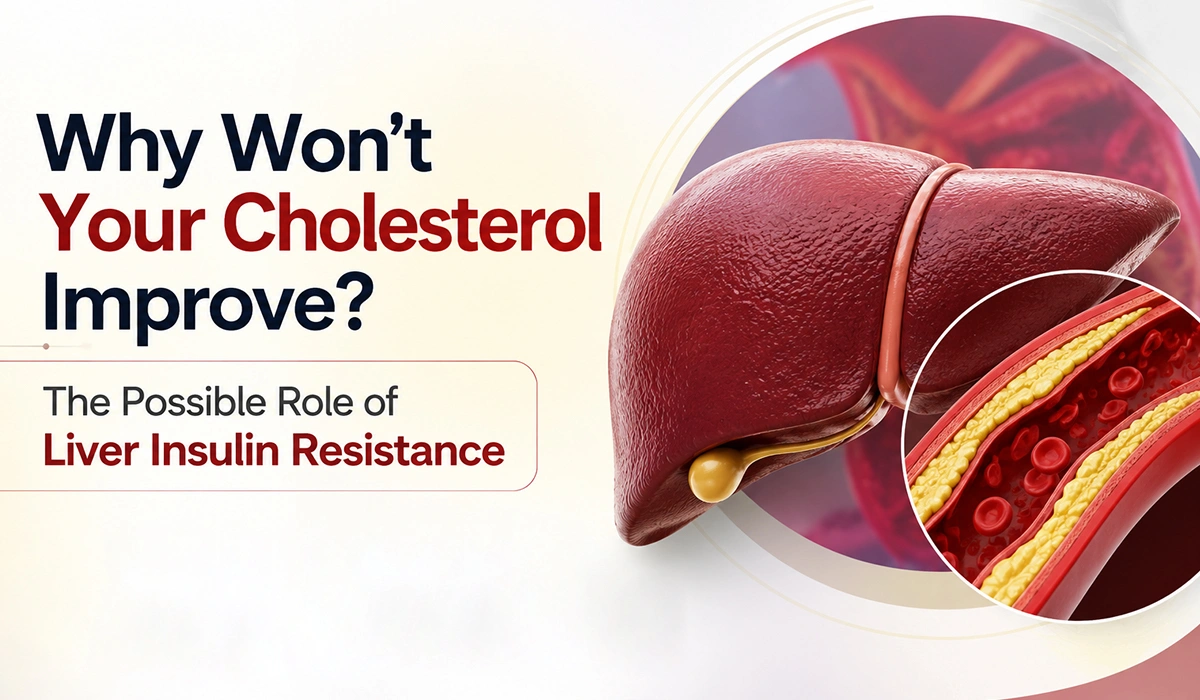
But cholesterol is not controlled by one food, one workout or even one organ working alone. Your liver plays a central role in producing, processing and transporting cholesterol and other fats. At the same time, insulin resistance can change how the liver handles glucose and fat, creating a metabolic environment in which high triglycerides, low HDL cholesterol and other lipid abnormalities may occur.
This does not mean that liver insulin resistance is the only reason cholesterol remains high. Genetics, diet, body weight, thyroid disorders, diabetes, medications, alcohol intake and other conditions can all influence lipid levels.
The important question is therefore not simply, “How do I lower cholesterol?”
It may be:
“Why are my cholesterol and other metabolic markers not improving despite my efforts?”
Understanding that bigger picture can lead to better decisions.
1. What Is Liver Insulin Resistance?
Quick answer: Liver insulin resistance occurs when liver cells become less responsive to insulin’s effects. This can disrupt normal glucose and fat metabolism and may contribute to metabolic abnormalities such as elevated triglycerides and fatty liver.
Insulin is a hormone that helps the body regulate blood glucose and energy storage. After eating, insulin signals different tissues to use or store nutrients.
The liver is particularly important because it helps maintain blood glucose between meals and manages the production and processing of fats.
When insulin signaling becomes impaired, the liver may not respond normally to insulin. This is part of the broader condition of insulin resistance, which can occur with obesity, metabolic syndrome, type 2 diabetes and metabolic dysfunction-associated steatotic liver disease (MASLD).
Importantly, insulin resistance is not synonymous with high LDL cholesterol.
A person can have insulin resistance without having high LDL-C, while another person can have high LDL-C because of genetic or other causes.
Practical tip: If cholesterol is repeatedly abnormal, look beyond total cholesterol. Ask your healthcare professional whether LDL-C, HDL-C, triglycerides, non-HDL-C, glucose or HbA1c and other risk markers should be evaluated.
2. How Does the Liver Affect Cholesterol?
Quick answer: The liver is a major regulator of cholesterol metabolism. It produces cholesterol, removes cholesterol from the blood through lipoprotein pathways and converts cholesterol into bile acids. Changes in metabolic health can alter these processes.
Cholesterol itself is not automatically harmful. Your body needs it to make cell membranes, hormones and other important substances.
The problem is the balance between cholesterol production, transport, clearance and the amount circulating in the bloodstream.
Cholesterol travels through the blood attached to proteins and other lipids, forming particles called lipoproteins.
Among the most important are:
| Marker | What it generally tells you |
|---|---|
| LDL-C | Amount of cholesterol carried in LDL particles |
| HDL-C | Cholesterol carried in HDL particles |
| Triglycerides | A major form of circulating fat |
| Non-HDL-C | Cholesterol carried by several potentially atherogenic particles |
| ApoB | Reflects the number of atherogenic lipoprotein particles |
| Lp(a) | A largely genetically determined cardiovascular risk marker |
The 2026 ACC/AHA dyslipidemia guideline emphasizes assessing lipid abnormalities as part of an individual’s overall cardiovascular risk rather than focusing on a single number.
Example: Two people may have the same total cholesterol but very different LDL-C, triglyceride and ApoB profiles—and therefore different risk profiles.
3. What Is the Connection Between Insulin Resistance and Cholesterol?
Quick answer: Insulin resistance can affect the way the body produces, stores and transports fat. It is commonly associated with a pattern of elevated triglycerides, lower HDL-C and changes in lipoprotein particles, particularly in people with metabolic syndrome or type 2 diabetes.
When insulin resistance develops, the normal regulation of fat metabolism can become disrupted.
One important change involves the movement of fatty acids to and from the liver. Increased delivery of fatty acids to the liver can contribute to increased triglyceride production.
The liver packages triglycerides and other lipids into lipoprotein particles that enter the bloodstream.
This can contribute to a pattern sometimes called atherogenic dyslipidemia, characterized by:
- Elevated triglycerides
- Low HDL-C
- Increased numbers of smaller, denser LDL particles
- Increased ApoB-containing lipoproteins in some individuals
This is one reason metabolic health matters when evaluating an abnormal lipid profile.
However, it would be inaccurate to say:
“Insulin resistance causes all high cholesterol.”
It does not.
LDL cholesterol can remain high because of genetic factors, dietary factors, hypothyroidism, certain medications, kidney disease and other causes.
4. Could Fatty Liver Be Part of the Picture?
Quick answer: Yes, metabolic dysfunction-associated steatotic liver disease (MASLD) commonly occurs alongside insulin resistance and other cardiometabolic risk factors. Improving metabolic health can help reduce liver fat and improve several related risk factors.
MASLD is a condition in which excess fat accumulates in the liver in association with metabolic dysfunction.
It is increasingly recognized as part of a wider metabolic health problem involving:
- Insulin resistance
- Obesity or excess body fat
- Type 2 diabetes
- High triglycerides
- Abnormal cholesterol
- High blood pressure
The relationship works in multiple directions, and having fatty liver does not automatically mean that a person will have high LDL cholesterol.
Current liver guidelines recommend physical activity and lifestyle intervention for people with MASLD. For people with overweight, sustained weight loss can reduce liver fat, with greater weight loss associated with greater improvements in liver inflammation and fibrosis.
Practical tip: If you have abnormal cholesterol together with diabetes, obesity, high triglycerides or suspected fatty liver, discuss your overall metabolic health with your doctor rather than treating cholesterol as an isolated problem.
5. Why Can Cholesterol Stay High Despite a Healthy Diet?
Quick answer: Healthy eating can improve cholesterol, but it does not guarantee that LDL-C will reach a specific level. Genetics, underlying conditions, medications, weight changes, dietary composition and baseline cardiovascular risk can all affect the result.
This is one of the most important points.
People sometimes assume that if they eat “healthy,” their cholesterol should automatically become normal.
Real biology is more complicated.
For some people, dietary changes produce a significant improvement. For others, the change may be modest.
The 2026 ACC/AHA dyslipidemia guideline continues to place healthy lifestyle habits at the foundation of cholesterol management, while also recognizing that medication may be appropriate when lipid levels remain above recommended levels or cardiovascular risk is sufficiently high.
Potential reasons cholesterol may remain elevated include:
- Genetics
- Familial hypercholesterolemia
- High intake of saturated fat
- Excess refined carbohydrates or added sugars
- Overweight or obesity
- Insulin resistance or diabetes
- Hypothyroidism
- Kidney or liver conditions
- Certain medications
- Poor adherence or an unrealistic dietary plan
Practical tip: Don’t judge success from one test. Look at trends over time and discuss unexpected results with a healthcare professional.
6. Is LDL Cholesterol or Triglycerides More Important?
Quick answer: Both can matter, but they represent different aspects of metabolic and cardiovascular health. LDL-C is a major causal risk factor for atherosclerotic cardiovascular disease, while elevated triglycerides can signal metabolic dysfunction and also contribute to cardiovascular risk.
It is common to focus only on LDL.
But triglycerides can provide additional information.
A typical metabolic pattern associated with insulin resistance may involve:
| Lipid pattern | Possible metabolic context |
|---|---|
| High LDL-C | May reflect diet, genetics or other factors |
| High triglycerides | Often associated with insulin resistance, excess weight, diabetes or alcohol |
| Low HDL-C | Frequently associated with metabolic dysfunction |
| High non-HDL-C | Indicates increased cholesterol carried by atherogenic particles |
| Elevated ApoB | May indicate increased numbers of atherogenic particles |
The 2026 ACC/AHA guideline also highlights ApoB as a potentially useful marker for residual cardiovascular risk in selected people, including those with high triglycerides, diabetes or cardiovascular-kidney-metabolic risk.
So, if your cholesterol “isn’t improving,” it may be useful to examine the whole lipid profile, not just total cholesterol.
7. What Role Does Diet Play in Liver Insulin Resistance?
Quick answer: Diet quality can influence metabolic health, body weight, triglycerides and liver fat. A dietary pattern emphasizing minimally processed foods, vegetables, fruits, whole grains, legumes, nuts and appropriate protein while limiting excess added sugars and saturated fat can support cardiometabolic health.
There is no single “liver-cleansing” food.
Instead, the overall dietary pattern matters.
For people with metabolic liver disease, current European guidelines recommend improving diet quality, limiting ultra-processed foods rich in sugars and saturated fat, and avoiding sugar-sweetened beverages.
For cholesterol management, heart-healthy dietary patterns generally emphasize:
- Vegetables
- Fruits
- Whole grains
- Legumes
- Nuts and seeds
- Appropriate sources of unsaturated fats
- Fish and other nutrient-rich protein sources
At the same time, reducing excessive intake of:
- Sugar-sweetened beverages
- Refined carbohydrates
- Highly processed foods
- Excess saturated fat
- Excess calories
can be useful.
The goal is not a crash diet.
It is a sustainable eating pattern.
8. Can Weight Loss Improve Liver and Cholesterol Health?
Quick answer: For people with overweight or obesity, even moderate weight loss can improve several metabolic risk factors. In MASLD, guidelines associate sustained weight reduction with reductions in liver fat and, at greater levels of weight loss, improvements in liver inflammation and fibrosis.
Weight loss is not simply about appearance.
Excess body fat can influence insulin sensitivity, inflammation, liver fat and lipid metabolism.
The amount of weight loss needed varies by individual.
For MASLD, current guidelines indicate that sustained weight loss of at least 5% can reduce liver fat, while approximately 7–10% may improve liver inflammation and 10% or more may improve fibrosis.
That does not mean everyone needs to lose 10% of their body weight.
A healthcare professional can help establish a realistic target based on your health, medications and nutritional needs.
Practical tip: Focus on sustainable changes rather than rapid weight-loss programs. A modest, maintained improvement is generally more useful than a dramatic change that cannot be maintained.
9. Can Exercise Improve Insulin Resistance and Cholesterol?
Quick answer: Regular physical activity can improve metabolic health and help lower triglycerides, improve insulin sensitivity and support healthy weight management. Exercise is beneficial even when the scale changes slowly.
You do not need to become a professional athlete.
Walking, cycling, swimming, resistance training and other forms of physical activity can contribute to better metabolic health.
Current MASLD guidelines recommend physical activity, preferably at least 150 minutes per week of moderate-intensity activity or 75 minutes of vigorous activity, tailored to the individual’s ability and preferences.
For dyslipidemia, guideline summaries similarly recommend regular moderate-to-vigorous aerobic activity combined with resistance exercise.
A practical weekly approach
| Activity | Example |
|---|---|
| Aerobic exercise | Brisk walking, cycling or swimming |
| Resistance training | Squats, resistance bands or weights |
| Daily movement | Walking more, taking stairs |
| Sitting breaks | Stand and move regularly during long periods of sitting |
Example: A person who cannot exercise for 60 minutes at once can divide activity into shorter sessions throughout the day.
Consistency matters.
10. What Are Three Practical Ways to Address the Problem?
1. Improve the overall dietary pattern
Build meals around vegetables, whole grains, legumes, appropriate protein and healthy sources of fat.
Reduce excessive refined carbohydrates, added sugars, sugary drinks and foods high in saturated fat.
This is not about completely eliminating one food.
2. Improve metabolic fitness
Combine regular aerobic activity with resistance exercise.
If you have overweight or obesity, gradual weight reduction may improve several metabolic markers.
3. Investigate why your cholesterol remains high
If your numbers remain abnormal despite lifestyle improvements, do not assume that you simply “need to try harder.”
Ask whether you should be evaluated for:
- Family history of high cholesterol
- Diabetes or prediabetes
- Thyroid disease
- Kidney disease
- Liver disease
- Medication-related effects
- Familial hypercholesterolemia
- Elevated triglycerides
- Lp(a)
- ApoB or other risk markers when appropriate
The 2026 ACC/AHA guideline emphasizes earlier assessment and treatment based on cardiovascular risk, rather than relying exclusively on lifestyle changes when those measures are insufficient.
11. Should You Take a Cholesterol Supplement?
Quick answer: Supplements should not automatically replace evidence-based cholesterol treatment. Some products may influence lipid levels, but effectiveness, safety and drug interactions vary. Current liver guidelines also state that nutraceuticals cannot routinely be recommended for MASLD because evidence of effectiveness and safety remains insufficient.
The supplement market can make cholesterol management confusing.
Products may advertise benefits such as:
- “Liver detox”
- “Natural cholesterol control”
- “Fat burner”
- “Insulin resistance support”
But marketing language is not the same as clinical evidence.
If your LDL-C is significantly elevated or your cardiovascular risk is high, a supplement should not delay appropriate medical care.
The 2026 ACC/AHA guideline continues to recognize statins as the foundation of lipid-lowering therapy when medication is indicated, with additional treatments considered for selected patients who need further LDL reduction.
Practical tip: Tell your doctor or pharmacist about every supplement you take, especially if you use prescription medicines.
12. When Should You See a Doctor About High Cholesterol?
Quick answer: You should discuss persistently abnormal cholesterol with a healthcare professional, particularly when LDL-C or triglycerides are substantially elevated, you have diabetes or metabolic disease, or you have a personal or family history of cardiovascular disease.
High cholesterol usually does not cause symptoms.
That is why a person can feel completely healthy while cholesterol-related cardiovascular risk is increasing.
A medical evaluation may include:
- Lipid profile
- Blood pressure
- Blood glucose or HbA1c
- Weight and waist measurements
- Family history
- Medication review
- Thyroid testing when indicated
- Liver and kidney assessment when clinically appropriate
- Additional cardiovascular risk markers when appropriate
The 2026 ACC/AHA guideline recommends individualized risk assessment and has introduced updated PREVENT-ASCVD equations for primary prevention in eligible adults aged 30–79 years.
Cholesterol vs Insulin Resistance: What Should You Focus On?
| Area | Cholesterol-focused approach | Metabolic-health approach |
|---|---|---|
| Main focus | LDL-C and other lipids | Glucose, insulin sensitivity, lipids and body composition |
| Diet | Reduce saturated fat and improve overall diet quality | Improve diet quality and reduce excess calories/refined foods |
| Exercise | Helps improve lipid profile | Improves insulin sensitivity and cardiovascular fitness |
| Weight | Important when excess weight is present | Important for metabolic and liver health |
| Liver | Evaluates liver-related contributors when appropriate | Considers liver fat and metabolic dysfunction |
| Medication | Used when clinically indicated | Depends on diabetes, obesity, lipids and other conditions |
| Goal | Reduce cardiovascular risk | Improve overall cardiometabolic health |
The two approaches are not competitors.
They are connected.
What About Cholesterol Management in India?
The same basic principles apply in India as elsewhere, but food habits, genetics, lifestyle patterns and access to healthcare can vary considerably between individuals and regions.
For example, a person living in Delhi, Mumbai, Bengaluru, Hyderabad, Chennai or another Indian city may have a very different diet and activity pattern from someone living in a rural area.
A heart-healthy Indian eating pattern does not have to mean abandoning traditional food.
Instead, portions and preparation can be adjusted.
Practical Indian examples
Choose more often:
- Dal and other legumes
- Vegetables
- Whole grains
- Fruits
- Nuts and seeds
- Unsaturated vegetable oils in appropriate amounts
- Fish where appropriate
Limit excessive:
- Deep-fried foods
- Sweets
- Sugar-sweetened beverages
- Refined carbohydrates
- Foods high in saturated fat
- Highly processed snack foods
The exact plan should be personalized, especially for people with diabetes, kidney disease, liver disease or other medical conditions.
Why Choose Evidence-Based Healthcare Information?
When researching cholesterol, insulin resistance or liver health, it is easy to find dramatic claims online.
A trustworthy health resource should:
- Clearly distinguish risk from diagnosis
- Avoid promising a “cure”
- Explain uncertainty
- Reference recognized clinical guidance
- Avoid replacing medical care with supplements
- Encourage appropriate testing
- Explain both lifestyle and medical treatment
- Update information when guidelines change
For a healthcare brand such as Nukind Healthcare, educational content should support informed health decisions rather than make unsupported treatment claims.
Product information, where relevant, should always be presented according to the product’s approved composition, intended use and applicable regulatory requirements.
Frequently Asked Questions About Liver Insulin Resistance and Cholesterol
Can liver insulin resistance cause high cholesterol?
Liver insulin resistance can contribute to abnormal lipid metabolism, particularly elevated triglycerides and other metabolic changes. However, it is not the only cause of high cholesterol. Genetics, diet, thyroid disease, medications and other conditions can also influence cholesterol levels.
Why is my cholesterol high even though I exercise?
Exercise is beneficial, but cholesterol is influenced by many factors. Genetics, diet, body weight, thyroid function, medications and underlying metabolic conditions can affect lipid levels. If cholesterol remains high despite consistent lifestyle changes, discuss the results with a healthcare professional.
Can fatty liver cause high cholesterol?
Fatty liver and abnormal cholesterol often occur together because both can be associated with metabolic dysfunction. However, fatty liver does not automatically cause high LDL cholesterol. The relationship depends on the individual’s metabolic health and other risk factors.
Does insulin resistance increase LDL cholesterol?
Insulin resistance is strongly associated with an adverse lipid pattern, particularly high triglycerides and low HDL-C. LDL-C may also be abnormal, but the relationship is more complex and varies between individuals.
Can losing weight lower cholesterol?
For people with overweight or obesity, weight loss can improve several cardiometabolic risk factors. It may lower triglycerides and improve other metabolic measures, although the effect on LDL-C varies from person to person.
What foods help lower cholesterol?
A heart-healthy dietary pattern generally emphasizes vegetables, fruits, whole grains, legumes, nuts and sources of unsaturated fat while limiting saturated fat, refined carbohydrates, added sugars and highly processed foods.
Can exercise reverse insulin resistance?
Regular physical activity can improve insulin sensitivity and metabolic health. However, the word “reverse” can be misleading because insulin resistance has multiple causes. Sustainable exercise, weight management and appropriate treatment can significantly improve metabolic health in many people.
Should I stop taking cholesterol medicine if my diet improves?
No. Do not stop prescribed cholesterol medication without discussing it with your healthcare professional. Lifestyle improvements can complement medication, but whether treatment should be changed depends on your LDL-C, cardiovascular risk and other health factors.
Is high triglyceride a sign of insulin resistance?
High triglycerides can occur with insulin resistance, obesity, metabolic syndrome and diabetes, but they are not specific enough to diagnose insulin resistance on their own.
Is cholesterol linked to diabetes?
Diabetes and abnormal cholesterol frequently occur together and both increase cardiovascular risk. People with diabetes may require more intensive lipid management depending on their individual risk profile.
Should I get a liver test if my cholesterol is high?
Not everyone with high cholesterol needs extensive liver testing. Your healthcare professional can determine whether liver enzymes, imaging or other investigations are appropriate based on your medical history and risk factors.
Can supplements fix insulin resistance?
There is no universal supplement that can reliably fix insulin resistance. Lifestyle management and treatment of underlying conditions remain central. Supplements may also have safety concerns or interact with medicines.
When should I worry about high cholesterol?
Persistent or substantially elevated cholesterol deserves medical assessment, especially if you have diabetes, hypertension, obesity, kidney disease, a strong family history or previous cardiovascular disease.
Conclusion: Your Cholesterol Number May Be Telling Only Part of the Story
When cholesterol refuses to improve, it can be tempting to blame the last meal, assume your exercise is not working or search for a quick supplement.
A better approach is to look at the bigger picture.
Liver insulin resistance is one possible piece of the metabolic puzzle. It can occur alongside insulin resistance, high triglycerides, fatty liver, obesity and diabetes, but it does not explain every case of high cholesterol.
The most useful strategy is to evaluate the complete picture:
- LDL-C
- Triglycerides
- HDL-C
- Non-HDL-C
- Blood glucose and HbA1c when appropriate
- Blood pressure
- Weight and waist measurements
- Family history
- Liver health
- Thyroid health when indicated
- Overall cardiovascular risk
Lifestyle remains important. A nutritious dietary pattern, regular physical activity, healthy weight management, adequate sleep and avoidance of tobacco can all contribute to better cardiometabolic health. But lifestyle changes are not a substitute for appropriate medical treatment when medication is indicated.
The 2026 ACC/AHA dyslipidemia guideline reinforces an important principle: lowering cardiovascular risk is not simply about chasing a single cholesterol number—it is about understanding the individual’s overall risk and treating it appropriately.