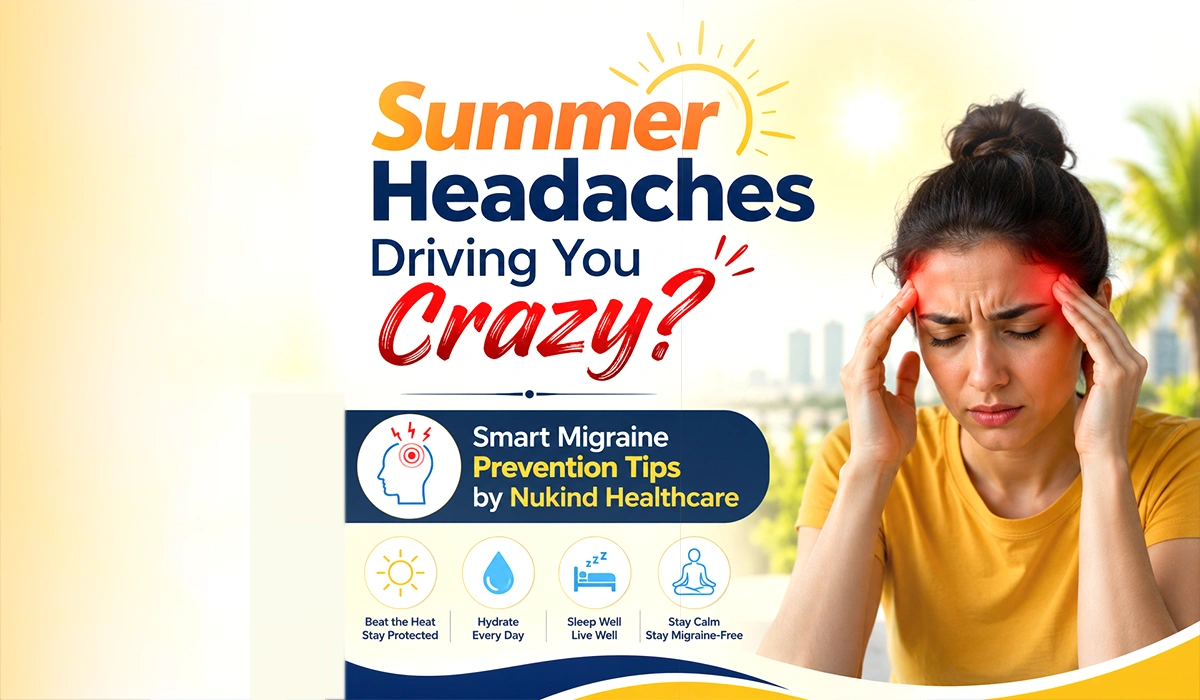
Summer is supposed to feel relaxing. Longer days, family trips, beach outings, and sunny weekends sound perfect—until a pounding headache ruins everything.
Have you ever stepped outside on a hot afternoon and suddenly felt pressure building behind your eyes? Maybe bright sunlight made your head throb. Or dehydration after a busy day left you exhausted and sensitive to sound.
For millions of people worldwide, especially during warmer months, summer headaches and migraines become a frustrating reality.
Migraine attacks are not just “bad headaches.” They can affect work, sleep, mood, focus, and daily life. In countries like the USA, rising temperatures, long screen hours, dehydration, and stress are making migraine episodes more common than ever.
The good news? Many summer migraine triggers can be prevented with the right habits and wellness support.
At Nukind Healthcare, we believe prevention is smarter than waiting for discomfort to become severe. Understanding your body’s signals early can help you enjoy the season without constant headaches.
In this guide, you’ll learn:
- Why migraines become worse in summer
- Common hidden triggers
- Smart migraine prevention tips
- Lifestyle and hydration strategies
- Nutrition support for better wellness
- When headaches may need medical attention
Let’s understand why summer headaches happen—and how to stay one step ahead of them.
What Are Summer Headaches and Migraines?
A summer headache is any headache that becomes more frequent or intense during hot weather. These headaches are often linked to:
- Heat exposure
- Dehydration
- Bright sunlight
- Sleep disruption
- Fatigue
- Stress
Migraines are more complex. They are neurological conditions that may cause:
- Severe throbbing pain
- Nausea
- Sensitivity to light and sound
- Dizziness
- Vision changes
- Fatigue
Some people experience migraines occasionally. Others may deal with them several times each month.
Summer weather can increase migraine triggers, especially when the body becomes overheated or dehydrated.
Why Hot Weather Can Trigger Migraines
Your body works hard to stay cool during summer. When temperatures rise, your body loses fluids through sweat. Blood vessels may expand, hydration levels drop, and energy levels decrease.
These changes can affect the nervous system and trigger headaches.
Common heat-related migraine triggers include:
- Extreme heat
- Humidity
- Direct sun exposure
- Lack of water intake
- Electrolyte imbalance
- Physical exhaustion
Many people notice migraine symptoms after:
- Outdoor workouts
- Long drives in the heat
- Traveling
- Skipping meals
- Spending too much time in the sun
Even mild dehydration can lead to headaches.
The Difference Between a Headache and a Migraine
People often confuse migraines with normal headaches. Understanding the difference matters because prevention strategies may differ.
Regular Headache
- Mild to moderate pain
- Pressure around the forehead or temples
- Usually short-lasting
- Often caused by stress or dehydration
Migraine
- Throbbing or pulsing pain
- Usually on one side of the head
- May last hours or days
- Can include nausea, dizziness, and light sensitivity
Migraines may also reduce concentration and productivity.
Dehydration: One of the Biggest Summer Migraine Triggers
One of the most common causes of summer headaches is dehydration.
When your body loses too much water:
- Blood flow changes
- Electrolyte levels shift
- Brain tissues temporarily contract
This can trigger headache pain.
Signs of dehydration include:
- Dry mouth
- Fatigue
- Dark urine
- Dizziness
- Muscle weakness
- Irritability
Many people drink water only after they feel thirsty, but thirst is often a late warning sign.
Smart Hydration Tips
- Drink water regularly throughout the day
- Increase intake during outdoor activity
- Add electrolyte-rich fluids when needed
- Avoid excessive caffeine and alcohol
- Carry a reusable water bottle
Hydration is one of the simplest migraine prevention habits.
How Sunlight and Heat Affect the Brain
Bright sunlight is another major migraine trigger.
Strong sunlight may overstimulate the nervous system and increase sensitivity in people prone to migraines.
Heat exposure may also:
- Increase fatigue
- Reduce energy
- Affect sleep quality
- Cause eye strain
Summer Protection Tips
- Wear sunglasses outdoors
- Use a cap or hat
- Avoid peak afternoon heat
- Stay in cool environments when possible
- Use cooling towels during outdoor activities
Small changes can reduce stress on the body and brain.
Why Skipping Meals Can Make Migraines Worse
Busy summer schedules often disrupt eating patterns. Many people skip breakfast, delay meals, or rely on unhealthy snacks.
Low blood sugar levels can trigger headaches and migraines.
When the brain doesn’t receive enough energy, it may react with:
- Fatigue
- Irritability
- Dizziness
- Head pain
Smart Eating Habits for Migraine Prevention
- Eat balanced meals regularly
- Include protein and healthy fats
- Avoid long gaps between meals
- Reduce processed sugary foods
- Keep healthy snacks nearby
Consistent nutrition supports stable energy and brain function.
Sleep Problems and Summer Headaches
Hot nights and travel schedules can disrupt sleep during summer.
Lack of sleep is strongly linked to migraines.
Poor sleep affects:
- Hormone balance
- Stress response
- Brain recovery
- Nervous system regulation
Even sleeping too much can sometimes trigger headaches.
Better Sleep Habits
- Maintain a regular bedtime
- Keep the bedroom cool
- Limit screen time before sleep
- Avoid caffeine late in the evening
- Stay hydrated during the day
Quality sleep plays a major role in migraine prevention.
Stress and Screen Time: Hidden Summer Triggers
Many people think summer is stress-free, but busy schedules, travel planning, work pressure, and excessive screen use can increase mental fatigue.
Long screen hours may lead to:
- Eye strain
- Neck tension
- Sleep disruption
- Headaches
Stress can also tighten muscles and increase nervous system sensitivity.
Reducing Stress Naturally
- Take regular breaks
- Practice deep breathing
- Spend time outdoors wisely
- Reduce excessive phone use
- Try relaxation exercises
Mental wellness and physical wellness are closely connected.
Foods That May Trigger Migraines in Summer
Certain foods may increase migraine risk in sensitive individuals.
Common migraine-trigger foods include:
- Processed meats
- Excess caffeine
- Artificial sweeteners
- Alcohol
- Aged cheese
- Packaged snacks
Summer parties and vacations often increase exposure to these foods.
Better Summer Food Choices
- Fresh fruits
- Water-rich vegetables
- Balanced meals
- Light homemade foods
- Nuts and seeds
- Natural hydration options
Keeping a food journal may help identify personal triggers.
The Role of Preventive Wellness in Migraine Support
Many people wait until headaches become severe before taking action.
Preventive wellness focuses on supporting the body before symptoms worsen.
Daily wellness habits may help:
- Improve hydration
- Support energy levels
- Reduce stress
- Support nutritional balance
- Promote better recovery
At Nukind Healthcare, preventive wellness is at the center of healthier living. Supporting the body consistently may help reduce everyday health challenges over time.
Can Nutritional Support Help With Headache Management?
Certain nutrients are linked with nervous system health and energy support.
People with frequent headaches may sometimes benefit from balanced nutrition that supports:
- Hydration
- Energy metabolism
- Muscle function
- Stress response
Nutrients commonly discussed in wellness support include:
- Magnesium
- Vitamin B complex
- CoQ10
- Electrolytes
- Antioxidants
A healthcare professional can guide individual nutritional needs.
When Should You See a Doctor for Migraines?
Occasional headaches are common, but some symptoms should never be ignored.
Seek medical attention if headaches:
- Become severe suddenly
- Occur frequently
- Affect speech or vision
- Cause confusion
- Happen after injury
- Disrupt daily activities regularly
Chronic migraines may require professional evaluation and treatment planning.
Early support can improve quality of life significantly.
Smart Daily Habits for Summer Migraine Prevention
Here are practical daily habits that may help reduce summer headache risk:
1. Stay Hydrated
Drink water consistently—not just when thirsty.
2. Protect Yourself From Heat
Avoid direct sun exposure during peak hours.
3. Eat Balanced Meals
Keep blood sugar levels stable.
4. Improve Sleep Quality
Maintain healthy sleep routines.
5. Reduce Stress
Relaxation matters for brain health.
6. Limit Screen Exposure
Take breaks to reduce eye strain.
7. Watch Personal Triggers
Track foods, weather, and habits linked to headaches.
Small preventive habits often make a big difference over time.
Summer Headaches and Children: What Parents Should Know
Children can also experience headaches during summer.
Common triggers include:
- Playing outdoors too long
- Poor hydration
- Excess screen time
- Irregular meals
Parents should encourage:
- Frequent water breaks
- Healthy snacks
- Rest periods
- Reduced overheating
If headaches become frequent, medical evaluation is important.
Why Preventive Healthcare Matters More Today
Modern lifestyles are increasing stress on the body.
People today face:
- Longer work hours
- More screen exposure
- Poor hydration habits
- Irregular eating patterns
- Higher stress levels
Preventive healthcare is no longer optional—it’s becoming essential.
Taking care of your body daily may help support:
- Better energy
- Improved wellness
- Reduced lifestyle-related health challenges
Nukind Healthcare believes stronger health starts with smarter daily care.
Conclusion
Summer should feel energizing—not exhausting.
But dehydration, heat exposure, poor sleep, stress, and unhealthy routines can quietly increase migraine risk. The good news is that many summer headaches can be reduced with smarter daily habits.
Your body constantly gives signals before bigger problems appear. Paying attention early matters.
Simple steps like staying hydrated, eating balanced meals, improving sleep, and managing stress can help support better wellness throughout the season.
At Nukind Healthcare, we believe prevention is one of the strongest forms of self-care. Daily wellness support and healthier habits can help you stay active, focused, and prepared for life’s demands.
Don’t wait for discomfort to control your summer.
Strengthen today. Stay healthier tomorrow.