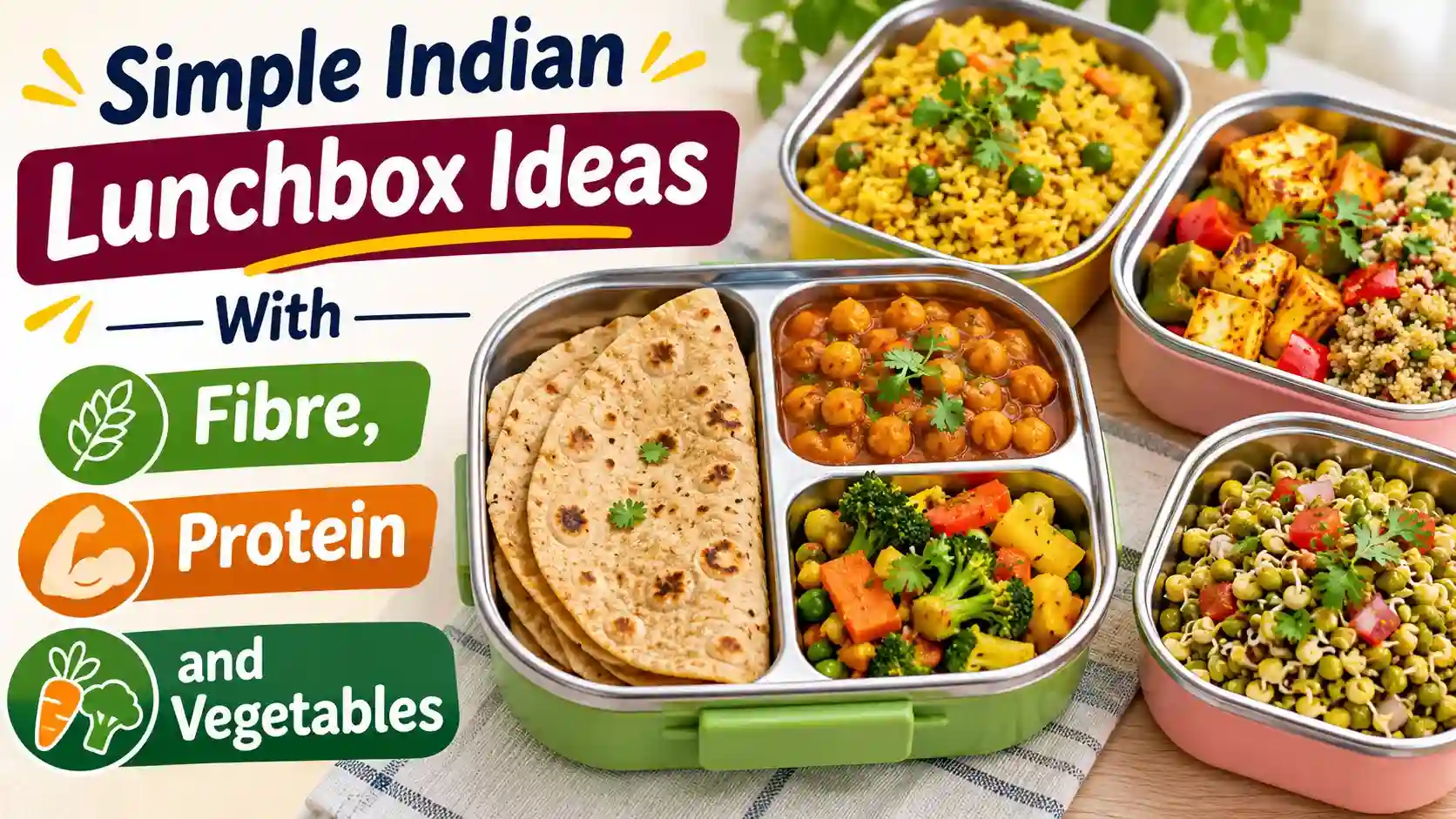
Packing a healthy lunchbox every morning can feel like a challenge, especially when you want something tasty, affordable and nutritious. Many Indian lunchboxes contain roti, rice or parathas but may lack enough vegetables, protein and fibre.
The good news is that healthy eating does not require expensive ingredients or complicated recipes. With everyday Indian foods such as dal, paneer, chana, seasonal vegetables and whole grains, you can prepare balanced lunches that support everyday nutritional needs.
Here are some simple Indian lunchbox ideas that make everyday meals more nutritious without completely changing your food habits.
1. What Makes a Healthy Indian Lunchbox?
A healthy lunchbox combines carbohydrates, protein, fibre and essential nutrients from different food groups.
A balanced meal may include:
- Whole grains such as roti or brown rice.
- Protein sources such as dal, paneer or chickpeas.
- Fibre-rich vegetables and salads.
- Seasonal fruits for additional vitamins and minerals.
Combining these foods helps create satisfying and varied meals.
2. Vegetable Stuffed Roti With Curd
Stuffed roti is a convenient Indian lunchbox option. Add grated carrots, cabbage, spinach or cauliflower to whole-wheat dough.
Serve it with plain curd for additional protein and calcium.
Practical tip: Use minimal oil and prepare the filling in advance to save morning cooking time.
3. Moong Dal Chilla With Green Chutney
Moong dal chilla is a protein-rich alternative to regular breakfast-style pancakes.
Soak and grind moong dal, then add chopped spinach, onions, tomatoes and carrots. Cook on a tawa and pack with green chutney.
It provides plant-based protein alongside vegetables and is suitable for adults and older children.
4. Vegetable Pulao With Chickpeas
Vegetable pulao becomes more balanced when prepared with carrots, peas, beans and chickpeas.
Chickpeas provide plant-based protein and fibre, while vegetables contribute vitamins and minerals.
Practical tip: Add cucumber or carrot salad separately for extra freshness.
5. Paneer Vegetable Wrap
A paneer wrap is an easy lunchbox option for people looking to include more protein.
Fill a whole-wheat roti with lightly cooked paneer, capsicum, carrots, onions and lettuce.
Paneer provides protein and calcium, while whole-wheat roti and vegetables contribute fibre.
6. Vegetable Idli With Sambar
Idli with vegetable-rich sambar offers a combination of grains, lentils and vegetables.
Sambar contributes protein and fibre through dal and vegetables. Idli provides carbohydrates for energy.
Pack the sambar in a leak-proof container to keep the lunchbox convenient.
7. Rajma Rice With Fresh Salad
Rajma rice is a familiar Indian meal that can provide both protein and fibre.
Kidney beans contain plant-based protein and dietary fibre. Pair them with rice and a fresh salad containing cucumber, carrots and tomatoes.
For additional fibre, consider brown rice or a mixture of brown and regular rice.
8. Easy Lunchbox Comparison
| Lunchbox meal | Protein source | Fibre source |
|---|---|---|
| Moong dal chilla | Moong dal | Vegetables |
| Paneer wrap | Paneer | Whole wheat, vegetables |
| Rajma rice | Kidney beans | Rajma, salad |
| Vegetable idli | Urad dal | Sambar vegetables |
| Chickpea pulao | Chickpeas | Vegetables, chickpeas |
Nutritional values vary depending on portion sizes and preparation methods.
9. How to Increase Fibre in Everyday Lunches
Dietary fibre supports digestive health and helps maintain regular bowel movements.
Simple ways to increase fibre include:
- Choose whole-wheat roti instead of refined-flour alternatives.
- Include beans, lentils and chickpeas.
- Add at least one or two types of vegetables.
- Include whole fruits instead of relying only on fruit juices.
- Increase fibre gradually and drink enough water.
10. How to Add More Protein to Indian Lunchboxes
Protein supports muscle maintenance, growth and tissue repair.
Include different protein sources throughout the week, such as:
- Paneer and curd.
- Moong dal and masoor dal.
- Rajma and chana.
- Soy chunks and tofu.
- Eggs, chicken or fish, depending on dietary preferences.
Combining different sources helps add variety to everyday meals.
11. Tips for Preparing Healthy Lunchboxes
Healthy lunchbox preparation does not have to take hours.
Try these simple habits:
- Wash and chop vegetables the previous evening.
- Soak chickpeas or beans overnight when required.
- Prepare chutneys and basic fillings in advance.
- Use seasonal vegetables to manage food costs.
- Pack wet and dry foods separately.
- Use insulated containers when needed to maintain safe food temperatures.
12. Frequently Asked Questions About Indian Lunchbox Ideas
Q1. What is the healthiest Indian lunchbox meal?
Moong dal chilla, paneer wraps, rajma rice and vegetable pulao are nutritious options when prepared with balanced portions.
Q2. Which Indian foods are rich in fibre and protein?
Chickpeas, rajma, lentils, green peas and soybeans provide both protein and fibre.
Q3. What can I pack for a healthy office lunch?
Vegetable roti rolls, dal with brown rice, paneer wraps and chickpea pulao are practical office lunch options.
Q4. How can I prepare a healthy lunchbox on a budget in India?
Use affordable staples such as seasonal vegetables, homemade dal, chana, moong and whole-wheat roti.
Q5. Are Indian vegetarian lunchboxes sufficient for protein?
Yes. A well-planned vegetarian diet can provide adequate protein through pulses, dairy, soy products, nuts and seeds.
Q6. How can I increase fibre without changing my diet completely?
Start by adding vegetables to existing meals, choosing whole grains more often and including beans or lentils regularly.
Conclusion
Healthy Indian lunchboxes do not need expensive ingredients or complicated recipes. Small changes, such as adding vegetables to roti, including dal or chickpeas, and choosing whole grains, can improve everyday meal variety and nutritional balance.
Whether preparing lunch for work, school or home, focus on combining fibre-rich foods, protein sources and colourful vegetables.
A healthier lunchbox starts with simple ingredients and consistent everyday choices.