For a family supporting someone through cancer treatment, the cost of medicines can become a second battle. Alongside hospital visits, tests and treatment decisions, families must often manage repeated pharmacy bills that strain their savings.
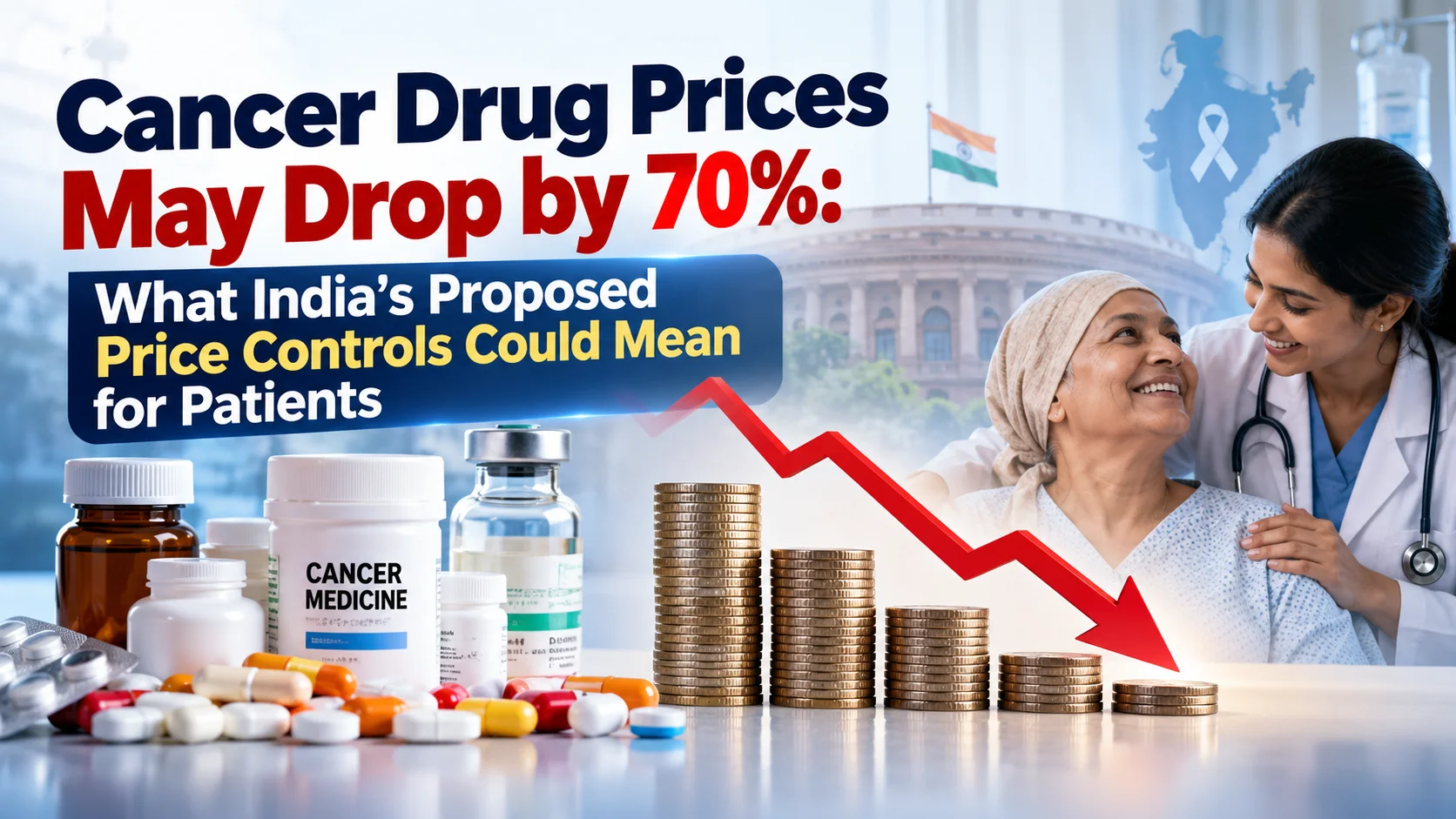
India has taken a significant step towards addressing this burden. On 8 October 2026, the central government announced a 30% cap on trade margins for non-scheduled anti-cancer medicines, with the potential to reduce the maximum retail prices (MRPs) of some medicines by up to 70%. The government estimates that patients could save around ₹2,500 crore annually.
But what does this policy actually change? Will every cancer medicine become 70% cheaper, and when will patients see the difference? Understanding the details can help patients and caregivers make more informed decisions.
1. What Is India’s Cancer Drug Price-Control Policy?
Quick answer: The policy limits trade margins on non-scheduled cancer medicines to 30% of their MRP, aiming to reduce excessive mark-ups across the medicine supply chain.
The government’s measure extends price protection to cancer medicines outside the existing scheduled price-control framework. The Department of Pharmaceuticals and the National Pharmaceutical Pricing Authority (NPPA) are central to India’s drug-pricing system.
The practical goal is to make expensive medicines more affordable without disrupting their availability.
2. Why Could Cancer Drug Prices Fall by 70%?
Quick answer: The projected reduction comes from restricting trade margins, not from a universal 70% discount on every cancer medicine.
When a medicine moves through distributors, stockists and retailers, mark-ups can increase the final price. Capping these margins can reduce the amount patients pay. However, the actual reduction will depend on the medicine’s existing price structure and the applicable rules.
3. Who Will Benefit From the New Price Controls?
Quick answer: Patients who purchase covered non-scheduled anti-cancer medicines are the main intended beneficiaries.
The policy covers branded and generic medicines, including domestic and imported products, according to government announcements. This could help patients whose treatment requires costly medicines over several cycles.
However, patients should check whether their specific medicine is covered and whether its revised price has taken effect.
4. Scheduled vs Non-Scheduled Cancer Medicines
Quick answer: Scheduled medicines already have government-set ceiling prices, while non-scheduled medicines fall outside that specific ceiling-price list.
| Feature | Scheduled medicines | Non-scheduled medicines |
|---|---|---|
| Existing price framework | Government ceiling prices | Different pricing framework |
| New measure | Existing controls continue | Trade-margin cap extends protection |
| Patient benefit | Price limits on covered drugs | Potential reductions in covered products |
The NPPA already regulates prices for medicines included under the applicable scheduled list. The new measure broadens protection for non-scheduled anti-cancer medicines.
5. How Much Could Patients Save?
Quick answer: Savings will vary by medicine, current MRP and the price adjustment applied. The government estimates total annual patient savings of approximately ₹2,500 crore.
For example, if a medicine’s price falls substantially after the cap is applied, a patient purchasing it regularly could save money over several treatment cycles. This is an illustration, not a prediction for any particular drug.
Practical tip: Compare the revised MRP with the previous price for the exact brand, strength and pack size.
6. When Will the Lower Prices Take Effect?
Quick answer: The policy has been announced, but patients should confirm the applicable medicine-specific price and implementation details before expecting a particular reduction.
The government’s announcement establishes the policy direction. The medicines covered and the relevant pricing instructions determine how it applies to individual products.
Patients can check official updates from the NPPA and ask their pharmacist or hospital pharmacy to verify current prices.
7. Could Price Controls Affect Medicine Availability?
Quick answer: Affordability must be balanced with a reliable supply of medicines, particularly for patients who cannot safely interrupt treatment.
Price controls aim to curb excessive mark-ups, but implementation also needs to protect manufacturing and distribution. Patients should not stop or switch prescribed medicines independently because of a price change.
8. What Should Cancer Patients and Caregivers Do?
Quick answer: Verify the medicine’s coverage, compare prices and discuss financial assistance with the treating hospital.
Useful steps include:
- Keep the prescription and medicine packaging available.
- Ask the hospital pharmacy whether the medicine is covered by the new rules.
- Compare the current MRP with the revised price, where applicable.
- Ask about generic alternatives only after consulting the oncologist.
- Explore eligible government schemes, hospital support programmes and patient-assistance options.
These steps can help families understand the financial impact without compromising treatment decisions.
9. What Does This Mean for India’s Healthcare System?
Quick answer: The policy could improve medicine affordability, but its overall impact will depend on implementation, price transparency and continued availability.
For patients in Delhi, Mumbai, Chennai, Bengaluru and smaller cities, lower medicine prices could ease part of the financial burden. However, the policy does not automatically reduce every component of cancer care, including hospital charges, diagnostic tests, surgery or radiation therapy.
10. Frequently Asked Questions About Cancer Drug Price Controls in India
Will all cancer medicines become 70% cheaper? No. Up to 70% is the projected maximum reduction, not a guaranteed discount for every medicine.
Who regulates medicine prices in India? The National Pharmaceutical Pricing Authority (NPPA) is responsible for implementing applicable drug-price controls.
Will branded and generic cancer medicines be covered? The announced measure includes branded and generic non-scheduled anti-cancer medicines, subject to the applicable ru
How can I check the new price of my cancer medicine? Check official NPPA notifications and confirm the current MRP with a licensed pharmacy or hospital pharmacist.
Should I change my cancer medicine to save money? No. Discuss alternatives and affordability concerns with your oncologist before making any treatment changes.
Conclusion: A Step Towards More Affordable Cancer Care
India’s cancer drug price-control policy could provide meaningful financial relief to patients and families. The 30% trade-margin cap for non-scheduled anti-cancer medicines is intended to curb excessive mark-ups, with potential price reductions of up to 70%.
The key is to distinguish the maximum projected reduction from the actual price of an individual medicine. Patients should verify current prices, ask about eligible assistance and continue treatment under professional medical guidance.
More affordable medicines can ease the financial burden of cancer care—but reliable access, transparent pricing and appropriate treatment must go hand in hand.