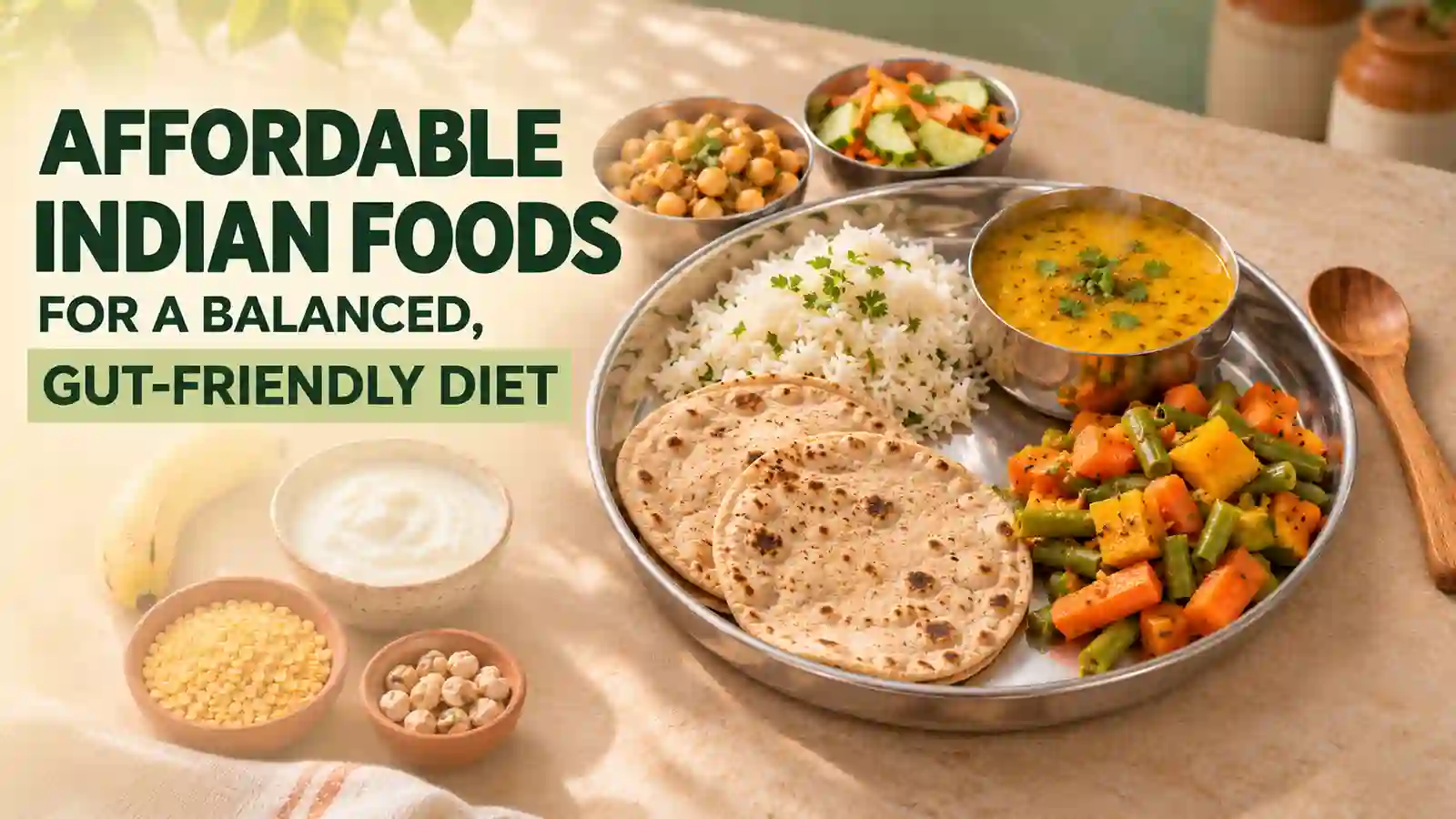
Eating healthy does not have to mean buying expensive superfoods or following complicated diet plans. Imagine starting your morning with a bowl of homemade poha, enjoying dal and roti for lunch, and ending the day with fresh vegetables and curd. These simple Indian meals can provide essential nutrients while supporting digestive health.
A balanced, gut-friendly diet focuses on fibre, protein, vitamins, minerals and beneficial food cultures. Fortunately, many affordable Indian foods contain these nutrients and are easily available in local markets across India.
1. What Is a Balanced, Gut-Friendly Diet?
A balanced, gut-friendly diet includes different food groups that provide essential nutrients and support normal digestion. It combines whole grains, vegetables, fruits, pulses, healthy fats and fermented foods. Choosing affordable, minimally processed ingredients makes healthy eating practical for everyday Indian households.
2. Dal: An Affordable Source of Protein and Fibre
Moong dal, masoor dal and chana dal are everyday kitchen staples. They provide plant-based protein, fibre and important minerals.
Including dal in regular meals supports nutritional balance and helps increase dietary fibre intake.
Practical tip: Prepare dal with seasonal vegetables and use moderate amounts of oil and salt.
3. Seasonal Vegetables for Better Digestion
Vegetables such as spinach, carrots, cabbage, bottle gourd and pumpkin provide fibre, vitamins and minerals.
Fibre supports regular bowel movements and contributes to a healthy gut environment.
Practical tip: Buy locally available seasonal vegetables to reduce grocery expenses.
4. Homemade Curd: A Traditional Probiotic Food
Plain homemade curd contains beneficial live cultures when properly fermented. These cultures may support gut microbial balance and provide calcium and protein.
However, not every fermented product contains the same microorganisms or provides identical benefits.
Practical tip: Choose fresh, unsweetened curd instead of flavoured varieties with added sugar.
5. Millets and Whole Grains for Everyday Nutrition
Bajra, jowar, ragi, whole wheat and oats are useful alternatives to relying entirely on refined grains. They provide varying amounts of fibre, minerals and complex carbohydrates.
Practical tip: Rotate different grains throughout the week instead of eating the same staple every day.
6. Bananas and Papaya: Budget-Friendly Fruits
Bananas and papayas are commonly available fruits in India. Bananas provide carbohydrates and potassium, while papaya contains fibre, vitamin C and other nutrients.
Including whole fruits can support overall dietary fibre intake.
Practical tip: Choose seasonal fruits and eat them whole rather than replacing them with packaged juices.
7. Sprouts and Chickpeas for Plant-Based Nutrition
Sprouted moong, boiled chana and roasted chickpeas are affordable sources of plant protein and fibre. They make nutritious additions to breakfast, lunch and evening snacks.
Practical tip: Wash sprouts thoroughly and cook them when needed for food safety, particularly for vulnerable individuals.
8. Affordable Indian Foods: Quick Comparison
| Food | Main Nutritional Benefit | Budget-Friendly Use |
|---|---|---|
| Moong dal | Protein and fibre | Dal and khichdi |
| Curd | Live cultures and calcium | Lunch accompaniment |
| Bajra | Fibre and minerals | Rotis |
| Banana | Potassium and carbohydrates | Breakfast snack |
| Chana | Protein and fibre | Evening snack |
| Spinach | Folate and iron | Vegetable curry |
9. How to Build a Gut-Friendly Indian Meal
Creating a nutritious plate does not require expensive ingredients. Combine different food groups in practical portions.
- Breakfast: Vegetable poha with peanuts or moong dal chilla.
- Lunch: Roti, dal, seasonal vegetables and plain curd.
- Evening snack: Roasted chana or a seasonal fruit.
- Dinner: Vegetable khichdi with cooked vegetables.
Drink enough water and increase fibre gradually to help your digestive system adjust.
10. Foods to Limit for Better Gut Health
Frequent consumption of highly processed snacks, sugary drinks, excessive fried foods and packaged products high in salt may reduce overall diet quality.
Instead, choose homemade meals, fresh ingredients and minimally processed foods more often. Individual digestive tolerance also matters.
11. Why Choose Affordable, Home-Cooked Indian Foods?
Home-cooked Indian meals offer flexibility, variety and control over ingredients. They also make it easier to include locally available vegetables, pulses, grains and traditional fermented foods.
Following recommendations from the ICMR-National Institute of Nutrition can help households make informed food choices without depending on expensive diet products.
12. Frequently Asked Questions About Affordable Indian Foods for a Balanced, Gut-Friendly Diet
Q1. Which Indian foods are best for gut health on a budget?
Moong dal, seasonal vegetables, bananas, chickpeas, whole grains and plain curd are affordable choices that contribute fibre and other essential nutrients.
Q2. Is homemade curd good for digestion?
Plain homemade curd containing live cultures can support gut microbial health. Individual tolerance to dairy may vary.
Q3. What is the cheapest high-fibre food in India?
Pulses, chickpeas, whole grains and seasonal vegetables are practical, affordable sources of dietary fibre.
Q4. Can I follow a gut-friendly diet without expensive supplements?
Yes. Most people can build a nutritious eating pattern using ordinary foods such as dal, vegetables, fruits, curd and whole grains.
Q5. Which Indian breakfast is good for gut health?
Vegetable poha, moong dal chilla, vegetable upma and oats are useful breakfast options when prepared with balanced ingredients.
Conclusion
A healthy digestive system starts with consistent everyday food choices. Affordable Indian foods such as dal, curd, seasonal vegetables, fruits, sprouts and whole grains can help create a balanced, gut-friendly diet.
Rather than spending more on expensive health products, focus on food variety, portion balance, hydration and home-cooked meals. Remember, better nutrition does not have to be expensive; it starts with making smarter choices from your everyday kitchen.