Introduction: Why Gut Health Matters
Have you ever experienced bloating, irregular bowel movements, or digestive discomfort after eating your favourite meal? Your gut may be trying to tell you something.
Your digestive system does more than break down food. It also contains trillions of microorganisms that help maintain a healthy balance inside your body.
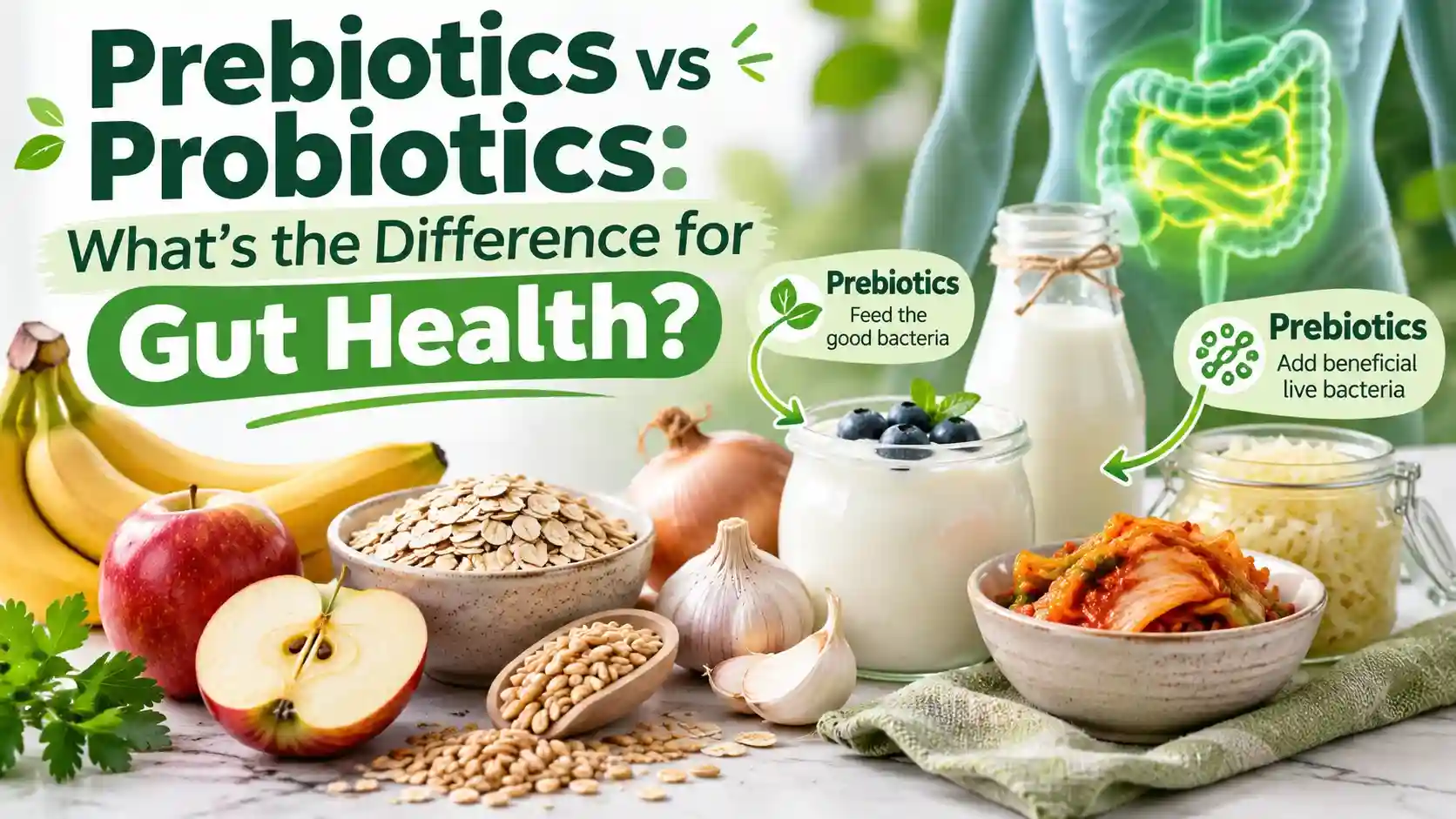
Two important terms often appear in conversations about digestive wellness: prebiotics and probiotics. Although they sound similar, they perform different functions.
Understanding prebiotics vs probiotics can help you make better food choices, support digestive health, and maintain a balanced gut microbiome.
1. What Are Prebiotics?
Quick Answer: Prebiotics are substances, mainly specific types of dietary fibre, that beneficial microorganisms in the gut can use as food.
They help nourish beneficial gut bacteria and support a healthy digestive environment.
Common prebiotic food sources include:
- Garlic and onions
- Bananas, particularly slightly green bananas
- Oats and barley
- Chicory root
- Beans and lentils
Practical Tip: Include fibre-rich foods in your everyday Indian meals instead of depending entirely on supplements.
2. What Are Probiotics?
Quick Answer: Probiotics are live microorganisms that provide health benefits when consumed in adequate amounts.
They are found in certain fermented foods and specific dietary supplements.
Popular probiotic food sources include:
- Curd (dahi) containing live cultures
- Some fermented milk products
- Certain fermented vegetables
- Selected probiotic supplements
Not every fermented food contains proven probiotic strains. Always check product labels for live cultures and relevant information.
3. Prebiotics vs Probiotics: What’s the Difference?
Both support gut health, but their functions are different.
| Feature | Prebiotics | Probiotics |
|---|---|---|
| Meaning | Food for beneficial microbes | Live beneficial microorganisms |
| Main function | Nourishes gut bacteria | Introduces specific live microorganisms |
| Sources | Garlic, oats, bananas | Curd, selected fermented foods |
| Common form | Dietary fibre | Live bacterial or yeast cultures |
| Primary role | Supports the gut environment | Provides specific health benefits |
Simple example: Prebiotics are like food for helpful garden plants, while probiotics are like introducing beneficial plants into the garden.
4. How Do Prebiotics Support Gut Health?
Prebiotics help beneficial gut microorganisms grow and produce substances such as short-chain fatty acids through fermentation.
These substances play important roles in maintaining intestinal health.
Regularly eating different fibre-rich foods can support bowel regularity and microbial diversity.
5. How Do Probiotics Support Digestion?
Certain probiotic strains can help maintain microbial balance and support specific digestive functions.
Research suggests that some strains may help with particular conditions, such as certain types of antibiotic-associated diarrhoea.
However, probiotic benefits depend on the microorganism, strain, dosage, and individual health condition.
6. Can You Take Prebiotics and Probiotics Together?
Quick Answer: Yes. Prebiotics and probiotics can be consumed together as part of a balanced diet. Their combination is often called a synbiotic.
Prebiotics can provide nourishment for certain microorganisms, while probiotics supply selected live microorganisms.
For example, eating plain curd with oats and banana combines probiotic-containing food with prebiotic-rich ingredients.
Practical Tip: Choose a varied diet rather than assuming that every combination will produce additional health benefits. Probiotics+1
7. Best Prebiotic and Probiotic Foods in India
Indian diets already include several foods that can support gut health.
| Food | Category |
|---|---|
| Onion and garlic | Prebiotic sources |
| Banana | Prebiotic source |
| Oats | Fibre-rich food |
| Rajma and chana | Fibre-rich food |
| Plain curd with live cultures | Potential probiotic food |
| Selected fermented foods | May contain live microorganisms |
Practical Tip: Include dal, vegetables, whole grains, fruits and suitable fermented foods in your daily meals.
8. Which Is Better: Prebiotics or Probiotics?
Quick Answer: Neither is universally better. They serve different purposes, and the right choice depends on your nutritional needs and health condition.
Prebiotics are useful for nourishing gut microorganisms, whereas specific probiotics may provide benefits for particular digestive concerns.
For everyday wellness, start with a balanced, fibre-rich diet. Consider supplements only when there is a clear reason to use them.
9. Are Prebiotic and Probiotic Supplements Necessary?
Quick Answer: Not necessarily. Many people can obtain prebiotic fibres and beneficial live microorganisms through suitable foods.
However, supplements may be considered in specific situations.
Before purchasing a probiotic supplement, check:
- Microorganism genus, species and strain.
- CFU count and serving information.
- Expiry date and storage instructions.
- Scientific evidence supporting the intended benefit.
- Manufacturer information and quality standards.
Important: People with weakened immune systems or serious illnesses should consult a healthcare professional before using probiotic supplements. Probiotics+1
10. How to Improve Gut Health Naturally
Quick Answer: A consistent routine involving balanced nutrition, hydration, physical activity and adequate sleep can support digestive health.
Try these everyday habits:
- Eat a variety of fruits and vegetables.
- Increase dietary fibre gradually.
- Drink sufficient water.
- Include appropriate fermented foods.
- Exercise regularly.
- Maintain consistent sleep habits.
- Avoid unnecessary antibiotic use.
If digestive symptoms persist, consult a qualified healthcare professional instead of relying only on supplements.
11. Prebiotics vs Probiotics: Common Mistakes to Avoid
Quick Answer: The biggest mistake is assuming that all fibres are prebiotics and all fermented foods are probiotics.
Remember:
- Not every dietary fibre meets the scientific definition of a prebiotic.
- Not every fermented food contains live microorganisms when consumed.
- Different probiotic strains can have different effects.
- Higher CFU counts do not automatically mean better results.
- Supplements cannot replace a balanced diet or medical treatment.
Understanding these differences helps you make informed decisions about digestive wellness. Nature+2
12. The Future of Gut Health and Nutrition
Quick Answer: Gut health research is increasingly focusing on individual microbiomes, specific microbial strains and evidence-based nutrition.
A 2026 international scientific consensus statement highlights that gut health involves more than digestion. It also considers intestinal function, symptoms and quality of life.
This means future nutrition recommendations may become more personalised, based on individual needs rather than one-size-fits-all solutions. Nature
Prebiotics vs Probiotics Frequently Asked Questions
1. What is the main difference between prebiotics and probiotics?
Prebiotics are substances that nourish beneficial gut microorganisms, while probiotics are live microorganisms that provide health benefits when consumed in adequate amounts.
2. Can I take prebiotics and probiotics daily?
They can be included in a daily diet through suitable foods. Supplement use should depend on individual needs and professional advice.
3. Is curd a prebiotic or probiotic?
Curd containing live and beneficial cultures can provide probiotics. It is not itself a prebiotic.
4. Which foods are naturally rich in prebiotics?
Onions, garlic, bananas, oats, chicory root and legumes are examples of foods containing prebiotic fibres or related substrates.
5. Which is better for constipation?
Dietary fibre and adequate hydration are important for bowel regularity. Some specific probiotics may help certain digestive symptoms, but their effectiveness varies.
6. Are probiotics safe for everyone?
They are generally safe for many healthy people, but individuals with weakened immune systems or serious illnesses should seek medical advice first.
7. Can I get prebiotics and probiotics from Indian foods?
Yes. Bananas, onions, garlic, oats, dal, chickpeas and curd containing live cultures are accessible options.
8. Do prebiotics and probiotics help with bloating?
Some specific interventions may help certain people, but prebiotic fibres can also increase gas and bloating, particularly when introduced too quickly.
Conclusion: Building Better Gut Health
Understanding prebiotics vs probiotics makes it easier to choose the right foods for digestive wellness.
Remember three important points:
- Prebiotics nourish beneficial gut microorganisms.
- Probiotics provide specific live microorganisms with demonstrated health benefits.
- Both can be part of a balanced approach to digestive health.