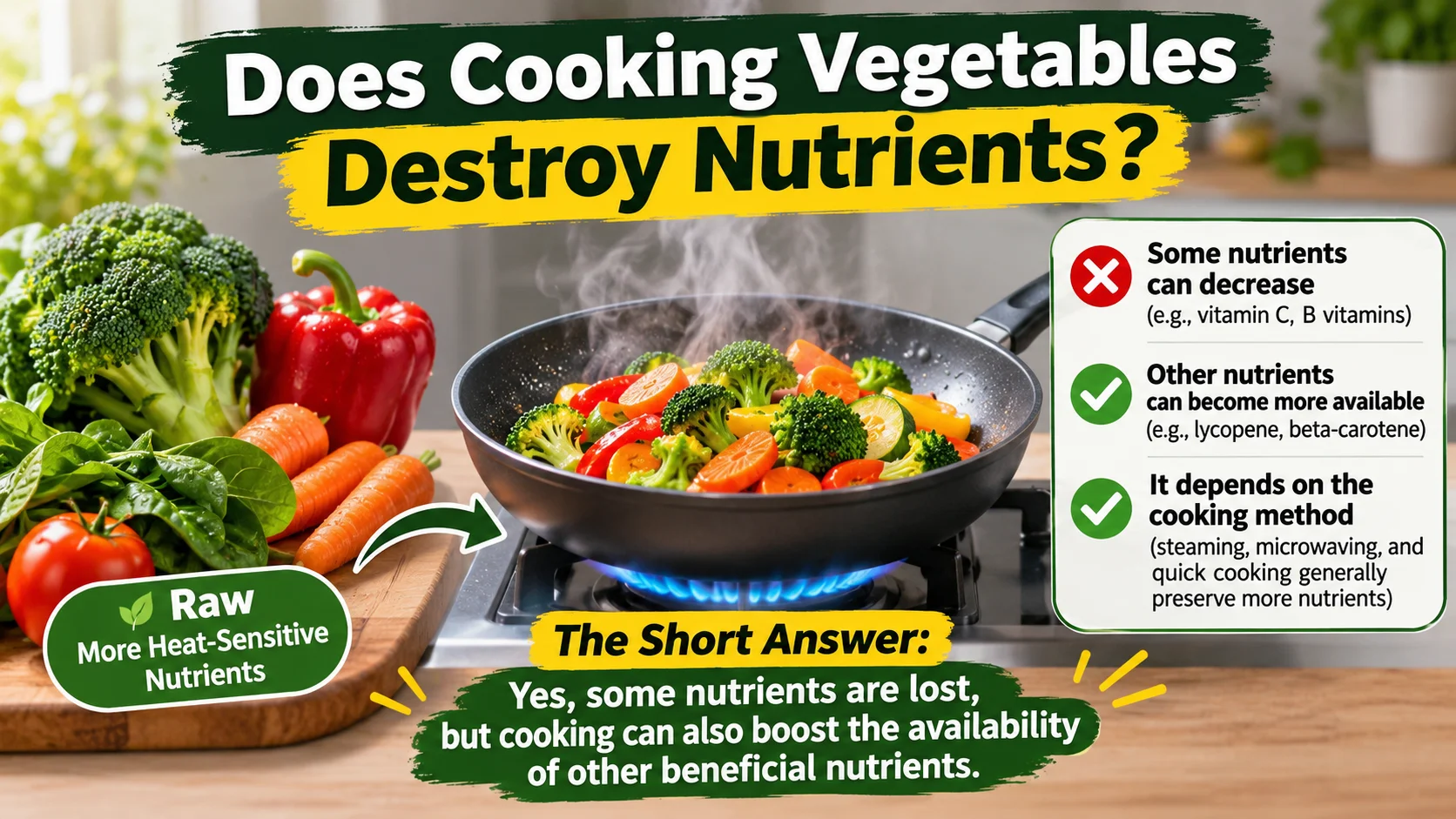
Have you ever wondered whether your healthy vegetable curry loses its nutritional value while cooking? Many people in India enjoy vegetables in sabzis, soups, dals and stir-fries, but cooking can change their nutritional content.
The truth is that cooking vegetables does not destroy all nutrients. Some vitamins decrease during cooking, while certain nutrients become easier for the body to absorb. The cooking method, temperature and duration make a difference.
1. Does Cooking Vegetables Destroy Nutrients?
Cooking vegetables can reduce some nutrients, particularly heat-sensitive vitamins such as vitamin C and folate. However, cooking can also improve the availability of certain nutrients. Therefore, cooked vegetables remain nutritious and should be part of a balanced diet.
2. Which Nutrients Are Lost During Cooking?
Vitamin C and some B vitamins are sensitive to heat and water. Prolonged cooking, especially boiling, can reduce their levels.
Water-soluble nutrients may also move into cooking water. Minerals generally withstand heat better, although some can leach into water.
3. Can Cooking Make Nutrients Easier to Absorb?
Yes. Heat can soften vegetables and break down their cell structures, making certain nutrients easier to access.
For example, cooking tomatoes increases the availability of lycopene, while cooking carrots can improve the availability of beta-carotene, which the body converts into vitamin A.
4. Boiling vs Steaming vs Microwaving
Different cooking methods affect nutrients differently.
| Cooking Method | Nutritional Effect |
|---|---|
| Boiling | Water-soluble vitamins may leach into water |
| Steaming | Generally preserves nutrients with limited water contact |
| Microwaving | Short cooking times and little water can help retain nutrients |
| Roasting | Enhances flavour but may reduce heat-sensitive vitamins |
| Stir-frying | Quick cooking; oil can improve absorption of some nutrients |
Research generally supports short cooking times and minimal water for retaining sensitive nutrients.
5. Is Boiling Vegetables Bad for Health?
No. Boiling vegetables is not unhealthy. Nutrient loss depends on the vegetable, cooking duration and amount of water used.
If you boil vegetables for soup, dal or curry, consider using the cooking liquid instead of discarding it. This helps retain nutrients that have moved into the water.
6. Should You Eat Vegetables Raw or Cooked?
Both raw and cooked vegetables provide nutritional benefits.
Raw vegetables may retain more vitamin C, while cooked vegetables can provide better access to certain carotenoids.
A combination of raw salads and cooked vegetables is a practical way to enjoy different nutrients.
7. Best Cooking Methods for Indian Vegetables
For everyday Indian meals, consider these methods:
- Steam broccoli, beans and carrots.
- Microwave vegetables using a small amount of water.
- Lightly sauté spinach and other leafy vegetables.
- Prepare vegetable soups using the cooking liquid.
- Avoid unnecessarily long boiling.
The goal is to cook vegetables until they are enjoyable and tender without overcooking them.
8. Does Frying Destroy Vegetable Nutrients?
Deep-frying can expose vegetables to high temperatures and add significant calories through oil absorption. Some nutrients may decrease during frying.
However, light sautéing with a small amount of oil can help the body absorb fat-soluble nutrients such as beta-carotene.
9. How to Preserve Nutrients While Cooking
Follow these simple tips:
- Wash vegetables before cutting them.
- Avoid peeling vegetables unnecessarily when the skin is edible.
- Cut vegetables into larger pieces when practical.
- Use minimal cooking water.
- Cook for shorter periods.
- Refrigerate vegetables appropriately.
- Use leftover cooking water in soups or gravies.
These habits can help reduce nutrient losses during preparation.
10. Frequently Asked Questions
Does cooking broccoli destroy nutrients?
Cooking can reduce vitamin C, but steaming or microwaving with minimal water generally helps preserve more nutrients than prolonged boiling.
Is spinach healthier raw or cooked?
Both provide nutrients. Cooking reduces some heat-sensitive vitamins but can improve access to certain nutrients and reduce some compounds that interfere with mineral absorption.
Does microwaving vegetables destroy vitamins?
Microwaving does not automatically destroy vitamins. Short cooking times and limited water can help preserve nutrients.
Which vegetables should be eaten raw?
Vegetables such as cucumber, carrots, tomatoes and bell peppers can be enjoyed raw when properly washed and suitable for your diet.
Conclusion
Does cooking vegetables destroy nutrients? Some nutrients are reduced, but others become easier to absorb.
Steaming, microwaving and quick cooking are useful methods for preserving nutrients. Rather than avoiding cooked vegetables, focus on variety, proper preparation and balanced meals.
The healthiest vegetable is one you enjoy eating regularly.