Have you ever wondered whether eating raw vegetables is healthier than eating cooked ones? You might enjoy a bowl of fresh salad with lunch, while your dinner includes cooked vegetables. Both choices can be nutritious, but the way you prepare vegetables can influence how much of certain nutrients your body receives.
Some vegetables retain more heat-sensitive nutrients when eaten raw, particularly vitamin C and folate. However, cooking can also make certain nutrients easier for your body to absorb. Research shows that the nutritional impact depends on the vegetable, cooking method, and nutrient being measured.
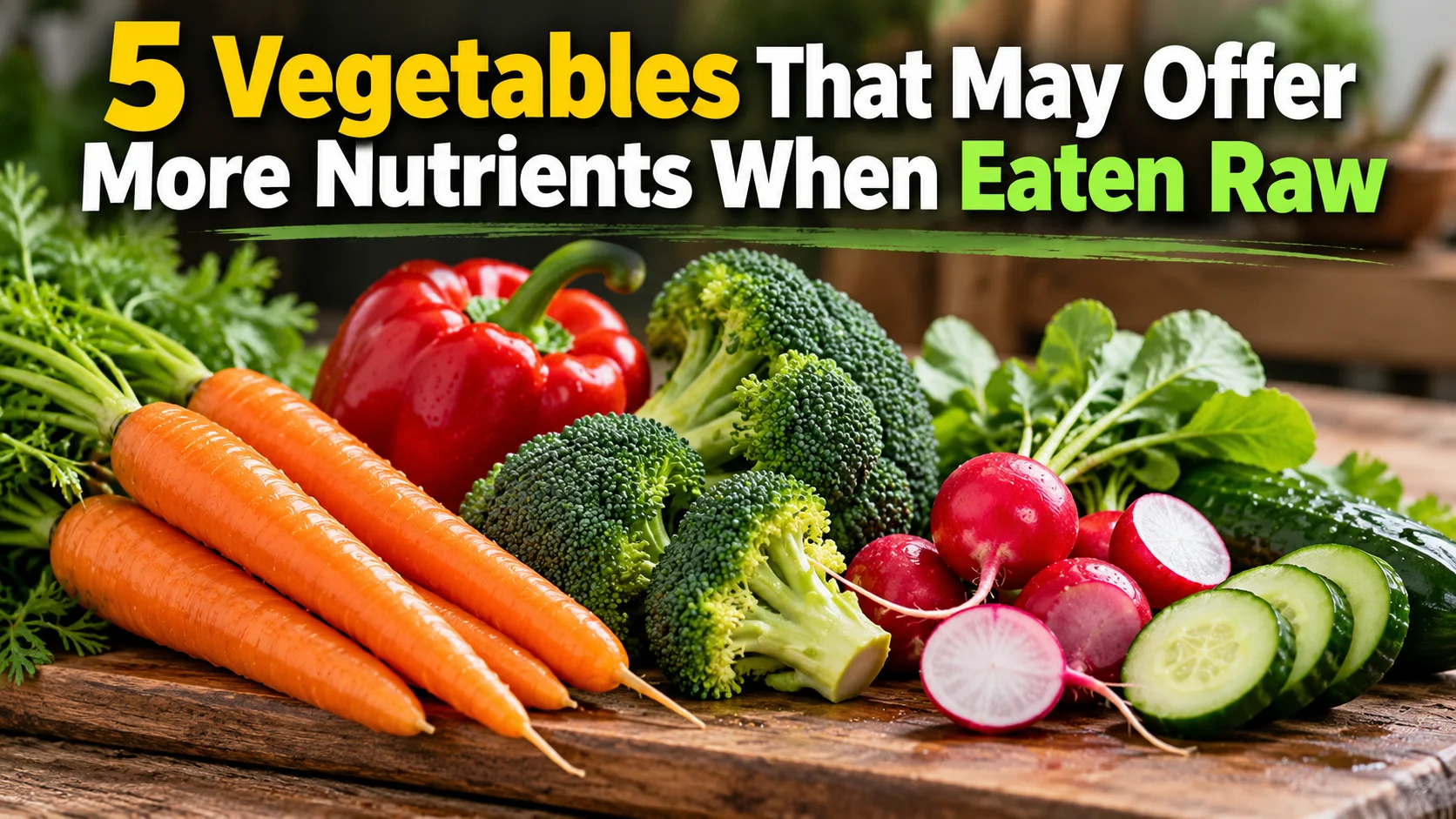
Here are five vegetables worth considering for your raw-food routine, along with practical tips for enjoying them safely.
1. Red Bell Peppers: A Vitamin C-Rich Choice
Quick answer: Red bell peppers are excellent sources of vitamin C, which can be reduced by heat and prolonged cooking.
Vitamin C supports normal immune function, collagen formation, and iron absorption. Red bell peppers are particularly useful because even a modest serving can provide a substantial amount of this vitamin.
Eating fresh bell peppers raw helps preserve their heat-sensitive vitamin C. Their crisp texture and naturally sweet flavour also make them easy to add to everyday meals.
Practical tip: Slice red bell peppers into salads, serve them with hummus, or add them to sandwiches. Wash them thoroughly under running water before cutting.
2. Broccoli: Preserve Heat-Sensitive Nutrients
Quick answer: Raw broccoli can help preserve vitamin C that may be lost during prolonged cooking.
Broccoli contains vitamin C, folate, fibre, and other beneficial plant compounds. Cooking changes its nutritional composition, and the extent of nutrient loss depends on the method used. Boiling can cause water-soluble nutrients to leach into the cooking water.
Raw broccoli florets can add crunch to salads and vegetable platters. However, cooked broccoli remains nutritious, and light steaming is a good alternative if you find raw broccoli difficult to digest.
Practical tip: Wash broccoli carefully and cut it into small florets. If eating it raw causes bloating, try steaming it briefly.
3. Cabbage: A Simple Source of Vitamin C and Fibre
Quick answer: Fresh cabbage can provide vitamin C and fibre without the additional nutrient losses associated with some cooking methods.
Green and red cabbage are versatile vegetables commonly used in Indian and international meals. They contain vitamin C and other plant compounds that contribute to a varied diet.
Prolonged cooking, especially boiling, can reduce some heat-sensitive nutrients. Raw cabbage retains its crisp texture and works well in salads, wraps, and fresh vegetable slaws. However, cooked cabbage is also a nutritious option.
Practical tip: Finely shred fresh cabbage and combine it with carrots, lemon juice, and a small amount of seasoning for a simple salad.
4. Cauliflower: Enjoy Its Nutrients Without Prolonged Cooking
Quick answer: Raw cauliflower can preserve heat-sensitive nutrients, including vitamin C, that may decrease during cooking.
Cauliflower provides vitamin C, fibre, and other nutrients that support a balanced diet. Its mild flavour makes it suitable for raw vegetable platters and salads.
Although raw cauliflower can retain heat-sensitive vitamins, cooking may improve texture and make it easier for some people to digest. The healthiest choice depends partly on personal tolerance and preparation.
Practical tip: Cut cauliflower into small florets, wash thoroughly, and serve with a yoghurt-based dip. Steam it lightly if you prefer a softer texture.
5. Spinach: Raw or Cooked?
Quick answer: Raw spinach can preserve some heat-sensitive nutrients, but cooked spinach may make certain nutrients easier to absorb.
Spinach contains folate, vitamin C, vitamin K, and carotenoids. Raw spinach is a convenient addition to salads and sandwiches. However, cooking can increase the availability of carotenoids, including beta-carotene, by breaking down plant cell structures.
This means spinach is not necessarily healthier in only one form. Including both raw and cooked spinach in your diet can provide nutritional variety.
Practical tip: Wash spinach thoroughly before eating it raw. You can also lightly steam or sauté it as a side dish.
Raw vs Cooked Vegetables: Which Is Better?
Neither preparation method is universally superior. Raw vegetables can retain more of certain heat-sensitive nutrients, while cooking can improve the availability of others.
| Vegetable | Potential advantage of eating raw | Potential advantage of cooking |
|---|---|---|
| Red bell peppers | Helps preserve vitamin C | Softer texture |
| Broccoli | Helps retain vitamin C | Easier texture for some people |
| Cabbage | Retains crispness and heat-sensitive nutrients | Softer and sometimes easier to digest |
| Cauliflower | Helps preserve vitamin C | Softer texture and easier chewing |
| Spinach | Retains some heat-sensitive nutrients | May improve carotenoid availability |
How to Preserve More Nutrients When Preparing Vegetables
You do not need to eat every vegetable raw to maintain a nutritious diet. A few simple habits can help you make the most of both raw and cooked foods.
- Wash before eating: Rinse vegetables thoroughly under running water.
- Avoid prolonged boiling: Water-soluble nutrients can be lost into cooking water.
- Choose light cooking methods: Steaming and microwaving can help retain certain nutrients.
- Prepare fresh portions: Cut vegetables shortly before eating when practical.
- Include dietary variety: Combine raw salads with cooked vegetables throughout the week.
These approaches help balance nutrient retention, food safety, taste, and convenience.
Are Raw Vegetables Safe for Everyone?
Raw vegetables can be part of a healthy diet, but proper washing and handling are essential. People with weakened immune systems or specific medical conditions may need additional food-safety precautions. Ask a healthcare professional for personalised guidance if you are unsure which foods are appropriate for you.
Frequently Asked Questions About Vegetables That Offer More Nutrients When Eaten Raw
1. Which vegetables are nutritious when eaten raw?
Red bell peppers, broccoli, cabbage, cauliflower, and spinach can provide valuable nutrients when eaten raw. Their nutritional benefits vary depending on the specific nutrient and preparation method.
2. Does cooking destroy all the nutrients in vegetables?
No. Cooking can reduce some heat-sensitive nutrients, such as vitamin C, but may improve the availability of others, including certain carotenoids.
3. Is raw broccoli healthier than cooked broccoli?
Not necessarily. Raw broccoli can retain more vitamin C, while cooking changes its texture and nutrient availability. Both forms can contribute to a healthy diet.
4. Can I eat spinach raw every day?
Raw spinach can be included in a varied diet if washed thoroughly and handled safely. Eating cooked spinach is also beneficial and may improve the availability of certain nutrients.
5. What is the healthiest way to cook vegetables?
Steaming or microwaving with minimal water and shorter cooking times can help preserve some nutrients. The best method depends on the vegetable and the nutrients you want to retain.
Conclusion: Make Room for Both Raw and Cooked Vegetables
The idea that raw vegetables are always healthier is too simplistic. Red bell peppers, broccoli, cabbage, cauliflower, and spinach can all contribute valuable nutrients when eaten raw, but cooking has nutritional advantages too.
For a balanced approach, enjoy fresh salads alongside steamed, sautéed, or otherwise lightly cooked vegetables. Choose a variety of colours, prepare produce safely, and focus on consistency rather than trying to eat everything raw.
The takeaway is simple: the healthiest vegetable is one you enjoy eating regularly, prepared in a way that preserves its nutritional value and suits your needs.