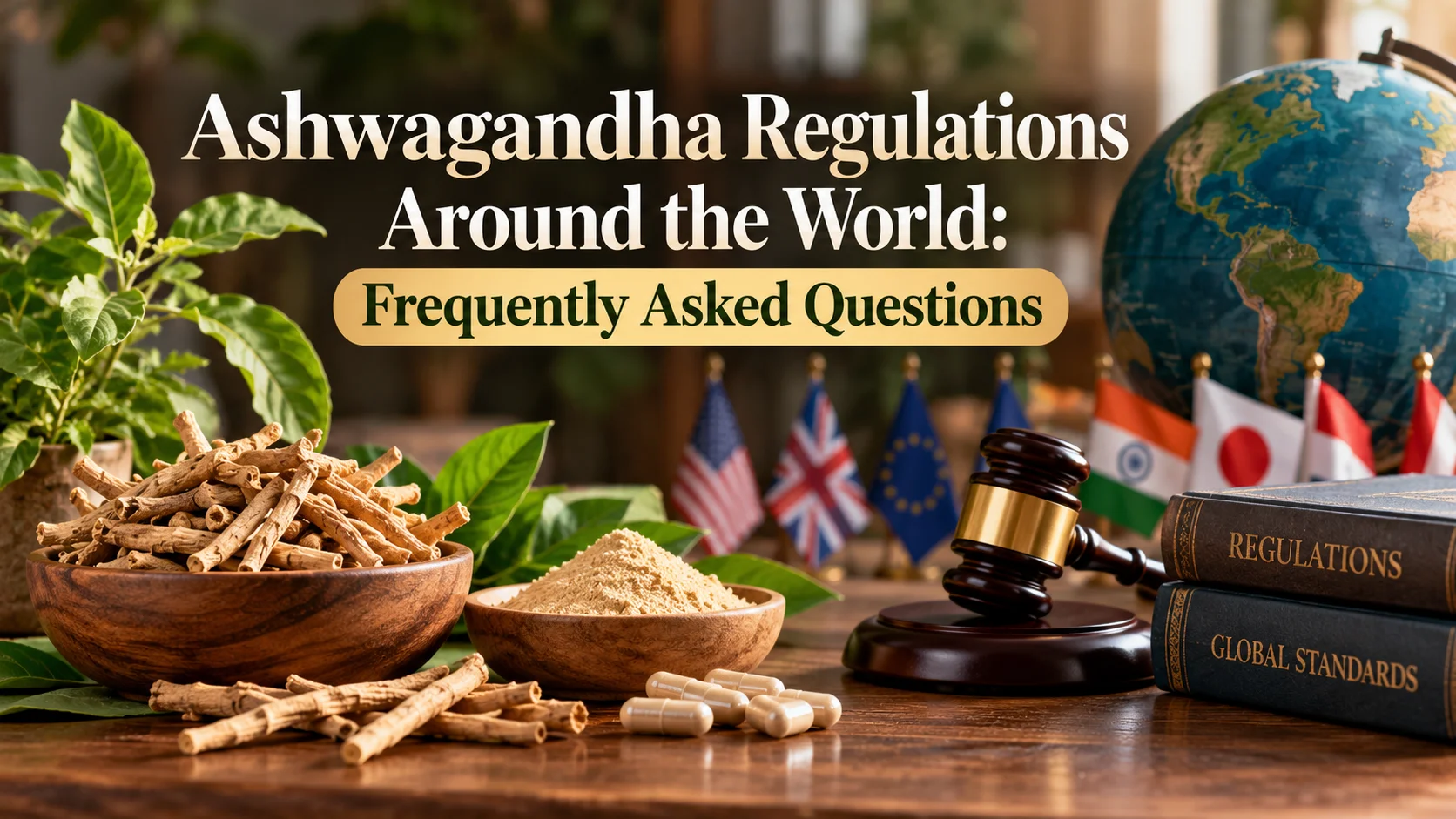
Ashwagandha has a long history in Ayurveda and is now widely sold in capsules, powders, and herbal supplements. However, a product available in India may face different regulatory requirements in the United States, United Kingdom, Canada, or Australia. Understanding these rules helps consumers make informed choices and helps businesses prepare for international markets.
What are ashwagandha regulations? They are the laws and standards governing how ashwagandha can be manufactured, labelled, marketed, and sold. Requirements depend on the product category, ingredients, claims, and destination country.
1. How Is Ashwagandha Regulated in India?
In India, the rules depend on whether ashwagandha is sold as an Ayurvedic medicine or a food supplement.
The Food Safety and Standards Authority of India (FSSAI) regulates health supplements and nutraceuticals under its applicable food regulations. Ayurvedic medicines fall under a separate regulatory framework.
An important update came in April 2026: FSSAI clarified that ashwagandha roots and their extracts are permitted in specified food supplement categories, subject to applicable requirements, while leaves are not permitted in those products. The Ministry of Ayush also directed Ayurvedic drug manufacturers to use roots rather than leaves in Ayurvedic products.
Practical tip: Check the product category, licence requirements, permitted plant parts, and applicable labelling rules before manufacturing or selling ashwagandha in India.
2. Are Ashwagandha Supplements Legal in the United States?
Ashwagandha supplements can be marketed in the United States, subject to applicable dietary supplement laws.
The US Food and Drug Administration (FDA) does not approve dietary supplements for safety and effectiveness before they enter the market. Manufacturers and distributors remain responsible for meeting legal requirements, including applicable safety, labelling, and manufacturing standards.
Practical tip: Businesses exporting to the US should review ingredient status, manufacturing controls, labelling, and the evidence supporting product claims.
3. What Are the Rules in the United Kingdom?
In Great Britain, ashwagandha’s regulatory position depends partly on how it is used in food.
The Food Standards Agency states that non-concentrated aqueous root infusions have evidence of a history of food use before the relevant cutoff date. It also indicates that ashwagandha plant parts are not considered novel for food supplements, while other food uses require novel food authorisation. General food safety and labelling rules still apply.
Practical tip: Check the intended product format and use rather than assuming that one approval covers every ashwagandha product.
4. Can Ashwagandha Be Sold in Canada?
Yes, certain ashwagandha products are licensed for sale in Canada as natural health products.
Health Canada uses product licensing requirements, and licensed products can be identified by an eight-digit Natural Product Number (NPN) or, where applicable, a DIN-HM. Requirements depend on the product and its authorised conditions of use.
Practical tip: Search Health Canada’s Licensed Natural Health Products Database to verify a product’s licence and permitted use before purchasing or importing it.
5. What About Australia and the European Union?
Rules vary across both markets. In Australia, complementary medicines are regulated through the Therapeutic Goods Administration framework. In July 2026, the TGA issued a safety alert noting reports of rare liver injury associated with ashwagandha-containing preparations.
In the European Union, food ingredients classified as novel generally require pre-market authorisation. Businesses must check the ingredient’s status and the requirements of the relevant market before selling a product.
Practical tip: Verify current country-specific rules before launching a product or making health claims.
6. Ashwagandha Regulation: Country Comparison
| Market | Key regulatory consideration |
|---|---|
| India | FSSAI food rules or applicable Ayurvedic medicine requirements |
| United States | Dietary supplement laws and manufacturer responsibilities |
| United Kingdom | Food supplement rules and novel food status for other uses |
| Canada | Natural health product licensing requirements |
| Australia | Applicable therapeutic goods requirements and safety guidance |
| European Union | Novel food status, authorisation, and national requirements |
This is a general overview, not a complete legal assessment. Requirements can differ by formulation, intended use, and product claims.
7. What Should Consumers Check Before Buying Ashwagandha?
Consumers should review the product label, ingredient list, recommended use, warnings, and manufacturer details.
Look for:
- The exact plant part and extract information.
- Clear directions for use and storage.
- Applicable licence or registration details.
- Transparent manufacturer and importer information.
- Claims that do not promise to cure or prevent diseases without appropriate authorisation.
A product’s availability online does not automatically mean it meets every local requirement.
8. Why Do Ashwagandha Regulations Differ Between Countries?
Countries classify products according to their intended use, ingredients, evidence, and local laws. A capsule marketed as a food supplement may face different requirements from an Ayurvedic medicine or a food ingredient used in a beverage.
For manufacturers, regulatory checks should be part of product development, not an afterthought.
9. Is Ashwagandha Safe for Everyone?
No herbal supplement is suitable for everyone. The Ministry of Ayush’s safety review discusses possible adverse events and the importance of appropriate use. Australia’s TGA has also highlighted rare reports of liver injury.
People who are pregnant or breastfeeding, have existing health conditions, or take medicines should consult a qualified healthcare professional before using ashwagandha.
10. How Can Businesses Prepare for International Markets?
Before exporting ashwagandha products, businesses should:
- Identify the product’s legal category in the destination country.
- Confirm permitted ingredients and plant parts.
- Review manufacturing, quality, and testing requirements.
- Verify labelling and health-claim restrictions.
- Confirm import, registration, and documentation requirements.
- Recheck official guidance before launch.
This process helps reduce compliance risks and supports more responsible product development.
Ashwagandha Regulations Around the World: Frequently Asked Questions
Is ashwagandha legal worldwide? No single rule applies worldwide. Its permitted use and sale depend on each country’s laws and the product category.
Can ashwagandha leaves be used in Indian food supplements? FSSAI’s April 2026 advisory states that ashwagandha leaves are not permitted in the specified food supplement categories; roots and root extracts may be used subject to applicable requirements.
Does the FDA approve ashwagandha supplements before sale? The FDA does not generally approve dietary supplements for safety and effectiveness before marketing. Companies must meet applicable legal requirements.
How can I verify a Canadian ashwagandha product? Search Health Canada’s Licensed Natural Health Products Database and check its licence details.
Can ashwagandha cause side effects? Yes. Adverse effects have been reported, and rare cases of liver injury have been highlighted by Australia’s TGA. Seek professional advice if you have concerns.
Conclusion
Ashwagandha regulations around the world reflect differences in product classification, safety requirements, and permitted claims. For consumers, checking labels and local authorisation is essential. For businesses, reviewing official guidance in every target market helps support responsible manufacturing and international trade.
The key takeaway: understand the rules before you buy, manufacture, market, or export an ashwagandha product.