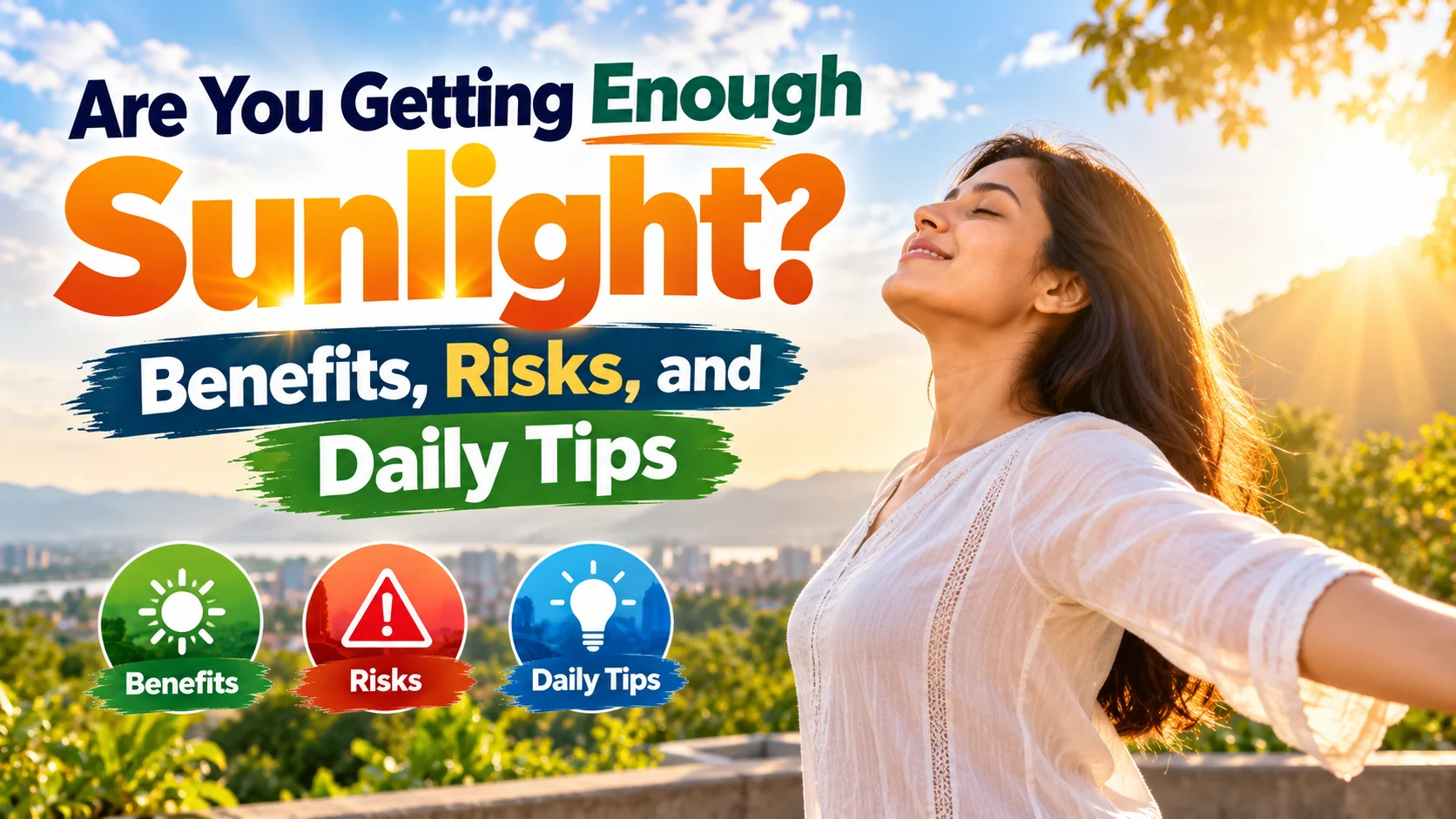
Have you ever wondered whether spending most of your day indoors could affect your health? Between office work, screen time, and busy routines, many people in India get less outdoor time than they realise. Sunlight plays an important role in vitamin D production and our daily body clock, but too much ultraviolet (UV) radiation can harm the skin and eyes. The goal is to enjoy daylight safely—not to spend hours in the sun.
What Are the Benefits of Sunlight?
Quick answer: Sunlight helps the body produce vitamin D, supports the natural sleep-wake cycle, and can encourage outdoor activity.
Vitamin D helps the body absorb calcium, which is essential for healthy bones and teeth. Spending time outdoors may also help people feel more alert and establish a regular daily routine.
Practical tip: Add a short outdoor walk to your routine, choosing the timing and sun protection according to the local UV index.
Does Sunlight Help Prevent Vitamin D Deficiency?
Quick answer: Sunlight contributes to vitamin D production, but exposure alone does not guarantee adequate vitamin D levels.
The amount your skin produces depends on factors such as skin tone, age, season, cloud cover, air pollution, clothing, and UV intensity. People who spend little time outdoors may be at greater risk of deficiency.
Example: Someone working indoors all day may need to discuss their vitamin D status with a healthcare professional rather than relying on occasional sunshine.
How Much Sunlight Do You Need Daily?
Quick answer: There is no single daily sunlight duration that works safely and effectively for everyone.
Requirements vary with location, skin type, season, and UV levels. In India, strong sunshine can increase the risk of sunburn and skin damage, even when the weather feels comfortable.
Practical tip: Check your local UV index and avoid using a fixed number of minutes as a universal vitamin D prescription.
What Is the Best Time to Get Sunlight?
Quick answer: The safest time depends on UV intensity, your location, and your skin’s sensitivity.
Early morning and late afternoon can offer opportunities for outdoor activity with generally lower UV exposure. However, UV radiation varies throughout the day, so the clock alone cannot determine whether exposure is safe.
Practical tip: Check the UV forecast before planning outdoor exercise.
Can Too Much Sunlight Harm Your Skin?
Quick answer: Yes. Excessive UV exposure can cause sunburn, premature skin ageing, eye damage, and skin cancer.
UV radiation can damage skin cells even when the weather is cloudy. Repeated exposure and severe sunburns increase health risks.
Practical tip: Seek shade, wear protective clothing, and apply broad-spectrum sunscreen when appropriate.
Sunlight Benefits vs. Risks
| Potential benefits | Possible risks of overexposure |
|---|---|
| Supports vitamin D production | Sunburn |
| Supports a regular body clock | Premature skin ageing |
| Encourages outdoor activity | Eye damage |
| May support mood and wellbeing | Increased skin cancer risk |
How Can You Get Sunlight Safely?
Quick answer: Combine outdoor activity with sensible sun protection.
- Check the UV index before going outside.
- Seek shade when UV levels are high.
- Wear protective clothing and a wide-brimmed hat.
- Use broad-spectrum SPF 30 or higher sunscreen on exposed skin.
- Wear sunglasses that protect against UVA and UVB rays.
- Avoid deliberately staying in the sun until your skin tans or burns.
Does Sunlight Through a Window Provide Vitamin D?
Quick answer: Sunlight through ordinary window glass does not provide meaningful UVB exposure for vitamin D production.
UVB rays are largely blocked by standard glass, although some UVA radiation can pass through. Sitting beside a sunny window is not a reliable substitute for appropriate outdoor exposure.
Who May Need Extra Attention to Vitamin D?
Quick answer: People with limited outdoor exposure, older adults, and those with certain medical conditions may need personalised advice.
Skin tone, clothing coverage, dietary intake, and health conditions can influence vitamin D status. A healthcare professional can assess symptoms, risk factors, and whether testing or supplementation is appropriate.
Important: Do not start high-dose vitamin D supplements without medical advice.
Sunlight Frequently Asked Questions
Can I get enough vitamin D from sunlight alone?
Not everyone can. Diet, supplements when medically appropriate, and individual health factors may also matter.
Is morning sunlight always safe?
Not necessarily. UV levels vary by location and season, so check the UV index and protect your skin when needed.
Does darker skin affect vitamin D production?
Higher levels of melanin can reduce vitamin D production from a given amount of UVB exposure. Individual needs still vary.
Should I stop using sunscreen to get vitamin D?
No. Do not deliberately risk sunburn. Discuss vitamin D concerns with a healthcare professional.
Conclusion
Getting enough sunlight is not simply about spending more time outdoors. It means balancing outdoor activity, vitamin D needs, and protection from excessive UV radiation. Check the UV index, build outdoor movement into your routine, eat a balanced diet, and seek medical advice if you are concerned about vitamin D deficiency.
Remember: healthy sunlight habits are about balance, not burning.