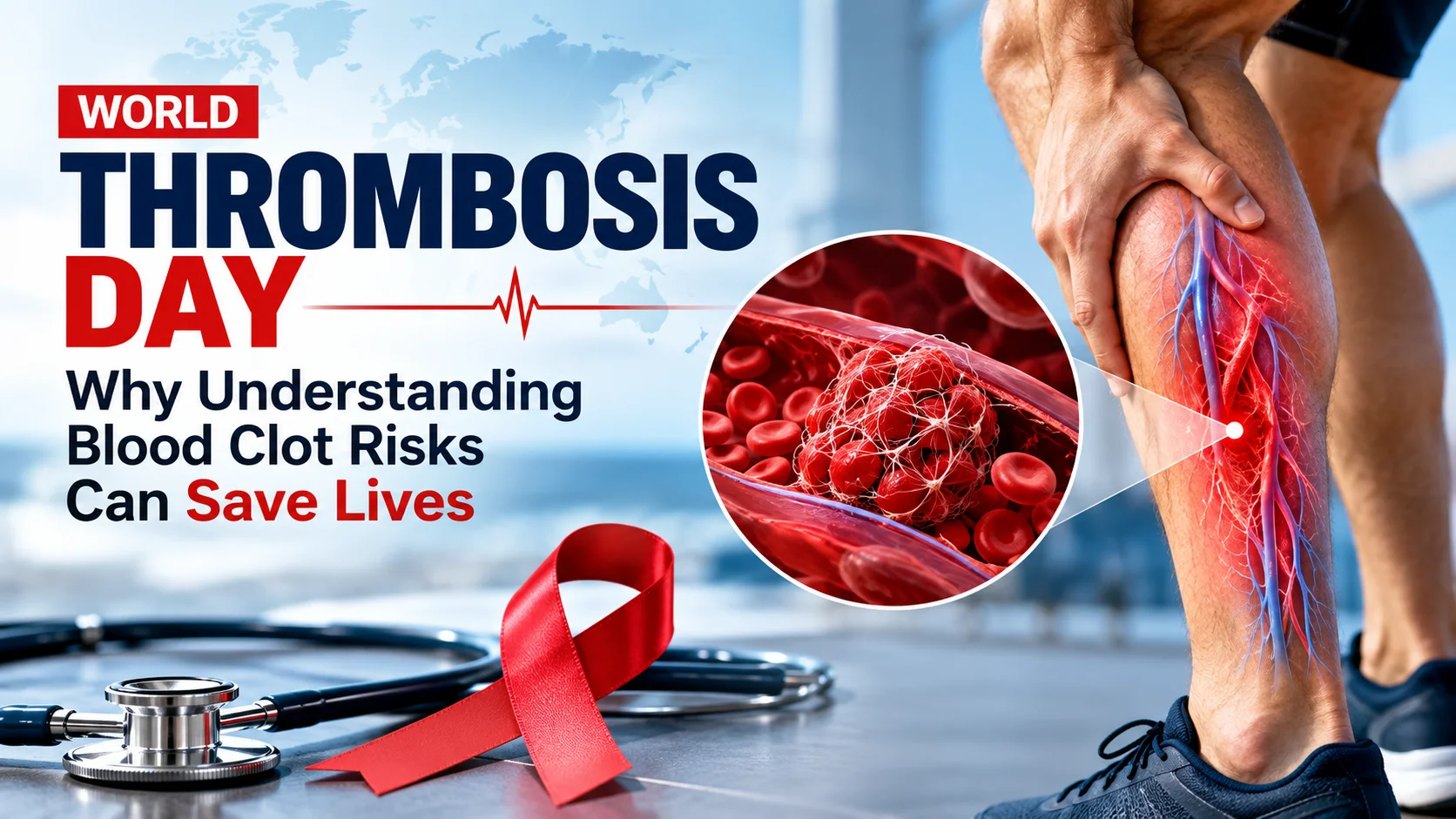
Every October 13, World Thrombosis Day reminds people that a blood clot can become a serious health emergency. Someone recovering from surgery, sitting for hours during a long journey, or going through pregnancy may have risk factors they do not fully understand. Recognising those risks early can help people seek timely medical care.
Thrombosis occurs when a blood clot forms inside a blood vessel and blocks or restricts blood flow. The 2026 World Thrombosis Day campaign highlights how blood clot risk can change throughout a woman’s life, including during pregnancy, after childbirth and around menopause.
1. What Is World Thrombosis Day?
Quick answer: World Thrombosis Day is observed on October 13 to raise awareness about blood clots, their risk factors, warning signs and prevention.
Led by the International Society on Thrombosis and Haemostasis (ISTH), the campaign encourages patients, families and healthcare professionals to discuss thrombosis and take appropriate action. Its message is simple: know the risks, recognise the signs and seek help promptly.
2. What Is Thrombosis?
Thrombosis is the formation of a blood clot inside a blood vessel. A clot may interfere with normal circulation and, depending on where it forms or travels, cause serious complications.
Two important conditions are:
- Deep vein thrombosis (DVT): A clot in a deep vein, often in the leg.
- Pulmonary embolism (PE): A clot that travels to the lungs and blocks blood flow.
Together, these conditions are known as venous thromboembolism (VTE).
3. Why Does Blood Clot Awareness Matter?
Blood clots can affect people of different ages and health backgrounds. Some clots cause noticeable symptoms, while others may go undetected until complications develop.
Awareness matters because early medical assessment can lead to diagnosis and treatment before a clot causes further harm. However, symptoms alone cannot confirm thrombosis; healthcare professionals may need specialised tests.
4. Who Is at Higher Risk of Blood Clots?
Risk increases with certain medical conditions and life circumstances. Common factors include:
- Recent surgery, injury or hospitalisation
- Long periods of limited movement or bed rest
- Previous blood clots or a family history
- Cancer and some chronic illnesses
- Pregnancy and the period after childbirth
- Certain hormone-based contraceptives or hormone therapies
- Increasing age and other individual health factors
Having a risk factor does not mean a clot will definitely develop. A healthcare professional can assess personal risk and recommend appropriate precautions.
5. Why Is Women’s Health a Focus in 2026?
Blood clot risk can change during different stages of a woman’s life. Pregnancy, the postpartum period and certain hormone-based medicines may increase risk. The 2026 campaign encourages women to discuss personal risk factors with healthcare professionals rather than assume their risk remains the same throughout life.
6. What Are the Warning Signs?
Quick answer: DVT may cause swelling, pain, tenderness, warmth or redness in one leg or arm. A pulmonary embolism may cause sudden breathing difficulty, chest pain, a rapid heartbeat or fainting.
Seek urgent medical assessment for possible DVT symptoms. If you experience sudden breathlessness, chest pain, coughing up blood or fainting, seek emergency medical help immediately.
7. How Can Blood Clot Risk Be Reduced?
Not every clot can be prevented, but appropriate steps may help reduce risk:
- Move regularly during long periods of sitting.
- Follow medical advice before and after surgery.
- Discuss personal clot risk during pregnancy or before starting hormone-based medication.
- Tell your healthcare professional if you have had a previous clot.
- Use prescribed preventive medicines or compression garments only as recommended.
Do not start blood-thinning medication on your own. These medicines can cause serious bleeding.
8. DVT vs Pulmonary Embolism
| Feature | DVT | Pulmonary embolism |
|---|---|---|
| Location | Deep vein, often in the leg | Blood vessel in the lung |
| Possible symptoms | Swelling, pain, warmth | Breathlessness, chest pain, fainting |
| Urgency | Prompt medical assessment | Emergency medical care |
Both conditions require professional assessment, and a pulmonary embolism can occur without obvious DVT symptoms.
9. When Should You Talk to a Doctor?
Discuss your risk with a qualified healthcare professional if you have a history of clots, upcoming surgery, prolonged immobility, pregnancy-related concerns or questions about hormone-based medication. People in Delhi NCR and elsewhere in India can consult a physician or appropriate specialist for individual risk assessment.
10. Frequently Asked Questions About World Thrombosis Day
When is World Thrombosis Day 2026? It is observed on October 13, 2026.
Can blood clots be prevented? Many can be prevented or their risk reduced through appropriate medical care and preventive measures, although prevention is not guaranteed.
Can healthy people develop blood clots? Yes. Blood clots can occur in people without obvious risk factors, although certain conditions and circumstances increase the likelihood.
Which doctor treats thrombosis? Depending on the situation, care may involve a physician, haematologist, vascular specialist or emergency medicine team.
Conclusion
World Thrombosis Day is a reminder that understanding blood clot risks can help people make informed decisions and recognise when medical attention is needed. Knowing your risk, discussing concerns with a healthcare professional and acting quickly on warning signs can make a meaningful difference.
A simple conversation about blood clot risk today could help protect a life tomorrow.