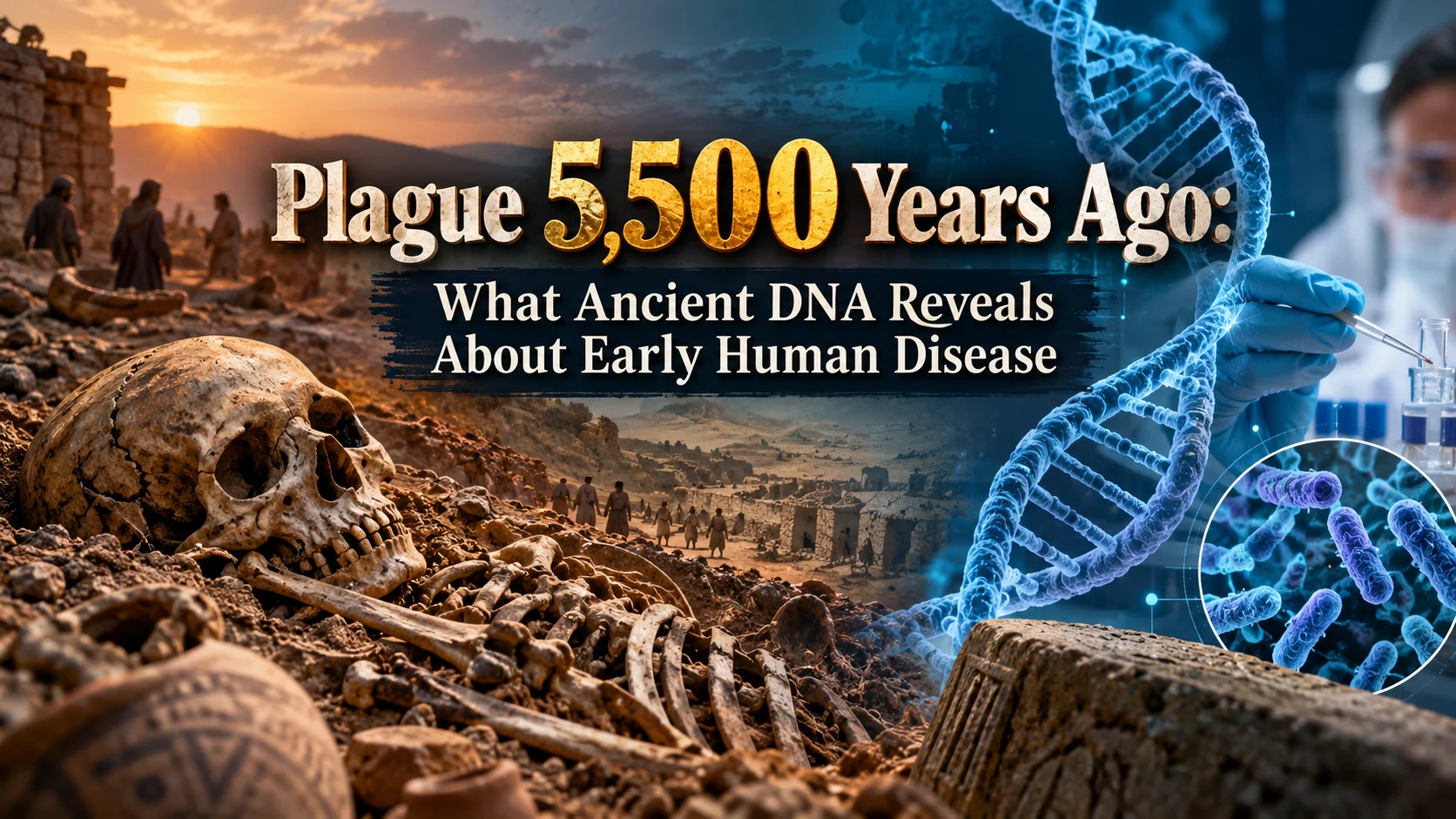
What Was Plague 5,500 Years Ago?
Quick answer: Plague 5,500 years ago was caused by early forms of the bacterium Yersinia pestis, according to ancient DNA recovered from human remains near Lake Baikal.
Researchers identified early Y. pestis genomes in hunter-gatherers buried at four cemeteries. The findings provide evidence that plague outbreaks could occur in mobile communities even before large agricultural settlements and cities became widespread. Nature
What Did the Ancient DNA Reveal?
Ancient DNA allows scientists to recover genetic traces of pathogens from archaeological remains. In the Lake Baikal study, researchers analysed DNA from human remains and identified Y. pestis in individuals from multiple cemeteries.
The study reported a 39% detection rate among the examined individuals associated with the outbreak contexts, providing unusually strong evidence for prehistoric plague activity.
Where Did These Plague Outbreaks Occur?
The evidence comes from hunter-gatherer cemeteries around Lake Baikal in southeastern Siberia. The communities lived thousands of years before the Black Death and were geographically far from the major medieval European plague outbreaks.
This matters because it challenges the idea that dense agricultural populations and cities were necessary conditions for serious plague outbreaks.
How Did Scientists Know People Were Related?
Researchers reconstructed kinship relationships among individuals buried at the sites. The results showed that small familial groups were affected.
This pattern is important because it suggests that the disease moved through closely connected groups. The researchers describe the first outbreak as occurring within a single generation, consistent with transmission between people, although the precise transmission route cannot be reconstructed with certainty from DNA alone.
Was Ancient Plague Already as Dangerous as the Black Death?
Not necessarily.
The ancient strains identified in the study are genetically different from later forms of Y. pestis. Earlier research has shown that prehistoric strains lacked some genetic features associated with later flea-adapted bubonic plague. The 2026 study nevertheless provides evidence that these early strains could cause acute and lethal infections.
Why Were Children Especially Affected?
The Lake Baikal research found evidence of acute mortality, with children aged approximately 8–11 years particularly represented among affected individuals.
However, ancient cemeteries cannot provide a complete picture of a population. Researchers therefore need to interpret mortality patterns carefully rather than assuming that every death in the community was caused by plague.
What Does This Tell Us About Human Disease?
The discovery changes the timeline of plague evolution.
| Finding | What it tells us |
|---|---|
| ~5,500-year-old outbreaks | Plague could be lethal much earlier than previously demonstrated |
| Ancient Y. pestis DNA | Confirms infection in prehistoric humans |
| Hunter-gatherer communities | Large cities were not required for outbreaks |
| Family-linked cases | Human transmission may have contributed |
| Genetic differences | Plague evolved through multiple stages |
Earlier research had already identified Y. pestis in humans dating back roughly 5,000 years, but the new Lake Baikal evidence provides some of the strongest evidence yet for early lethal outbreaks.
How Does This Compare With Modern Plague?
Modern plague is still caused by Yersinia pestis. Today, it is primarily associated with animal and flea transmission, although pneumonic plague can spread between people through respiratory particles. Importantly, modern plague is treatable with antibiotics when diagnosed and treated promptly.
For readers in India and elsewhere, the historical discovery should not be interpreted as evidence of a current prehistoric-style outbreak. It is primarily important for understanding pathogen evolution, ancient populations and the history of infectious disease.
Why Is Ancient DNA Important?
Ancient DNA gives researchers a molecular record that archaeology alone cannot provide. Bones, teeth and burial patterns can show that people died or lived together, while pathogen DNA can help identify an infectious organism.
Together, archaeology, genetics and anthropology allow scientists to reconstruct how diseases interacted with human populations thousands of years before written medical records existed.
What Can We Learn From Plague 5,500 Years Ago?
The biggest lesson is that infectious diseases do not follow a simple timeline.
The study suggests that plague was already capable of causing deadly outbreaks among relatively small, mobile communities before the development of large cities. Later changes in the bacterium—including genetic adaptations associated with flea transmission—help explain how plague eventually developed into the devastating forms known from later history.
Frequently Asked Questions About Plague 5,500 Years Ago
What caused plague 5,500 years ago?
The outbreaks were associated with ancient strains of Yersinia pestis, the bacterium responsible for plague.
Where was the 5,500-year-old plague found?
Evidence came from hunter-gatherer cemeteries near Lake Baikal in southeastern Siberia.
Was this the Black Death?
No. The Black Death occurred thousands of years later. The ancient Lake Baikal strains were early forms of Y. pestis and were genetically distinct from later pandemic strains.
Did plague exist before agriculture?
Yes. The new evidence demonstrates lethal plague outbreaks among hunter-gatherers, challenging the idea that agriculture and high population density were prerequisites for plague outbreaks.
Is plague still dangerous today?
Yes, but modern plague can be treated effectively with antibiotics when diagnosed early.
Conclusion
The story of plague 5,500 years ago is more than an archaeological mystery. Ancient DNA is revealing that infectious diseases were already shaping human communities thousands of years before modern medicine.
The Lake Baikal findings push our understanding of plague further into the past and show that deadly outbreaks could occur among small hunter-gatherer populations. They also demonstrate why studying ancient pathogens matters today: understanding how microbes evolved can help scientists better understand the relationship between humans, animals and infectious disease.