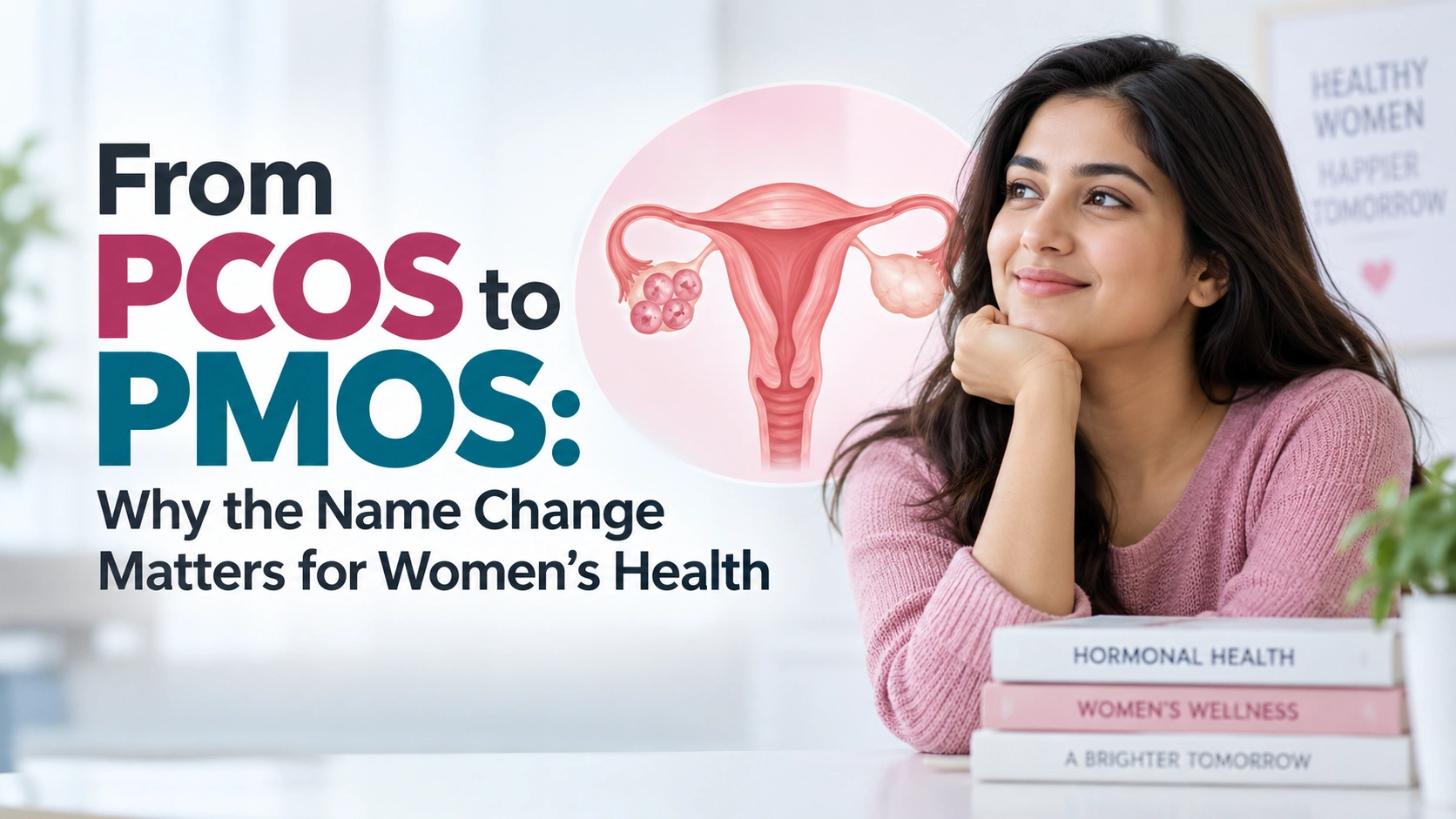
For years, the term PCOS (Polycystic Ovary Syndrome) has shaped how people think about this condition. But the name has often suggested that the problem is mainly about ovarian “cysts.” In reality, the condition involves much more than the ovaries.
In May 2026, an international consensus renamed PCOS as PMOS — Polyendocrine Metabolic Ovarian Syndrome. The change aims to better reflect the condition’s hormonal, metabolic, reproductive, skin, weight and mental-health dimensions.
What Is PMOS?
PMOS is the new name for the condition previously known as PCOS. It describes a complex, long-term endocrine condition involving interconnected hormonal, metabolic and ovarian features.
The condition affects approximately 1 in 8 reproductive-aged women, or more than 170 million women worldwide.
The new name does not mean that people suddenly have a different condition. Rather, it provides a broader and more accurate way to describe the same condition.
Why Was PCOS Renamed PMOS?
The previous name dates back to the 1930s and was influenced by the appearance of ovaries seen during surgery. Modern research has shown that the condition is not simply about ovarian cysts.
The updated international guideline explains that the term “polycystic ovary” can be misleading because the ovarian appearance generally reflects arrested follicular development rather than pathological cysts.
In simple terms: PMOS shifts the focus from “cysts on the ovaries” to the broader hormonal and metabolic condition.
What Does PMOS Stand For?
| Term | Meaning |
|---|---|
| P | Polyendocrine |
| M | Metabolic |
| O | Ovarian |
| S | Syndrome |
Each part highlights an important aspect of the condition rather than focusing only on the ovaries.
How Is PMOS Different From the Old PCOS Name?
The underlying condition has not suddenly changed. The terminology has changed to better represent what medical evidence already shows.
| PCOS | PMOS |
|---|---|
| Polycystic Ovary Syndrome | Polyendocrine Metabolic Ovarian Syndrome |
| Strong ovarian focus | Broader whole-body perspective |
| Can create confusion about “cysts” | Emphasises endocrine and metabolic features |
| Often viewed mainly through reproductive health | Encourages broader assessment and care |
The May 2026 guideline update states that the recommendations and clinical content remain unchanged; the terminology has been updated, with the 2028 guideline expected to use PMOS as standard terminology.
Why Does a Broader Approach Matter?
PMOS can affect several areas of health, so assessment should not focus only on menstrual cycles or fertility.
Depending on the individual, healthcare professionals may need to consider hormonal, metabolic, reproductive, dermatological, psychological and cardiovascular aspects. This broader view can help reduce fragmented care.
Why Multidisciplinary Care Is Important
A holistic approach may involve different healthcare professionals depending on a person’s symptoms and needs.
This can include:
- Gynaecologists – reproductive and menstrual health
- Endocrinologists – hormones and metabolic concerns
- Dietitians – nutrition and sustainable dietary strategies
- Dermatologists – acne, hair growth and hair-related concerns
- Mental-health professionals – emotional and psychological wellbeing
- Primary-care doctors – overall health monitoring
The international PMOS guideline itself was developed through extensive collaboration involving multidisciplinary clinical and lived-experience experts.
Does the Name Change Affect Treatment?
No. The name change itself does not mean that everyone needs a new treatment. The 2026 guideline terminology update states that the existing recommendations and content remain unchanged. Care should continue to be personalised according to symptoms, health risks, reproductive goals and individual preferences.
This is important because PMOS is not one identical experience for every woman.
What Does PMOS Mean for Women in India?
For women in India, the terminology change can help encourage conversations about PMOS beyond fertility alone. A woman experiencing irregular periods, acne, excess hair growth, weight or metabolic concerns may need a broader health assessment rather than assuming that the condition is simply an ovarian problem.
However, these symptoms can have several possible causes. Only a qualified healthcare professional can assess whether someone has PMOS and determine appropriate care.
When Should You Talk to a Doctor?
Consider speaking with a healthcare professional if you experience persistent concerns such as:
- Irregular or unpredictable menstrual cycles
- Unusual hair growth or hair loss
- Persistent acne
- Fertility concerns
- Unexplained metabolic or weight-related changes
Avoid self-diagnosing based on a single symptom or social-media checklist.
What Does the PMOS Name Change Mean for the Future?
The renaming process involved 56 professional and patient organisations and more than 22,000 survey responses, making it a major international consensus effort.
The goal is not simply to replace three letters with four. It is to encourage better recognition of the condition’s complexity and support more comprehensive healthcare.
PMOS Frequently Asked Questions
Is PCOS now called PMOS?
Yes. In May 2026, Polyendocrine Metabolic Ovarian Syndrome (PMOS) became the new name for the condition previously called PCOS. A transition period is underway, with PMOS expected to become standard terminology in the 2028 international guideline.
Does PMOS mean something completely different from PCOS?
No. PMOS is the new name for the same condition. The change is intended to describe its broader hormonal, metabolic and ovarian characteristics more accurately.
Why was PCOS renamed PMOS?
The previous name could imply that the condition is primarily about ovarian cysts. The new name highlights its broader endocrine and metabolic nature.
Does the name change mean treatment has changed?
Not by itself. The 2026 terminology update states that the recommendations and clinical content of the international guideline remain unchanged.
Final Takeaway
PCOS to PMOS is more than a name change—it is a shift toward seeing the condition as a broader, interconnected health issue.
For women, the message is simple: reproductive health, hormones, metabolic health, skin and mental wellbeing can all be relevant. A personalised and multidisciplinary approach can help ensure that care looks at the whole person rather than just one symptom or one organ.
This article is for educational purposes and does not replace medical diagnosis or treatment. Anyone concerned about symptoms should consult a qualified healthcare professional