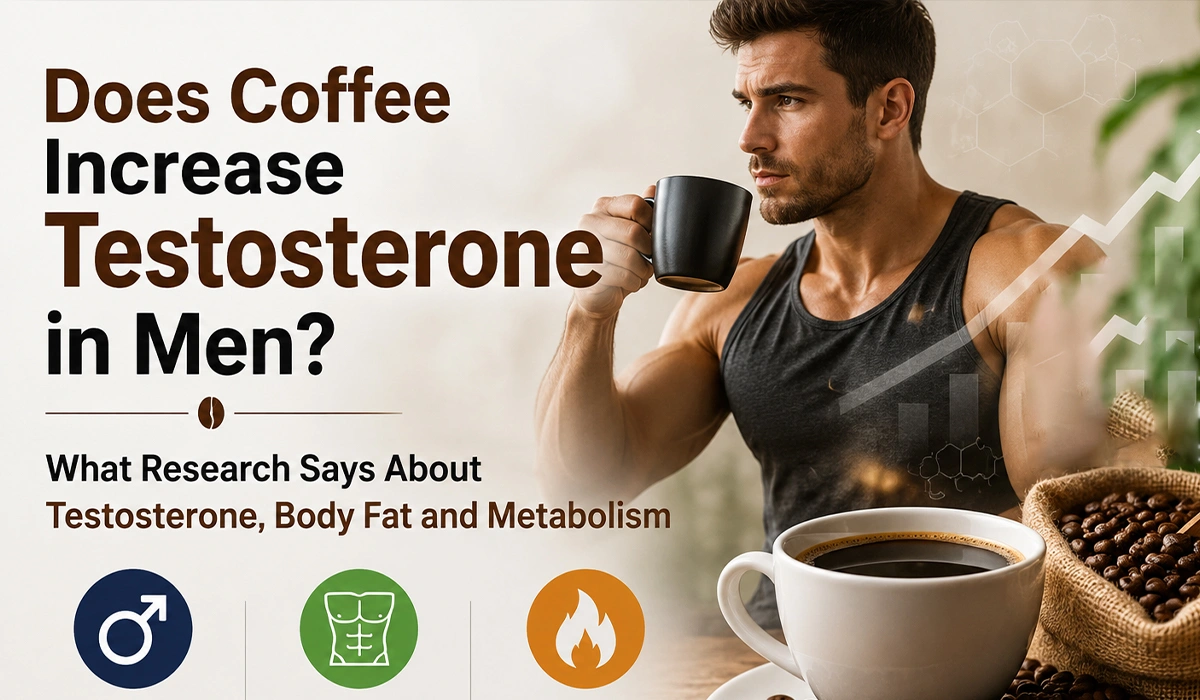
Introduction: Your Morning Coffee and Your Testosterone
For many men, the morning begins with the same ritual: wake up, reach for a cup of coffee and get ready for the day.
Then comes a question that has become increasingly popular in fitness and men’s wellness circles:
Could that cup of coffee do more than wake you up? Could it increase testosterone?
The answer is more complicated than social-media headlines suggest.
Some controlled studies have found that caffeine can temporarily change testosterone responses, particularly around exercise. Other research has found no meaningful relationship between habitual caffeine intake and testosterone levels. A large observational analysis of U.S. men found no simple linear relationship between caffeine intake and testosterone.
There is another piece of the puzzle: body fat and metabolic health.
Testosterone is influenced by age, sleep, physical activity, body composition, nutrition, medical conditions and several other factors. Coffee may influence some aspects of energy expenditure and exercise performance, but that does not make it a testosterone-boosting treatment.
So, does coffee increase testosterone in men?
The short answer
Coffee may cause short-term changes in testosterone under certain circumstances, especially when caffeine is consumed around exercise, but current evidence does not show that drinking coffee consistently raises men’s long-term testosterone levels.
Let’s look at what the research actually says.
1. What Is Testosterone and Why Does It Matter?
Testosterone is a hormone produced mainly by the testes in men, although smaller amounts are also produced elsewhere in the body. It plays important roles in reproductive function, muscle and bone health, red blood cell production and other physiological processes.
Testosterone is not simply a “muscle hormone.”
It contributes to several aspects of male health, including:
- Sexual development and function
- Sperm production
- Muscle maintenance
- Bone health
- Red blood cell production
- Body composition
- Overall physiological function
Testosterone levels naturally vary between individuals and can change throughout the day.
They are also affected by factors such as:
- Age
- Sleep
- Body composition
- Physical activity
- Nutrition
- Illness
- Certain medications
- Hormonal disorders
Practical example
Two men can drink the same coffee every morning and have completely different testosterone levels.
That is because testosterone health is determined by a much broader biological picture than caffeine intake alone.
Practical tip: Don’t judge your testosterone health based on how much coffee you drink.
2. Does Coffee Increase Testosterone in Men?
The evidence is mixed. Some small experimental studies have observed temporary increases in testosterone after caffeine, particularly alongside resistance exercise. Other studies have found no meaningful difference. Observational research also does not show a simple relationship between habitual caffeine intake and testosterone.
This is where many online claims become misleading.
One controlled study involving resistance-trained men found that caffeine consumed before exercise increased the acute testosterone response to exercise.
Another randomized study specifically examined caffeinated coffee before exercise and found that testosterone increased after exercise—but caffeine added to coffee did not alter the acute testosterone response compared with decaffeinated coffee.
That distinction is important.
It means the exercise itself may have contributed substantially to the observed testosterone response.
What about everyday coffee drinking?
A large analysis of American men found no linear relationship between caffeine intake and testosterone levels, although researchers observed some nonlinear associations.
Another population-based study similarly found no consistent association between caffeinated beverage consumption and androgen concentrations.
Bottom line
Coffee should not be considered a reliable testosterone booster.
3. Why Do Some Studies Show Higher Testosterone After Caffeine?
Caffeine affects the nervous system and can influence exercise performance and several physiological responses. During resistance exercise, some studies have observed short-term changes in testosterone after caffeine consumption. These responses may depend on dose, exercise, individual biology and study design.
One controlled trial involving 24 professional rugby players examined different caffeine doses before resistance exercise. The researchers reported a dose-dependent increase in testosterone at the highest caffeine dose, but cortisol also increased substantially.
That creates an important complication.
You cannot look at one hormone in isolation.
The body responds to caffeine through multiple pathways.
Caffeine may influence:
- Alertness
- Perceived effort
- Exercise performance
- Free fatty acids
- Cortisol
- Testosterone
- Other hormonal responses
And these effects can vary between people.
Practical takeaway
A temporary rise in testosterone after caffeine and exercise does not automatically mean coffee improves testosterone status over months or years.
4. Coffee Before Exercise: Does It Change Testosterone?
Caffeine may change the acute hormonal response to exercise, but the evidence does not establish that coffee produces a lasting testosterone benefit. Studies have produced different results, suggesting that exercise type, caffeine dose, individual response and study design all matter.
A 2019 randomized crossover study compared caffeinated and decaffeinated coffee before combined high-intensity and resistance exercise in recreationally strength-trained men. Testosterone increased after exercise, but adding caffeine to coffee did not significantly change that testosterone response.
Another study found that higher caffeine doses increased testosterone and cortisol responses during resistance exercise.
So why do the findings differ?
Because studies can vary in:
- Caffeine dose
- Participant fitness
- Exercise intensity
- Timing
- Coffee versus isolated caffeine
- Hormone measurement
- Genetic differences
- Sample size
Practical tip
If you drink coffee before exercise because it helps you feel more alert or perform better, that is a different claim from saying it raises testosterone.
5. What About Body Fat and Testosterone?
Body composition is relevant to testosterone health, but coffee should not be viewed as a direct treatment for low testosterone caused by excess body fat. Healthy weight management, regular physical activity, adequate sleep and appropriate nutrition have a much broader role in metabolic and hormonal health.
This is an important part of the coffee-and-testosterone conversation.
Men with excess body fat can experience changes in hormone regulation, including lower testosterone in some circumstances.
But the solution is not simply:
More coffee → more testosterone.
A healthier approach is:
Better nutrition + physical activity + healthy body composition + sleep + medical evaluation when needed.
Coffee can be part of a healthy dietary pattern for many people, but it cannot replace those fundamentals.
6. Can Coffee Help Metabolism?
Caffeine can temporarily affect energy expenditure and fat metabolism, but this does not mean coffee alone produces major or lasting weight loss. Research on coffee and metabolic health is complex, and observational associations do not prove that coffee causes better metabolic outcomes.
Caffeine is a stimulant.
Research has shown that caffeine can influence metabolic processes, including the release and use of fatty acids.
For example, controlled exercise research has found increased free fatty acid concentrations following caffeine intake.
But increased fatty acid availability is not the same as losing body fat.
Think about it this way
Your body can temporarily mobilize more fat for energy without necessarily reducing total body fat.
Long-term body composition depends heavily on:
- Total energy intake
- Energy expenditure
- Physical activity
- Diet quality
- Sleep
- Hormonal and metabolic health
- Consistency over time
Practical tip
Don’t use coffee as a shortcut for fat loss.
Use it, if you enjoy it and tolerate it, as one small part of a broader healthy lifestyle.
7. Does Coffee Help Men Lose Belly Fat?
There is no strong evidence that simply drinking coffee specifically removes belly fat. Caffeine can influence energy expenditure and fat metabolism temporarily, but reducing abdominal fat requires sustainable changes in overall energy balance, physical activity, nutrition and lifestyle.
Belly fat is particularly important because excess visceral fat is associated with metabolic health risks.
But there is no special coffee mechanism that selectively “melts” abdominal fat.
A more realistic strategy includes:
Strength training + aerobic activity + adequate protein + high-quality diet + sleep + sustainable calorie control.
Coffee may fit into that routine.
It is not the foundation of it.
8. Coffee, Testosterone and Metabolic Health: What Does Research Actually Show?
| Research area | What evidence suggests |
|---|---|
| Caffeine + exercise | Can produce short-term hormonal changes |
| Habitual caffeine + testosterone | No consistent simple relationship |
| Coffee + acute testosterone | Mixed findings |
| Caffeine + fat metabolism | Can temporarily increase fatty-acid availability |
| Coffee + body fat | Not a standalone fat-loss strategy |
| Coffee + long-term testosterone | Insufficient evidence for a reliable boosting effect |
| Individual response | Can vary substantially |
The most important word in this table is “short-term.”
A temporary physiological response does not necessarily translate into a meaningful long-term health benefit.
9. Does the Amount of Caffeine Matter?
Yes. Dose can affect the body’s response to caffeine, but more caffeine is not automatically better. Research has found different hormonal responses at different doses, and high doses can also increase cortisol and cause unwanted effects.
In one resistance-exercise study, researchers tested 200, 400 and 800 mg caffeine doses. The highest dose produced a larger testosterone response, but cortisol also increased substantially.
Another study using different doses found increased testosterone responses at higher caffeine exposure during resistance exercise.
That does not mean men should consume large doses of caffeine to increase testosterone.
High caffeine intake can cause:
- Nervousness
- Restlessness
- Sleep problems
- Rapid heartbeat
- Anxiety
- Digestive discomfort
And poor sleep can work against overall health.
Practical tip
Don’t chase a hormone response by increasing caffeine.
10. Can Genetics Change How Caffeine Affects Testosterone?
Possibly. Research suggests that genetic differences may influence individual hormonal responses to caffeine. A 2024 study found that a specific ADORA2A gene variant was associated with different testosterone and growth-hormone responses to caffeine during resistance exercise in trained men.
This is an interesting example of nutrigenetics—the study of how genetic differences may influence responses to dietary components.
In the study, men with one ADORA2A genotype showed greater hormonal responses after caffeine and resistance exercise than carriers of other variants.
But this is early evidence.
It does not mean that consumers need genetic testing to decide whether to drink coffee.
The bigger lesson
The same food or beverage can affect different people differently.
That is why broad statements such as “coffee boosts testosterone in men” are too simplistic.
11. Caffeinated vs Decaffeinated Coffee: Does It Matter?
Caffeinated and decaffeinated coffee can have different effects, but research has not established that caffeinated coffee consistently raises testosterone in men. Some randomized research has observed hormone changes, while other studies have found no consistent effect.
A randomized controlled trial compared caffeinated coffee, decaffeinated coffee and water in overweight adults. Researchers found no consistent overall effect on SHBG or sex hormones, although some short-term differences were observed among men. The researchers cautioned that the small sample size limited conclusions.
This reinforces a key principle:
One study is rarely enough to settle a nutrition question.
Practical comparison
| Feature | Caffeinated coffee | Decaffeinated coffee |
|---|---|---|
| Contains caffeine | Yes | Very little |
| Alertness effect | Stronger | Lower |
| May affect exercise response | Possible | Lower caffeine-related effect |
| Proven testosterone booster | No | No |
| Can fit a healthy diet | Yes, for many people | Yes, for many people |
12. Could Coffee Affect Testosterone Indirectly Through Lifestyle?
Possibly, but the effect is indirect and depends on the individual. Coffee may improve alertness and exercise readiness for some people, but excessive caffeine can interfere with sleep. Since sleep is important for overall hormonal health, too much caffeine could work against the very goal someone is trying to achieve.
Consider two scenarios.
Scenario A
A man drinks a moderate amount of coffee in the morning, exercises regularly, eats well and sleeps adequately.
Coffee may fit comfortably into his lifestyle.
Scenario B
A man drinks large amounts of coffee late in the evening, sleeps poorly and relies on caffeine to function the next day.
The caffeine habit may become counterproductive.
The lesson is simple:
The context matters more than the coffee itself.
13. What Actually Supports Healthy Testosterone?
Healthy testosterone is supported by overall health rather than one food or beverage. Regular exercise, healthy body composition, adequate sleep, balanced nutrition and management of underlying medical conditions are more important than trying to manipulate testosterone through coffee.
Focus on the fundamentals
1. Exercise
Resistance training can support muscle health and body composition.
2. Healthy body weight
Maintaining a healthy body composition supports metabolic health.
3. Sleep
Poor sleep can affect multiple hormonal and metabolic processes.
4. Balanced nutrition
Adequate protein, healthy fats, vitamins and minerals are important for general health.
5. Stress management
Chronic stress can affect overall wellbeing and hormone regulation.
6. Medical evaluation
Persistent symptoms of low testosterone should be assessed by a healthcare professional rather than treated with coffee or supplements alone.
14. Coffee vs Other Strategies for Testosterone Health
| Approach | Evidence for overall testosterone health |
|---|---|
| Coffee | Mixed/inconclusive |
| Resistance training | Strong lifestyle benefit |
| Healthy body composition | Important |
| Adequate sleep | Important |
| Balanced diet | Important |
| Managing medical conditions | Important |
| Excessive caffeine | Not recommended |
| Unverified testosterone supplements | Evidence varies; caution needed |
This comparison highlights an important point:
The boring basics usually matter more than the trendy hack.
Coffee may be useful.
But it is not a replacement for sleep, exercise or nutrition.
15. When Should Men Check Their Testosterone?
Men should consider medical evaluation when they have persistent symptoms that could indicate testosterone deficiency rather than trying to diagnose themselves through diet. Symptoms can include reduced sexual desire, erectile difficulties, decreased muscle mass, fatigue and other changes, but these symptoms have many possible causes.
A single symptom does not automatically mean testosterone is low.
Similarly, drinking coffee and feeling energetic does not prove that testosterone is healthy.
If symptoms persist, a healthcare professional can determine whether hormone testing is appropriate.
Practical tip
Do not start testosterone therapy or hormone-boosting supplements based solely on social-media claims about coffee, caffeine or “natural boosters.”
16. Coffee and Testosterone: The Bottom Line for Men
The evidence gives us a more balanced picture than the typical internet headline.
What we know
- Caffeine can affect acute physiological responses.
- Some studies have observed temporary testosterone increases during or after exercise.
- Other studies have found no meaningful testosterone difference.
- Habitual caffeine intake does not show a simple linear relationship with testosterone in population research.
- Genetic differences may influence individual responses.
- Caffeine can affect fat metabolism and exercise performance, but this does not make coffee a fat-loss treatment.
- Long-term testosterone health depends on many factors.
What we do not know
There is not enough evidence to say:
“Drink coffee every day to raise testosterone.”
That claim goes beyond the evidence.
Frequently Asked Questions: Coffee and Testosterone in Men
1. Does coffee increase testosterone in men?
Coffee may produce short-term changes in testosterone under certain conditions, particularly around exercise, but research is inconsistent. There is no strong evidence that regular coffee consumption reliably increases men’s long-term testosterone levels.
2. Does caffeine increase testosterone before a workout?
Some studies have reported greater acute testosterone responses when caffeine is consumed before resistance exercise, while others found no significant effect. Dose, exercise type and individual characteristics may influence the response.
3. Can coffee help reduce belly fat?
Coffee should not be considered a specific treatment for belly fat. Caffeine can temporarily affect energy expenditure and fat metabolism, but sustainable fat loss depends on overall diet, activity and energy balance.
4. Is black coffee better for testosterone?
There is no good evidence that black coffee is a reliable testosterone booster. Avoiding added sugar and excessive calories may help overall dietary quality, but coffee itself should not be treated as hormone therapy.
5. Does caffeine lower testosterone?
Research is mixed. Some observational studies have found inverse associations, while others found no consistent relationship, and controlled exercise studies have sometimes found temporary increases.
6. How much coffee should men drink for testosterone?
There is no scientifically established amount of coffee that should be consumed specifically to increase testosterone. Drinking more caffeine to chase a hormonal effect is not recommended.
7. Does coffee increase testosterone permanently?
There is no convincing evidence that coffee permanently increases testosterone. Most research showing hormonal changes has examined short-term responses.
8. Does coffee improve metabolism?
Caffeine can temporarily influence metabolic processes and fat mobilization. However, this does not mean coffee alone produces substantial or sustained weight loss.
9. Can exercise and coffee together increase testosterone?
Some studies have found acute testosterone increases after caffeine and exercise, but other studies have found that caffeine did not significantly change the exercise-related testosterone response.
10. Does decaf coffee affect testosterone?
Research has not established a consistent testosterone effect from decaffeinated coffee. A small randomized trial found no consistent overall effect on sex hormones.
11. Should men with low testosterone drink more coffee?
No. Coffee should not be used as treatment for clinically low testosterone. Men with persistent symptoms should speak with a healthcare professional.
12. What naturally supports healthy testosterone?
Regular physical activity, healthy body composition, adequate sleep, balanced nutrition and appropriate management of medical conditions are more meaningful foundations for hormonal health than relying on a single food or drink.
Conclusion: Coffee Is Not a Testosterone Shortcut
So, does coffee increase testosterone in men?
The most accurate answer is:
It may temporarily influence testosterone under certain conditions, especially around exercise, but current evidence does not show that drinking coffee reliably increases long-term testosterone levels.
Some controlled studies have reported acute hormonal changes after caffeine, while other research has found no meaningful effect. Population studies also do not show a simple relationship between habitual caffeine intake and testosterone.
Coffee can still have a place in a healthy lifestyle.
If you enjoy it, tolerate caffeine well and avoid excessive intake, it can be part of your daily routine. But don’t expect it to compensate for poor sleep, inactivity, excess body fat or an unbalanced diet.
For men’s hormonal health, the strongest strategy remains remarkably simple:
Move regularly. Eat well. Sleep enough. Maintain a healthy body composition. Manage health conditions. And use coffee as a beverage—not as a testosterone treatment.
The best “testosterone hack” may not be another cup of coffee. It may be taking better care of the whole body.