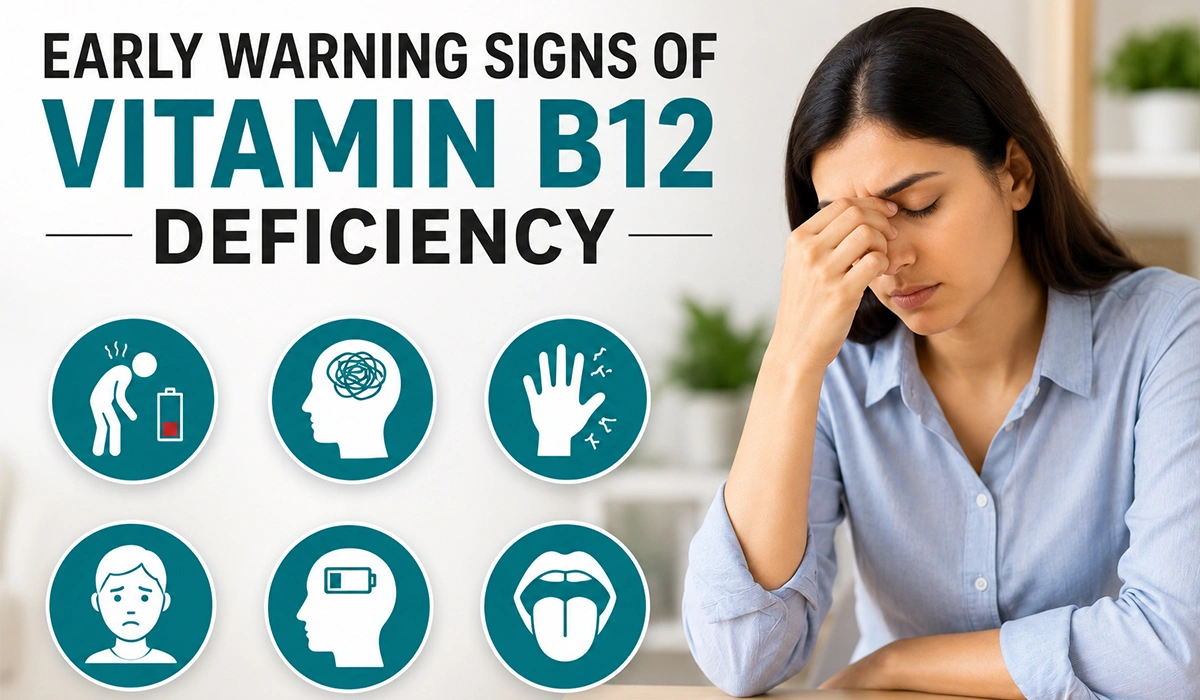
Primary Keyword: Early Warning Signs of Vitamin B12 Deficiency
Vitamin B12 is one of the most important nutrients your body needs to produce healthy red blood cells, support nerve function, and maintain brain health. Yet, Vitamin B12 deficiency often develops slowly, making its early symptoms easy to overlook. Many people mistake fatigue, forgetfulness, or tingling in the hands and feet as signs of stress or aging when they may actually indicate a nutritional deficiency.
In India, Vitamin B12 deficiency is increasingly common due to vegetarian diets, digestive disorders, and age-related absorption issues. Recognizing the warning signs early can help prevent serious complications and improve overall well-being.
What Is Vitamin B12 Deficiency?
Vitamin B12 deficiency occurs when your body does not have enough Vitamin B12 to produce healthy red blood cells and maintain normal nerve function.
Vitamin B12, also known as Cobalamin, is a water-soluble vitamin that plays a vital role in:
- Red blood cell formation
- DNA synthesis
- Brain function
- Nervous system health
- Energy production
Without enough Vitamin B12, your body’s cells cannot function efficiently.
Why Is Vitamin B12 Important?
Vitamin B12 helps maintain many essential body functions.
| Function | Importance |
|---|---|
| Red Blood Cell Production | Prevents certain types of anemia |
| Brain Function | Supports memory and concentration |
| Nerve Health | Protects nerve cells |
| DNA Formation | Supports healthy cell growth |
| Energy Metabolism | Helps convert food into usable energy |
Early Warning Signs of Vitamin B12 Deficiency
Quick Answer
Early symptoms may include fatigue, weakness, numbness, memory problems, dizziness, and pale skin. These symptoms often develop gradually.
1. Constant Fatigue
Feeling tired despite adequate sleep is one of the earliest signs.
People may notice:
- Low energy
- Reduced productivity
- Difficulty completing routine tasks
- Frequent exhaustion
This happens because the body cannot produce enough healthy red blood cells to transport oxygen efficiently.
2. Weakness
Muscle weakness may occur even without strenuous activity.
Common signs include:
- Difficulty climbing stairs
- Weak grip strength
- Reduced stamina
- Feeling physically drained
3. Tingling or Numbness
Vitamin B12 supports healthy nerves.
A deficiency may lead to:
- Tingling in hands
- Tingling in feet
- Burning sensation
- Pins and needles
Persistent symptoms should be evaluated by a healthcare professional.
4. Difficulty Walking or Poor Balance
People with prolonged deficiency may experience:
- Poor coordination
- Loss of balance
- Frequent stumbling
- Muscle instability
Nerve damage can affect normal movement if left untreated.
5. Memory Problems
Vitamin B12 plays an important role in brain health.
Possible symptoms include:
- Forgetfulness
- Difficulty concentrating
- Mental fog
- Reduced attention span
These symptoms may resemble stress or aging.
6. Mood Changes
Some individuals experience:
- Irritability
- Anxiety
- Low mood
- Difficulty focusing
Although Vitamin B12 deficiency is only one possible cause, nutritional status should be considered during evaluation.
7. Pale or Yellowish Skin
Reduced red blood cell production can make the skin appear:
- Pale
- Yellowish
- Dull
Some people also notice reduced facial brightness.
8. Shortness of Breath
Reduced oxygen delivery may cause:
- Breathlessness while walking
- Faster heartbeat
- Reduced exercise tolerance
9. Mouth Ulcers and Sore Tongue
Vitamin B12 deficiency may affect oral health.
Symptoms include:
- Red tongue
- Burning sensation
- Mouth ulcers
- Difficulty eating spicy foods
10. Vision Changes
Although less common, severe Vitamin B12 deficiency can affect the optic nerve.
Symptoms may include:
- Blurred vision
- Double vision
- Reduced visual clarity
Prompt medical evaluation is recommended if these symptoms occur.
Who Is Most at Risk?
Certain groups have a higher risk of developing Vitamin B12 deficiency.
These include:
- Older adults
- Vegetarians and vegans
- People with digestive disorders
- Individuals taking long-term acid-reducing medications
- People with pernicious anemia
- Patients after stomach or intestinal surgery
- Individuals with Crohn’s disease or celiac disease
Common Causes of Vitamin B12 Deficiency
| Cause | Explanation |
|---|---|
| Vegetarian Diet | Limited natural Vitamin B12 intake |
| Poor Absorption | Digestive disorders reduce absorption |
| Aging | Lower stomach acid production |
| Certain Medicines | Long-term medication may affect absorption |
| Autoimmune Disorders | Pernicious anemia affects Vitamin B12 absorption |
| Gastrointestinal Surgery | Reduced absorption after surgery |
Foods Rich in Vitamin B12
Natural dietary sources include:
Animal-Based Foods
- Fish
- Chicken
- Eggs
- Milk
- Cheese
- Yogurt
- Meat
Fortified Foods
- Fortified cereals
- Fortified plant-based milk
- Nutritional yeast
People following vegetarian or vegan diets may need fortified foods or supplements as advised by a healthcare professional.
How Is Vitamin B12 Deficiency Diagnosed?
Diagnosis typically includes:
- Medical history
- Physical examination
- Blood tests
- Complete Blood Count (CBC)
- Serum Vitamin B12 level
- Folate testing (if needed)
- Additional investigations based on symptoms
Your healthcare provider will determine the most appropriate evaluation.
Can Vitamin B12 Deficiency Be Prevented?
Yes. Prevention often includes:
- Eating a balanced diet
- Including Vitamin B12-rich or fortified foods
- Regular health check-ups
- Following medical advice regarding supplements if recommended
- Managing underlying digestive conditions
For individuals at higher risk, periodic monitoring may be advised by a healthcare professional.
When Should You See a Doctor?
Consult a healthcare professional if you experience:
- Persistent fatigue
- Numbness or tingling
- Memory difficulties
- Balance problems
- Pale skin
- Unexplained weakness
- Frequent dizziness
Early diagnosis can help prevent long-term complications.
Vitamin B12 Deficiency vs General Tiredness
| Vitamin B12 Deficiency | General Tiredness |
|---|---|
| Persistent fatigue | Improves after rest |
| Tingling sensations | Usually absent |
| Memory issues | Less common |
| Pale skin | Usually normal |
| Balance problems | Rare |
| May require medical treatment | Often improves with sleep |
Tips for Maintaining Healthy Vitamin B12 Levels
- Eat a nutrient-rich balanced diet.
- Include Vitamin B12-containing foods regularly.
- Stay physically active.
- Have routine health screenings.
- Follow your healthcare professional’s advice regarding supplementation.
- Avoid self-medicating with high-dose supplements without medical guidance.
Conclusion
Vitamin B12 deficiency is a common but often overlooked health concern. Early symptoms such as fatigue, weakness, numbness, memory problems, and balance issues should not be ignored. Recognizing these warning signs and seeking timely medical advice can help prevent complications and support long-term health.
A balanced diet, regular health check-ups, and appropriate medical guidance are key to maintaining healthy Vitamin B12 levels. If you have persistent symptoms or belong to a high-risk group, consult a qualified healthcare professional for evaluation and personalized care.