Introduction
Imagine spending eight to ten hours sitting at your desk, followed by another two hours commuting and then relaxing on the sofa while watching television. This routine has become normal for millions of people in India and around the world. Unfortunately, what feels comfortable today can silently affect your health over time.
Modern technology has made work easier, but it has also reduced physical activity. Whether you work in IT, finance, healthcare, education, marketing, or run your own business, prolonged sitting has become a part of daily life.
Health experts now describe excessive sitting as one of the biggest lifestyle challenges of the modern era. Research has consistently shown that sitting for long periods increases the risk of obesity, diabetes, cardiovascular disease, poor posture, back pain, and even early mortality.
The good news is that small lifestyle changes can significantly reduce these risks.
This comprehensive guide explains why sitting all day is harmful, what happens inside your body, and practical ways to stay healthy while maintaining your work routine.
What Is a Sedentary Lifestyle?
A sedentary lifestyle refers to spending most of the day sitting or lying down with very little physical activity.
Definition
A sedentary lifestyle is characterized by low energy expenditure. Common examples include:
- Office work
- Remote working
- Watching television
- Playing video games
- Long-distance driving
- Excessive smartphone use
People can exercise for one hour every day but still have a sedentary lifestyle if they remain seated for most of the remaining hours.
Why Is Sitting All Day Harmful?
Prolonged sitting slows down metabolism, weakens muscles, reduces calorie burning, affects blood circulation, and increases the risk of chronic diseases.
What Happens Inside the Body?
When you sit continuously:
- Blood circulation becomes slower.
- Large leg muscles remain inactive.
- Calorie burning decreases.
- Blood sugar regulation becomes less efficient.
- Fat metabolism slows down.
- Muscle strength gradually declines.
- Posture deteriorates.
These changes may seem small initially but accumulate over months and years.
Health Risks of Sitting All Day
1. Increased Risk of Heart Disease
People who sit for prolonged periods have a higher risk of cardiovascular disease.
Physical inactivity contributes to:
- High blood pressure
- Increased cholesterol
- Reduced circulation
- Blood vessel stiffness
Walking for just a few minutes every hour helps improve circulation and supports heart health.
2. Weight Gain and Obesity
Sitting burns significantly fewer calories than standing or walking.
Daily consequences include:
- Increased body fat
- Slower metabolism
- Higher Body Mass Index (BMI)
- Greater abdominal fat accumulation
Excess abdominal fat is associated with:
- Diabetes
- High cholesterol
- Heart disease
3. Higher Risk of Type 2 Diabetes
Long sitting periods reduce insulin sensitivity.
When muscles remain inactive:
- Blood glucose stays elevated for longer.
- Insulin becomes less effective.
- The body stores more fat.
Regular movement improves glucose uptake and supports healthy blood sugar control.
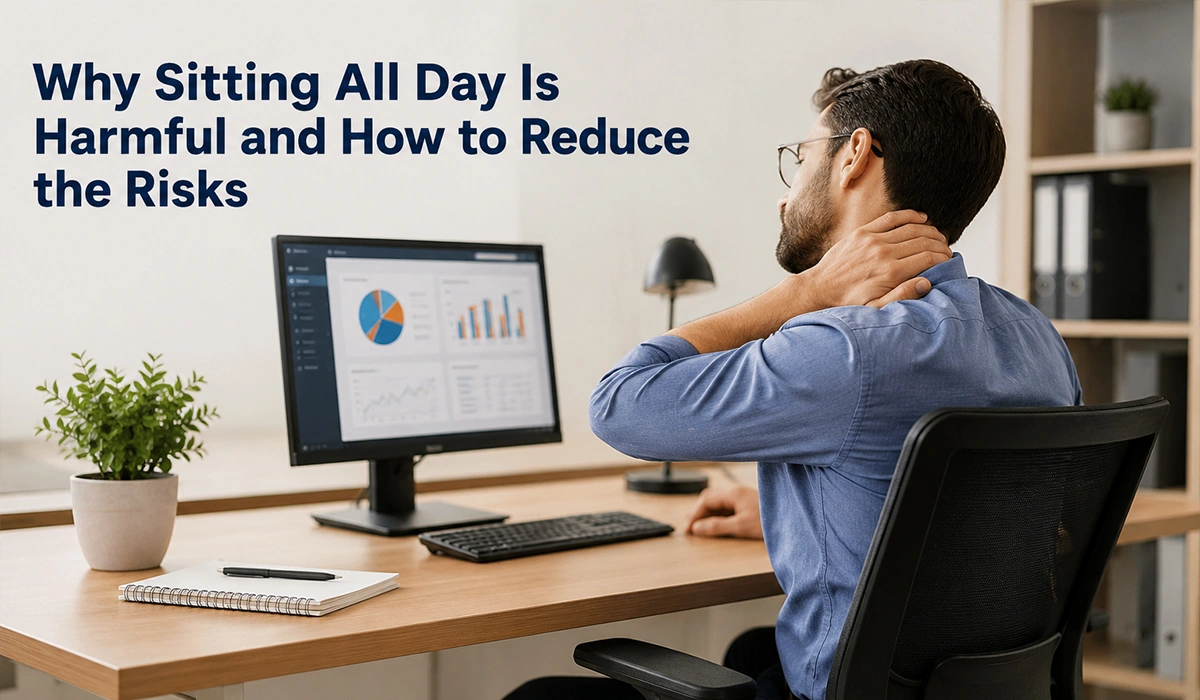
4. Chronic Neck and Back Pain
Poor sitting posture places continuous pressure on:
- Cervical spine
- Lumbar spine
- Shoulders
- Hip joints
Common symptoms include:
- Neck stiffness
- Shoulder pain
- Lower back pain
- Headaches
- Muscle tightness
Ergonomic seating and regular stretching can significantly reduce these problems.
5. Poor Mental Health
Physical inactivity can negatively affect emotional well-being.
Studies suggest prolonged sitting is associated with:
- Stress
- Anxiety
- Low mood
- Reduced productivity
- Mental fatigue
Simple walking breaks help stimulate blood flow and improve concentration.
How Sitting Affects Different Parts of the Body
| Body Part | Effect of Prolonged Sitting |
|---|---|
| Heart | Increased cardiovascular risk |
| Brain | Reduced alertness |
| Neck | Stiffness and pain |
| Spine | Poor posture |
| Hips | Tight hip flexors |
| Legs | Poor circulation |
| Metabolism | Reduced calorie burning |
| Eyes | Digital eye strain |
Warning Signs You Are Sitting Too Much
Watch for these symptoms:
- Frequent back pain
- Neck stiffness
- Leg numbness
- Poor posture
- Weight gain
- Constant fatigue
- Reduced flexibility
- Swollen ankles
- Tight hips
- Difficulty concentrating
These warning signs indicate your body needs more regular movement.
Who Is Most at Risk?
People with sedentary occupations face the highest risk.
This includes:
- Office employees
- Software engineers
- Digital marketers
- Accountants
- Customer support professionals
- Students
- Call centre executives
- Drivers
- Gamers
- Remote workers
In India, where urban office culture continues to grow, workplace wellness has become increasingly important.
Why Prevention Matters
Preventive healthcare focuses on reducing health risks before they become serious medical conditions.
Simple daily habits can make a significant difference:
- Stand every hour.
- Walk during phone calls.
- Stretch regularly.
- Stay hydrated.
- Use stairs whenever possible.
- Exercise consistently.
Small actions performed every day often produce better long-term results than occasional intense workouts.
Frequently Asked Questions
Is sitting all day harmful even if I exercise?
Yes. Research suggests that long periods of uninterrupted sitting may have health effects even in people who meet recommended exercise guidelines. Breaking up sitting time is beneficial.
Can standing instead of sitting help?
Standing increases muscle activity and circulation compared with sitting, but alternating between sitting, standing, and walking is generally recommended.
How often should I stand up?
Many experts suggest standing or moving every 30 to 60 minutes during prolonged sitting.
What exercises are best for office workers?
Walking, stretching, yoga, bodyweight exercises, and strength training can help counteract the effects of prolonged sitting.
Can prolonged sitting cause back pain?
Yes. Poor posture and extended sitting may contribute to neck, shoulder, and lower back discomfort.
Does sitting affect mental health?
Extended sedentary time has been associated with lower energy levels, increased stress, and reduced mood in some individuals. Regular movement may support mental well-being.
How many hours of sitting is considered too much?
There is no universal cut-off, but reducing uninterrupted sitting and incorporating regular movement throughout the day is generally recommended.
Are standing desks helpful?
Standing desks can be useful when combined with regular walking and posture changes. They should not replace movement.
Can children be affected by too much sitting?
Yes. Long periods of screen time and sitting may affect children’s physical activity levels, posture, and overall health.
What is the easiest way to reduce sitting time?
Set reminders every 30 minutes to stand, stretch, or walk for a few minutes. Small, consistent breaks can make a meaningful difference.
Conclusion
Modern work and technology often require us to spend long hours sitting, but our bodies are designed to move. Prolonged sitting can affect heart health, metabolism, muscles, posture, and mental well-being over time.
The encouraging news is that reducing these risks doesn’t require major lifestyle changes. Standing up regularly, stretching, walking, improving posture, and staying physically active throughout the day can significantly support your overall health.
Remember, every step counts. Replacing just a few minutes of sitting with movement each hour is a simple investment in a healthier future.