Introduction
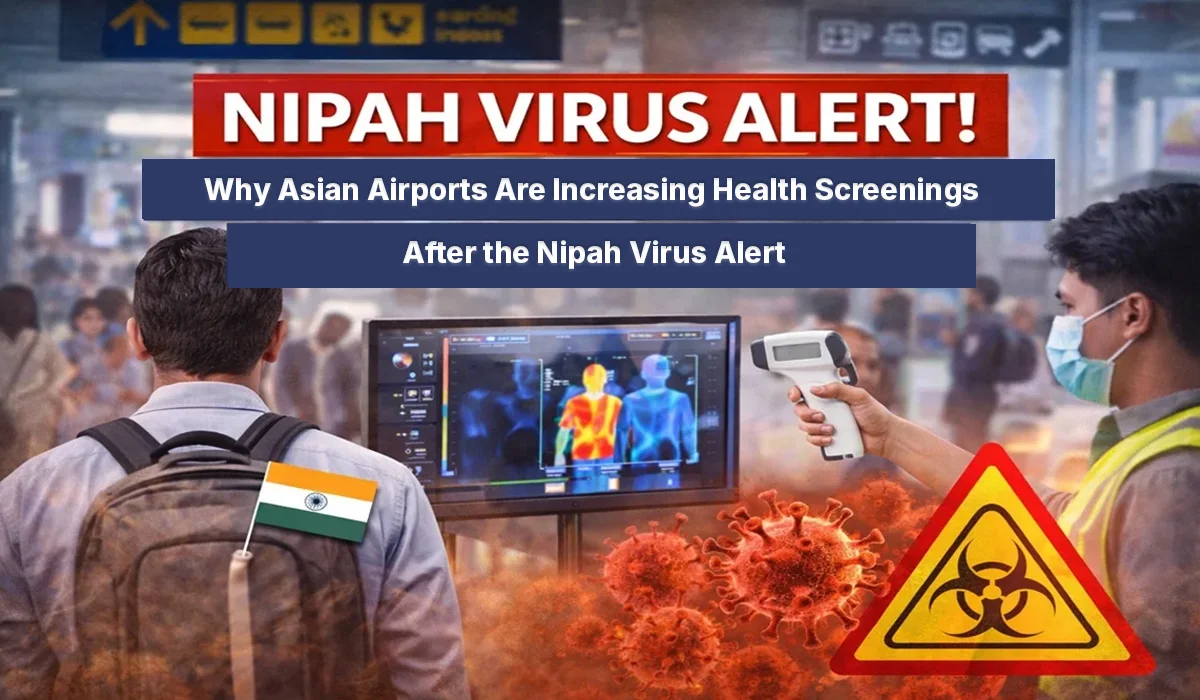
The recent Nipah virus alert in India has reignited global concern about the rapid cross-border spread of emerging infectious diseases. In response, Asian airports are increasing health screenings after the Nipah virus alert, marking a decisive shift in how aviation hubs manage biosecurity risks.
With Asia handling some of the world’s busiest international travel corridors, even localized outbreaks can have far-reaching implications. According to public health experts, early detection at points of entry remains one of the most effective ways to prevent global transmission of high-fatality viruses like Nipah.
This renewed focus on airport health screening protocols in Asia reflects lessons learned from past outbreaks, including COVID-19, SARS, and avian influenza. Airports are no longer just transit points—they are now frontline defenses in global disease surveillance.
What Is the Nipah Virus and Why Is It Triggering Airport Alerts in Asia?
The Nipah virus is a zoonotic pathogen first identified in 1999. It spreads from animals to humans and can also transmit through close human contact. What makes Nipah particularly alarming is its high fatality rate, which can range between 40% and 75% depending on outbreak conditions.
Recent clusters reported in parts of India have prompted health authorities to issue advisories. As a result, Asian airport health screenings after the Nipah virus alert have intensified, especially at hubs connecting South Asia to Southeast Asia and the Middle East.
Public health agencies warn that early symptoms—fever, headache, and respiratory distress—can be mistaken for common viral infections. This uncertainty increases the risk of undetected international spread, making airports a critical checkpoint.
Why Are Asian Airports Increasing Health Screenings After the Nipah Virus Alert?
The decision to enhance screenings is not reactive panic—it is risk-based prevention. Experts highlight three key reasons:
- High Passenger Volume: Asia accounts for a large share of global air travel.
- Incubation Period Risks: Travelers may appear healthy while incubating the virus.
- No Approved Vaccine: Prevention relies heavily on early identification and isolation.
By strengthening health screening measures at Asian airports, authorities aim to identify symptomatic passengers before community transmission occurs. These measures also reassure travelers that safety protocols are actively enforced.
What Health Screening Measures Are Asian Airports Implementing?
Following the Nipah virus alert, airports across Asia are deploying multi-layered screening systems, including:
- Thermal scanning for fever detection
- Health declaration forms for recent travel and exposure history
- Visual assessments by trained medical staff
- Isolation rooms for suspected cases
- Coordination with national disease control centers
These airport screening protocols for Nipah virus prevention are designed to be non-intrusive yet effective. Importantly, they are integrated with digital surveillance systems that allow rapid reporting to public health authorities.
Is Airport Health Screening Effective in Preventing Disease Spread?
Experts agree that airport screening alone cannot eliminate risk—but it significantly reduces it. According to epidemiologists, early detection at travel hubs can delay outbreak escalation, buying critical time for healthcare systems to respond.
Studies from previous outbreaks show that layered interventions—screening, contact tracing, and public awareness—are most effective when implemented together. This is why Asian airports increasing health screenings after the Nipah virus alert are also sharing passenger data with health ministries and international agencies.
The goal is containment, not disruption.
How This Impacts Travelers and Regional Public Health
For travelers, enhanced screenings may mean slightly longer processing times. However, surveys consistently show that passengers prefer safety over speed during health alerts.
From a broader perspective, these measures strengthen regional health security in Asia. Airports now act as surveillance nodes, helping detect patterns that might otherwise go unnoticed until hospitals report clusters.
Health officials emphasize that transparent communication is key. Clear signage, multilingual advisories, and staff training ensure cooperation rather than fear.
Conclusion
The reason Asian airports are increasing health screenings after the Nipah virus alert is clear: prevention is faster, safer, and more effective than response. In a region defined by mobility and interconnected economies, airports play a crucial role in protecting public health.
By applying lessons from past outbreaks and using modern screening tools, Asian aviation hubs are reinforcing their position as guardians of global health security. These measures are not just about Nipah—they represent a long-term shift toward smarter, more resilient disease prevention systems.
As global travel continues to rebound, proactive screening remains one of the strongest defenses against the next outbreak.
Latest Post
- Pharma Company in Gujarat: The Backbone of India’s Healthcare Growth

- Why Gujarat Is Home to Some of India’s Strongest Pharma Companies

- Pharma Company in Gujarat: Quality Manufacturing That Builds Trust

- How a Trusted Pharma Company in Gujarat Ensures Regulatory Excellence

- Pharma Company in Gujarat: A Strategic Choice for Healthcare Expansion

- Pharma Company in Greater Noida: Your Guide to Safe and Reliable Solutions