Introduction
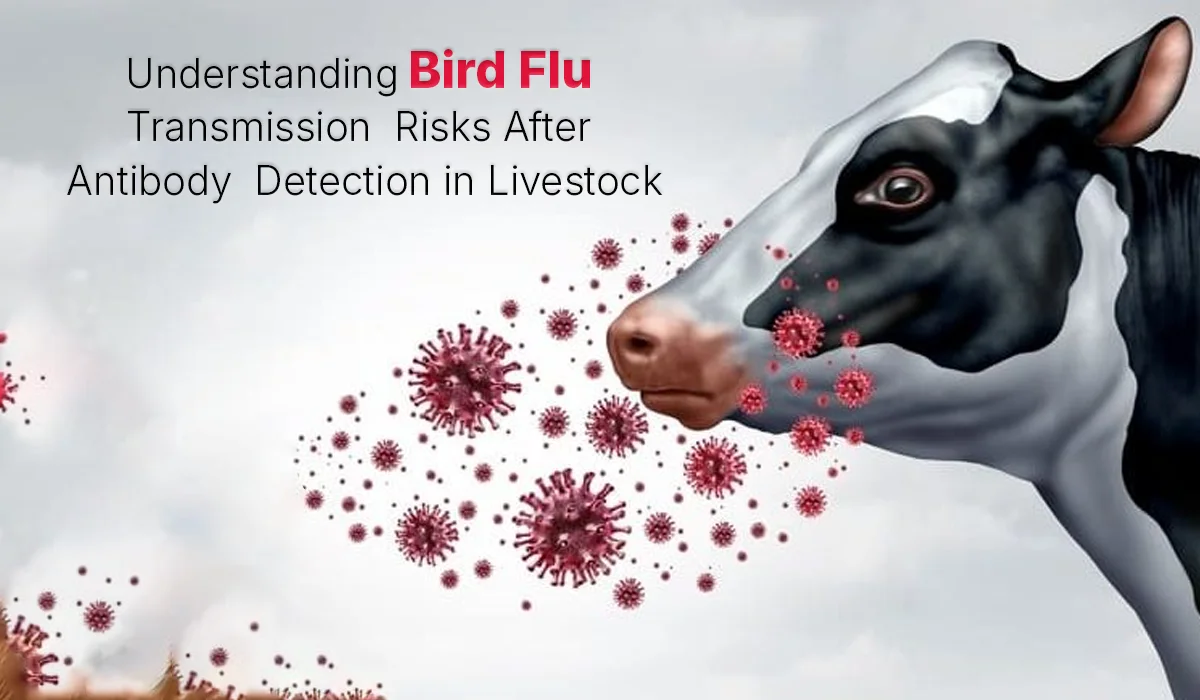
The recent detection of bird flu antibodies in livestock has intensified global concern about how zoonotic viruses move silently across species. Understanding bird flu transmission risks after antibody detection in livestock is no longer a topic limited to scientists—it directly affects farmers, policymakers, healthcare professionals, and consumers alike.
Antibody presence does not always signal an active outbreak, but it strongly indicates prior exposure to avian influenza viruses, raising important questions about cross-species transmission. In regions with dense farming systems and close human–animal interaction, these findings demand careful attention. As experts monitor evolving strains, the focus has shifted from reaction to early risk assessment and prevention, especially where food systems and public health intersect.
This article explains what antibody detection really means, why it matters now, and how it reshapes global bird flu preparedness.
What Does Antibody Detection in Livestock Mean for Bird Flu Transmission?
Antibody detection shows that an animal’s immune system has previously encountered the bird flu virus. This does not necessarily mean the animal is currently infected or contagious.
However, understanding bird flu transmission risks after antibody detection in livestock requires recognizing antibodies as early warning signals. They suggest that avian influenza viruses have breached expected species barriers at least once.
Experts emphasize that such findings:
- Indicate silent circulation of the virus
- Reveal gaps in biosecurity systems
- Help identify regions requiring enhanced surveillance
From a public health perspective, antibody detection acts as a risk marker, prompting closer investigation rather than immediate alarm.
How Can Bird Flu Spread from Birds to Livestock and Humans?
Bird flu viruses primarily originate in wild birds, especially waterfowl. Transmission pathways widen when farming ecosystems overlap.
Common transmission routes include:
- Contaminated water sources shared by birds and livestock
- Contact with infected poultry waste
- Poor farm-level hygiene and equipment reuse
Humans are typically exposed through:
- Direct contact with infected animals
- Handling raw or undercooked animal products
- Prolonged exposure in high-risk farm environments
This is why understanding bird flu transmission risks after antibody detection in livestock is crucial—it highlights indirect exposure pathways that often go unnoticed until patterns emerge.
Why Is Antibody Detection in Livestock a Growing Concern in Asia?
Asia has unique agricultural and ecological conditions that amplify zoonotic risks. High-density poultry farming, mixed livestock systems, and live animal markets create ideal conditions for viral adaptation.
Health experts note three major concerns:
- Virus mutation potential in mammals
- Increased human exposure frequency
- Delayed detection due to asymptomatic animals
Antibody detection suggests the virus may already be adapting. While adaptation does not guarantee human transmission, it raises the stakes for monitoring viral evolution.
This is why regional health authorities increasingly link understanding bird flu transmission risks after antibody detection in livestock with long-term pandemic preparedness.
Is Antibody Detection Proof of an Imminent Bird Flu Outbreak?
No. Antibody presence alone does not confirm an active outbreak or immediate threat to humans.
According to epidemiologists:
- Antibodies reflect past exposure, not active infection
- Many animals clear the virus without symptoms
- Continuous surveillance is more important than emergency response
However, dismissing antibody findings would be risky. History shows that early biological signals often precede outbreaks by months or years.
Thus, understanding bird flu transmission risks after antibody detection in livestock allows authorities to:
- Strengthen surveillance systems
- Adjust farm biosecurity protocols
- Prepare healthcare response frameworks
What Are Experts Saying About Future Bird Flu Risks?
Virologists and public health experts largely agree on one point: zoonotic spillover risk is rising globally.
Expert consensus highlights:
- Climate change altering bird migration patterns
- Expanding livestock production increasing contact points
- Viruses adapting faster in mixed-species environments
Several global health agencies now treat antibody detection as part of predictive outbreak modeling, not merely retrospective analysis.
By integrating veterinary data with human health surveillance, experts aim to intercept outbreaks before they escalate, reinforcing the value of understanding bird flu transmission risks after antibody detection in livestock.
How Can Governments, Farmers, and Consumers Reduce Risk?
Risk mitigation requires coordinated action across sectors.
For governments:
- Expand routine serological testing in livestock
- Improve data sharing between animal and human health agencies
For farmers:
- Enforce strict farm biosecurity
- Limit wildlife–livestock interaction
- Report unusual animal illness promptly
For consumers:
- Avoid raw or undercooked animal products
- Follow food safety advisories
- Stay informed through official health channels
Prevention depends less on fear and more on awareness-driven behavior change.
Conclusion
Understanding bird flu transmission risks after antibody detection in livestock provides a critical lens into how zoonotic threats develop long before human cases appear. Antibodies are not alarms—but they are signals that demand attention, preparedness, and coordinated response.
As animal and human health become increasingly interconnected, early detection tools like antibody surveillance play a vital role in protecting food systems, livelihoods, and public health. Proactive monitoring, informed policy decisions, and responsible farming practices remain our strongest defense against the next potential outbreak.