Introduction: Every Breakthrough Begins With a Question
A young scientist stands in a laboratory late at night. On the table lies a compound that might one day save thousands of lives. But right now, it is just an idea — a possibility.
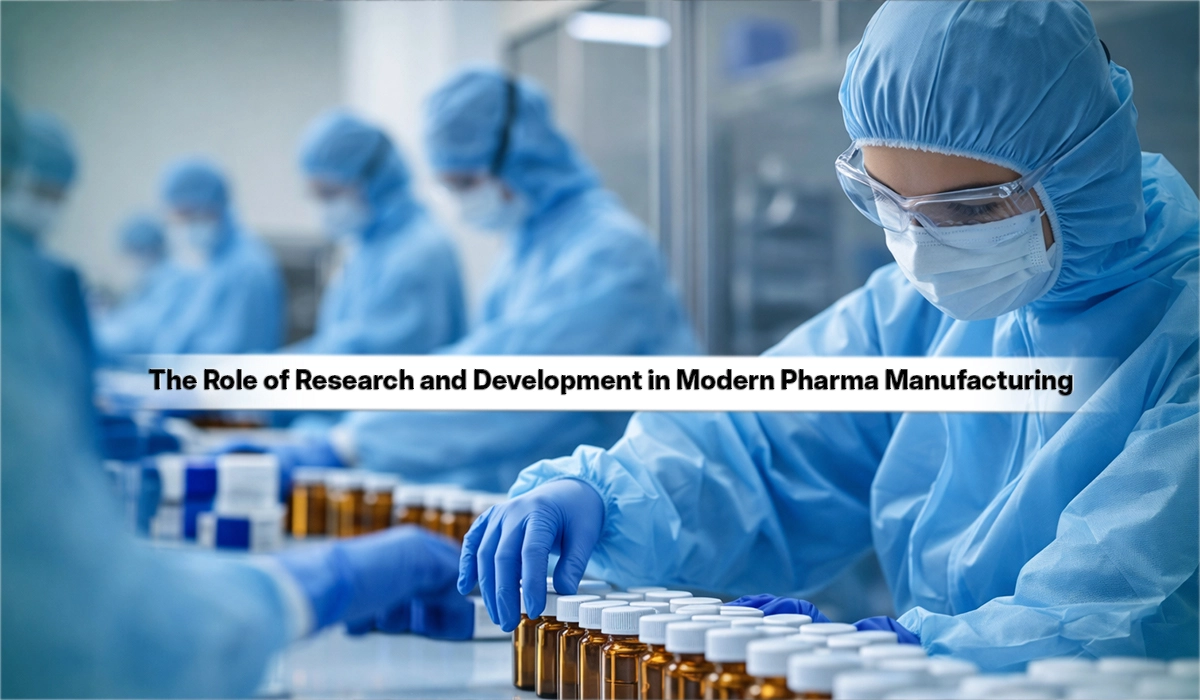
Behind every life-saving tablet, vaccine, or injectable lies years of testing, failures, adjustments, and discoveries. What most people see is the final product on a pharmacy shelf. What they do not see is the powerful engine driving it all: Research and Development in Modern Pharma Manufacturing.
From India’s growing pharmaceutical hubs to advanced laboratories in the United States and Europe, research and development (R&D) shape the future of healthcare. It ensures medicines are safe, effective, affordable, and innovative. In today’s fast-changing healthcare world, R&D is not optional — it is the backbone of pharmaceutical progress.
Let us explore how The Role of Research and Development in Modern Pharma Manufacturing defines innovation, safety, global competitiveness, and long-term healthcare impact.
What Is Research and Development in Modern Pharma Manufacturing?
At its core, Research and Development (R&D) refers to the systematic process of discovering, designing, testing, and improving pharmaceutical products.
In modern pharma manufacturing, R&D includes:
- Drug discovery and formulation
- Clinical research and trials
- Bioavailability and stability studies
- Process optimization
- Regulatory documentatio
- Technology transfer to manufacturing units
Without R&D, pharmaceutical companies would simply produce copies. With R&D, they create safer, more effective, and improved therapies.
Why It Matters
- Ensures patient safety
- Improves drug efficacy
- Reduces side effects
- Supports regulatory approval
- Drives innovation
Countries like India, known as the “Pharmacy of the World,” rely heavily on strong R&D systems to supply high-quality generic and specialty medicines globally.
How Did Pharma R&D Evolve Over Time?
In the early 20th century, drug discovery often happened by chance. Today, R&D is data-driven and technology-powered.
Modern pharma R&D uses:
- Artificial intelligence for molecule screening
- Advanced lab equipment
- Biotechnology platforms
- Data analytics
- Genomic research
The shift from traditional research to advanced scientific development has dramatically improved precision and speed in drug manufacturing.
Drug Discovery: Where Innovation Begins
Every new medicine starts with identifying a problem — a disease or unmet medical need.
The Discovery Process Includes:
- Target Identification
- Compound Screening
- Laboratory Testing
- Preclinical Trials
Only a small percentage of tested compounds move forward. According to global pharma data, less than 10% of compounds entering clinical trials reach final approval.
This highlights why The Role of Research and Development in Modern Pharma Manufacturing is so critical — it filters, refines, and validates solutions before they reach patients.
Formulation Development: Turning Science Into Medicine
Once a molecule is approved, scientists work on formulation.
This stage answers key questions:
- Should it be a tablet, capsule, syrup, or injection?
- How can we improve absorption?
- What is the ideal dosage?
- How stable is the product?
Formulation development ensures medicines are:
- Easy to consume
- Long-lasting
- Stable under different temperatures
- Suitable for global markets
India’s pharmaceutical manufacturers are globally recognized for formulation expertise, especially in generics and complex injectables.
Clinical Research: Ensuring Safety and Efficacy
Clinical trials are among the most important steps in pharmaceutical R&D.
They occur in three main phases:
- Phase 1: Safety testing
- Phase 2: Effectiveness testing
- Phase 3: Large-scale validation
Modern pharma manufacturing depends on strong clinical data to meet global regulatory standards like:
- US FDA
- CDSCO (India)
- EMA (Europe)
- WHO GMP
Without rigorous clinical research, medicines cannot enter the global market.
Process Development and Scale-Up
Creating a formula in a lab is different from producing millions of units in a manufacturing plant.
Process development ensures:
- Consistent batch quality
- Cost-effective production
- GMP compliance
- Reduced wastage
This stage bridges R&D and manufacturing — a crucial link in modern pharmaceutical production.
The Role of R&D in Generic Drug Manufacturing
India is a global leader in generic medicines.
But generic manufacturing still requires strong R&D in:
- Bioequivalence studies
- Stability testing
- Regulatory filings
- Process optimization
Even though generics replicate existing molecules, they must match the reference product in safety and performance.
Thus, R&D remains essential.
Innovation in Biologics and Specialty Medicines
Modern pharma manufacturing is expanding into:
- Biologics
- Biosimilars
- Targeted therapies
- Personalized medicine
These advanced therapies require deeper research in molecular biology and biotechnology.
R&D teams now collaborate across borders, sharing scientific data to accelerate innovation.
How R&D Supports Regulatory Compliance
Pharmaceutical regulations are strict worldwide.
Research teams prepare:
- Drug Master Files (DMF)
- Stability reports
- Clinical data
- Safety profiles
Strong R&D ensures faster regulatory approvals and fewer compliance issues.
This is especially important for export-focused companies in India serving the US and EU markets.
Cost vs Investment: Why R&D Is Worth It
Developing a new drug can cost billions globally. Even generic development requires significant investment.
However, R&D delivers long-term returns:
- Brand reputation
- Patent protection
- Market leadership
- Improved patient outcomes
Companies that underinvest in R&D often struggle to compete internationally.
Technology and Digital Transformation in Pharma R&D
Digital tools are transforming research processes:
- AI-powered drug discovery
- Automated lab systems
- Real-time data monitoring
- Digital twins in manufacturing
This reduces development time and improves precision.
Modern pharma manufacturing is now a combination of science and smart technology.
Collaboration: The Global Nature of Pharma R&D
Pharma research is no longer isolated.
Companies collaborate with:
- Universities
- Research institutions
- Biotech startups
- Government bodies
India’s pharma industry often partners with US-based research organizations to bring cost-effective yet high-quality medicines to global markets.
Conclusion
Every medicine tells a story — not just of treatment, but of years of research, testing, and scientific dedication.
The Role of Research and Development in Modern Pharma Manufacturing goes beyond laboratories. It protects patient safety, strengthens global healthcare systems, and drives innovation.
As healthcare challenges grow, strong R&D systems will determine which companies lead and which fall behind.
Whether in India, the USA, or anywhere in the world, the future of pharma manufacturing depends on research-driven excellence.