Introduction: What Really Happens Before a Medicine Reaches Your Hands?
When you hold a tablet or syrup bottle, it may look simple. A small pill. A clear liquid. A labeled strip.
But behind that product lies a complex world of science, strict regulation, skilled professionals, and advanced technology.
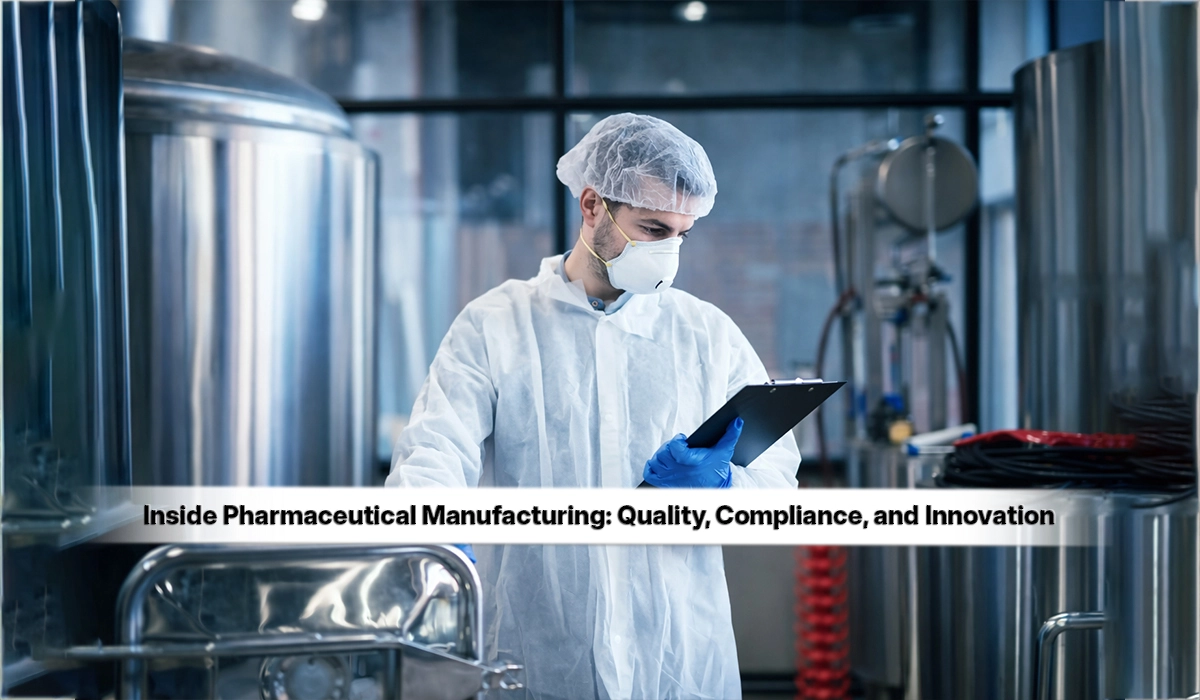
Inside Pharmaceutical Manufacturing: Quality, Compliance, and Innovation is a story of precision, responsibility, and trust. Every medicine must be safe, effective, and consistent — whether it is produced in India, the USA, Europe, or any other part of the world.
In countries like India, which is often called the “Pharmacy of the World,” pharmaceutical manufacturing plays a critical role in global healthcare. India supplies affordable medicines to over 200 countries, including highly regulated markets such as the USA and Europe. That level of responsibility demands world-class standards.
Let’s step inside pharmaceutical manufacturing and understand how quality, compliance, and innovation come together to protect patient lives.
What Is Pharmaceutical Manufacturing?
At its core, pharmaceutical manufacturing is the process of producing medicines in a controlled, regulated environment to ensure safety, effectiveness, and consistency.
It includes:
- Sourcing raw materials
- Formulation development
- Manufacturing and processing
- Quality testing
- Packaging and labeling
- Distribution
This process applies to:
- Tablets and capsules
- Injectables
- Syrups and suspensions
- Topical creams
- Nutraceuticals
- Biologics
Pharmaceutical manufacturing is not just about producing drugs. It is about protecting public health.
Why Quality Is the Foundation of Pharmaceutical Manufacturing
In most industries, a defect may mean inconvenience. In pharmaceutical manufacturing, a defect can risk lives.
Quality in pharmaceutical manufacturing ensures:
- Correct dosage strength
- Purity of ingredients
- Absence of contamination
- Stability over shelf life
- Consistent performance
Quality is not tested at the end. It is built into every step.
Quality by Design (QbD)
Modern pharmaceutical manufacturing follows the principle of Quality by Design. This means:
- Understanding how ingredients behave
- Controlling variables during production
- Monitoring each stage in real time
The goal is simple: make quality predictable, not accidental.
Understanding GMP in Pharmaceutical Manufacturing
One of the most important pillars inside pharmaceutical manufacturing is Good Manufacturing Practices (GMP).
GMP guidelines are issued by regulatory bodies such as:
- US FDA (United States)
- CDSCO (India)
- EMA (Europe)
- WHO
GMP ensures that:
- Facilities are clean and controlled
- Staff are trained
- Equipment is validated
- Documentation is accurate
- Processes are traceable
Without GMP compliance, a pharmaceutical manufacturer cannot legally supply medicines in regulated markets.
The Role of Regulatory Compliance
Regulatory compliance in pharmaceutical manufacturing goes beyond internal checks. It involves external audits and inspections.
Key Regulatory Requirements
- US FDA inspections for exports to America
- EU-GMP certification for European markets
- WHO-GMP approval for global distribution
- Schedule M compliance in India
Regulatory bodies review:
- Batch records
- Quality control data
- Cleanroom conditions
- Stability studies
Compliance is not a one-time event. It is ongoing.
Step-by-Step: How Medicines Are Manufactured
Let’s walk through the pharmaceutical manufacturing journey.
1. Raw Material Procurement
Only approved vendors supply active pharmaceutical ingredients (APIs) and excipients.
Each material is tested before use.
2. Formulation Development
Scientists design the correct combination of:
- Active ingredients
- Fillers
- Binders
- Stabilizers
The goal is proper absorption and effectiveness.
3. Manufacturing Process
Depending on dosage form:
- Tablets are granulated and compressed
- Capsules are filled
- Syrups are mixed in controlled tanks
- Injectables are prepared in sterile environments
4. Quality Testing
Each batch undergoes:
- Chemical analysis
- Microbial testing
- Dissolution testing
- Stability testing
Only after passing all tests is a batch released.
Sterile vs Non-Sterile Pharmaceutical Manufacturing
Inside pharmaceutical manufacturing, there is a major difference between sterile and non-sterile production.
Non-Sterile Manufacturing
- Tablets
- Capsules
- Oral syrups
- Creams
Requires controlled cleanliness but not full sterility.
Sterile Manufacturing
- Injectables
- Eye drops
- IV infusions
Requires:
- Cleanrooms
- HEPA filtration
- Laminar airflow
- Strict gowning protocols
Sterile facilities are among the most highly controlled environments in healthcare.
Innovation in Pharmaceutical Manufacturing
Modern pharmaceutical manufacturing is no longer manual and repetitive. Technology drives efficiency and safety.
Automation
- Robotic filling lines
- Automated inspection systems
- Digital batch records
Data Integrity Systems
Electronic systems track:
- Temperature
- Humidity
- Equipment calibration
This ensures transparency and traceability.
Continuous Manufacturing
Instead of producing in large batches, some manufacturers now use continuous production systems for improved consistency.
Pharmaceutical Manufacturing in India: A Global Leader
India plays a central role inside pharmaceutical manufacturing globally.
Why India Is Important
- Supplies over 20% of global generics
- Largest provider of vaccines worldwide
- Cost-efficient production
- Strong regulatory ecosystem
Many Indian pharmaceutical manufacturers export to:
- USA
- UK
- Canada
- Australia
- Africa
India’s strength lies in combining affordability with regulatory compliance.
Challenges Inside Pharmaceutical Manufacturing
Despite advancements, pharmaceutical manufacturing faces challenges.
Rising Regulatory Standards
Regulations continue to evolve.
Supply Chain Disruptions
API sourcing disruptions affect production.
Cost Pressure
Maintaining quality while keeping medicines affordable.
Counterfeit Risks
Ensuring product authenticity through serialization.
Modern pharmaceutical manufacturing responds with better monitoring, stricter audits, and digital tracking systems.
Quality Control vs Quality Assurance
People often confuse these terms inside pharmaceutical manufacturing.
Quality Control (QC)
Testing finished products.
Quality Assurance (QA)
Ensuring processes prevent defects before they occur.
Both work together to maintain compliance.
The Importance of Documentation
In pharmaceutical manufacturing, documentation is everything.
“If it is not documented, it did not happen.”
Every process step must be recorded, including:
- Equipment cleaning logs
- Batch manufacturing records
- Calibration reports
- Deviation reports
Documentation ensures traceability in case of product recall or investigation.
Sustainability in Pharmaceutical Manufacturing
Modern pharmaceutical manufacturing is also focusing on sustainability.
Green Manufacturing Initiatives
- Reduced water usage
- Waste management systems
- Energy-efficient plants
- Solvent recovery systems
Environmental responsibility is now part of compliance.
Conclusion
Inside Pharmaceutical Manufacturing: Quality, Compliance, and Innovation reveals a world built on responsibility and precision. From raw material sourcing to global export, pharmaceutical manufacturing ensures that every medicine is safe, effective, and reliable. As regulations grow stricter and technology advances, pharmaceutical manufacturing continues to evolve — bridging science and trust for patients worldwide. The next time you hold a medicine, remember the layers of quality and compliance behind it.